
Three Outrages, Three Churches
The funeral service, which was not a Mass, drew criticism after a eulogy described the deceased as a “great whore, St. Cecilia, the mother of all whores,” and after a rendition of “Ave Maria” sung during the liturgy was interrupted by a mourner who shouted “Ave Cecilia,” and danced down the aisle.
The priest celebrant, Fr. Edward Dougherty, was also criticized for using female pronouns to describe Gentili, a biological man who identified as a woman.
The reader may peruse the pictures, but best not. Questions abound, which I will group into three basic ones, before, during and after:
A priori: Why was nothing done to prevent this? Are there no procedures to ensure such travesties do not happen in New York’s premier church?
In media: Why did no one – not least, the priest ‘celebrant’, Father Edward Dougherty – stop the proceedings, as they unfolded?
A posteriori: What will happen now to ensure this happens not again? A Mass of reparation has purportedly been said – very good in itself – but the place may need an exorcism. And what of Father Dougherty? Will he be reprimanded or disciplined in some way?
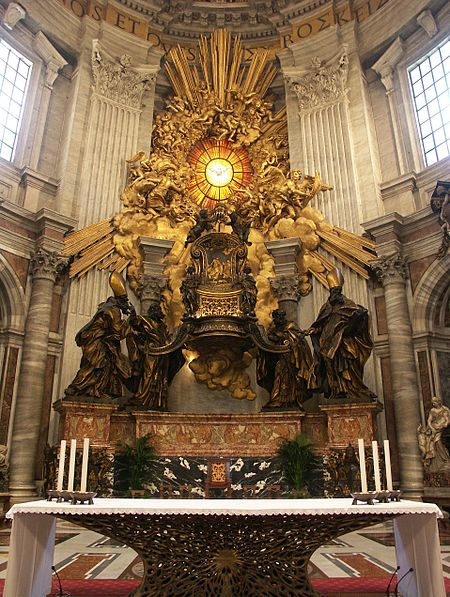
The second outrage is more nuanced, not least since it took place with the full approbation of the Holy Father, when Justin Welby, ‘Archbishop of Canterbury’ celebrated a ‘Mass’ at the high altar in Saint Peter’s basilica.
A couple of clarifications are in order: It has been decreed infallibly by Pope Leo XIII in his Apostolic Constitution Apostolicae Curae (1896) that Anglican ‘Orders’ simply do not exist:
Wherefore, strictly adhering, in this matter, to the decrees of the pontiffs, our predecessors, and confirming them most fully, and, as it were, renewing them by our authority, of our own initiative and certain knowledge, we pronounce and declare that ordinations carried out according to the Anglican rite have been, and are, absolutely null and utterly void. (#36)
And in case there be any doubt, or a future pontiff try to modify this infallible decree:
We decree that these letters and all things contained therein shall not be liable at any time to be impugned or objected to by reason of fault or any other defect whatsoever of subreption or obreption of our intention, but are and shall be always valid and in force and shall be inviolably observed both juridically and otherwise, by all of whatsoever degree and preeminence, declaring null and void anything which, in these matters, may happen to be contrariwise attempted, whether wittingly or unwittingly, by any person whatsoever, by whatsoever authority or pretext, all things to the contrary notwithstanding. (#40)
Hence, whatever be his own personal convictions and certitude, Reverend Welby is a simple layman, not a priest, and still less a bishop. In the straightforward words of priest, historian and philosopher of science, Father Stanley Jaki:
Those whom Protestants call their bishops are such only in name. A Lutheran bishop or a Methodist bishop, let alone a Calvinist or a Baptist bishop is a conceptual construct to which their respective origins and theologies can assure no more validity than a mathematician can accord to squaring a circle.
Altars in Catholic churches are reserved for the saying of Mass, which is to say, offering the Real Presence of the Body and Blood of Jesus Christ to the Father, in a propitiatory sacrifice.
To celebrate a faux-Mass on such an altar – and the altar of Saint Peter’s, above the very throne and grave of the first Pope – seems at the very least disconcerting, if not worse. One must choose one’s words carefully, for one’s mind reels. Things fall apart, and the centre cannot hold. All this, in the most iconic church of Christendom where the traditional Mass, and even private Masses, are now verboten, even on any of the 44 side altars, now left empty and unused.
In his 1928 encyclical Mortalium Annos, Pius XI warned against any hint of syncretism in our liturgical practices, practices that would signify that all religions are the same, or equal paths to God. There is only one route to salvation, through the holy, catholic, apostolic Church, wherein subsists the fullness of Jesus Christ, the one mediator between God and Man, the Way, the Truth and the Life.
As Pius puts it, in the Church’s relation to her separated non-Catholic brethren:
it is clear that the Apostolic See cannot on any terms take part in their assemblies, nor is it anyway lawful for Catholics either to support or to work for such enterprises; for if they do so they will be giving countenance to a false Christianity, quite alien to the one Church of Christ.
If such be so, then what are we to make of the permission for non-Catholics to offer a non-liturgy as though it were a real liturgy, on a real, consecrated altar? The same thing happened last April at the cathedral of Saint John Lateran, when a group of Anglicans ‘said Mass’ at the altar. But this was presented as a misunderstanding, which should have been avoided, with Bishop di Tora offering ‘deep regret’.
This time, there’s no regret; rather, full approval, and from the highest authority in the Church. What are we to say of scandal? Is it not Justin Welby’s duty – in any objective sense – to follow his spiritual ancestor, John Henry Newman, to delve into history, and so cease to be Protestant? And do others not have a duty to exhort him in this respect, as did Edmund Campion? Or at least not pretend that his liturgical practice is little more than pretense?
The third outrage occurred not in a Catholic church – well, it used to be Catholic, but was usurped by the Anglicans during the great looting of the Reformation, that is, Canterbury cathedral, where Thomas Becket (most definitely Catholic) was martyred. Since it’s expensive to upkeep such a glorious church – I stood beside it nearly five years ago, and was in awe at its immensity – and I don’t think liturgical attendance is what it used to be – they decided to hold a ‘rave in the nave‘ on the evenings of February 9th and 10th, with expensive drinks galore, to raise some much-needed funds. People were buzzed and boogying, likely spilling sugary alcoholic drinks on the stone floor, worn down by worshippers. I recall vividly my own time in that sacred space – less sacred now that the Mass has been forbidden for five hundred years – praying a Rosary on the site of Becket’s martyrdom.
Should we be surprised? Newman predicted that the end point of Protestantism is secularism, and here we have it. The one consolation, if one might be found, is that the ‘rave’ was silent, the music being heard only through Bluetooth headphones. It must have been odd to walk through there without them, to see people swaying silently like hypnotized zombies to music you yourself could not hear. Perhaps they were all hearing different melodies – insofar as such music has melody – reminding me of the lyrics of Simon and Garfunkel’s Sound of Silence:
And in the naked light I saw
Ten thousand people, maybe more
People talking without speaking
People hearing without listening
People writing songs that voices never shared
And no one dared disturb the sound of silence
As one headline put it, if the Anglicans have forgotten what the great cathedrals are for – all of them built by devout Catholics – can we have them back?
I will stop there, for three’s a crowd, and to go further may lead me into strange and foreboding waters, already swirling in my mind, heart and soul. All I can say, on this glorious feast, is that Christ’s promise holds true, the gates of hell shall not prevail against His Church. This too shall pass, and reparation, restitution and restoration, one day, will be made.

Carney’s Amoral Majority
After five defections – euphemistically described as ‘crossing the floor’ – and three by-elections, Mark Carney and his Liberals how have their coveted majority. One wonders what bowls of pottage were offered in back-room deals. In the archaic monarchical system that is the Dominion of Canada, this majority allows the newly-minted Prime Minister to rule[…]Continue reading→

Saint Kateri , Canada’s Protectress
This was the title given to Saint Kateri Tekakwitha, by Pope Benedict XVI, when he canonized her on October 28th, 2012, along with six others, in Saint Peter’ Square (she had been beatified by Pope John Paul II back in 1980). With Saint Joseph as our protector, along with the Canadian martyrs, we seem to[…]Continue reading→

A Tale of Two Benedicts
A grace-filled Holy Week to all our readers! As we await and prepare for the Resurrection about to dawn upon us, we might keep in mind two Benedicts: Pope Emeritus Benedict XVI, requiescat in pace, elected on this day in 2005; and today’s commemoration of the mystic pilgrim, Benedict Joseph Labre, who died on this[…]Continue reading→

My Name is Bernadette
April 16th is a propitious day, for besides the anniversary of Father de Valk’s death, who founded Catholic Insight in its print form decades ago, and the commemoration of the ‘two Benedicts’, mentioned in accompanying posts, today we also recall Saint Bernadette Soubirous, the young visionary to whom the Virgin Mary appeared numerous times at[…]Continue reading→

Saint Lydwina of Schiedam and Suffering Joyfully
Saint Lydwina of Schiedam (1380 – 1433) was one of the countless and glorious ‘victim souls’ in the history of the Church, those whose lives are filled with suffering, often of an unimaginable intensity, but who suffer joyfully. She was a fifteen-year old Dutch girl, out skating one day, when she fell and broke one[…]Continue reading→

The Glorious Martyrdoms of Martin and Maximus
As we enter into Eastertide, we recall on this 13th of April Pope Saint Martin I (+655), one of the noblest, if most tragic, of the successors of Saint Peter. Born in Umbria, Italy, he was of noble lineage, with great intelligence combined with charity and love of the poor and the Church. While still[…]Continue reading→

Saint Stanislaus of Szczepanów
We celebrate Saint Stanislaus today (+ April 11, 1079), in light of this Easter Octave, a bishop and martyr who accepted the episcopacy only at the direct order of Pope Alexander II. He proved a wise and courageous leader of his flock, put to death by his own king, Boleslaus, for rebuking the monarch’s ‘immoral[…]Continue reading→
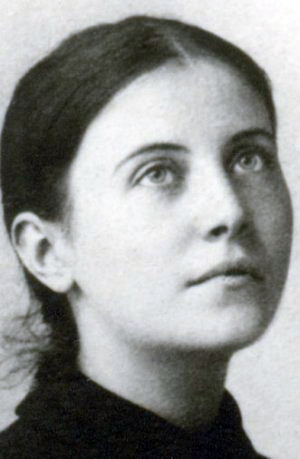
Saint Gemma Galgani
On this April 11th, in 1903 – the same year that the Italian Guiseppe Sarto was elected Pope later that summer as Pius X – a lovely, young Italian woman died, by the name of Gemma Galgani. She lived a brief life of 24 years, as did a number of other young saints, including Pier[…]Continue reading→
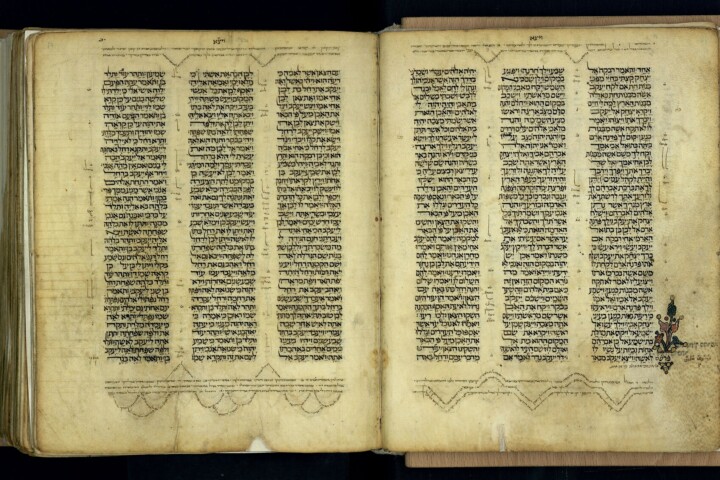
An Ideological and Improper Translation
I noticed something odd with the psalm reading at Mass the other day. Our bishops’ conference here in Canada has decreed that the Mass in English – Novus Ordo – use the ‘NRSV’, the ‘New Revised Standard Version’, an ‘updated’ translation of the original RSV, first published in 1952. This ‘new translation’ has the tendency[…]Continue reading→
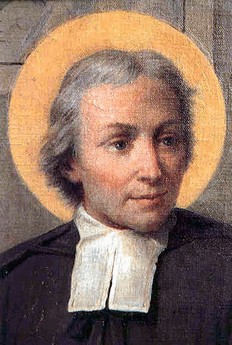
Saint Jean-Baptiste de la Salle: A Teacher for Teachers
Jean-Baptiste de la Salle (1651 – 1719), a French nobleman, ordained a priest, founded the first order in the Church’s history entirely without priests, and this came about almost by accident. I say ‘almost’, for, of course, there are no accidents with God. Destined for ordination from an early age, Jean-Baptiste never looked back, even[…]Continue reading→