
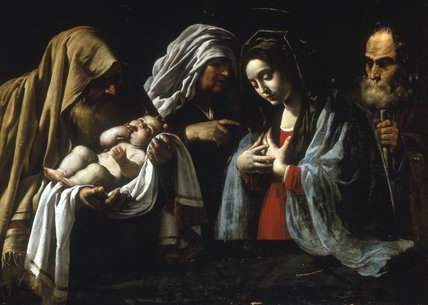
The Message of the Presentation
Are there passages from the Bible that frighten you, or at least make you think twice about yourself and your behaviour? Thomas Merton—a well-known religious figure of a generation ago—was made uneasy by Matthew 6.5: “Amen I say to you, they have received their reward,” words used by Jesus to describe the recognition the Pharisees received when they practised their piety publicly, in order to excite admiration among the people. And that certainly is meagre recompense compared to the glory that waits the humble and faithful servants of the Lord: “Come, O blessed of my Father, inherit the kingdom prepared for you from the foundation of the world.”[1] A text I find unsettling is also found in Matthew: “The Queen of the South will arise at the judgment with this generation and condemn it.”[2] Let me explain why I find this verse a continual challenge.
In 1959, after my graduation, I left Saint Michael’s College here in Toronto, returning to take up residence there after an absence of more than fifty years, in 2012. Not surprisingly, when I first began moving around the campus, images from the past crowded into my mind. In what is now a meeting room under Saint Basil’s church, to take one instance, there had earlier been a chapel frequented by the twenty-five seminarians who lived and studied at the College in those days. I can picture it as it was, with the altar against the front wall, flanked by statues of the Blessed Virgin and Saint Joseph.
As I recall, we were very devout, almost monastic, in the simplicity and severity of our lives, and I sometimes wonder if the spectre of my former self, when I was a young man, might not, like the Queen of the South, arise at the judgment to rebuke my loss of fevour and religious observance. And I also sometimes ask myself what Catholics of the Middle Ages would have to say to us, if they were somehow able to join us in the celebration of Candlemas, today’s feast of the Purification of Mary. In mediaeval times Candlemas was a major religious and social event, marked by one of the most elaborate processions of the liturgical year, when every parishioner was obliged to join in carrying a blessed candle [which] afterwards would burn before Our Lady’s altar. . . . The people took candles away from the ceremony, to be lit during thunderstorms or during times of sickness, and to be placed in the hands of the dying. [The use of candles] and the imagery of light in the ceremonies was derived from Simeon’s song, in which the child Jesus is hailed as “a light to the gentiles”[3] a phrase we have just heard in today’s Gospel. That’s what it was like to live in a Catholic country, where the liturgical seasons and the great feasts determined the rhythm of daily life—in the home, in business, in courts and palaces.
Is there is anything quite like that in our society? What about professional sports—Will you be watching the Super Bowl this afternoon?—or the entertainment industry? Are not, in fact, the Oscars an annual event that a lot of people mark on their calendars? And are we not as keen to learn about the goings-on of athletes and actors as our ancestors in the Faith were to hear about the saints? In any case we decidedly do not live in a religious society, and as religiously minded people we must at times feel the lack. Surely it would have been easy to be devout long ago, when the rhythm of life was determined by the Church’s calendar. The practices of devotion, such as processions and pilgrimages, novenas, fasting and feasting—all these were woven into the fabric of everyday life. How different it is today! They unconsciously, perhaps, functioned in a Catholic culture, and we, equally unconsciously, function in ours. If we are honest with ourselves, shall we not admit that our moral and cultural convictions, for the most part, are indistinguishable from those of our non-believing contemporaries? On the other hand, it requires more gumption to practise our faith and to witness to it nowadays than in the past. They were carried along by social custom and observances, but we have to swim upstream, against the current. This fact may be some response to the rebuke of those ghosts from the Middle Ages who alongside the Queen of the South will arise at the judgment with this generation and condemn it.
Whatever the period, past or present, the essence of our faith remains constant, and, like our mediaeval counterparts, we recognize Jesus as a “light for revelation to the gentiles and the glory of his people Israel.” He still comes to his temple and still expects us to incorporate the Gospel into our lives; and the stakes today are as high as they were seven hundred years ago. The prophet says as much in the first reading: “But who can endure the day of his coming . . . ? he is like a refiner’s fire . . . and he will purify the sons of Levi and refine them like gold and silver.”[4] There’s another fearsome verse to summon that over-worked Queen of the South, a text echoed by Saint Peter when he wrote that our faith is to be tested by the refiner’s fire,[5] just as the ore is smelted until the slag rises to the surface to be skimmed off, leaving the pure gold behind. Given this text—and there are many others like it—“we have cause to be uneasy.”[6] It follows that we have all the more reason to place all our hope in Jesus, about whom the Letter to the Hebrews says: “he himself was tested by what he suffered, [so that] he is able to help those who are being tested.”[7]a
[1] Matt 25.34.
[2] Matt 12.42.
[3] Eamon Duffy, The Stripping of the Altars (New Haven: Yale University Press, 1992), pp. 16-18.
[4] Malachi 3.2-3.
[5] 1 Pet 1.7.
[6] C.S. Lewis, Mere Christianity, book 1, chapter 5.
[7] Heb 2.18.

Saint Kateri , Canada’s Protectress
This was the title given to Saint Kateri Tekakwitha, by Pope Benedict XVI, when he canonized her on October 28th, 2012, along with six others, in Saint Peter’ Square (she had been beatified by Pope John Paul II back in 1980). With Saint Joseph as our protector, along with the Canadian martyrs, we seem to[…]Continue reading→

Remembering Father Alphonse de Valk
(Today marks the sixth anniversary of the death of Father Alphonse de Valk, C.S.B., a faithful, courageous and indefatigable Basilian priest, pro-life-and-family apostle, and the founder of Catholic Insight magazine. Here is what we wrote those on his entering into eternity five years ago, as we continue to remember him in our prayers and thoughts)[…]Continue reading→

My Name is Bernadette
April 16th is a propitious day, for besides the anniversary of Father de Valk’s death, who founded Catholic Insight in its print form decades ago, and the commemoration of the ‘two Benedicts’, mentioned in accompanying posts, today we also recall Saint Bernadette Soubirous, the young visionary to whom the Virgin Mary appeared numerous times at[…]Continue reading→
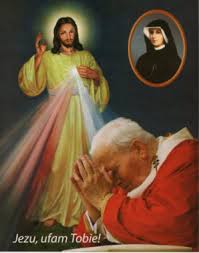
Canonizing Sister Faustina and Divine Mercy
HOMILY OF THE HOLY FATHER MASS IN ST PETER’S SQUARE FOR THE CANONIZATION OF SR MARY FAUSTINA KOWALSKA Sunday, 30 April 2000 1. “Confitemini Domino quoniam bonus, quoniam in saeculum misericordia eius”; “Give thanks to the Lord for he is good; his steadfast love endures for ever” (Ps 118: 1). So the Church sings on the Octave of[…]Continue reading→

Divine Mercy Sunday – An Echo of Every Mass
Reach out your hand and put it in my side. Do not doubt but believe’… ‘My Lord and my God!’ (Jn. 20:18)). Today is Divine Mercy Sunday, and as we celebrate the end of the Easter Octave, we contemplate the wounded side of our Saviour, the Church’s source of life. On Good Friday in the[…]Continue reading→

Saint Stanislaus of Szczepanów
We celebrate Saint Stanislaus today (+ April 11, 1079), in light of this Easter Octave, a bishop and martyr who accepted the episcopacy only at the direct order of Pope Alexander II. He proved a wise and courageous leader of his flock, put to death by his own king, Boleslaus, for rebuking the monarch’s ‘immoral[…]Continue reading→
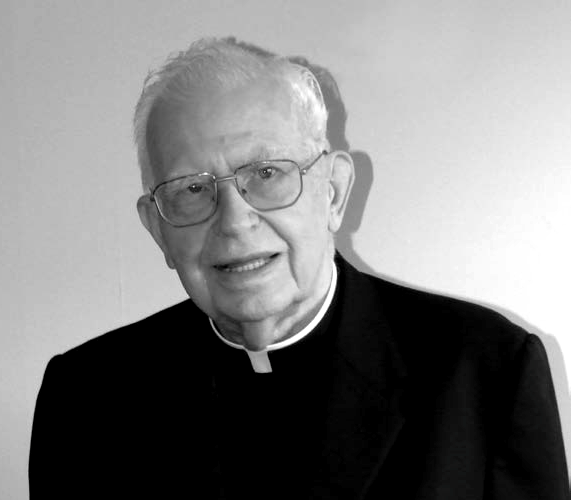
First Holy Communion: Sermon from May 16, 1943
Here is a sermon from the good old days by +Rev. Msgr. Vincent Nicholas Foy (August 14, 1915 – March 13, 2017), from 1943. Readers may recall that Pope Saint Pius X, by the decree Quam Singulari in 1910, lowered the customary age of reception of Holy Communion – after the rigours of the plague[…]Continue reading→
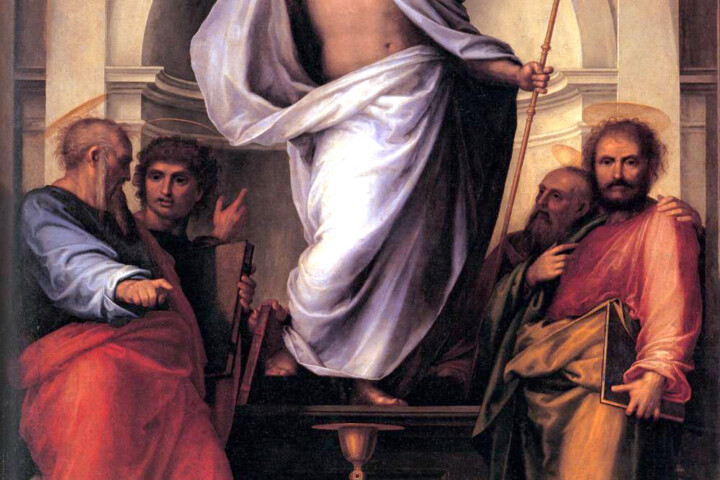
In the Glorious Light of Easter, Alleluia!
Set your minds on things that are above, not on things that are on earth, for you have died, and your life is hidden with Christ in God. When Christ who is your life is revealed, then you also will be revealed with him in glory (Col. 3:3-4). The Resurrection of Our Lord and Saviour[…]Continue reading→
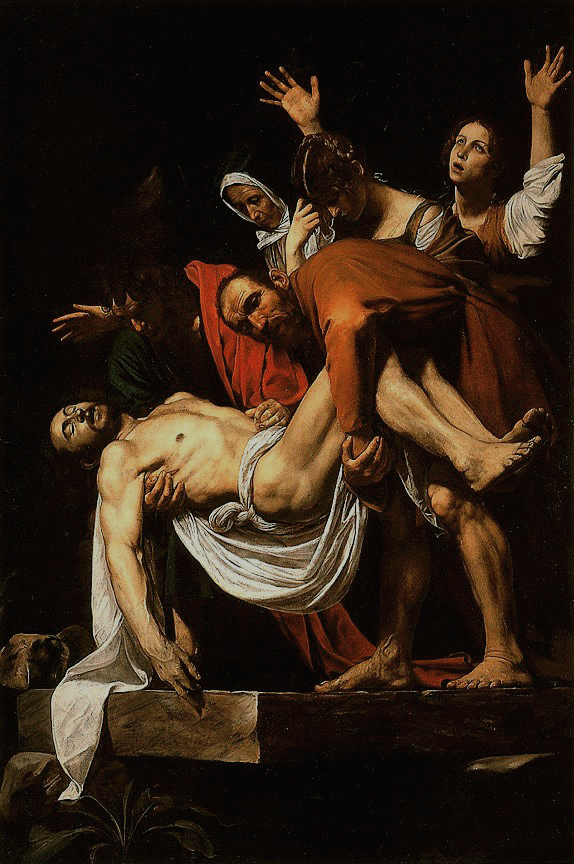
An Ancient Homily for Holy Saturday
The time between Good Friday and Easter Sunday is one of waiting, in silence, as the world wonders – anticipates – what will happen, after the death of Christ. We re-live this time each year in the anamnesis of our liturgy, and in turn look forward to the glorious re-creation of all things at the[…]Continue reading→
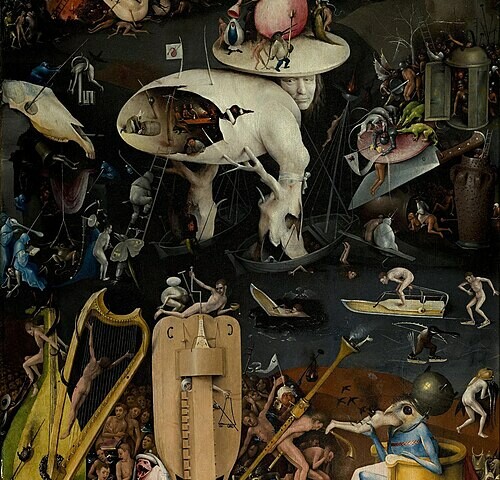
Europe’s Long Descent
(As we meditate on this day on Christ’s burial, and His descent into hell, it is fitting to ponder here with contributor Peter Marcus how the world seems to be heading there as well. The difference is that, although God cannot ‘redeem’ hell, nor those therein, He can and did redeem the world. There is[…]Continue reading→