
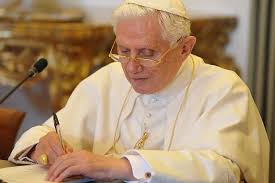
Saint Thomas, Apostle
BENEDICT XVI
GENERAL AUDIENCE
Saint Peter’s Square
Wednesday, 27 September 2006
Thomas the twin
Dear Brothers and Sisters,
Continuing our encounters with the Twelve Apostles chosen directly by Jesus, today we will focus our attention on Thomas. Ever present in the four lists compiled by the New Testament, in the first three Gospels he is placed next to Matthew (cf. Mt 10: 3; Mk 3: 18; Lk 6: 15), whereas in Acts, he is found after Philip (cf. Acts 1: 13).
His name derives from a Hebrew root, ta’am, which means “paired, twin”. In fact, John’s Gospel several times calls him “Dydimus” (cf. Jn 11: 16; 20: 24; 21: 2), a Greek nickname for, precisely, “twin”. The reason for this nickname is unclear.
It is above all the Fourth Gospel that gives us information that outlines some important traits of his personality.
The first concerns his exhortation to the other Apostles when Jesus, at a critical moment in his life, decided to go to Bethany to raise Lazarus, thus coming dangerously close to Jerusalem (Mk 10: 32).
On that occasion Thomas said to his fellow disciples: “Let us also go, that we may die with him” (Jn 11: 16). His determination to follow his Master is truly exemplary and offers us a valuable lesson: it reveals his total readiness to stand by Jesus, to the point of identifying his own destiny with that of Jesus and of desiring to share with him the supreme trial of death.
In fact, the most important thing is never to distance oneself from Jesus.
Moreover, when the Gospels use the verb “to follow”, it means that where he goes, his disciple must also go.
Thus, Christian life is defined as a life with Jesus Christ, a life to spend together with him. St Paul writes something similar when he assures the Christians of Corinth: “You are in our hearts, to die together and to live together” (II Cor 7: 3). What takes place between the Apostle and his Christians must obviously apply first of all to the relationship between Christians and Jesus himself: dying together, living together, being in his Heart as he is in ours.
A second intervention by Thomas is recorded at the Last Supper. On that occasion, predicting his own imminent departure, Jesus announced that he was going to prepare a place for his disciples so that they could be where he is found; and he explains to them: “Where [I] am going you know the way” (Jn 14: 4). It is then that Thomas intervenes, saying: “Lord, we do not know where you are going; how can we know the way?” (Jn 14: 5).
In fact, with this remark he places himself at a rather low level of understanding; but his words provide Jesus with the opportunity to pronounce his famous definition: “I am the Way, and the Truth and the Life” (Jn 14: 6).
Thus, it is primarily to Thomas that he makes this revelation, but it is valid for all of us and for every age. Every time we hear or read these words, we can stand beside Thomas in spirit and imagine that the Lord is also speaking to us, just as he spoke to him.
At the same time, his question also confers upon us the right, so to speak, to ask Jesus for explanations. We often do not understand him. Let us be brave enough to say: “I do not understand you, Lord; listen to me, help me to understand”. In such a way, with this frankness which is the true way of praying, of speaking to Jesus, we express our meagre capacity to understand and at the same time place ourselves in the trusting attitude of someone who expects light and strength from the One able to provide them.
Then, the proverbial scene of the doubting Thomas that occurred eight days after Easter is very well known. At first he did not believe that Jesus had appeared in his absence and said: “Unless I see in his hands the print of the nails, and place my finger in the mark of the nails, and place my hand in his side, I will not believe” (Jn 20: 25).
Basically, from these words emerges the conviction that Jesus can now be recognized by his wounds rather than by his face. Thomas holds that the signs that confirm Jesus’ identity are now above all his wounds, in which he reveals to us how much he loved us. In this the Apostle is not mistaken.
As we know, Jesus reappeared among his disciples eight days later and this time Thomas was present. Jesus summons him: “Put your finger here, and see my hands; and put out your hand, and place it in my side; do not be faithless, but believing” (Jn 20: 27).
Thomas reacts with the most splendid profession of faith in the whole of the New Testament: “My Lord and my God!” (Jn 20: 28). St Augustine comments on this: Thomas “saw and touched the man, and acknowledged the God whom he neither saw nor touched; but by the means of what he saw and touched, he now put far away from him every doubt, and believed the other” (In ev. Jo. 121, 5).
(To continue reading, please see here)

Saint Kateri , Canada’s Protectress
This was the title given to Saint Kateri Tekakwitha, by Pope Benedict XVI, when he canonized her on October 28th, 2012, along with six others, in Saint Peter’ Square (she had been beatified by Pope John Paul II back in 1980). With Saint Joseph as our protector, along with the Canadian martyrs, we seem to[…]Continue reading→

Remembering Father Alphonse de Valk
(Today marks the sixth anniversary of the death of Father Alphonse de Valk, C.S.B., a faithful, courageous and indefatigable Basilian priest, pro-life-and-family apostle, and the founder of Catholic Insight magazine. Here is what we wrote those on his entering into eternity five years ago, as we continue to remember him in our prayers and thoughts)[…]Continue reading→
A Tale of Two Benedicts
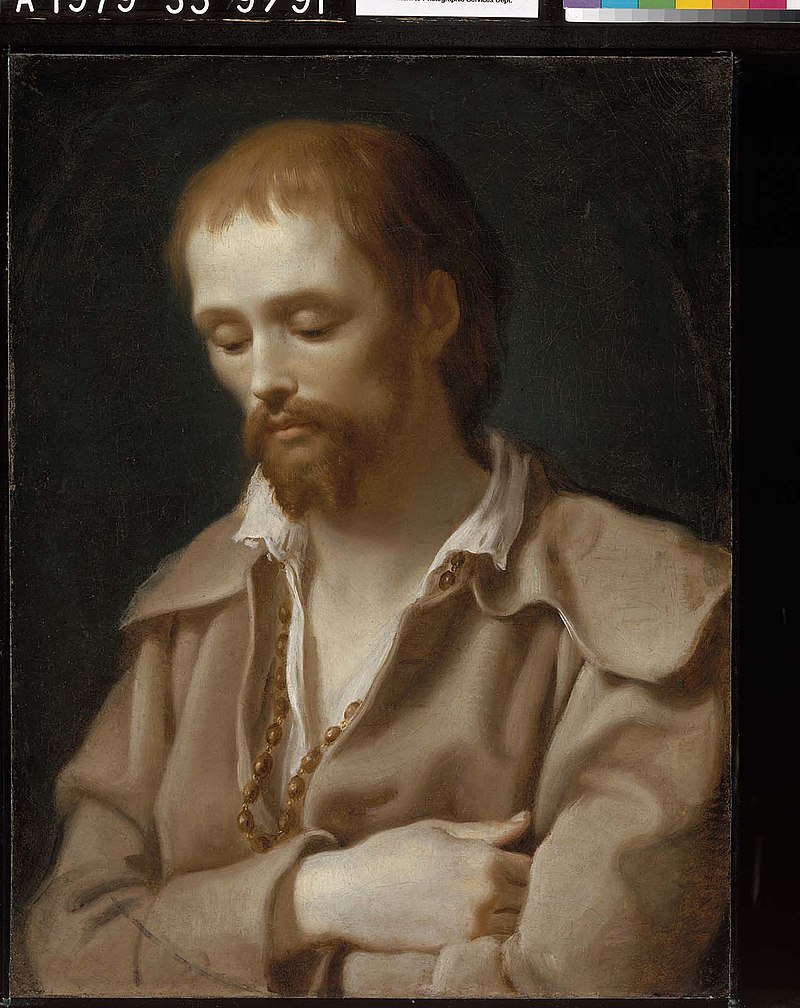
A grace-filled Holy Week to all our readers! As we await and prepare for the Resurrection about to dawn upon us, we might keep in mind two Benedicts: Pope Emeritus Benedict XVI, requiescat in pace, elected on this day in 2005; and today’s commemoration of the mystic pilgrim, Benedict Joseph Labre, who died on this[…]Continue reading→

My Name is Bernadette
April 16th is a propitious day, for besides the anniversary of Father de Valk’s death, who founded Catholic Insight in its print form decades ago, and the commemoration of the ‘two Benedicts’, mentioned in accompanying posts, today we also recall Saint Bernadette Soubirous, the young visionary to whom the Virgin Mary appeared numerous times at[…]Continue reading→
Saint Lydwina of Schiedam and Suffering Joyfully
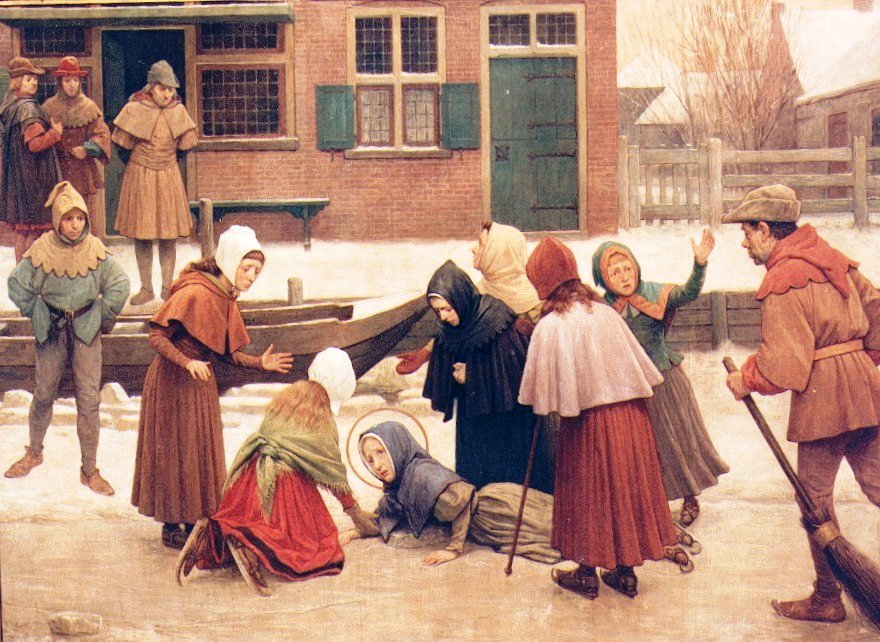
Saint Lydwina of Schiedam (1380 – 1433) was one of the countless and glorious ‘victim souls’ in the history of the Church, those whose lives are filled with suffering, often of an unimaginable intensity, but who suffer joyfully. She was a fifteen-year old Dutch girl, out skating one day, when she fell and broke one[…]Continue reading→
The Glorious Martyrdoms of Martin and Maximus
As we enter into Eastertide, we recall on this 13th of April Pope Saint Martin I (+655), one of the noblest, if most tragic, of the successors of Saint Peter. Born in Umbria, Italy, he was of noble lineage, with great intelligence combined with charity and love of the poor and the Church. While still[…]Continue reading→
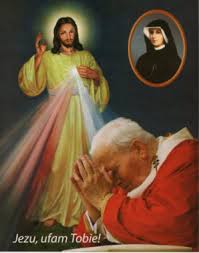
Canonizing Sister Faustina and Divine Mercy
HOMILY OF THE HOLY FATHER MASS IN ST PETER’S SQUARE FOR THE CANONIZATION OF SR MARY FAUSTINA KOWALSKA Sunday, 30 April 2000 1. “Confitemini Domino quoniam bonus, quoniam in saeculum misericordia eius”; “Give thanks to the Lord for he is good; his steadfast love endures for ever” (Ps 118: 1). So the Church sings on the Octave of[…]Continue reading→

Divine Mercy Sunday – An Echo of Every Mass
Reach out your hand and put it in my side. Do not doubt but believe’… ‘My Lord and my God!’ (Jn. 20:18)). Today is Divine Mercy Sunday, and as we celebrate the end of the Easter Octave, we contemplate the wounded side of our Saviour, the Church’s source of life. On Good Friday in the[…]Continue reading→

Saint Stanislaus of Szczepanów
We celebrate Saint Stanislaus today (+ April 11, 1079), in light of this Easter Octave, a bishop and martyr who accepted the episcopacy only at the direct order of Pope Alexander II. He proved a wise and courageous leader of his flock, put to death by his own king, Boleslaus, for rebuking the monarch’s ‘immoral[…]Continue reading→
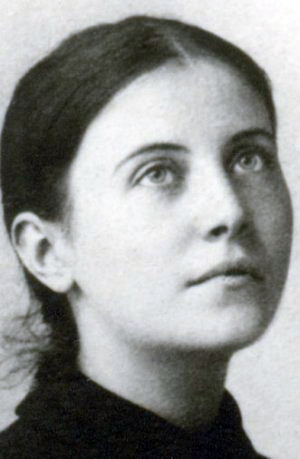
Saint Gemma Galgani
On this April 11th, in 1903 – the same year that the Italian Guiseppe Sarto was elected Pope later that summer as Pius X – a lovely, young Italian woman died, by the name of Gemma Galgani. She lived a brief life of 24 years, as did a number of other young saints, including Pier[…]Continue reading→