
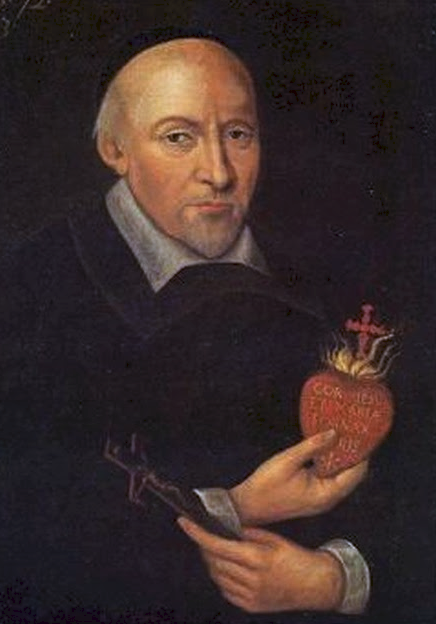
The Logic of the Sacred Heart
Today’s solemnity of the Sacred Heart is of rather recent provenance as Church history goes. Although the full humanity of Christ, body and soul, was defined clearly in the first series of ecumenical Councils of the Church, the notion of worshipping and honouring the ‘heart’ of Jesus has its roots in the early Middle Ages, with Saint Bernard of Clairvaux and the Cistercians, Saint Bonaventure and the Franciscans, as well as the Jesuits, who took the heart as their symbol, before culminating in the visions of Saint Margaret Mary Alacoque (+1690), as compiled and published through her saintly spiritual director, Saint Claude de la Colombiere.
This devotion flows naturally from what we believe of Christ: That His divine Person is united hypostatically (that is, in the ‘hypostasis’ or ‘Person’ of the divine Logos) with His human nature, including His human body. Of course, we honour Christ’s entire body, blood, soul and divinity, which we receive in Holy Communion under the mystical species. But we honour the heart specifically as the seat of the emotions, the symbol of love and affection, as that which suffers and bleeds for another. ‘Out of His heart shall flow rivers of living water‘, Christ declared of Himself (John 7:38).
Saint Thomas wrote that revelation is always attuned to our own capacities, sensitivities and proclivities,. Our tradition, even in the secular realm, has the ‘heart’ as the centre and locus of our affective life. The word ‘heart’ is mentioned hundreds of times in the Bible (depending on how one translates the Hebrew term lev, which, providentially, sounds like our English ‘love’), and in songs and poetry throughout the ages, up to all the modern ballads sung with such heart-felt intensity, to make up, one supposes, for what they lack in talent and musicianship. Oh Bach and Palestrina, where art thou!
Yes, devotion to the ‘Sacred Heart’ may descend into saccharine spirituality and kitsch art, but the central point is sound: That Christ loves us with His whole being, not just as God, but as Man, with His human heart that moves Him to have mercy and pity, willing the salvation of all men, and drawing all to Himself, even to the point that we from our humanly, earthly perspective might find mysterious, even disconcerting. His mercy always triumphs over His justice. Get behind me Satan, was Christ’s response to the ‘logic’ of Peter, trying to find a non-suffering way for Christ to save Man. Christ follows a higher, supernatural ‘logic’, if you will, the way of the word. Suffering is the way of love, and love always, always implies giving oneself for the other, in some way.
We can resist that love if you like, but why would we? As the tag line for one musical had it, resist no longer, but give ourselves to the infinite love of Christ, leading us to eternity and eternal joy with Him in Trinitarian communion, of which all our loves in this life, even the greatest and most passionate, are but a dim reflection.
Today – in particular the vigil – is also the World Day of Prayer for Priests, instituted by Pope Saint John Paul II in 2002, a reminder that Christ came in true human nature, with a human body, flesh and ‘heart’, and all that means, the emotions and affections proper to being a man. Christ could say with the Roman poet Terence, Homo sum, humani nihil a me alienum puto, ‘I am a man, and nothing human is alien to me’, albeit with a bit of a different meaning and emphasis, for Christ knew no sin, and was perfect in mind, body and soul.
The Priesthood, as the Curé D’Ars said, is the love of the heart of Jesus. Even if at times their own human weaknesses obscure that love, the priest is still an alter Christus, and we must pray that they re-discover and live up to their exalted vocation, which is not primarily their work but Christ’s, and God’s.
Again to Saint Jean Vianney (declared the patron of all priests in 2009 by Pope Benedict, inaugurating the year he dedicated to priests), if we really understood the priest on earth, we would die not of fright, but of love. (cf., CCC, #1589).
Trust in God, and in His Christ, and praise Him still.
Most Sacred Heart of Jesus, have mercy on us.
A blessed solemnity to one and all. +
Carney’s Amoral Majority
After five defections – euphemistically described as ‘crossing the floor’ – and three by-elections, Mark Carney and his Liberals how have their coveted majority. One wonders what bowls of pottage were offered in back-room deals. In the archaic monarchical system that is the Dominion of Canada, this majority allows the newly-minted Prime Minister to rule[…]Continue reading→

Saint Kateri , Canada’s Protectress
This was the title given to Saint Kateri Tekakwitha, by Pope Benedict XVI, when he canonized her on October 28th, 2012, along with six others, in Saint Peter’ Square (she had been beatified by Pope John Paul II back in 1980). With Saint Joseph as our protector, along with the Canadian martyrs, we seem to[…]Continue reading→
A Tale of Two Benedicts
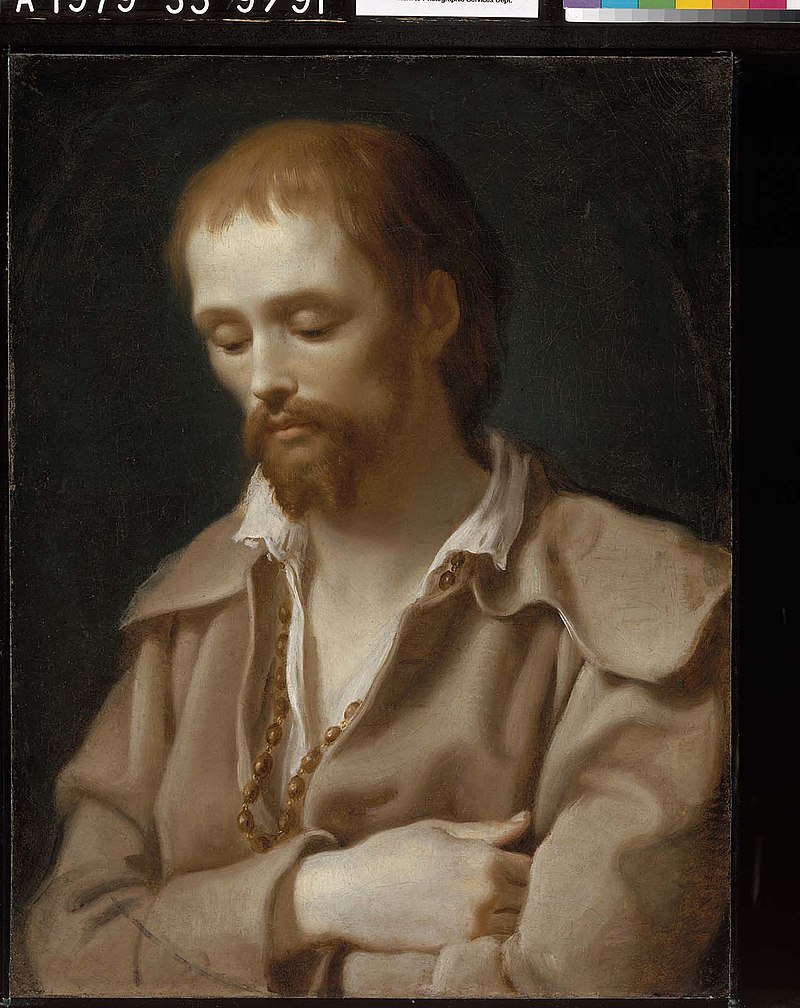
A grace-filled Holy Week to all our readers! As we await and prepare for the Resurrection about to dawn upon us, we might keep in mind two Benedicts: Pope Emeritus Benedict XVI, requiescat in pace, elected on this day in 2005; and today’s commemoration of the mystic pilgrim, Benedict Joseph Labre, who died on this[…]Continue reading→

My Name is Bernadette
April 16th is a propitious day, for besides the anniversary of Father de Valk’s death, who founded Catholic Insight in its print form decades ago, and the commemoration of the ‘two Benedicts’, mentioned in accompanying posts, today we also recall Saint Bernadette Soubirous, the young visionary to whom the Virgin Mary appeared numerous times at[…]Continue reading→
Saint Lydwina of Schiedam and Suffering Joyfully
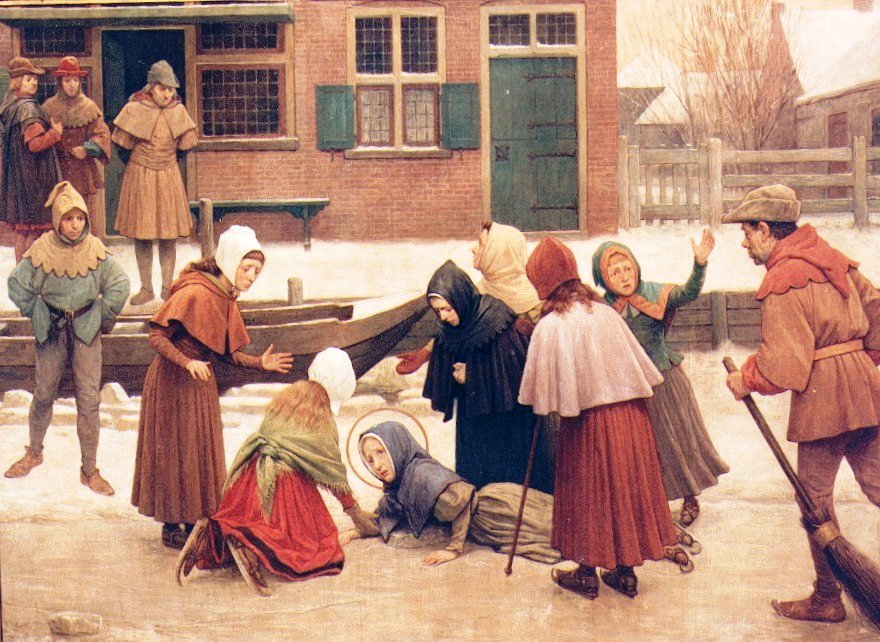
Saint Lydwina of Schiedam (1380 – 1433) was one of the countless and glorious ‘victim souls’ in the history of the Church, those whose lives are filled with suffering, often of an unimaginable intensity, but who suffer joyfully. She was a fifteen-year old Dutch girl, out skating one day, when she fell and broke one[…]Continue reading→
The Glorious Martyrdoms of Martin and Maximus
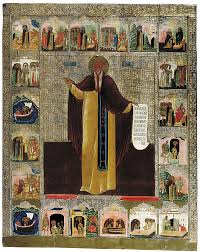
As we enter into Eastertide, we recall on this 13th of April Pope Saint Martin I (+655), one of the noblest, if most tragic, of the successors of Saint Peter. Born in Umbria, Italy, he was of noble lineage, with great intelligence combined with charity and love of the poor and the Church. While still[…]Continue reading→

Saint Stanislaus of Szczepanów
We celebrate Saint Stanislaus today (+ April 11, 1079), in light of this Easter Octave, a bishop and martyr who accepted the episcopacy only at the direct order of Pope Alexander II. He proved a wise and courageous leader of his flock, put to death by his own king, Boleslaus, for rebuking the monarch’s ‘immoral[…]Continue reading→
Saint Gemma Galgani
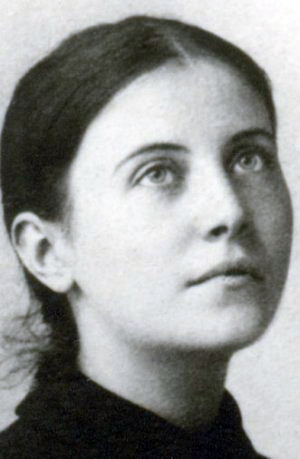
On this April 11th, in 1903 – the same year that the Italian Guiseppe Sarto was elected Pope later that summer as Pius X – a lovely, young Italian woman died, by the name of Gemma Galgani. She lived a brief life of 24 years, as did a number of other young saints, including Pier[…]Continue reading→
An Ideological and Improper Translation
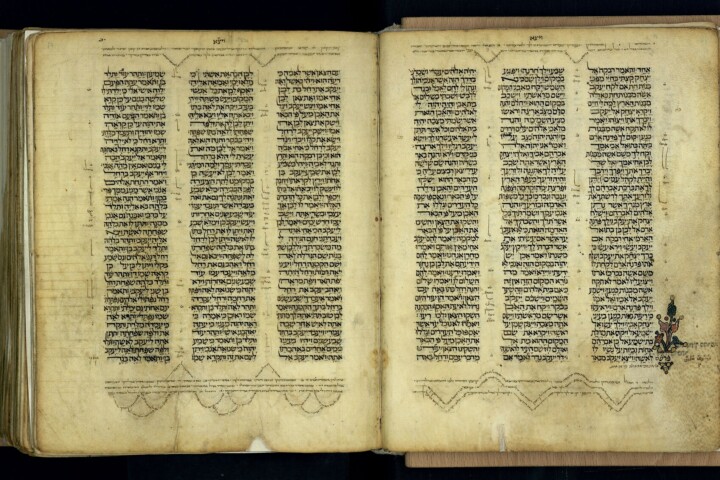
I noticed something odd with the psalm reading at Mass the other day. Our bishops’ conference here in Canada has decreed that the Mass in English – Novus Ordo – use the ‘NRSV’, the ‘New Revised Standard Version’, an ‘updated’ translation of the original RSV, first published in 1952. This ‘new translation’ has the tendency[…]Continue reading→
Saint Jean-Baptiste de la Salle: A Teacher for Teachers
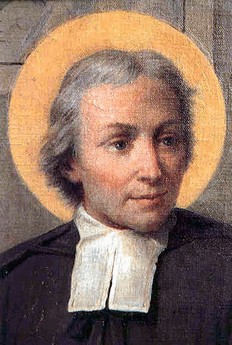
Jean-Baptiste de la Salle (1651 – 1719), a French nobleman, ordained a priest, founded the first order in the Church’s history entirely without priests, and this came about almost by accident. I say ‘almost’, for, of course, there are no accidents with God. Destined for ordination from an early age, Jean-Baptiste never looked back, even[…]Continue reading→
One thought on “The Logic of the Sacred Heart”
Comments are closed.
And we can the more accept how the humanity of Jesus is moved in the Heart when we read St. Augustine (whose symbol includes a pierced heart aflame),”I would that all men would think in their heart”.
blessings,
Gary D. Knight (Aylmer QC)