

‘Love’ Isn’t Always Love
‘Anti-hate’ is all the rage, if one may excuse the mixed metaphor. The ‘anti’ of something is, logically, its contrary, and the contrary of hate is, of course, love.
But what are love and hate? Second-hand emotions, to evoke the recently deceased Tina Turner, requiescat in pace? Or something more? Ama et fac quod vis, wrote Saint Augustine – Love and do what thou will. Or, in more contemporary terms, do whatever moves you – so long as it’s done in ‘love’, it’s fine.
The key for the bishop of Hippo, is that love comes first, and one who loves would not think of doing evil to another. Love and the good always go together.
Hence, to understand love and hate, we must first grasp good and evil, which are of two sorts – there is the natural variety, that responds to our emotional and bodily needs. And then there is the supernatural, or intellectual good and evil, perceived by our reason. The two often coalesce, but they are not quite the same.
Love and hate have an analogous distinction: They are first emotions, or passions, the natural response of our appetites to perceived good and evil. Yet they are also acts of the will – the rational appetite – which should guide and control our passions by reason and truth. This is the realm of moral virtue, much discussed by Aristotle and Saint Thomas. We should love what we are meant to love, and hate what we are meant to hate.
Sounds simple, and at one level, it is. We may love symphony, but hate cacophony; love chocolate, and hate cod-liver oil; love pleasure, and hate pain. Things are, of course, more complex than that – for some discordance in music is good, cod-liver has its place, and what would life be without some pain to make pleasure more poignant?
The real notion of love and hate are found when we add reason, and make a deliberate choice of good and evil. This is the basis for the moral life, and upon these decisions we are held responsible. They shape our soul here and now, and determine our destiny for all eternity.
As Thomas puts it, love as a virtue – charity, agape in the Gospels – is to ‘will the good of someone’ (cf., II-II.q.23., a.1, ff.). (Hate, as its contrary, is to will someone evil – we will return to that).
To ‘will the good’ means to ‘will the true good’, for there are many false goods, things that appear pleasant, even beneficial, but which truly are not. To will such false good of another is a subtle form of – if the word be not too strong – hate. For a false good is, beneath the façade, a type of evil.
The devil rarely tempts us with obvious evil. True, there are those so given over to him that they do evil for its own sake, a demonic kind of malice. Most, however, act more explicitly sub speciem boni – under the appearance of good. They are either truly convinced that they are doing good, in a state of invincible ignorance – that is, ignorance that they cannot overcome on their own. Or they convince themselves, with a further act of the will and deliberate blindness, that they are willing the good, even though at some submerged level, they know full well it’s wrong. This is the seared, or tortured, conscience against which Saint Paul warns, and explains much of the misguided, if not out outright demonic, moral madness of our modern time.
Euthanasia and abortion are touted as ‘freedom of choice’ and ‘bodily autonomy’, both good things, but not when they involve the deliberate taking of innocent life.
Pre-marital sex, adultery, any other sexual deviance may claim to express ‘love’ – and there is sensual and emotional pleasure, no doubt – but this ignores the deleterious effects on individuals of such misconstrued intimacy, which metastatize through society.
Government-supplied ‘safe’ drug supplies are intended to help addicts, but they only get them more addicted, and lead to an exponential growth in other addicts, including many minors, as narcotics given then sold make their way into local high schools.
Surgical and chemical mutilation under the false auspices of treating ‘gender dysphoria’ – which only makes things worse – a lot worse, and a reckoning is already on the horizon.
We may add also theft, lying, sacrilege, and so on. None of these is truly ‘willing the good’ of the other.
We should point out that we may do physical evil, inflicting pain or hardship upon another that they may ‘hate’, for the sake of a greater good or to avoid a proportionate evil: Coercing a child to eat his broccoli; a drill sergeant forcing his troops on a 20 mile forced march; a math professor handing out a difficult exam; or incarcerating criminals – but that’s all for the recipient’s, and society’s, ultimate good.
The essential point, on which the entire moral edifice rests, is that love – true love – is semper et ubique – always and everywhere – inconsistent with moral evil, even if we think much good may derive therefrom. Willing such is not a loving act, but, whether witting or not, a hateful one.
These truths are outlined in Scripture, clarified by Tradition, taught in the Catechism, clarified by the Magisterium – there for those with eyes to see and ears to hear. Deep down, we know that, for the natural moral law is written on all our hearts, and no one is deemed ignorant of its principles. (cf., CCC, #1860). In the end, all our works will be exposed to the light, and may we walk in that light, while we have the time.
Carney’s Amoral Majority
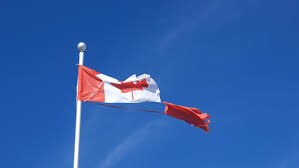
After five defections – euphemistically described as ‘crossing the floor’ – and three by-elections, Mark Carney and his Liberals how have their coveted majority. One wonders what bowls of pottage were offered in back-room deals. In the archaic monarchical system that is the Dominion of Canada, this majority allows the newly-minted Prime Minister to rule[…]Continue reading→

Saint Kateri , Canada’s Protectress
This was the title given to Saint Kateri Tekakwitha, by Pope Benedict XVI, when he canonized her on October 28th, 2012, along with six others, in Saint Peter’ Square (she had been beatified by Pope John Paul II back in 1980). With Saint Joseph as our protector, along with the Canadian martyrs, we seem to[…]Continue reading→

A Tale of Two Benedicts
A grace-filled Holy Week to all our readers! As we await and prepare for the Resurrection about to dawn upon us, we might keep in mind two Benedicts: Pope Emeritus Benedict XVI, requiescat in pace, elected on this day in 2005; and today’s commemoration of the mystic pilgrim, Benedict Joseph Labre, who died on this[…]Continue reading→

My Name is Bernadette
April 16th is a propitious day, for besides the anniversary of Father de Valk’s death, who founded Catholic Insight in its print form decades ago, and the commemoration of the ‘two Benedicts’, mentioned in accompanying posts, today we also recall Saint Bernadette Soubirous, the young visionary to whom the Virgin Mary appeared numerous times at[…]Continue reading→

Saint Lydwina of Schiedam and Suffering Joyfully
Saint Lydwina of Schiedam (1380 – 1433) was one of the countless and glorious ‘victim souls’ in the history of the Church, those whose lives are filled with suffering, often of an unimaginable intensity, but who suffer joyfully. She was a fifteen-year old Dutch girl, out skating one day, when she fell and broke one[…]Continue reading→

The Glorious Martyrdoms of Martin and Maximus
As we enter into Eastertide, we recall on this 13th of April Pope Saint Martin I (+655), one of the noblest, if most tragic, of the successors of Saint Peter. Born in Umbria, Italy, he was of noble lineage, with great intelligence combined with charity and love of the poor and the Church. While still[…]Continue reading→

Saint Stanislaus of Szczepanów
We celebrate Saint Stanislaus today (+ April 11, 1079), in light of this Easter Octave, a bishop and martyr who accepted the episcopacy only at the direct order of Pope Alexander II. He proved a wise and courageous leader of his flock, put to death by his own king, Boleslaus, for rebuking the monarch’s ‘immoral[…]Continue reading→
Saint Gemma Galgani
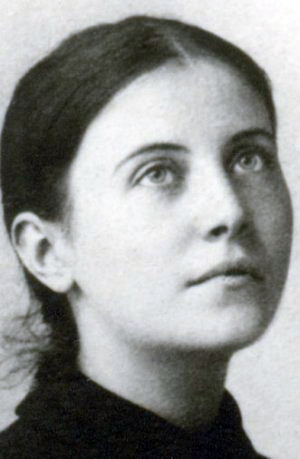
On this April 11th, in 1903 – the same year that the Italian Guiseppe Sarto was elected Pope later that summer as Pius X – a lovely, young Italian woman died, by the name of Gemma Galgani. She lived a brief life of 24 years, as did a number of other young saints, including Pier[…]Continue reading→
An Ideological and Improper Translation
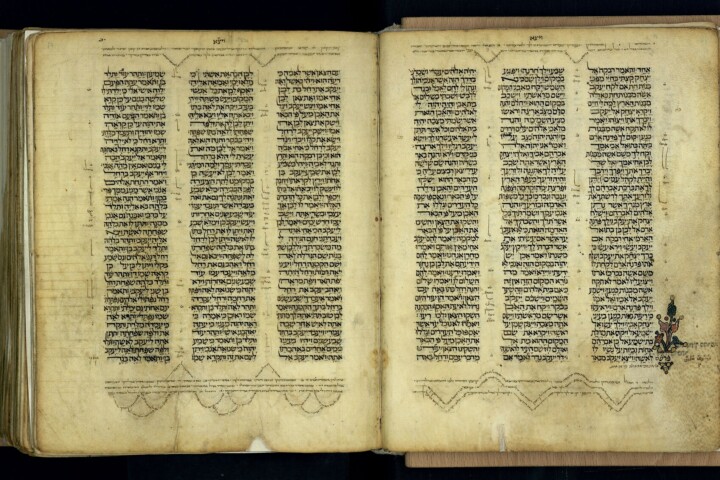
I noticed something odd with the psalm reading at Mass the other day. Our bishops’ conference here in Canada has decreed that the Mass in English – Novus Ordo – use the ‘NRSV’, the ‘New Revised Standard Version’, an ‘updated’ translation of the original RSV, first published in 1952. This ‘new translation’ has the tendency[…]Continue reading→
Saint Jean-Baptiste de la Salle: A Teacher for Teachers
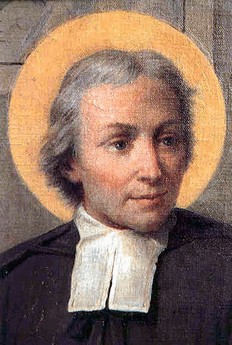
Jean-Baptiste de la Salle (1651 – 1719), a French nobleman, ordained a priest, founded the first order in the Church’s history entirely without priests, and this came about almost by accident. I say ‘almost’, for, of course, there are no accidents with God. Destined for ordination from an early age, Jean-Baptiste never looked back, even[…]Continue reading→