
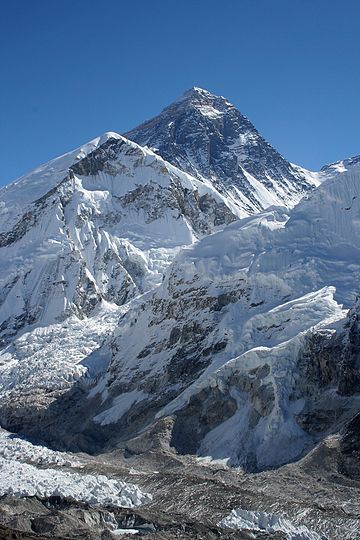
The Human Spirit Vincit Omnia
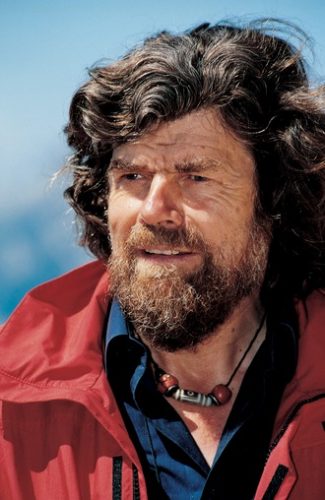
On this day, May 8, in 1978, Reinhold Messner and Peter Habeler stood on the highest peak in the world, Mount Everest, at 29,031.7 feet. To get any higher, you’d have to fly. Everest long remained unconquered, and was only scaled for the first time by Tenzig Norgay and Edmund Hillary in 1953. What made Messner’s and Habeler’s ascent singular was that they did it without supplemental oxygen, long considered impossible – but, then, that word is overused, as we saw with Bannister’s mile. Messner adopted from his youth an ‘alpine style’ of climbing, with light equipment, fast and agile, rather than the ‘siege tactics’ of laying assault to a peak with technology. After all, why not just jet pack up there?
Messner had other firsts: To scale all fourteen peaks over 8000 metres (26,000 feet); the first to scale a number of other ascents; the first to cross Antarctica and Greenland by foot (no snowmobiles or dogsleds), and perhaps the first to cross the Gobi Desert, solo (who knows about that one – the desert has secrets it does to give up easily). Watching an interview with the now-septuagenarian mountaineer, he does express some odd moral thoughts, that there is no ‘right and wrong’, only the decisions we make in the moment. But our nature is to help each other (Messner has rescued a number of fellow climbers), bred into us by evolution. Something, however, drove him to the top – whether right or wrong, only he, and ultimately God, can judge.
For a clearer moral example, in 1429, also on this day, Joan of Arc, a young, illiterate peasant girl, against significant odds, led the troops of France to lift the siege of Orleans, saving the throne of Charles VII, and France from English domination, which in turn changed the very direction of history (the Reformation and Revolution would have been quite different, if they happened at all, or at least the way they did). She would be put to death – betrayed and bereft – two years later, dying a martyr, with a courage the belied her nineteen years.
And we have already written on Catherine of Saint Augustine, who crossed the stormy Atlantic – a perilous journey in wind-driven wooden boats, held together by pitch and tar – to the wilds of Canada – then New France – a scrabbling group of colonists on the scraggy shores of Quebec, facing untold thousands of miles of wilderness, savage attacks, cruel winters, food shortages, and thousands of miles of icy cold storm tossed waters to anything resembling ‘civilization’. All to bring the benefits of that same civilization, not least the truth that sets us free, to this new land.
The human spirit is marvelous and wonderful, even unconquerable, and we, made in the imago Dei, do not rest easy, and we should scale what peaks God has waiting for us.
Semper altius!
(cf, source, wikipedia.org).
Carney’s Amoral Majority
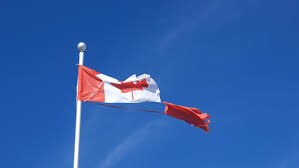
After five defections – euphemistically described as ‘crossing the floor’ – and three by-elections, Mark Carney and his Liberals how have their coveted majority. One wonders what bowls of pottage were offered in back-room deals. In the archaic monarchical system that is the Dominion of Canada, this majority allows the newly-minted Prime Minister to rule[…]Continue reading→

Saint Kateri , Canada’s Protectress
This was the title given to Saint Kateri Tekakwitha, by Pope Benedict XVI, when he canonized her on October 28th, 2012, along with six others, in Saint Peter’ Square (she had been beatified by Pope John Paul II back in 1980). With Saint Joseph as our protector, along with the Canadian martyrs, we seem to[…]Continue reading→
A Tale of Two Benedicts
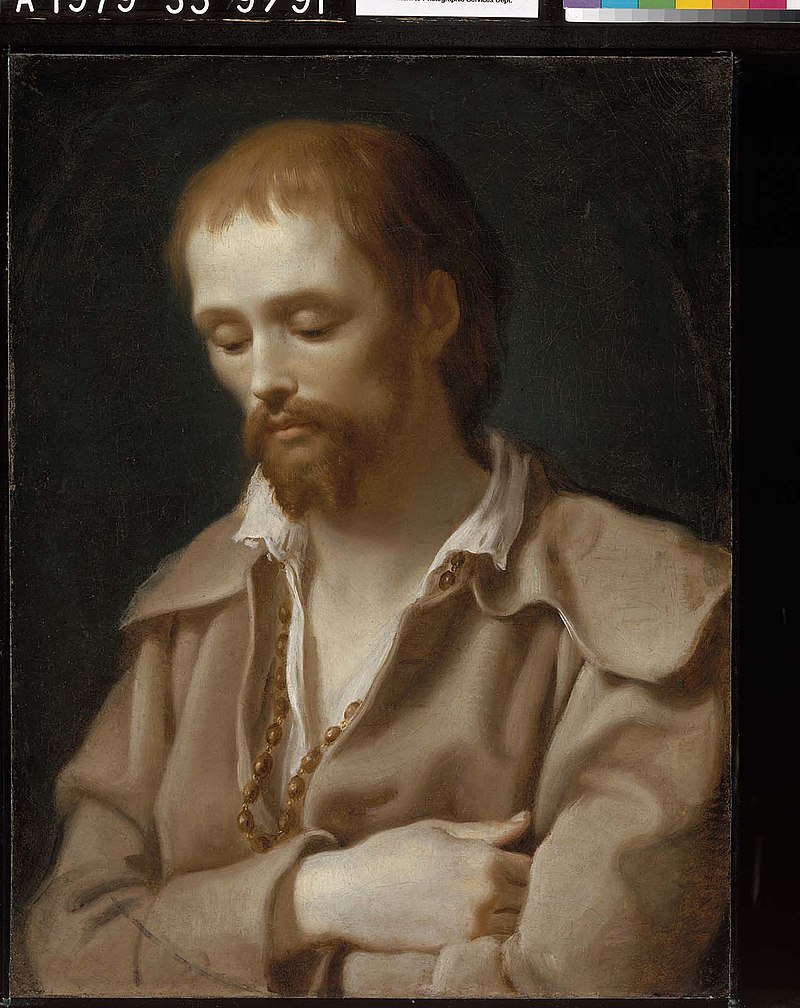
A grace-filled Holy Week to all our readers! As we await and prepare for the Resurrection about to dawn upon us, we might keep in mind two Benedicts: Pope Emeritus Benedict XVI, requiescat in pace, elected on this day in 2005; and today’s commemoration of the mystic pilgrim, Benedict Joseph Labre, who died on this[…]Continue reading→

My Name is Bernadette
April 16th is a propitious day, for besides the anniversary of Father de Valk’s death, who founded Catholic Insight in its print form decades ago, and the commemoration of the ‘two Benedicts’, mentioned in accompanying posts, today we also recall Saint Bernadette Soubirous, the young visionary to whom the Virgin Mary appeared numerous times at[…]Continue reading→
Saint Lydwina of Schiedam and Suffering Joyfully
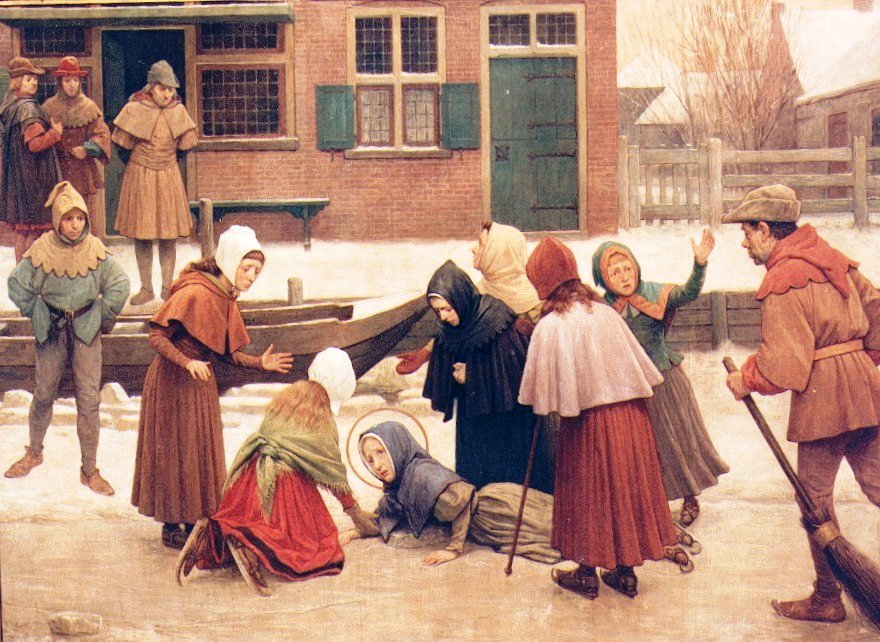
Saint Lydwina of Schiedam (1380 – 1433) was one of the countless and glorious ‘victim souls’ in the history of the Church, those whose lives are filled with suffering, often of an unimaginable intensity, but who suffer joyfully. She was a fifteen-year old Dutch girl, out skating one day, when she fell and broke one[…]Continue reading→
The Glorious Martyrdoms of Martin and Maximus
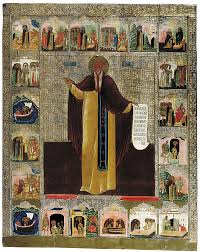
As we enter into Eastertide, we recall on this 13th of April Pope Saint Martin I (+655), one of the noblest, if most tragic, of the successors of Saint Peter. Born in Umbria, Italy, he was of noble lineage, with great intelligence combined with charity and love of the poor and the Church. While still[…]Continue reading→

Saint Stanislaus of Szczepanów
We celebrate Saint Stanislaus today (+ April 11, 1079), in light of this Easter Octave, a bishop and martyr who accepted the episcopacy only at the direct order of Pope Alexander II. He proved a wise and courageous leader of his flock, put to death by his own king, Boleslaus, for rebuking the monarch’s ‘immoral[…]Continue reading→
Saint Gemma Galgani
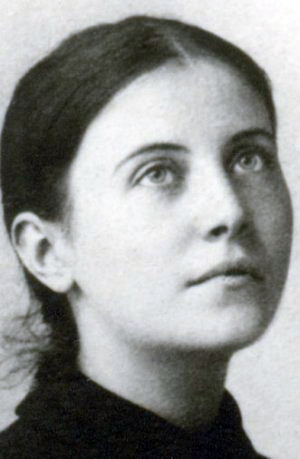
On this April 11th, in 1903 – the same year that the Italian Guiseppe Sarto was elected Pope later that summer as Pius X – a lovely, young Italian woman died, by the name of Gemma Galgani. She lived a brief life of 24 years, as did a number of other young saints, including Pier[…]Continue reading→
An Ideological and Improper Translation
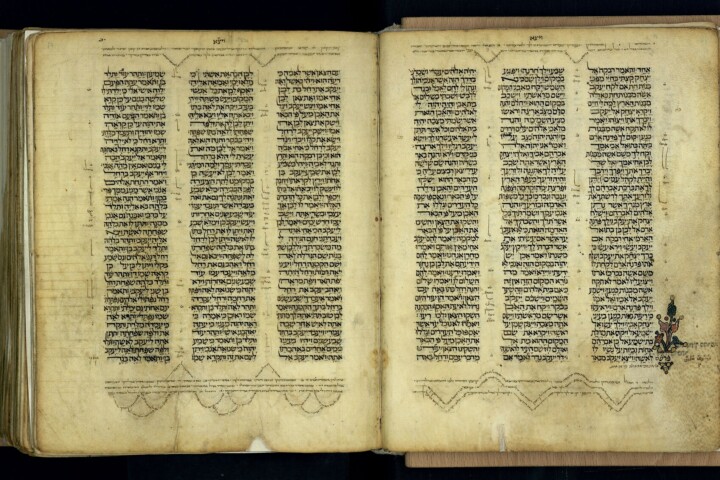
I noticed something odd with the psalm reading at Mass the other day. Our bishops’ conference here in Canada has decreed that the Mass in English – Novus Ordo – use the ‘NRSV’, the ‘New Revised Standard Version’, an ‘updated’ translation of the original RSV, first published in 1952. This ‘new translation’ has the tendency[…]Continue reading→
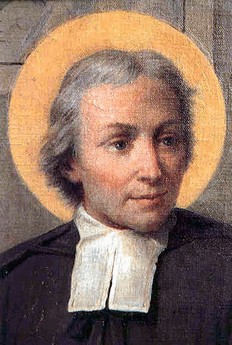
Saint Jean-Baptiste de la Salle: A Teacher for Teachers
Jean-Baptiste de la Salle (1651 – 1719), a French nobleman, ordained a priest, founded the first order in the Church’s history entirely without priests, and this came about almost by accident. I say ‘almost’, for, of course, there are no accidents with God. Destined for ordination from an early age, Jean-Baptiste never looked back, even[…]Continue reading→