
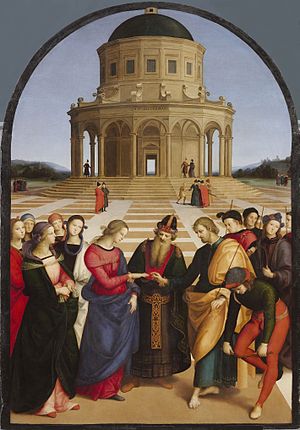
Marriage, Divorce and Seeking Happiness
The old joke has it that Milton wrote Paradise Lost after he got married; and when his wife died, he penned the sequel, Paradise Found.
In joco veritas. The joke is only funny – if funny it be, and not tragic – because all too often marriage does not seem to bring the happiness we sought, and thought it would. Why is marital bliss so often a mirage, and so many unions unhappy, with divorce almost the norm, even anticipated with pre-nuptial agreements and separate bank accounts?
It is a truism that all men seek happiness, and that’s a good thing, written into our very nature. The problem, as Saint Thomas succinctly puts it, is that we often look for it in all the wrong ways. We have the general notion of happiness, but not the specific – that is, how it is actually achieved, by marriage or by other means.
So, a bit of clarity.
Happiness, Thomas defines, following Aristotle, as the ‘fulfilment of the will’ – not of our passions or appetites or any bodily needs, which come and go with the summer breeze. In fact, our bodies can be in great privation or pain, but we feel gloriously fulfilled – as warriors in battle, competitors in sports or, better yet, ascetical saints have attested. Such fulfillment of the will is hence to be found in proper operation – in doing what we are meant to do, and doing it well, fitting light of today’s memorial of Saint Joseph the Worker – regardless of what we might have to suffer.
As Thomas alludes, too many of us get this backwards. We think we will be happy if we cater to our passions and our bodies. If someone ceases to be pleasing us, we cast them aside. Stephanie Pawluk posted a sobering article recently on divorce rates, which have skyrocketed in the past decades. Married for life? Not on your life.
The main reason for chucking off one’s spouse is seeking happiness with someone else, from a state of unhappiness with one’s original choice. Evidence speaks against the success of this endeavour, which as Samuel Johnson quipped, is the triumph of hope over experience: Second marriages have much higher divorce rates than the first time around. (Oscar Wilde went further, remarking that marriage is the triumph of imagination over intelligence and that second marriage is the triumph of hope over experience).
What gives?
We should clear the air right away that happiness can never really be found in those unions that are not really marriage, or even perversions thereof. When Christ speaks of the indissoluble marital bond, he makes the exception ‘for unchastity’, μὴ ἐπὶ πορνείᾳ, sometimes translated ‘except for fornication’. What our Lord seems to be alluding to are transient hook-ups – whether for an evening or a season – are not really marriage, imply no permanent bond. As He said to the woman at the well, he whom you now have is not your husband.
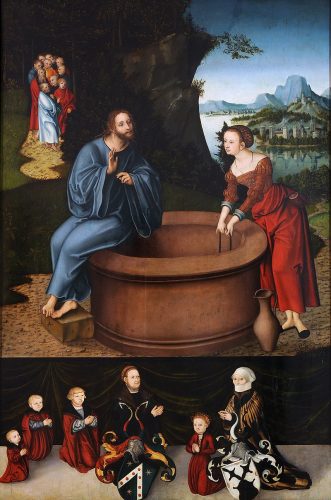
by Lukas Cranach the Elder
circa 1525 until 1537
wikipedia.org
Even in true marriage, ultimate happiness cannot be found. In fact, such cannot be found anywhere in this life, for our wills, made by God for God, can never be fully fulfilled by any creature – even other humans made in Gods image. To seek happiness in such transience is like trying to fill the Grand Canyon with popcorn. Saint Augustine put it most memorably towards the end of his own search for happiness amidst the fleshpots, our hearts are restless until they rest in Thee, O Lord.
Certainly, we find some real happiness in this life, but only in doing the right thing, that is, what God wants us to do. In His will is our peace, wrote Dante put it. God loves marriage and hates divorce. Once you are married, He wills that you to stay married. And in uniting our wills to His, we will find not only happiness in this life, the next.
Which brings us to our final point, that true fulfillment can only be found with God in heaven. If there is one thing Christ came to teach us, it’s the connection between this life and the next – how we live here and now, and how we will spend eternity. We must leave ourselves ‘open’ to God, which means, in theological terms, being in a state of grace and charity – and the more we can do so, the better.
In that paradox of Christianity, we must die to ourselves and so live to God. In marriage, that means being faithful unto death, through sickness, health, good times and bad, carrying the cross to the end. God gives the grace to endure what must be endured, if we but ask Him, especially in a sacramental marriage. This is charity – true love – for our spouse, our children, and for the rest of society.
At many times in this pilgrimage through life – in marriage or any other worthy endeavour – there will be many times we will be ‘unhappy’, perhaps even bitterly so. We must persevere through these doldrums, for they will lead to greater happiness – in part, here and now, but more to the point, in heaven.
I do not promise to make you happy in this life, said the Virgin Mary to Saint Bernadette, but the next.
There is overwhelming evidence that children are happiest, and societies most stable and flourishing, when families stay together. As the family goes, so goes society, wrote Pope John Paul. Offer up what is difficult, and don’t air everything out in front of each other, far less in front of the children. Even if one were to find a better ‘soul mate’ than the spouse of one’s youthful folly, ponder the damage left in the wake of breaking up a family. One might strive to silence one’s conscience to not think about the wreckage caused by the breakup of a family – but such guilt comes back to haunt one eventually. Previous generations held the inviolability of the family and the marital bond as tantamount, even sacrosanct, with remarkable results for the cohesion, stability and flourishing of society. Current generations no longer hold marriage in such esteem, even those dwindling numbers who still bother tying the knot. Their promises are worth about as much as those made in a game of Monopoly, with the tragic results all around us.

This is all to the good, for those who stay married also tend to be much happier, as the love develops and matures into a deep affection for the other – like fine wine, it gets better with age. From the initial infatuating effervescence of eros – fickle and fluctuating – married love, like many loves, should grow into what the Greeks called storge, an abiding affection for the other, almost unnoticed, until the beloved is gone. C.S. Lewis surmised that such abiding and enriching love was responsible for most of human happiness. Ultimately, all love must be undergirded and perfected by agape, a sacrificial and divine love of others for their own sake, to will their good, regardless of what it costs us, even our very lives.
We should not marry primarily to make ourselves happy – we should already be so, to some extent, before that. Rather, marriage, qua marriage, is about helping others become happier – and, by the way, holier, which always go together. As the Catechism says, both Holy Orders and Matrimony “are directed to the salvation of others”, and that “if they contribute to personal salvation, it is through the service to others that they do so”.
In other words, marriage should be a mutually virtuous circle. For he who gives, receives, and it is only by losing our lives that we can receive them again – full measure, flowing over, in this life and even more so, in heaven, in a supremely joyful marriage banquet that never, ever ends.

Carney’s Amoral Majority
After five defections – euphemistically described as ‘crossing the floor’ – and three by-elections, Mark Carney and his Liberals how have their coveted majority. One wonders what bowls of pottage were offered in back-room deals. In the archaic monarchical system that is the Dominion of Canada, this majority allows the newly-minted Prime Minister to rule[…]Continue reading→

Saint Kateri , Canada’s Protectress
This was the title given to Saint Kateri Tekakwitha, by Pope Benedict XVI, when he canonized her on October 28th, 2012, along with six others, in Saint Peter’ Square (she had been beatified by Pope John Paul II back in 1980). With Saint Joseph as our protector, along with the Canadian martyrs, we seem to[…]Continue reading→

A Tale of Two Benedicts
A grace-filled Holy Week to all our readers! As we await and prepare for the Resurrection about to dawn upon us, we might keep in mind two Benedicts: Pope Emeritus Benedict XVI, requiescat in pace, elected on this day in 2005; and today’s commemoration of the mystic pilgrim, Benedict Joseph Labre, who died on this[…]Continue reading→

My Name is Bernadette
April 16th is a propitious day, for besides the anniversary of Father de Valk’s death, who founded Catholic Insight in its print form decades ago, and the commemoration of the ‘two Benedicts’, mentioned in accompanying posts, today we also recall Saint Bernadette Soubirous, the young visionary to whom the Virgin Mary appeared numerous times at[…]Continue reading→

Saint Lydwina of Schiedam and Suffering Joyfully
Saint Lydwina of Schiedam (1380 – 1433) was one of the countless and glorious ‘victim souls’ in the history of the Church, those whose lives are filled with suffering, often of an unimaginable intensity, but who suffer joyfully. She was a fifteen-year old Dutch girl, out skating one day, when she fell and broke one[…]Continue reading→

The Glorious Martyrdoms of Martin and Maximus
As we enter into Eastertide, we recall on this 13th of April Pope Saint Martin I (+655), one of the noblest, if most tragic, of the successors of Saint Peter. Born in Umbria, Italy, he was of noble lineage, with great intelligence combined with charity and love of the poor and the Church. While still[…]Continue reading→

Saint Stanislaus of Szczepanów
We celebrate Saint Stanislaus today (+ April 11, 1079), in light of this Easter Octave, a bishop and martyr who accepted the episcopacy only at the direct order of Pope Alexander II. He proved a wise and courageous leader of his flock, put to death by his own king, Boleslaus, for rebuking the monarch’s ‘immoral[…]Continue reading→

Saint Gemma Galgani
On this April 11th, in 1903 – the same year that the Italian Guiseppe Sarto was elected Pope later that summer as Pius X – a lovely, young Italian woman died, by the name of Gemma Galgani. She lived a brief life of 24 years, as did a number of other young saints, including Pier[…]Continue reading→
An Ideological and Improper Translation
I noticed something odd with the psalm reading at Mass the other day. Our bishops’ conference here in Canada has decreed that the Mass in English – Novus Ordo – use the ‘NRSV’, the ‘New Revised Standard Version’, an ‘updated’ translation of the original RSV, first published in 1952. This ‘new translation’ has the tendency[…]Continue reading→
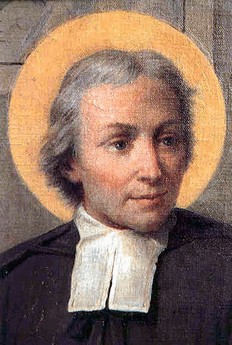
Saint Jean-Baptiste de la Salle: A Teacher for Teachers
Jean-Baptiste de la Salle (1651 – 1719), a French nobleman, ordained a priest, founded the first order in the Church’s history entirely without priests, and this came about almost by accident. I say ‘almost’, for, of course, there are no accidents with God. Destined for ordination from an early age, Jean-Baptiste never looked back, even[…]Continue reading→