
Fourth Sunday of Easter: Cultivating Catholic Culture
‘I came that they may have life and have it abundantly’ (Jn. 10:10).
These few words tell us everything that we need to know about the Redemptive Incarnation, the saving mission of the Word Incarnate, and about ourselves in relation to this Mystery. The Lord of all creation reveals Himself and He has created us with an ability both to know Him and to share His eternal life. It is upon these foundational truths that we build up our life as individual disciples who learn to recognize the voice of the Good Shepherd and collectively as the People of God. As we have noted on many different occasions, the Sacred Liturgy is both the feast and the school of faith. It is in the celebration of the Sacred Mysteries that Our Lord has left us, especially in the Holy Sacrifice of the Mass, the feast and school of faith that we come to a deeper understanding of the truths and events of salvation and their effect on our life. Consequently, everything we do and observe in the liturgy, from the externals in their every detail to our own dispositions as we celebrate these mysteries, speak of our deep, personal love for Our Saviour. We pattern our lives on the Mystery that we profess and that we celebrate with reverence and love. The primacy that we give to the adoration and worship of God is reflected in the secular realm by the subordination of human society to divine law. This is the foundational truth of Catholic culture whose cultural mission is to bring all nations to the saving knowledge of Jesus Christ. In the absence of this divinely established order, whether in the religious or secular realm, there is only chaos and ultimately, cultural collapse.
Every parish community is an expression of the mystery of the Church; and our mission is likewise one of cultivating a vibrant Catholic culture that glorifies God and serves the world. Our parish church, like every monastery, is a sacred place where nothing is preferred to the praise of the Father’s glory. It is from our prayer of adoration and praise which we offer daily, that all of the graces that we need are received and then generously shared with the world. Ever since Our Risen Lord sent out His apostles to preach the Gospel to all the nations, the Church has endeavoured to cultivate a robust Catholic culture through which the world can be truly served, healed and transformed. The history of the Church makes it very clear that in the encounter with cultures and peoples whose foundational principles are deficient or even hostile, initially, there is the experience of hostility and persecution. Nevertheless, the proclamation of the Gospel is always a corrective and so effective evangelization always entails a cultural mission whose effects have been quite extraordinary. It is undeniable that where the Gospel is authentically preached and received, life improves for everyone.
In time, as the values of the Gospel are appropriated, there is a flowering of culture and the arts reflect the beauty and grandeur of God. At a very simple level and one that all of us can participate in, the practice of the corporal and spiritual works of mercy enables all of us to extend the truth, beauty and love of Our Lord to all. The works of mercy are first and foremost an affirmation of the dignity of the human person. This truth is absolutely foundational and necessary for a well-ordered society; for the human person bears the image of God and has been created to know, love and serve God and enjoy God’s own life. This is why Our Lord says very simply, ‘My sheep hear my voice. I know them and they follow me. I give them eternal life, and they will never perish’ (Jn. 10:27). It follows that all our efforts in Catholic education should aim to deepen our ability to listen to and to obey the voice of the Good Shepherd.
Our dignity as persons created in God’s image is the principle gives us a personal identity and which enables us to understand ourselves in the only manner that truly makes sense, that is, from a theological perspective; since our origin and destiny are in God. What defines us as a community is also first and foremost, theological. Our reflection and instruction on the things of God that is part of our worship nurtures our human nature. As we listen to Our Lord we learn to worship the Father in spirit and in truth (Cf. Jn. 4:23)). Consequently, the Church allows herself to be led by an intense life of prayer, praise and adoration and by her mission of glorifying God in the midst of nations (Robert Cardinal Sarah, God or Nothing, p.105). This is our primary task; to glorify God; and in so doing we sanctify our lives and reveal the True God.
We are ever mindful that before all else, in the Church, there is adoration; and therefore God. This corresponds to the first and chief concern of the Rule of St. Benedict, arguably one of the most influential books in history: Nothing should be preferred to the work of God. [Nihil operi Dei praeponatur]. What St. Benedict calls the work of God, the opus Dei, is the Sacred Liturgy, our prayer. Consequently, we also prefer nothing to the work of God. Indeed, it is in the adoration of God, all that is most noble and excellent is placed at the service of God. Our weekly celebration of the Sacred Liturgy is an affirmation of our human dignity, called as we are to share the life of God. This conviction enables us in turn, to undertake great tasks and to perform heroic works of charity and of mercy. There is a causal link between the Church’s effectiveness as the presence of Christ in our world and the Church’s worship.
That we have experienced and continue to experience a crisis in worship is undeniable. Some have even spoken of a liturgical collapse and by consequence, a cultural collapse. We are also dealing with the satiated state of mind of modern man, who, living in our consumer society, approaches anything that is holy with a complete lack of understanding and has no concept of religion, let alone his own sinful state. (Msgr. Klaus Gamber, The Reform of the Roman Liturgy, p. 99). The much needed remedy for us and by extension, for the world, is a liturgy that clearly conveys the sense of the transcendent or supernatural, because this alone is what ultimately fulfills us.
There is a signal event in our history that illustrates the causal link between liturgy and life. In 496, the baptism of Clovis, King of the Franks marked the beginning of Catholic France. On the threshold of the baptistery, the splendour of the vestments, the brilliantly lit church, and the litanies and hymns caused the overawed king to ask St. Remi, ‘My Father, is this it, the kingdom of heaven you promised me?’ ‘No’, he replied, ‘but it is the beginning of the road that leads there’. So it is with us as we offer God our prayer of adoration, praise and thanksgiving; or so it should be. The beauty of our worship is a foretaste of the Heavenly Liturgy; and as we walk the pilgrimage of faith, it is the inspiration that we need to work for the establishment of God’s kingdom in a well-ordered society where everything is subordinate to the divine law. In the moral chaos that characterises our world, let us nevertheless endeavour to give primacy of place to God; that we may radiate Christ, the Good Shepherd who has become the source of eternal salvation for all who obey Him. It is His life that through grace we share even now; for He came that we may have life and have it abundantly.
Remembering Father Alphonse de Valk
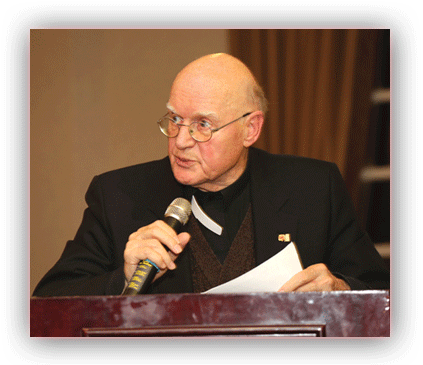
(Today marks the sixth anniversary of the death of Father Alphonse de Valk, C.S.B., a faithful, courageous and indefatigable Basilian priest, pro-life-and-family apostle, and the founder of Catholic Insight magazine. Here is what we wrote those on his entering into eternity five years ago, as we continue to remember him in our prayers and thoughts)[…]Continue reading→
Divine Mercy Sunday – An Echo of Every Mass
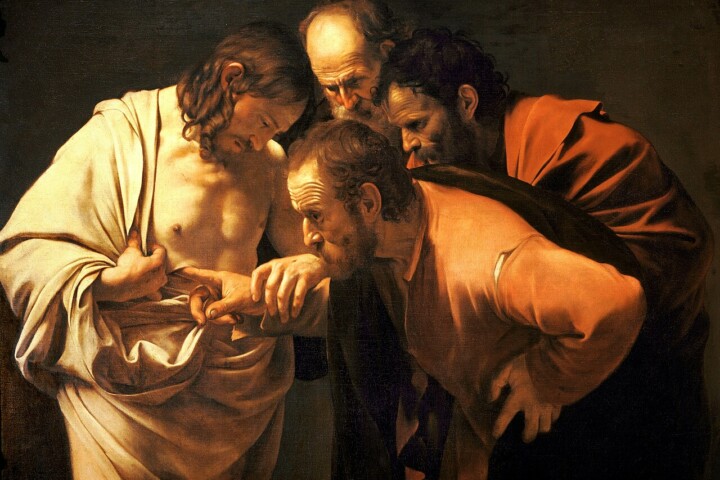
Reach out your hand and put it in my side. Do not doubt but believe’… ‘My Lord and my God!’ (Jn. 20:18)). Today is Divine Mercy Sunday, and as we celebrate the end of the Easter Octave, we contemplate the wounded side of our Saviour, the Church’s source of life. On Good Friday in the[…]Continue reading→

Saint Stanislaus of Szczepanów
We celebrate Saint Stanislaus today (+ April 11, 1079), in light of this Easter Octave, a bishop and martyr who accepted the episcopacy only at the direct order of Pope Alexander II. He proved a wise and courageous leader of his flock, put to death by his own king, Boleslaus, for rebuking the monarch’s ‘immoral[…]Continue reading→
First Holy Communion: Sermon from May 16, 1943
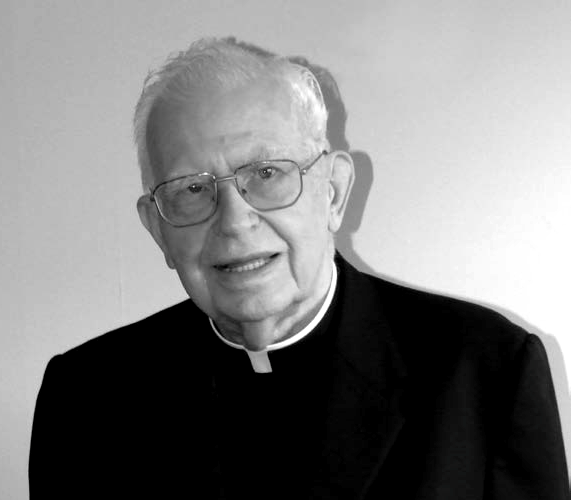
Here is a sermon from the good old days by +Rev. Msgr. Vincent Nicholas Foy (August 14, 1915 – March 13, 2017), from 1943. Readers may recall that Pope Saint Pius X, by the decree Quam Singulari in 1910, lowered the customary age of reception of Holy Communion – after the rigours of the plague[…]Continue reading→
In the Glorious Light of Easter, Alleluia!
Set your minds on things that are above, not on things that are on earth, for you have died, and your life is hidden with Christ in God. When Christ who is your life is revealed, then you also will be revealed with him in glory (Col. 3:3-4). The Resurrection of Our Lord and Saviour[…]Continue reading→
An Ancient Homily for Holy Saturday
The time between Good Friday and Easter Sunday is one of waiting, in silence, as the world wonders – anticipates – what will happen, after the death of Christ. We re-live this time each year in the anamnesis of our liturgy, and in turn look forward to the glorious re-creation of all things at the[…]Continue reading→
Europe’s Long Descent
(As we meditate on this day on Christ’s burial, and His descent into hell, it is fitting to ponder here with contributor Peter Marcus how the world seems to be heading there as well. The difference is that, although God cannot ‘redeem’ hell, nor those therein, He can and did redeem the world. There is[…]Continue reading→
Pope Saint John Paul II’s First Good Friday Homily
ADDRESS OF HIS HOLINESS JOHN PAUL II AT THE CONCLUSION OF THE STATIONS OF THE CROSS AT THE COLOSSEUM Good Friday, 13 April 1979 When we make the Way of the Cross from one station to the next, in spirit we are always at the spot wherethis journey had its “historical” place: where it[…]Continue reading→
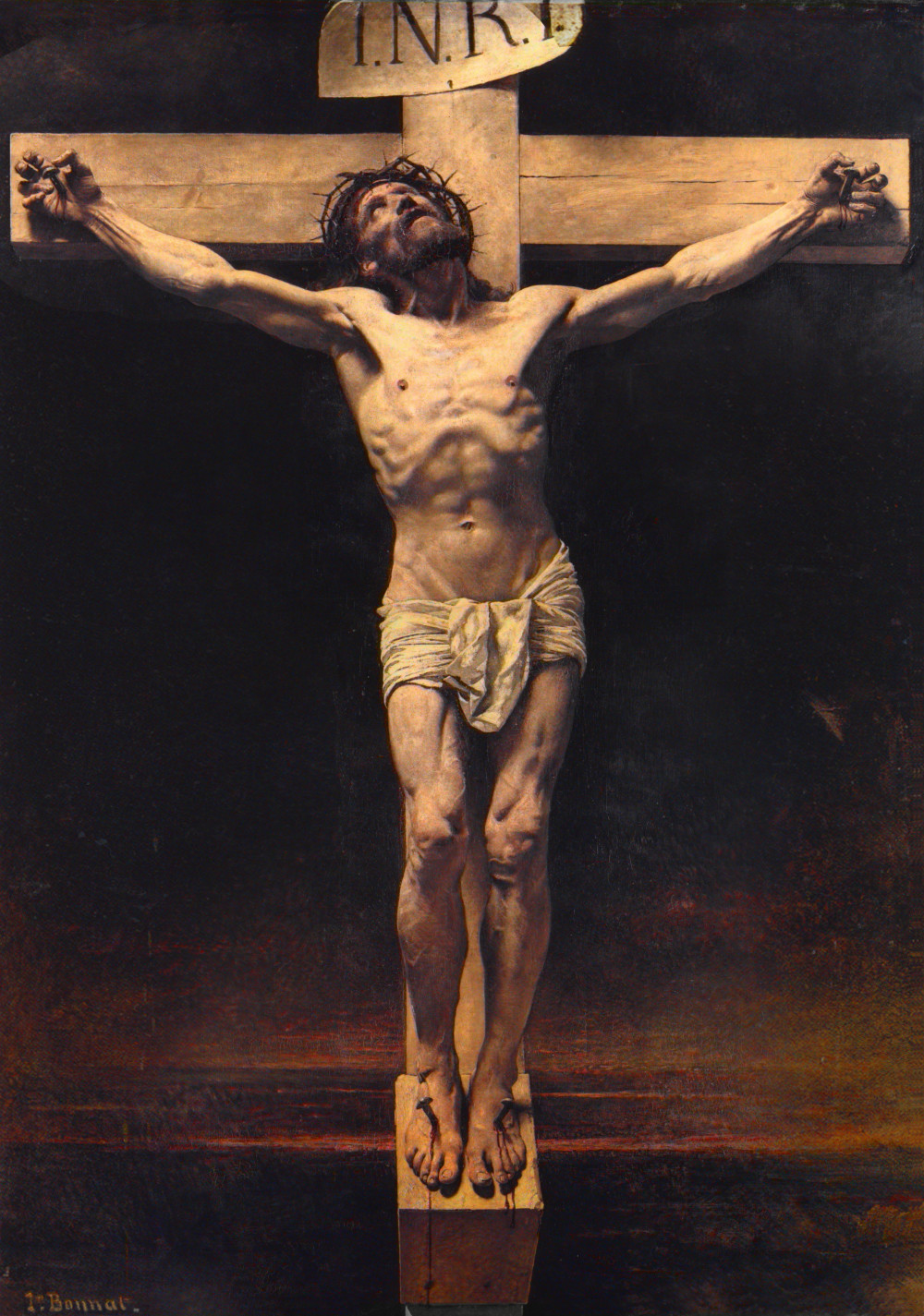
A Meditation for Good Friday: How To Undo the Effects of Sin?
Cardinal Newman, now Saint John Henry Newman, was a towering figure of nineteenth-century Catholicism who is almost universally admired. I say “almost” because not everyone likes him. I knew a priest once, Arthur Caulkins, who has become disenchanted with Newman. As an undergraduate Arthur had been enamoured of Newman, and this interest continued when he[…]Continue reading→
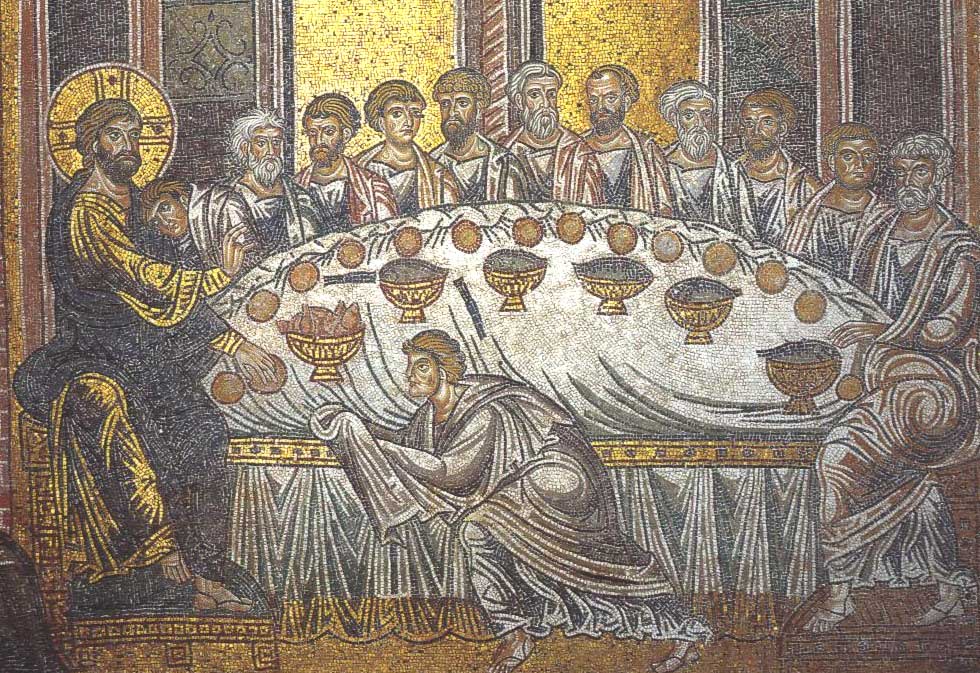
Pope Benedict’s Last Holy Thursday Homily
MASS OF THE LORD’S SUPPER HOMILY OF HIS HOLINESS BENEDICT XVI Basilica of St John Lateran Holy Thursday, 5 April 2012 Photo Gallery (Video) Dear Brothers and Sisters! Holy Thursday is not only the day of the institution of the Most Holy Eucharist, whose splendour bathes all else and in some ways draws it to[…]Continue reading→