
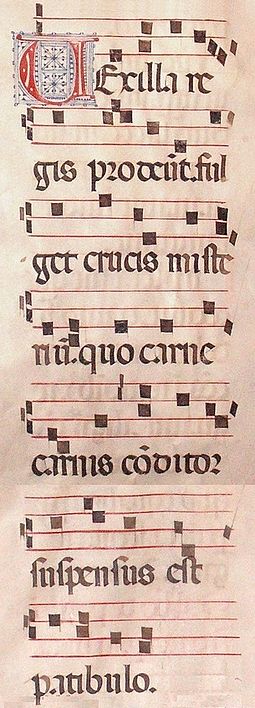
Venantius’ Vexilla Regis Prodeunt
Venantius Honorius Clementianus Fortunatus was a self-described wandering minstrel in Europe of the very early Middle Ages, or late Antiquity, or the inaptly-described ‘Dark Ages’, which in fact had much that was light about them. As Father Callam points out in the accompanying reflection, Venantius lived between 530 to about 600 Anno Domini. He was eventually ordained a priest, and ended up as bishop of Poitiers, but is perhaps best known in history as one of the Church’s greatest poets and hymnographers, with eleven books of poetry and panegyrics attributed to him.
For our purposes today, we turn to the Vexilla Regis Prodeunt, used for Vespers from Passion Sunday to Holy Thursday, and for the Feast of the Triumph of the Cross – see Father Callam again for the full text, or follow along with the scrolled chant version below. Translated as ‘The Royal Banner Forward Goes’, it is ideal in its original language – ‘vexilla‘ referring to all the symbols of kingship, the banners, flags, even weapons of war. But Christ’s dominion, as the Word Himself confessed, is not of this world, and his ‘weapon’ is the Holy Cross, by which He brought about our redemption.
The hymn was first sung for the solemn procession of a sizeable relic of the True Cross, on November 19th, 569, as it was brought from the East, to Tours in France, and then to the monastery of Saint Radegunda at Poitiers.
Here is the original chant version:
Next, the Vexilla in Palestrina’s incomparable polyphony, first performed in 1589:
And, finally, the arrangement of Venantius’ hymn by Anton Bruckner, the final motet the great composer ever composed, with his usual haunting, soaring harmonies, first performed on Good Friday, April 15th, 1892:

Carney’s Amoral Majority
After five defections – euphemistically described as ‘crossing the floor’ – and three by-elections, Mark Carney and his Liberals how have their coveted majority. One wonders what bowls of pottage were offered in back-room deals. In the archaic monarchical system that is the Dominion of Canada, this majority allows the newly-minted Prime Minister to rule[…]Continue reading→

Saint Kateri , Canada’s Protectress
This was the title given to Saint Kateri Tekakwitha, by Pope Benedict XVI, when he canonized her on October 28th, 2012, along with six others, in Saint Peter’ Square (she had been beatified by Pope John Paul II back in 1980). With Saint Joseph as our protector, along with the Canadian martyrs, we seem to[…]Continue reading→

Remembering Father Alphonse de Valk
(Today marks the sixth anniversary of the death of Father Alphonse de Valk, C.S.B., a faithful, courageous and indefatigable Basilian priest, pro-life-and-family apostle, and the founder of Catholic Insight magazine. Here is what we wrote those on his entering into eternity five years ago, as we continue to remember him in our prayers and thoughts)[…]Continue reading→
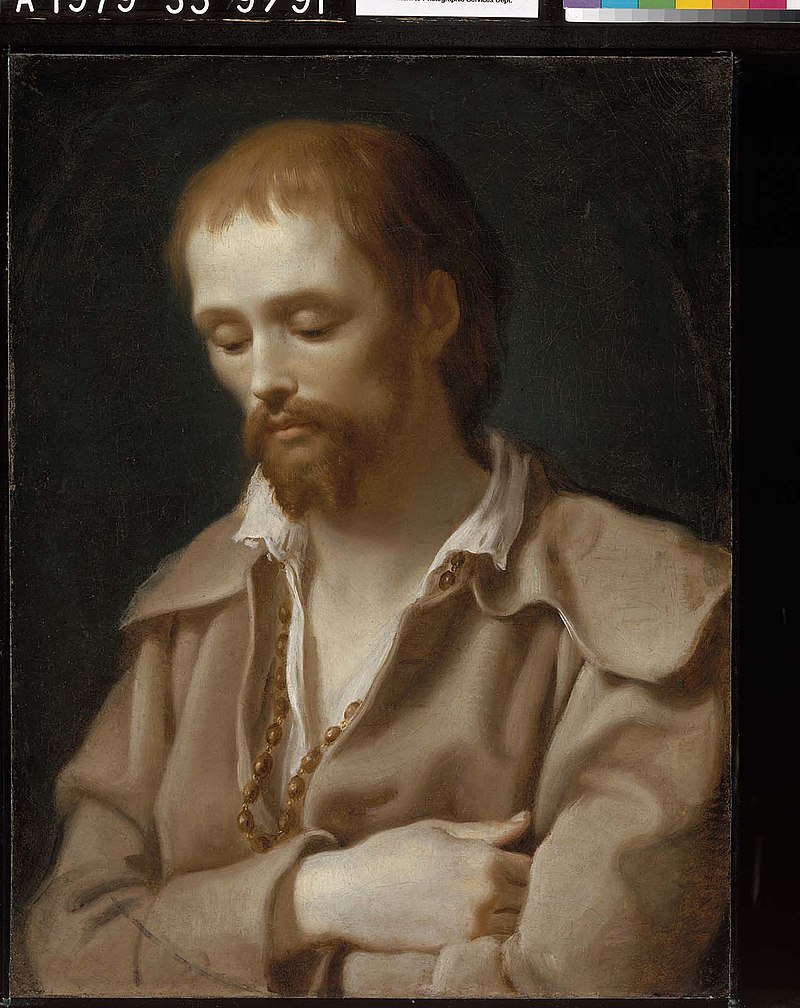
A Tale of Two Benedicts
A grace-filled Holy Week to all our readers! As we await and prepare for the Resurrection about to dawn upon us, we might keep in mind two Benedicts: Pope Emeritus Benedict XVI, requiescat in pace, elected on this day in 2005; and today’s commemoration of the mystic pilgrim, Benedict Joseph Labre, who died on this[…]Continue reading→

My Name is Bernadette
April 16th is a propitious day, for besides the anniversary of Father de Valk’s death, who founded Catholic Insight in its print form decades ago, and the commemoration of the ‘two Benedicts’, mentioned in accompanying posts, today we also recall Saint Bernadette Soubirous, the young visionary to whom the Virgin Mary appeared numerous times at[…]Continue reading→
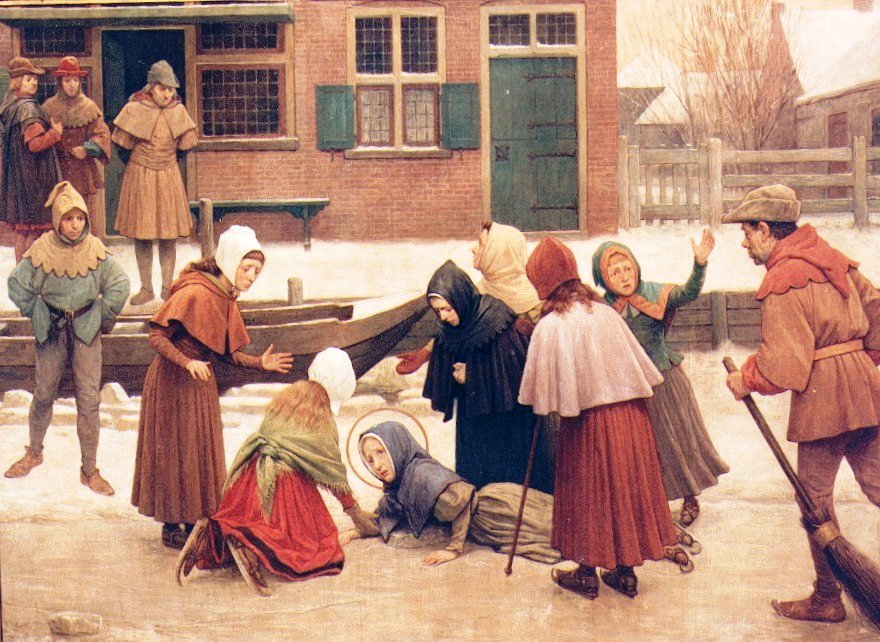
Saint Lydwina of Schiedam and Suffering Joyfully
Saint Lydwina of Schiedam (1380 – 1433) was one of the countless and glorious ‘victim souls’ in the history of the Church, those whose lives are filled with suffering, often of an unimaginable intensity, but who suffer joyfully. She was a fifteen-year old Dutch girl, out skating one day, when she fell and broke one[…]Continue reading→
The Glorious Martyrdoms of Martin and Maximus
As we enter into Eastertide, we recall on this 13th of April Pope Saint Martin I (+655), one of the noblest, if most tragic, of the successors of Saint Peter. Born in Umbria, Italy, he was of noble lineage, with great intelligence combined with charity and love of the poor and the Church. While still[…]Continue reading→
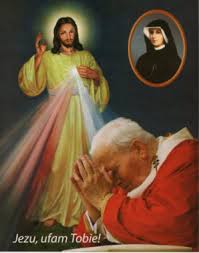
Canonizing Sister Faustina and Divine Mercy
HOMILY OF THE HOLY FATHER MASS IN ST PETER’S SQUARE FOR THE CANONIZATION OF SR MARY FAUSTINA KOWALSKA Sunday, 30 April 2000 1. “Confitemini Domino quoniam bonus, quoniam in saeculum misericordia eius”; “Give thanks to the Lord for he is good; his steadfast love endures for ever” (Ps 118: 1). So the Church sings on the Octave of[…]Continue reading→

Divine Mercy Sunday – An Echo of Every Mass
Reach out your hand and put it in my side. Do not doubt but believe’… ‘My Lord and my God!’ (Jn. 20:18)). Today is Divine Mercy Sunday, and as we celebrate the end of the Easter Octave, we contemplate the wounded side of our Saviour, the Church’s source of life. On Good Friday in the[…]Continue reading→
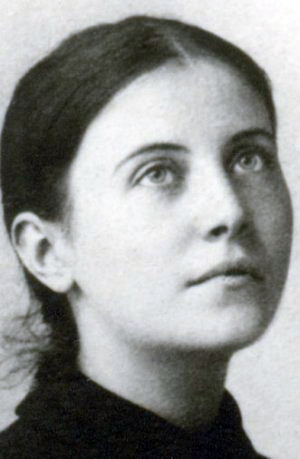
Saint Gemma Galgani
On this April 11th, in 1903 – the same year that the Italian Guiseppe Sarto was elected Pope later that summer as Pius X – a lovely, young Italian woman died, by the name of Gemma Galgani. She lived a brief life of 24 years, as did a number of other young saints, including Pier[…]Continue reading→