
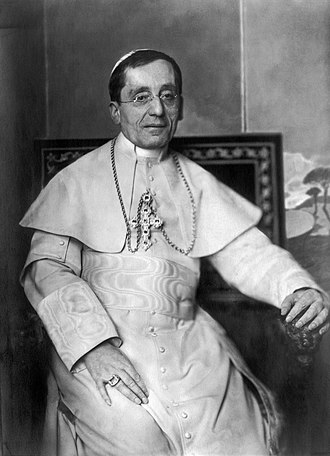
Benedict XV’s War and Peace
There is a fin de siècle feel in the air, akin to what people must have felt in 1914 on eve of the Great War – which was meant to end all wars. As Europe descended into the madness of that maelstrom, Cardinal Giacomo Paolo Giovanni Battista della Chiesa was elected Pope, taking the name Benedict XV, after the death of Pius X, who is said to have died of a broken heart, seeing what destruction was about to be unleashed on the world.
The new Pope did not take sides in the war, so was vilified all round. What he did do was offer a plan for peace, whose principles were underlined in his first encyclical, Ad Beatissimi Apostolorum, issued right after he was consecrated in November of 1914, a vehement condemnation of what was causing the conflict:
For ever since the precepts and practices of Christian wisdom ceased to be observed in the ruling of states, it followed that, as they contained the peace and stability of institutions, the very foundations of states necessarily began to be shaken. Such, moreover, has been the change in the ideas and the morals of men, that unless God comes soon to our help, the end of civilization would seem to be at hand. Thus we see the absence from the relation of men of mutual love with their fellow men; the authority of rulers is held in contempt; injustice reigns in relations between the classes of society; the striving for transient and perishable things is so keen, that men have lost sight of the other and more worthy goods they have to obtain. (5)
The Church has always taught that no perfect justice can ever be found this side of heaven. As Benedict rightly saw, we can achieve an approximation of right order, often a very rough one, the best that might be achieved in the circumstances.
The Pope’s plan for such a peaceful resolution – which would likely have avoided the second and greater war – was rejected. On the eve of war, both sides demonized the other, inflaming passions, blinding reason – which sounds sort of familiar. After the carnage, there was the illusory ‘peace of Versailles’, with the leaders of the free world, Wilson, Clemenceau, Lloyd George, bending over a map on the floor carving up Europe, like little boys playing, to paraphrase the American president’s wife.
Benedict saw Versailles as unjust and vindictive, which would only delay, even stoke, a future, and far greater, war. He was excluded from the negotiations at Versailles, at Italy’s insistence, for the ‘Vatican question’ had not been resolved. After rejecting the Pope’s plan as ‘unrealistic’ a few years before, President Wilson implemented many of them in the new peace, without attribution.
So here we are again, history repeating itself in a different key. But there is no Benedict XV redivivus to guide us, and, even if there were, he’d likely be ignored and vilified, as the good pontiff was in his own day.
Before we are drawn into a new global catastrophe, we should remind ourselves not only of the Pope’s wise words, but of the traditional requirements of a just war, as summarized in the Catechism (2309):
– the damage inflicted by the aggressor on the nation or community of nations must be lasting, grave, and certain;
– all other means of putting an end to it must have been shown to be impractical or ineffective;
– there must be serious prospects of success;
– the use of arms must not produce evils and disorders graver than the evil to be eliminated. The power of modem means of destruction weighs very heavily in evaluating this condition.
Justice, and injustice, borders and hegemonies will be disputed ad infinitum, but of one thing we should be certain and all agree: An imperfect peace is better than an unjust war, and, to cut to the chase, no grievance or injustice is worth nuclear conflict, which would by any reckoning violate the fourth and final principle, unleashing ‘evils and disorders graver’ not only than the evil to be eliminated, but any physical evil that might imagined (except perhaps a massive asteroid collision or a series of super volcanoes erupting simultaneously or being swallowed by a vagarious black hole). A ‘first strike option’, or really any option that implies going nuclear, is both immoral, insane, or both, leading to the destruction of the world as we know it. The more all of this escalates, the closer we get, inexorably and ineluctably, to such an apocalypse. If Pope Benedict thought things were so in the conventional and limited war 1914, what are we to say of 2023?
Wars and calamities are always, in some complex way in the mysterious permissive will of God, a punishment for our innumerable sins, our blindness and hardness of heart – but always for a greater good, to bring us to repentance and conversion.
There is a time for such, but limited. Each of us has our span, as does history. Saint Peter prophesied that the world would be destroyed not by flood, but by fire, but we know not in what way or when; what we do know is that time and the world will have an end…but not quite yet. According to the same prophecies, much has yet to happen before that final act.
For now, tend whatever ‘garden’ God has given you, keep your soul in a state of grace and serenity of conscience, pray and trust in God.
Is there still time for peace and for all to agree to some updated version of the ‘fourteen-point’ plan? There’s always such hope, right up to the end. We Catholics are not fatalists, for, as the Book of Sirach says, the Almighty has left man ‘in the hand of his own counsel’. Good counsel, and God’s help, are what we need most of all.
On that note, we will conclude with the timeless intercessory appeal of the Pope:
And now, Venerable Brethren, at the end of this Letter, our mind turns spontaneously to the subject with which we began; and we implore with our most earnest prayers the end of this most disastrous war for the sake of human society and for the sake of the Church; for human society, so that when peace shall have been concluded, it may go forward in every form of true progress; for the Church of Jesus Christ, that freed at length from all impediments it may go forth and bring comfort and salvation even to the most remote parts of the earth. +
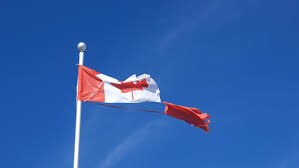
Carney’s Amoral Majority
After five defections – euphemistically described as ‘crossing the floor’ – and three by-elections, Mark Carney and his Liberals how have their coveted majority. One wonders what bowls of pottage were offered in back-room deals. In the archaic monarchical system that is the Dominion of Canada, this majority allows the newly-minted Prime Minister to rule[…]Continue reading→

Saint Kateri , Canada’s Protectress
This was the title given to Saint Kateri Tekakwitha, by Pope Benedict XVI, when he canonized her on October 28th, 2012, along with six others, in Saint Peter’ Square (she had been beatified by Pope John Paul II back in 1980). With Saint Joseph as our protector, along with the Canadian martyrs, we seem to[…]Continue reading→
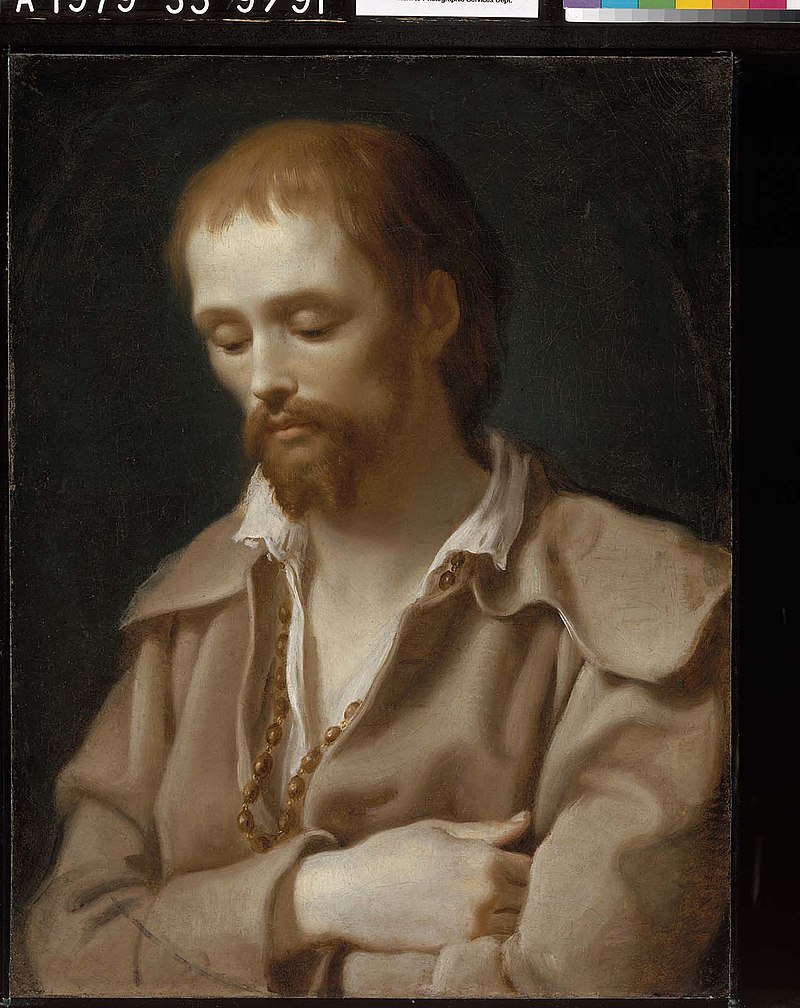
A Tale of Two Benedicts
A grace-filled Holy Week to all our readers! As we await and prepare for the Resurrection about to dawn upon us, we might keep in mind two Benedicts: Pope Emeritus Benedict XVI, requiescat in pace, elected on this day in 2005; and today’s commemoration of the mystic pilgrim, Benedict Joseph Labre, who died on this[…]Continue reading→

My Name is Bernadette
April 16th is a propitious day, for besides the anniversary of Father de Valk’s death, who founded Catholic Insight in its print form decades ago, and the commemoration of the ‘two Benedicts’, mentioned in accompanying posts, today we also recall Saint Bernadette Soubirous, the young visionary to whom the Virgin Mary appeared numerous times at[…]Continue reading→
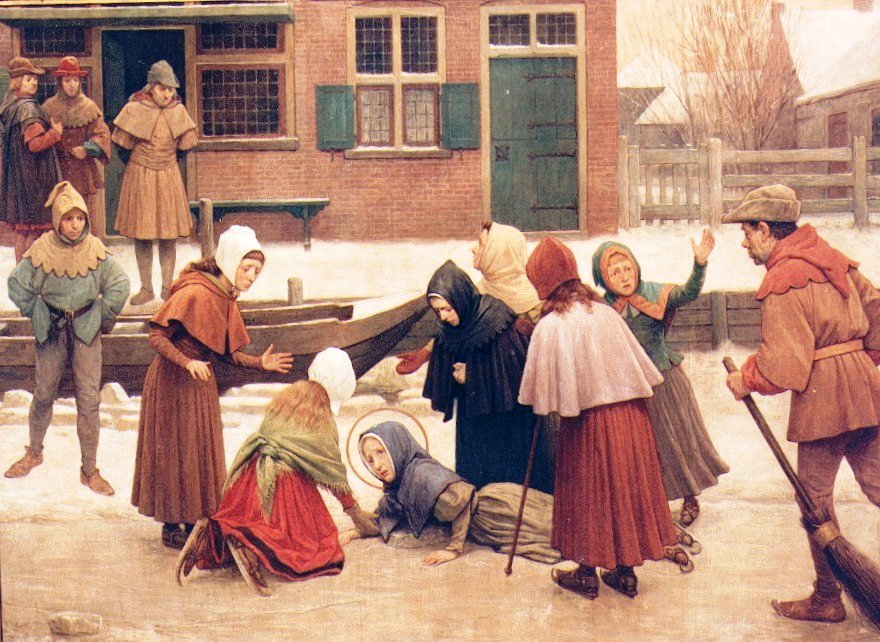
Saint Lydwina of Schiedam and Suffering Joyfully
Saint Lydwina of Schiedam (1380 – 1433) was one of the countless and glorious ‘victim souls’ in the history of the Church, those whose lives are filled with suffering, often of an unimaginable intensity, but who suffer joyfully. She was a fifteen-year old Dutch girl, out skating one day, when she fell and broke one[…]Continue reading→
The Glorious Martyrdoms of Martin and Maximus
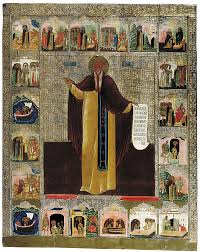
As we enter into Eastertide, we recall on this 13th of April Pope Saint Martin I (+655), one of the noblest, if most tragic, of the successors of Saint Peter. Born in Umbria, Italy, he was of noble lineage, with great intelligence combined with charity and love of the poor and the Church. While still[…]Continue reading→

Saint Stanislaus of Szczepanów
We celebrate Saint Stanislaus today (+ April 11, 1079), in light of this Easter Octave, a bishop and martyr who accepted the episcopacy only at the direct order of Pope Alexander II. He proved a wise and courageous leader of his flock, put to death by his own king, Boleslaus, for rebuking the monarch’s ‘immoral[…]Continue reading→
Saint Gemma Galgani
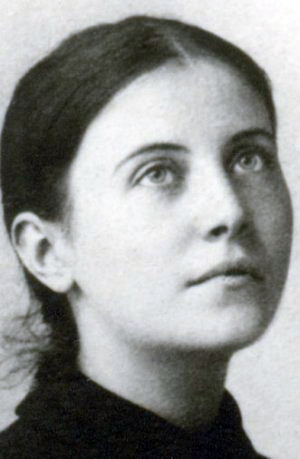
On this April 11th, in 1903 – the same year that the Italian Guiseppe Sarto was elected Pope later that summer as Pius X – a lovely, young Italian woman died, by the name of Gemma Galgani. She lived a brief life of 24 years, as did a number of other young saints, including Pier[…]Continue reading→
An Ideological and Improper Translation
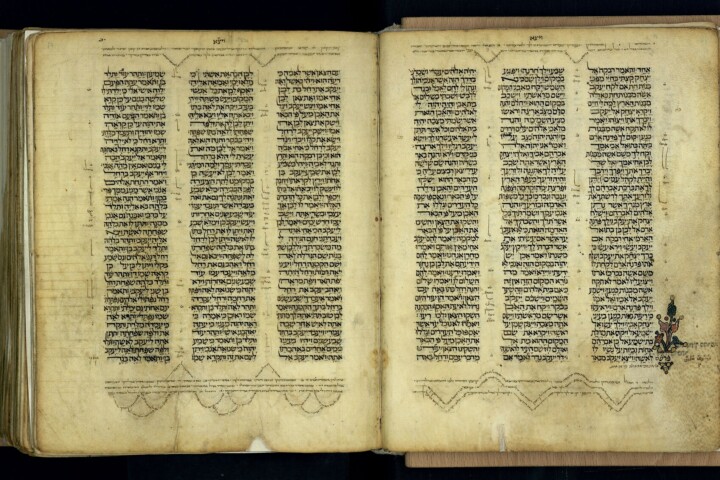
I noticed something odd with the psalm reading at Mass the other day. Our bishops’ conference here in Canada has decreed that the Mass in English – Novus Ordo – use the ‘NRSV’, the ‘New Revised Standard Version’, an ‘updated’ translation of the original RSV, first published in 1952. This ‘new translation’ has the tendency[…]Continue reading→
Saint Jean-Baptiste de la Salle: A Teacher for Teachers
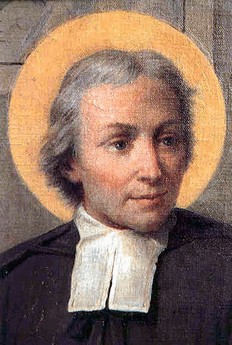
Jean-Baptiste de la Salle (1651 – 1719), a French nobleman, ordained a priest, founded the first order in the Church’s history entirely without priests, and this came about almost by accident. I say ‘almost’, for, of course, there are no accidents with God. Destined for ordination from an early age, Jean-Baptiste never looked back, even[…]Continue reading→