
Ignatius Ground to Wheat, While Canada Grows its Pot
(This being not only the memorial of the one of the Church’s earliest post-Apostolic martyrs, the great Ignatius, who may have known the Apostle John personally, but also the fifth anniversary of the legalization of marijuana, or cannabis, we thought this retrospect quite fitting. As readers may know, a new ‘pot shop’ opened up a few doors down from my own house, and I can only hope most of the clientele are there for therapeutic purposes. Given their state of health and often their youth, my grounds for such hope are minimal, but hope against hope, not least as we may all one day have to make the choice Ignatius did – and he did so joyfully, racing to his witness for Christ in the Coliseum, where they thought the ‘panem et circenses’ would never end…but end they did.)
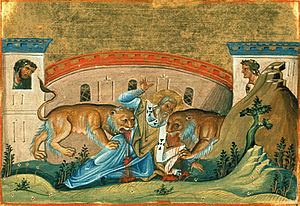
Saint Ignatius of Antioch (+107) joyfully ‘went to the lions’, as the saying goes, meeting his martyrdom in the arena of the Coliseum in the eternal city, perhaps less than a decade after the death of the last Apostle, John the Evangelist. Ignatius was the epi-scopos – literally the ‘overseer’ – of the ancient diocese of Antioch, where the ‘disciples were first called Christians’, and where Saint Peter was first a bishop, before going to Rome. There is a tradition – not a binding one, but pious nonetheless – that Ignatius was the ‘small child’ whom Christ put in the midst, to signify that the ‘kingdom of heaven belongs to such as these’.
Whatever the case, here is Ignatius, soon after his capture as a bishop:
I am writing to all the churches to let it be known that I will gladly die for God if only you do not stand in my way. I plead with you: show me no untimely kindness. Let me be food for the wild beasts, for they are my way to God. I am God’s wheat and shall be ground by their teeth so that I may become Christ’s pure bread. Pray to Christ for me that the animals will be the means of making me a sacrificial victim for God.
On the long and difficult route, bound in chains, Ignatius managed somehow to pen seven letters to seven communities of early Christians, which offer not only a store of spiritual depth, wisdom and courage, as we as his vivid, attractive and courageous personality, but they also give us some of the most clear and direct evidence of the Catholic Church’s structure from the very beginning, right after the time of Christ, replete with bishops, priests, dioceses, and irrefutable belief in the Real Presence and the Holy Sacrifice of the Mass.
In his letter to the Church at Ephesus, Ignatius expresses his desire for the Eucharist as the medicine of immortality, the antidote against death, and everlasting life in Jesus Christ and in his missive to the Romans, quoted in today’s Office of Readings, he prays that he no longer take pleasure in perishable food or in the delights of this world. I want only God’s bread, which is the flesh of Jesus Christ, formed of the seed of David, and for drink I crave his blood, which is love that cannot perish, all of which follows upon the clear teaching of Christ Himself, as recounted in the Bread of Life discourse in chapter six of Saint John’s Gospel.
Small wonder, then, that Saint Cardinal Newman, in his own vain attempt to find an Anglican ‘via media‘, a kind of Protestant middle ground somewhere in the early past, quipped that to ‘delve into history is to cease to be a Protestant’. There never was a simple sort of Gospel-only church, or, rather, community, with just the Bible and a lay-pastor. From the very beginning, there was the One, Holy, Catholic and Apostolic Church, centred in Rome under Saint Peter, with all the sacraments and all the Liturgy and all the means of holiness and truth, even if obscured at times.
Ignatius gave his life for that Church, and we should be prepared to do no less.
This is also the fifth anniversary, if you will, of Trudeau’s legalization of marijuana, with Canada thereby becoming the second sovereign nation to legalize the green weed (Uruguay just beat us to the punch). Feel free to peruse something I wrote for Crisis, which I have re-posted here on Catholic Insight, on the moral difference between alcoholic beverages, permitted in our Catholic faith, and recreational drugs, which are intrinsically immoral. I have heard that marijuana also saps and weakens one’s will, the opposite of the fortitude of Ignatius; there is reason those addicted have acquired the epithet dopeheads.
Why seek an earthly, drug-induced euphoria, which only leave us feeling, and being, worse for wear, and not the peace and happiness that Christ offers, with joys that know no end?
May Saint Ignatius, who knew that peace that the world cannot offer, ora pro nobis!
Carney’s Amoral Majority
After five defections – euphemistically described as ‘crossing the floor’ – and three by-elections, Mark Carney and his Liberals how have their coveted majority. One wonders what bowls of pottage were offered in back-room deals. In the archaic monarchical system that is the Dominion of Canada, this majority allows the newly-minted Prime Minister to rule[…]Continue reading→

Saint Kateri , Canada’s Protectress
This was the title given to Saint Kateri Tekakwitha, by Pope Benedict XVI, when he canonized her on October 28th, 2012, along with six others, in Saint Peter’ Square (she had been beatified by Pope John Paul II back in 1980). With Saint Joseph as our protector, along with the Canadian martyrs, we seem to[…]Continue reading→
A Tale of Two Benedicts
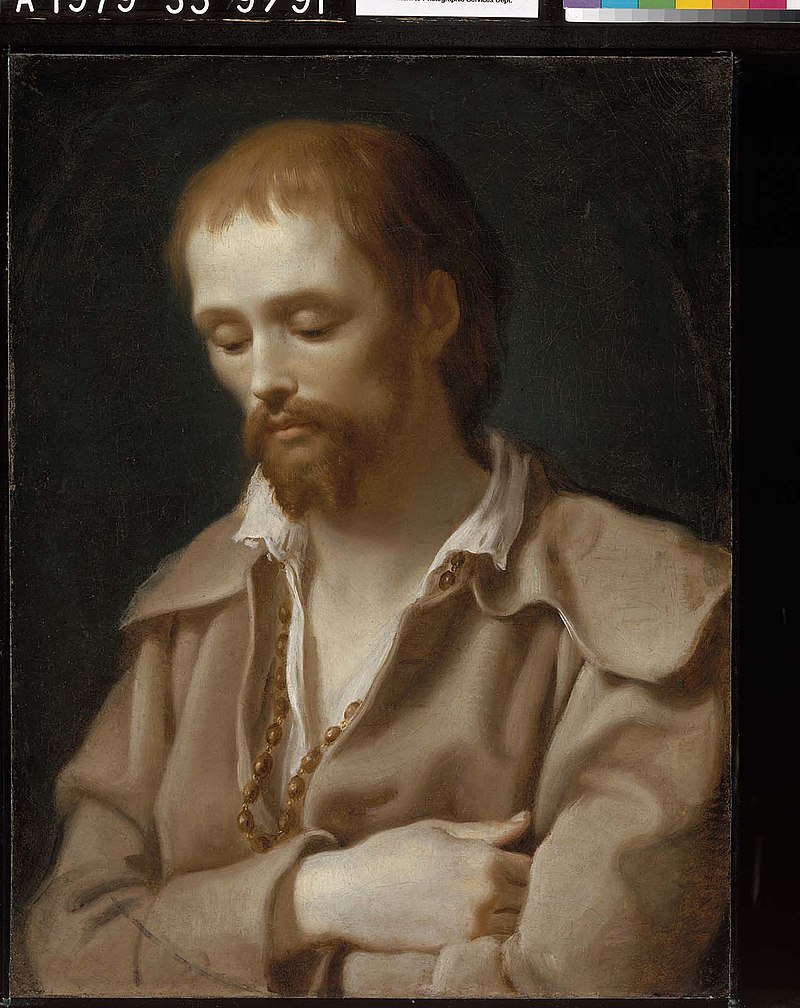
A grace-filled Holy Week to all our readers! As we await and prepare for the Resurrection about to dawn upon us, we might keep in mind two Benedicts: Pope Emeritus Benedict XVI, requiescat in pace, elected on this day in 2005; and today’s commemoration of the mystic pilgrim, Benedict Joseph Labre, who died on this[…]Continue reading→

My Name is Bernadette
April 16th is a propitious day, for besides the anniversary of Father de Valk’s death, who founded Catholic Insight in its print form decades ago, and the commemoration of the ‘two Benedicts’, mentioned in accompanying posts, today we also recall Saint Bernadette Soubirous, the young visionary to whom the Virgin Mary appeared numerous times at[…]Continue reading→
Saint Lydwina of Schiedam and Suffering Joyfully
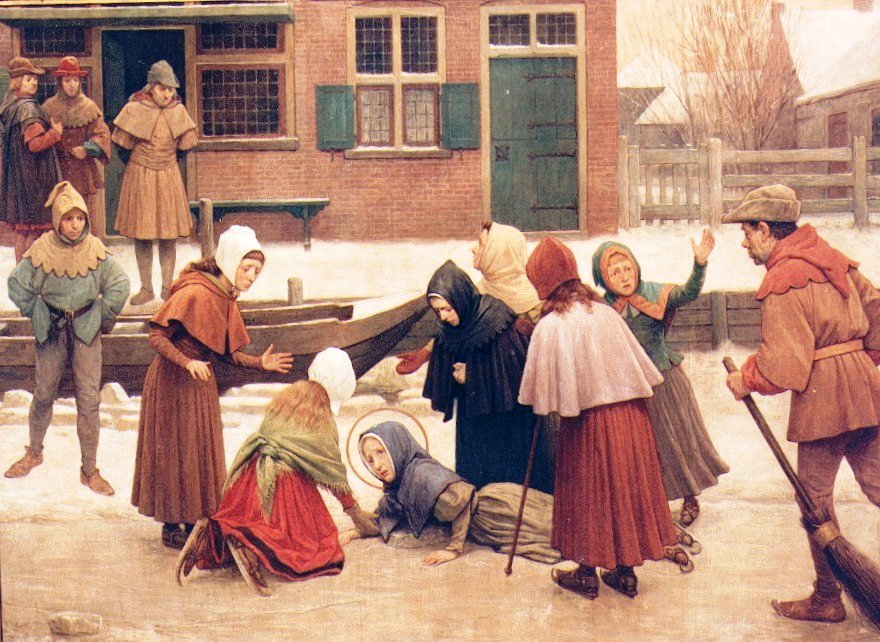
Saint Lydwina of Schiedam (1380 – 1433) was one of the countless and glorious ‘victim souls’ in the history of the Church, those whose lives are filled with suffering, often of an unimaginable intensity, but who suffer joyfully. She was a fifteen-year old Dutch girl, out skating one day, when she fell and broke one[…]Continue reading→
The Glorious Martyrdoms of Martin and Maximus
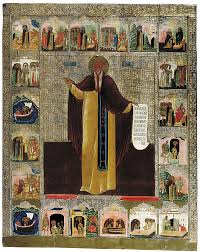
As we enter into Eastertide, we recall on this 13th of April Pope Saint Martin I (+655), one of the noblest, if most tragic, of the successors of Saint Peter. Born in Umbria, Italy, he was of noble lineage, with great intelligence combined with charity and love of the poor and the Church. While still[…]Continue reading→
Canonizing Sister Faustina and Divine Mercy
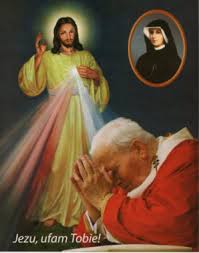
HOMILY OF THE HOLY FATHER MASS IN ST PETER’S SQUARE FOR THE CANONIZATION OF SR MARY FAUSTINA KOWALSKA Sunday, 30 April 2000 1. “Confitemini Domino quoniam bonus, quoniam in saeculum misericordia eius”; “Give thanks to the Lord for he is good; his steadfast love endures for ever” (Ps 118: 1). So the Church sings on the Octave of[…]Continue reading→

Saint Stanislaus of Szczepanów
We celebrate Saint Stanislaus today (+ April 11, 1079), in light of this Easter Octave, a bishop and martyr who accepted the episcopacy only at the direct order of Pope Alexander II. He proved a wise and courageous leader of his flock, put to death by his own king, Boleslaus, for rebuking the monarch’s ‘immoral[…]Continue reading→
Saint Gemma Galgani
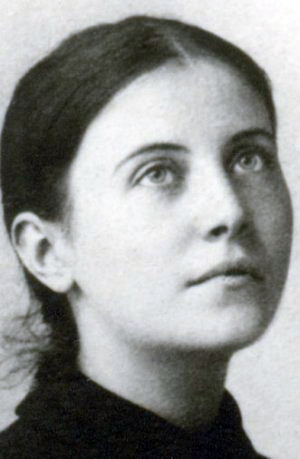
On this April 11th, in 1903 – the same year that the Italian Guiseppe Sarto was elected Pope later that summer as Pius X – a lovely, young Italian woman died, by the name of Gemma Galgani. She lived a brief life of 24 years, as did a number of other young saints, including Pier[…]Continue reading→
An Ideological and Improper Translation
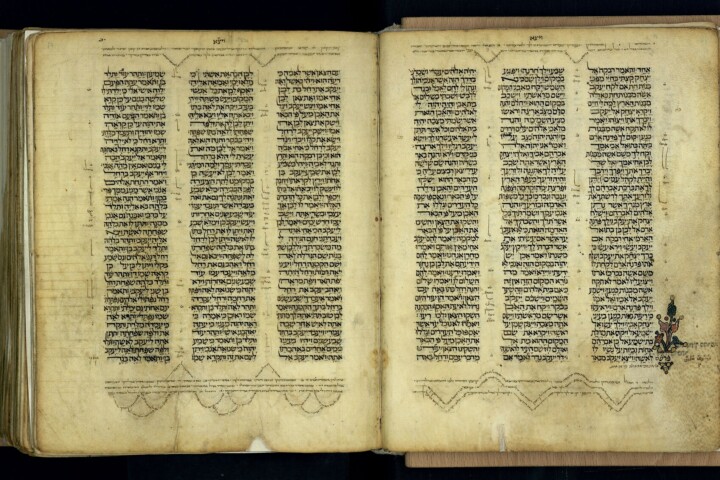
I noticed something odd with the psalm reading at Mass the other day. Our bishops’ conference here in Canada has decreed that the Mass in English – Novus Ordo – use the ‘NRSV’, the ‘New Revised Standard Version’, an ‘updated’ translation of the original RSV, first published in 1952. This ‘new translation’ has the tendency[…]Continue reading→