
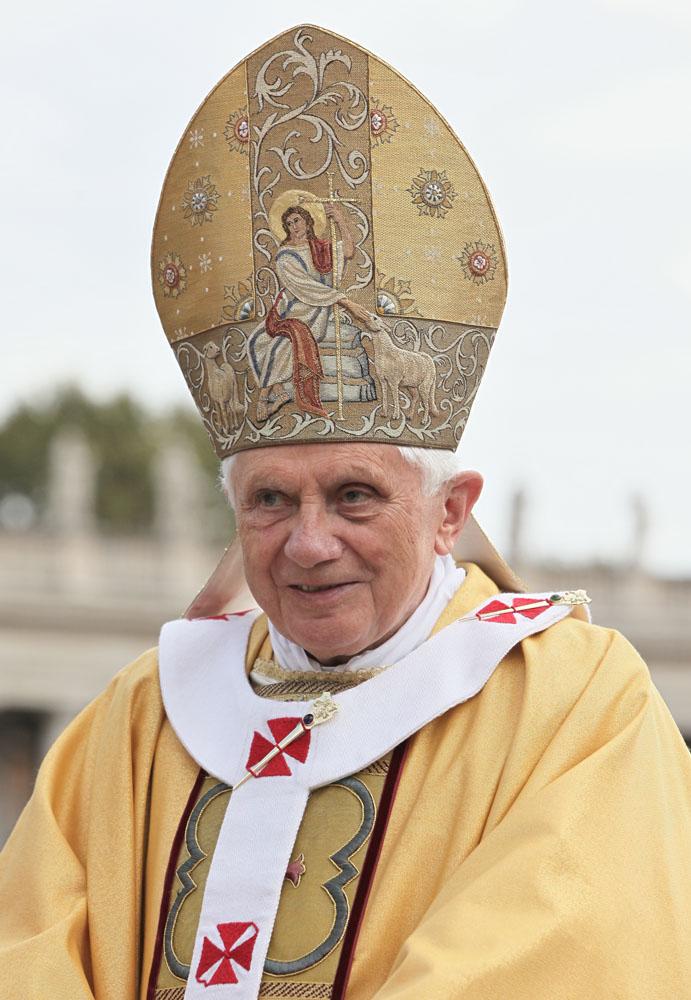
Pope Benedict and Saint Cyprian
BENEDICT XVI
GENERAL AUDIENCE
St Peter’s Square
Wednesday, 6 June 2007
Saint Cyprian
Dear Brothers and Sisters,
In the series of our catecheses on the great figures of the ancient Church, today we come to an excellent African Bishop of the third century, St Cyprian, “the first Bishop in Africa to obtain the crown of martyrdom”.
His fame, Pontius the Deacon his first biographer attests, is also linked to his literary corpus and pastoral activity during the 13 years between his conversion and his martyrdom (cf. Life and Passion of St Cyprian, 19, 1; 1, 1).
Cyprian was born in Carthage into a rich pagan family. After a dissipated youth, he converted to Christianity at the age of 35.
He himself often told of his spiritual journey, “When I was still lying in darkness and gloomy night”, he wrote a few months after his Baptism, “I used to regard it as extremely difficult and demanding to do what God’s mercy was suggesting to me. “I myself was held in bonds by the innumerable errors of my previous life, from which I did not believe I could possibly be delivered, so I was disposed to acquiesce in my clinging vices and to indulge my sins….
“But after that, by the help of the water of new birth, the stain of my former life was washed away, and a light from above, serene and pure, was infused into my reconciled heart… a second birth restored me to a new man. Then, in a wondrous manner every doubt began to fade…. I clearly understood that what had first lived within me, enslaved by the vices of the flesh, was earthly and that what, instead, the Holy Spirit had wrought within me was divine and heavenly” (Ad Donatum, 3-4).
Immediately after his conversion, despite envy and resistance, Cyprian was chosen for the priestly office and raised to the dignity of Bishop. In the brief period of his episcopacy he had to face the first two persecutions sanctioned by imperial decree: that of Decius (250) and that of Valerian (257-258).
After the particularly harsh persecution of Decius, the Bishop had to work strenuously to restore order to the Christian community. Indeed, many of the faithful had abjured or at any rate had not behaved correctly when put to the test. They were the so-called lapsi – that is, the “fallen” – who ardently desired to be readmitted to the community.
(To continue reading, please see here).

Saint Kateri , Canada’s Protectress
This was the title given to Saint Kateri Tekakwitha, by Pope Benedict XVI, when he canonized her on October 28th, 2012, along with six others, in Saint Peter’ Square (she had been beatified by Pope John Paul II back in 1980). With Saint Joseph as our protector, along with the Canadian martyrs, we seem to[…]Continue reading→

Remembering Father Alphonse de Valk
(Today marks the sixth anniversary of the death of Father Alphonse de Valk, C.S.B., a faithful, courageous and indefatigable Basilian priest, pro-life-and-family apostle, and the founder of Catholic Insight magazine. Here is what we wrote those on his entering into eternity five years ago, as we continue to remember him in our prayers and thoughts)[…]Continue reading→
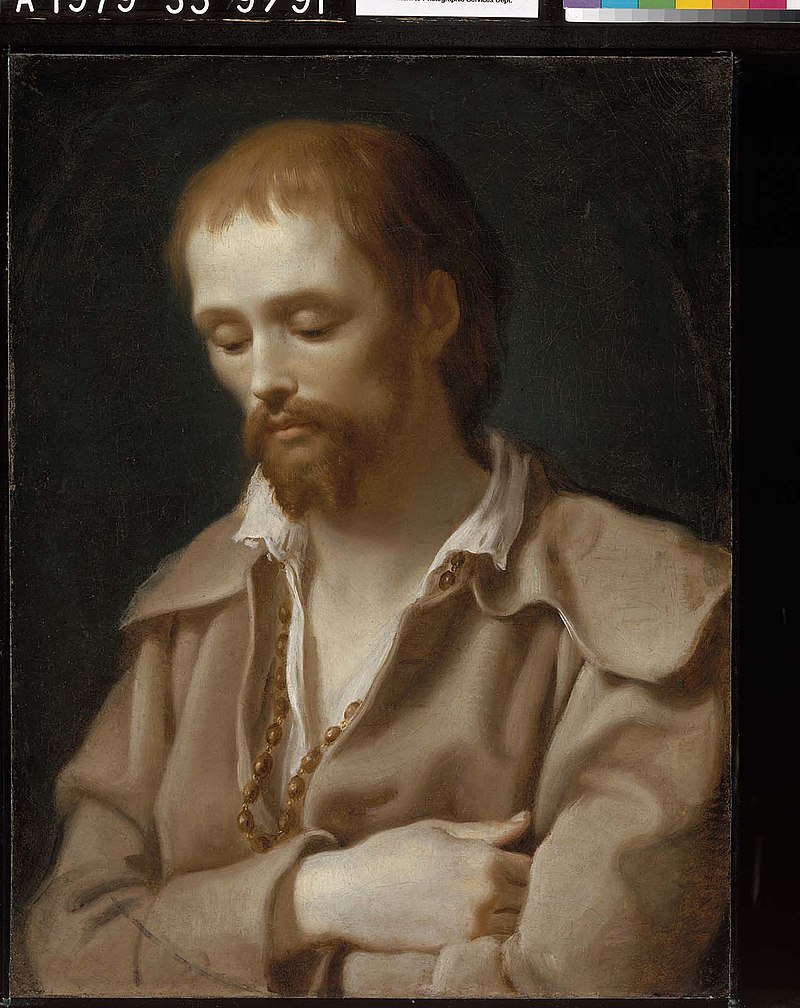
A Tale of Two Benedicts
A grace-filled Holy Week to all our readers! As we await and prepare for the Resurrection about to dawn upon us, we might keep in mind two Benedicts: Pope Emeritus Benedict XVI, requiescat in pace, elected on this day in 2005; and today’s commemoration of the mystic pilgrim, Benedict Joseph Labre, who died on this[…]Continue reading→

My Name is Bernadette
April 16th is a propitious day, for besides the anniversary of Father de Valk’s death, who founded Catholic Insight in its print form decades ago, and the commemoration of the ‘two Benedicts’, mentioned in accompanying posts, today we also recall Saint Bernadette Soubirous, the young visionary to whom the Virgin Mary appeared numerous times at[…]Continue reading→
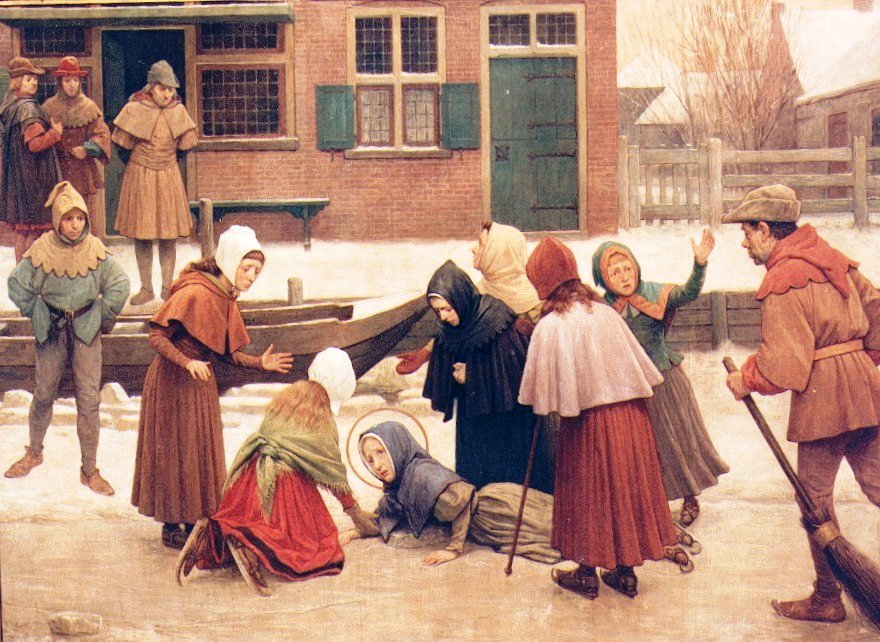
Saint Lydwina of Schiedam and Suffering Joyfully
Saint Lydwina of Schiedam (1380 – 1433) was one of the countless and glorious ‘victim souls’ in the history of the Church, those whose lives are filled with suffering, often of an unimaginable intensity, but who suffer joyfully. She was a fifteen-year old Dutch girl, out skating one day, when she fell and broke one[…]Continue reading→
The Glorious Martyrdoms of Martin and Maximus
As we enter into Eastertide, we recall on this 13th of April Pope Saint Martin I (+655), one of the noblest, if most tragic, of the successors of Saint Peter. Born in Umbria, Italy, he was of noble lineage, with great intelligence combined with charity and love of the poor and the Church. While still[…]Continue reading→

Canonizing Sister Faustina and Divine Mercy
HOMILY OF THE HOLY FATHER MASS IN ST PETER’S SQUARE FOR THE CANONIZATION OF SR MARY FAUSTINA KOWALSKA Sunday, 30 April 2000 1. “Confitemini Domino quoniam bonus, quoniam in saeculum misericordia eius”; “Give thanks to the Lord for he is good; his steadfast love endures for ever” (Ps 118: 1). So the Church sings on the Octave of[…]Continue reading→

Divine Mercy Sunday – An Echo of Every Mass
Reach out your hand and put it in my side. Do not doubt but believe’… ‘My Lord and my God!’ (Jn. 20:18)). Today is Divine Mercy Sunday, and as we celebrate the end of the Easter Octave, we contemplate the wounded side of our Saviour, the Church’s source of life. On Good Friday in the[…]Continue reading→
Saint Gemma Galgani
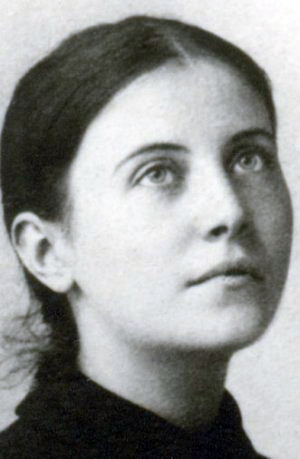
On this April 11th, in 1903 – the same year that the Italian Guiseppe Sarto was elected Pope later that summer as Pius X – a lovely, young Italian woman died, by the name of Gemma Galgani. She lived a brief life of 24 years, as did a number of other young saints, including Pier[…]Continue reading→
First Holy Communion: Sermon from May 16, 1943
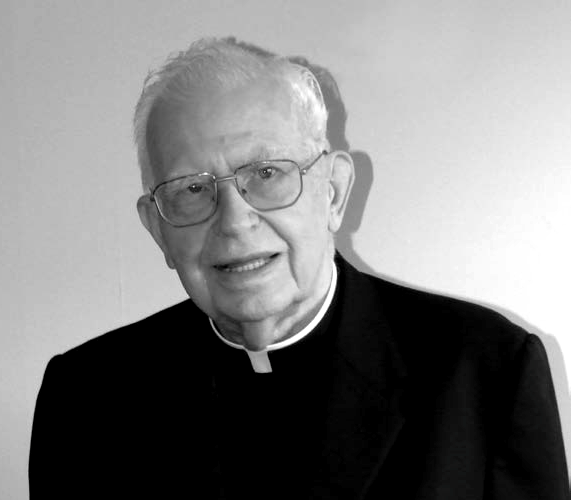
Here is a sermon from the good old days by +Rev. Msgr. Vincent Nicholas Foy (August 14, 1915 – March 13, 2017), from 1943. Readers may recall that Pope Saint Pius X, by the decree Quam Singulari in 1910, lowered the customary age of reception of Holy Communion – after the rigours of the plague[…]Continue reading→