
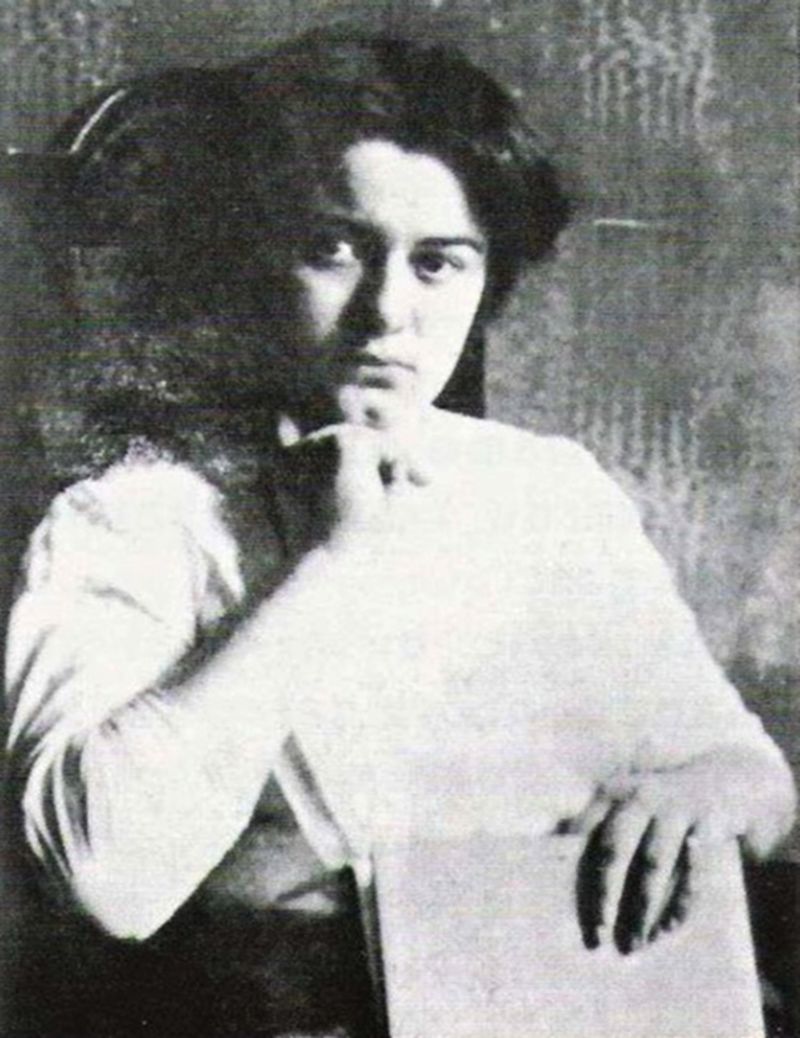
St Teresa Benedicta of the Cross, a Mystic for our Times
We celebrate the feast day of St Teresa Benedict of the Cross on August 9th, and we may ask, who was this great woman whose life was cut short at the age of 51 years old?
Her original name was Edith Stein. Born on 12 October 1891, the highly intelligent Edith in her teenage years rejected God altogether. However, this girl was endowed with a great gift. Whenever she became convinced of the truth of an idea her entire life fell into place around it. It needs to be said that her youthful unruliness came to an end when she became more intellectually aware that her mother’s and sister’s guidance was for her benefit. This realization came to her at the age of seven. Having said that, she completely rejected her mother’s Jewish piety. As time went by Edith lost faith in the idea of God since she could hardly see any witness of self-professed believers, whether Jew or Christian alike. She came to the conclusion that if there was nothing out there why trying to play a game in vain?
Nevertheless, amidst the turbulent events of the time, the aftermath of the First World War, followed by the rise of the Nazis, the gift of faith arrived to her too. At the height of her philosophical career as assistant to the father of existentialism, Edmund Husserl, whose papers for publication she prepared, Edith had a deep transformative experience. In her 30th year of life, in 1921, she picked up the autobiography of Saint Teresa of Avila in a friend’s library. After reading it through she simply could not put it down. In fact, following her reading of it, she adamantly said: This is the truth! And, that affirmation meant for her a permanent change.
Following her baptism in 1922, Edith dropped her university appointment as Husserl’s assistant and went to teach at a Dominican college for women teachers in Speyer, Germany. At this college she became more acquainted with the philosophical works of St Thomas Aquinas. Edith was the one to translate in German St Thomas’ treatise The Truth (De Veritate) for the first time. Immediately she started lecturing across Europe to women’s groups concerning education as well as the Catholic women’s role in it.
When the Nazis snatched the power in Germany and impeded her from teaching because she was Jeiwsh, Edith was moved to make a life-changing decision. Much to her mother’s disillusionment, Edith embraced the Carmelite life taking her name as Sister Teresa Benedicta of the Cross. In Carmel she wrote extensively, particularly Life in a Jewish Family and The Science of the Cross, which is a study of St John of the Cross. She lived a holy life and continually made her self-offering for peace and the unbelief of the Jewish people. Knowing that she was Jewish, the Nazis imposed on Sr Teresa Benedicta of the Cross to put on a Star of David.
Due to the difficult moment she was undergoing, Sr Teresa Benedicta had to flee from her Carmelite monastery in Cologne, to the Carmel in Eht, Holland. Here, the end came, after the Dutch bishops explicitly condemned the Nazis, and they took their vengeance by arresting all Jewish converts to Catholicism in Holland, including Sir Teresa Benedicta. They shamelessly put them into a filthy crowded boxcar and transported them to Poland for their eventual execution.
Edith was killed in the gas chambers of Auschwitz on August 9, 1942 accompanied by her sister Rosa who met this same fate. It was St Pope John Paul II who canonized her as St Teresa Benedicta of the Cross, confessor and martyr, on October 11, 1998.
Beautiful are the words with which Pope St John Paul II ended his homily of the canonization of St Teresa Benedicta of the Cross:
St Teresa Benedicta of the Cross was able to understand that the love of Christ and human freedom are intertwined, because love and truth have an intrinsic relationship. The quest for truth and its expression in love did not seem at odds to her; on the contrary she realized that they call for one another. In our time, truth is often mistaken for the opinion of the majority. In addition, there is a widespread belief that one should use the truth even against love or vice versa. But truth and love need each other. St Teresa Benedicta is a witness to this. The “martyr for love”, who gave her life for her friends, let no one surpass her in love. At the same time, with her whole being she sought the truth, of which she wrote: “No spiritual work comes into the world without great suffering. It always challenges the whole person”. St Teresa Benedicta of the Cross says to us all: Do not accept anything as the truth if it lacks love. And do not accept anything as love which lacks truth! One without the other becomes a destructive lie (no.6).
Her teaching markedly shows how St Teresa Benedicta of the Cross is truly a mystic for our times. She teaches us that when we totally surrender ourselves to God His divine life becomes ours. For by doing what God demands of us with total surrender of our innermost being, we cause the divine life to become our own inner life. Entering into ourselves, we find God in our own selves.
God shows the way in this process through the Church’s liturgy. God Himself teaches us to go forward with our hand in His by means of the Church’s liturgy. Surrender takes place in our day-to-day business. We have to give to God the best of our day. Let go of your plans. The first hour of your morning belongs to God.
The richness of the Carmelite Order is its calling to intercede for everybody. Those who join the Carmelite Order are not lost to their near and dear ones, but have been won for them, because it is our vocation to intercede to God for everyone. You and I are called to be God’s image in every aspect of our earthly lives. In order to be an image of God, the spirit must turn to what is eternal, hold it in spirit, keep it in memory, and by loving it, embrace it in the will.
Do I surrender myself totally to God? Do I believe that if I do that every aspect of my life is transformed? Do I understand that when I let God be God in my life my prayers will be for everyone to undergo the same experience I have been undergoing myself? Is this not what we, in our time, are greatly craving for, namely intimacy with God, each other, ourselves and all the world around us?
St Teresa Benedicta of the Cross, pray for us!

Saint Kateri , Canada’s Protectress
This was the title given to Saint Kateri Tekakwitha, by Pope Benedict XVI, when he canonized her on October 28th, 2012, along with six others, in Saint Peter’ Square (she had been beatified by Pope John Paul II back in 1980). With Saint Joseph as our protector, along with the Canadian martyrs, we seem to[…]Continue reading→

Remembering Father Alphonse de Valk
(Today marks the sixth anniversary of the death of Father Alphonse de Valk, C.S.B., a faithful, courageous and indefatigable Basilian priest, pro-life-and-family apostle, and the founder of Catholic Insight magazine. Here is what we wrote those on his entering into eternity five years ago, as we continue to remember him in our prayers and thoughts)[…]Continue reading→

A Tale of Two Benedicts
A grace-filled Holy Week to all our readers! As we await and prepare for the Resurrection about to dawn upon us, we might keep in mind two Benedicts: Pope Emeritus Benedict XVI, requiescat in pace, elected on this day in 2005; and today’s commemoration of the mystic pilgrim, Benedict Joseph Labre, who died on this[…]Continue reading→

My Name is Bernadette
April 16th is a propitious day, for besides the anniversary of Father de Valk’s death, who founded Catholic Insight in its print form decades ago, and the commemoration of the ‘two Benedicts’, mentioned in accompanying posts, today we also recall Saint Bernadette Soubirous, the young visionary to whom the Virgin Mary appeared numerous times at[…]Continue reading→

Saint Lydwina of Schiedam and Suffering Joyfully
Saint Lydwina of Schiedam (1380 – 1433) was one of the countless and glorious ‘victim souls’ in the history of the Church, those whose lives are filled with suffering, often of an unimaginable intensity, but who suffer joyfully. She was a fifteen-year old Dutch girl, out skating one day, when she fell and broke one[…]Continue reading→

The Glorious Martyrdoms of Martin and Maximus
As we enter into Eastertide, we recall on this 13th of April Pope Saint Martin I (+655), one of the noblest, if most tragic, of the successors of Saint Peter. Born in Umbria, Italy, he was of noble lineage, with great intelligence combined with charity and love of the poor and the Church. While still[…]Continue reading→

Canonizing Sister Faustina and Divine Mercy
HOMILY OF THE HOLY FATHER MASS IN ST PETER’S SQUARE FOR THE CANONIZATION OF SR MARY FAUSTINA KOWALSKA Sunday, 30 April 2000 1. “Confitemini Domino quoniam bonus, quoniam in saeculum misericordia eius”; “Give thanks to the Lord for he is good; his steadfast love endures for ever” (Ps 118: 1). So the Church sings on the Octave of[…]Continue reading→

Divine Mercy Sunday – An Echo of Every Mass
Reach out your hand and put it in my side. Do not doubt but believe’… ‘My Lord and my God!’ (Jn. 20:18)). Today is Divine Mercy Sunday, and as we celebrate the end of the Easter Octave, we contemplate the wounded side of our Saviour, the Church’s source of life. On Good Friday in the[…]Continue reading→
Saint Gemma Galgani
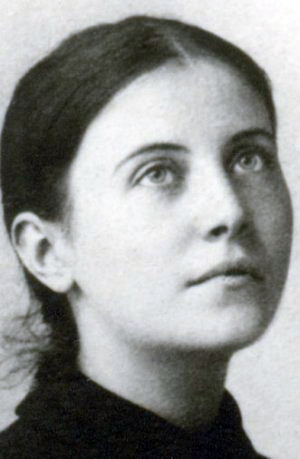
On this April 11th, in 1903 – the same year that the Italian Guiseppe Sarto was elected Pope later that summer as Pius X – a lovely, young Italian woman died, by the name of Gemma Galgani. She lived a brief life of 24 years, as did a number of other young saints, including Pier[…]Continue reading→

First Holy Communion: Sermon from May 16, 1943
Here is a sermon from the good old days by +Rev. Msgr. Vincent Nicholas Foy (August 14, 1915 – March 13, 2017), from 1943. Readers may recall that Pope Saint Pius X, by the decree Quam Singulari in 1910, lowered the customary age of reception of Holy Communion – after the rigours of the plague[…]Continue reading→