
A Happy Independence Day in the Not-So-United States
A joyous Independence Day to all our American readers, one that may be more muted than days of yore in the land of our neighbours – or neighbors – to the south. There are any number of factions developing in the once-United States, but all can be traced back to those who accept the Christian principles guiding the foundation of the republic, from those who have rejected these principles, and want to start something, well, new.
This might have been predicted, for can a nation ever truly persist without being undergirded by the fullness of truth that Christ offers in the Catholic Church? Did the over-exaltation of ‘independence’ descend into individualism, sowing the seeds, however, subtly, for what we are now witnessing? Many of those who hold to ‘self-evident’ truth of the Constitution sent their children, at great expense, to universities and colleges where they were brainwashed that those truths are not self-evident, and that the only ‘truth’ is an insidious doctrine of nihilism, subjectivism, a catering to one’s identity, the passions of the moment, which leads inevitably in an enervated populace to a will-to-power, anarchy, a moral morass that leads only to destruction. De Tocqueville saw this coming in 1835. There are calls for a new secession from an increasingly tyrannical federal government, but how this would play out is anyone’s guess. Who gets the breadbasket?
We can only be independent if we are free, and only free if we live in the truth which ‘sets us free’. How many still actually want the difficult responsibility of freedom? Crisis magazine has a couple of intriguing articles this morning, one on the kind of people the founding fathers envisaged in their new nation – a people disciplined and virtuous, but who have now become dissipated and addicted to all sorts of easy food and pleasures, if not outright vices. In a democracy – insofar as such a thing still exists – such a people can always be bribed with baubles and free handouts. And this is only exacerbated by the millions streaming across the porous southern border (as the northern one remains a scarcely penetrable fortress). It is a question how many of them share the values, the ethics, mores and customs, of what we call ‘America’.
Whither do we go? The Didache, the early teaching of the Apostles, following that exhortation of Moses to the Israelite people, proclaims that there is a way of life, and a way of death, and a great divide exists between the two, as we are tragically discovering. Here’s hoping and praying that, with the symbolic fall of Roe v. Wade, the way of life wins out in the hearts of many.
For a bit of an uplift, as you are washing dishes or preparing a meal, is Mark Steyn’s audio celebration of a happier and more triumphant time in America – which is not that long ago, and what was, might yet be again. As our Faith teaches, we always have a choice, and freedom is ours, but we have to fight, especially against our own lower nature, to keep it.
God bless America, home of the free, and of the brave. As Pope John Paul II said to families, he might have said to the United States: Become what you are!
Carney’s Amoral Majority
After five defections – euphemistically described as ‘crossing the floor’ – and three by-elections, Mark Carney and his Liberals how have their coveted majority. One wonders what bowls of pottage were offered in back-room deals. In the archaic monarchical system that is the Dominion of Canada, this majority allows the newly-minted Prime Minister to rule[…]Continue reading→

Saint Kateri , Canada’s Protectress
This was the title given to Saint Kateri Tekakwitha, by Pope Benedict XVI, when he canonized her on October 28th, 2012, along with six others, in Saint Peter’ Square (she had been beatified by Pope John Paul II back in 1980). With Saint Joseph as our protector, along with the Canadian martyrs, we seem to[…]Continue reading→
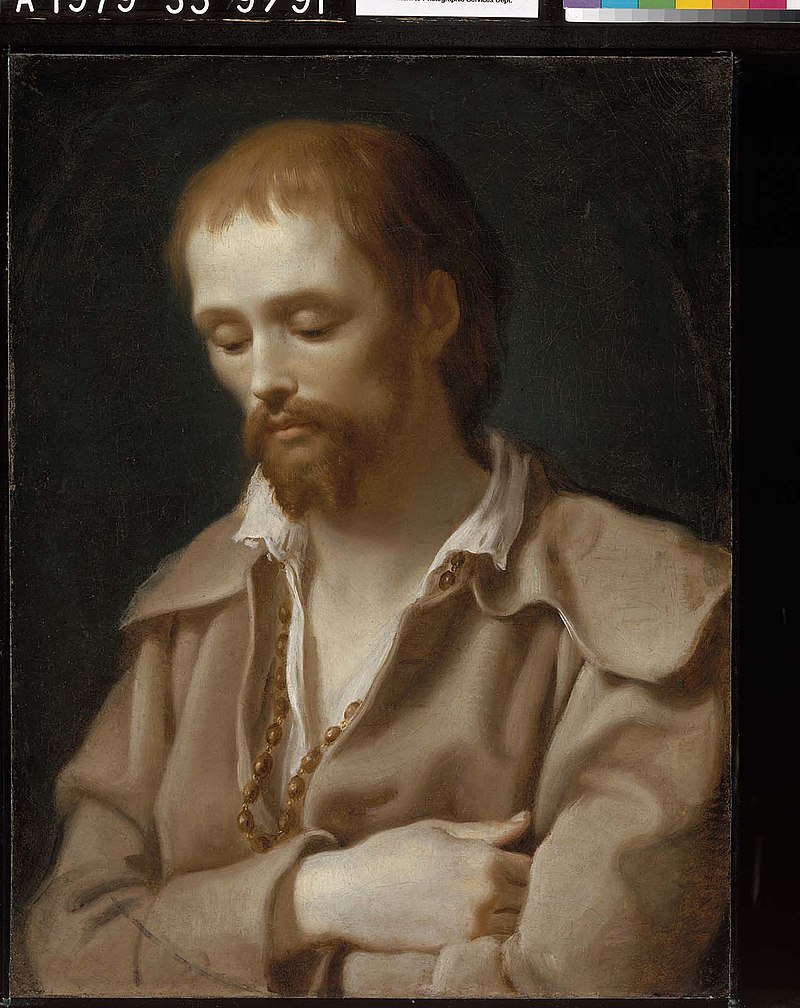
A Tale of Two Benedicts
A grace-filled Holy Week to all our readers! As we await and prepare for the Resurrection about to dawn upon us, we might keep in mind two Benedicts: Pope Emeritus Benedict XVI, requiescat in pace, elected on this day in 2005; and today’s commemoration of the mystic pilgrim, Benedict Joseph Labre, who died on this[…]Continue reading→

My Name is Bernadette
April 16th is a propitious day, for besides the anniversary of Father de Valk’s death, who founded Catholic Insight in its print form decades ago, and the commemoration of the ‘two Benedicts’, mentioned in accompanying posts, today we also recall Saint Bernadette Soubirous, the young visionary to whom the Virgin Mary appeared numerous times at[…]Continue reading→
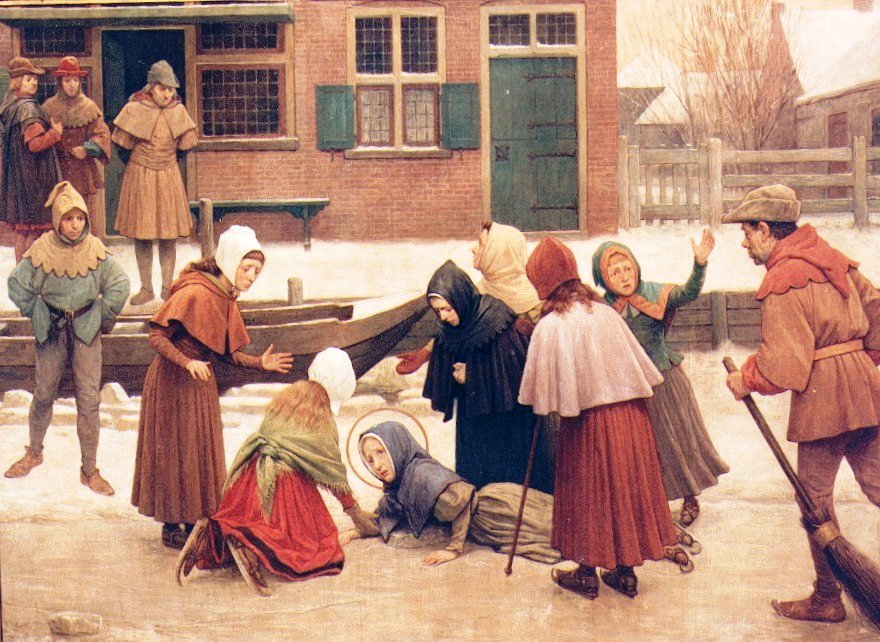
Saint Lydwina of Schiedam and Suffering Joyfully
Saint Lydwina of Schiedam (1380 – 1433) was one of the countless and glorious ‘victim souls’ in the history of the Church, those whose lives are filled with suffering, often of an unimaginable intensity, but who suffer joyfully. She was a fifteen-year old Dutch girl, out skating one day, when she fell and broke one[…]Continue reading→
The Glorious Martyrdoms of Martin and Maximus
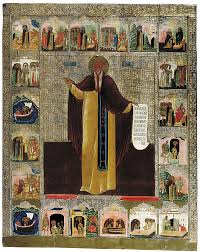
As we enter into Eastertide, we recall on this 13th of April Pope Saint Martin I (+655), one of the noblest, if most tragic, of the successors of Saint Peter. Born in Umbria, Italy, he was of noble lineage, with great intelligence combined with charity and love of the poor and the Church. While still[…]Continue reading→

Saint Stanislaus of Szczepanów
We celebrate Saint Stanislaus today (+ April 11, 1079), in light of this Easter Octave, a bishop and martyr who accepted the episcopacy only at the direct order of Pope Alexander II. He proved a wise and courageous leader of his flock, put to death by his own king, Boleslaus, for rebuking the monarch’s ‘immoral[…]Continue reading→
Saint Gemma Galgani
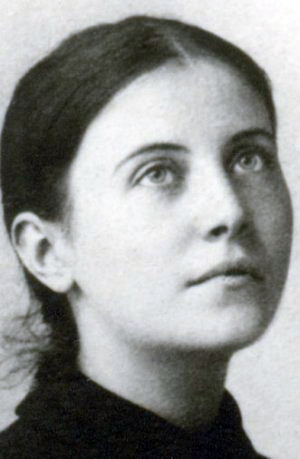
On this April 11th, in 1903 – the same year that the Italian Guiseppe Sarto was elected Pope later that summer as Pius X – a lovely, young Italian woman died, by the name of Gemma Galgani. She lived a brief life of 24 years, as did a number of other young saints, including Pier[…]Continue reading→
An Ideological and Improper Translation
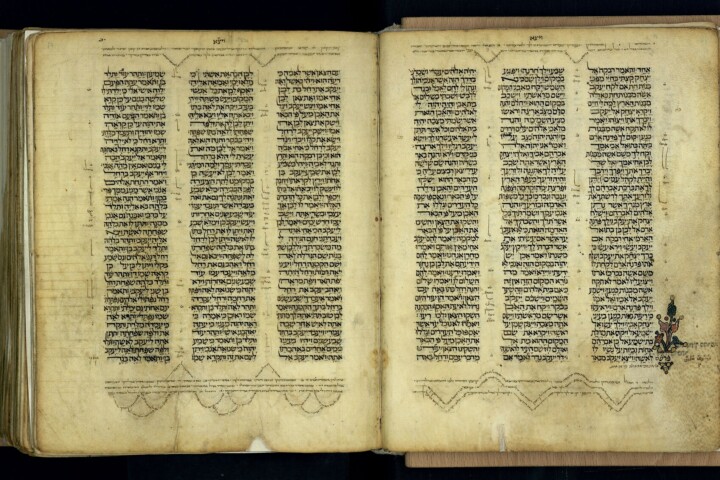
I noticed something odd with the psalm reading at Mass the other day. Our bishops’ conference here in Canada has decreed that the Mass in English – Novus Ordo – use the ‘NRSV’, the ‘New Revised Standard Version’, an ‘updated’ translation of the original RSV, first published in 1952. This ‘new translation’ has the tendency[…]Continue reading→
Saint Jean-Baptiste de la Salle: A Teacher for Teachers
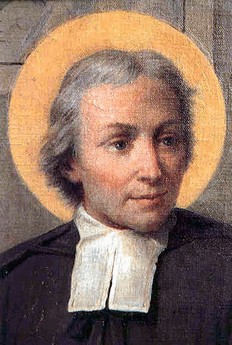
Jean-Baptiste de la Salle (1651 – 1719), a French nobleman, ordained a priest, founded the first order in the Church’s history entirely without priests, and this came about almost by accident. I say ‘almost’, for, of course, there are no accidents with God. Destined for ordination from an early age, Jean-Baptiste never looked back, even[…]Continue reading→