
Complacence, Complaisance, Courage and Christ
Saints Peter and Paul, whom we celebrate today, and John the Baptist, whose birth we recalled a few days ago, were neither complacent nor complaisant. In fact, the saints could be claimed as the patrons against these vices, and of the contrary virtues: humility, zeal and courage, even an (apparently) insouciant fearlessness.
Complacence and complaisance both have the same root – of ‘pleased or pleasing’. The first, derived from the Latin, placere, implies being too pleased with ourselves, thinking we’re ‘good enough’, and not striving higher, whether naturally (music, studies, athletics) or supernaturally (in charity and the other virtues). Complacence is debilitating, in part because there is no such thing as staying still, especially in our spiritual growth. We are either getting better, or worse, moving towards heaven, or hell. We should never be satisfied with where we are, but always striving, fighting our sins, and sinful inclinations. Semper altius, as the Latin has it, or, as the mountain-climbing saint Pier Giorgio would exhort his companions, Verso l’alto! – To the heights!
Complaisance, on the other hand, is derived from the French, plaisir, and implies pleasing not ourselves too much, but others. That is, we make them too comfortable in their own faults and sins, either praising them, or not doing what we should to point these out and help correct them; so, at least by omission, if not commission, we aid and abet them in what harm they wreak, not just on themselves, but on those around them.
But did not Christ tell us not to judge? Ah, yes, we are not to judge anyone’s interior state, and even the exterior actions of most people are, quite frankly, not our concern. But for the people God puts in our way, or especially those over whom we have rightful authority, we have some obligation for proper fraternal correction, one of the spiritual works of mercy.
Consider parents and their children: Being complaisant with the faults of toddlers – which can be sort of cute in the beginning – only makes them wax stronger, turning them into spoiled brats, and then into very unpleasant and socially maladjusted adults.
Bishops and priests must speak the truth to their flock, even, and especially, the difficult truths. Urge, exhort, rebuke, says Saint Paul, in season and out of season! It is natural to want to please others, but it’s not charity to be left complacent with our faults and sins. There are grave derelictions of duty in this area, not least the giving of Communion to pro-abortion politicians and others publicly flouting the moral law, or persisting in ‘manifest, grave sin’. Such complaisance is, to put it mildly, is not helping the state of their souls, nor that of others, by the scandal caused.
And it’s not just bishops and priests. We all have our duty to speak the truth to others, and act upon that truth ourselves, even if awkward and unpleasant. This requires the virtue of prudence, knowing when our words may produce good, but also courage, to speak those words when appropriate.
The Vatican II Decree on the Apostolate of the Laity, Apostolicam Actuositatem, states:
However, an apostolate of this kind does not consist only in the witness of one’s way of life; a true apostle looks for opportunities (occasiones) to announce Christ by words addressed either to non-believers with a view to leading them to faith, or to the faithful with a view to instructing, strengthening, and encouraging them to a more fervent life.
What we do or say, or don’t do and say, makes more of a difference than we might think: Refusing an invitation to an illicit or invalid wedding; not wearing a ‘pride’ button; pointing out the wages of sin, and beauty of the moral law, to those boasting of breaking it; asking a shopkeeper why he’s selling porn, or querying the local pharmacist about his contraceptives; standing firm in your rights in the face of over-zealous Covidian mandates; and what of physicians who provide euthanasia or abortion, even by referral, to keep the peace and their own licences? All of these need the truth offered to them – charitably, but firmly – a word from the Word that hopefully leads to conversion.
The six justices on the Supreme Court were not complaisant in their recent ruling striking down the infamous Roe v. Wade, a great, even miraculous, victory, which will save many lives, and souls. But this decision is quite displeasing to many. I wouldn’t put it past someone in the current administration to pull a King Henry II on their Thomas a Beckets. Who will rid us of these meddlesome justices? How that one would-be assassin decked out with full military gear got on a plane and showed up at Kavanaugh’s house, is still a mystery. May God protect His own, and those who do His will.
I have my reservations on giving such momentous moral decisions to nine, unelected, ermine-robed lawyers, brought to tragic focus in the threats of violence and death against them. They should not have to bear such a brunt, and the Supreme Court should unburden itself of such burdens. Justice Clarence Thomas is right: It’s time also to revisit previous decisions on contraceptives, same-sex ‘marriage’, and a host of other issues.
Hadley Arkes has an intriguing take on this decision, and why the justices did not go farther, to pronounce on the actual personhood of the unborn child. He’s right. For why should a child be protected in Missouri from conception, but it’s open season all nine months in New York? Chemical abortions – by far, the major cause of death of the unborn – also continue unabated, as does the degradation of marriage, family life, the corruption and mutilation of children, and on it goes.
Mr. Arkes’ point is quite Thomistic, that behind all law there is a philosophy, and behind that philosophy there is a theology, a religion, one’s view of the cosmos, life, eternity, and what it means to be human. Outside of Christ, there are not true and complete answers to those questions, and too many very, very wrong ones. As Gaudium et Spes puts it: The truth is that only in the mystery of the incarnate Word does the mystery of man take on light.
Without that Light that has come into the world, we stumble in the darkness.
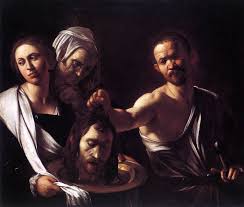
Saint John the Baptist, whose birth we celebrate in these days, gave up his own life as a witness to the truth, ‘He must increase, and I must decrease’, as did Peter, ‘we must obey God rather than men’, and Paul, ‘woe to me if I do not preach the Gospel!’. All gave their lives as a witness for the truth. For Christ, we too must be willing to give everything. But we will receive far more than that in return. Now is not the time to remain complacent, nor complaisant. Courage, mes frères et sœurs! The battle is just beginning.
Carney’s Amoral Majority
After five defections – euphemistically described as ‘crossing the floor’ – and three by-elections, Mark Carney and his Liberals how have their coveted majority. One wonders what bowls of pottage were offered in back-room deals. In the archaic monarchical system that is the Dominion of Canada, this majority allows the newly-minted Prime Minister to rule[…]Continue reading→

Saint Kateri , Canada’s Protectress
This was the title given to Saint Kateri Tekakwitha, by Pope Benedict XVI, when he canonized her on October 28th, 2012, along with six others, in Saint Peter’ Square (she had been beatified by Pope John Paul II back in 1980). With Saint Joseph as our protector, along with the Canadian martyrs, we seem to[…]Continue reading→

A Tale of Two Benedicts
A grace-filled Holy Week to all our readers! As we await and prepare for the Resurrection about to dawn upon us, we might keep in mind two Benedicts: Pope Emeritus Benedict XVI, requiescat in pace, elected on this day in 2005; and today’s commemoration of the mystic pilgrim, Benedict Joseph Labre, who died on this[…]Continue reading→

My Name is Bernadette
April 16th is a propitious day, for besides the anniversary of Father de Valk’s death, who founded Catholic Insight in its print form decades ago, and the commemoration of the ‘two Benedicts’, mentioned in accompanying posts, today we also recall Saint Bernadette Soubirous, the young visionary to whom the Virgin Mary appeared numerous times at[…]Continue reading→

Saint Lydwina of Schiedam and Suffering Joyfully
Saint Lydwina of Schiedam (1380 – 1433) was one of the countless and glorious ‘victim souls’ in the history of the Church, those whose lives are filled with suffering, often of an unimaginable intensity, but who suffer joyfully. She was a fifteen-year old Dutch girl, out skating one day, when she fell and broke one[…]Continue reading→

The Glorious Martyrdoms of Martin and Maximus
As we enter into Eastertide, we recall on this 13th of April Pope Saint Martin I (+655), one of the noblest, if most tragic, of the successors of Saint Peter. Born in Umbria, Italy, he was of noble lineage, with great intelligence combined with charity and love of the poor and the Church. While still[…]Continue reading→

Saint Stanislaus of Szczepanów
We celebrate Saint Stanislaus today (+ April 11, 1079), in light of this Easter Octave, a bishop and martyr who accepted the episcopacy only at the direct order of Pope Alexander II. He proved a wise and courageous leader of his flock, put to death by his own king, Boleslaus, for rebuking the monarch’s ‘immoral[…]Continue reading→
Saint Gemma Galgani
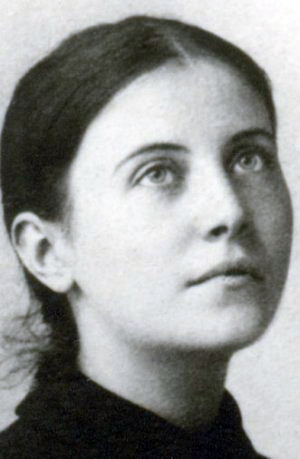
On this April 11th, in 1903 – the same year that the Italian Guiseppe Sarto was elected Pope later that summer as Pius X – a lovely, young Italian woman died, by the name of Gemma Galgani. She lived a brief life of 24 years, as did a number of other young saints, including Pier[…]Continue reading→
An Ideological and Improper Translation
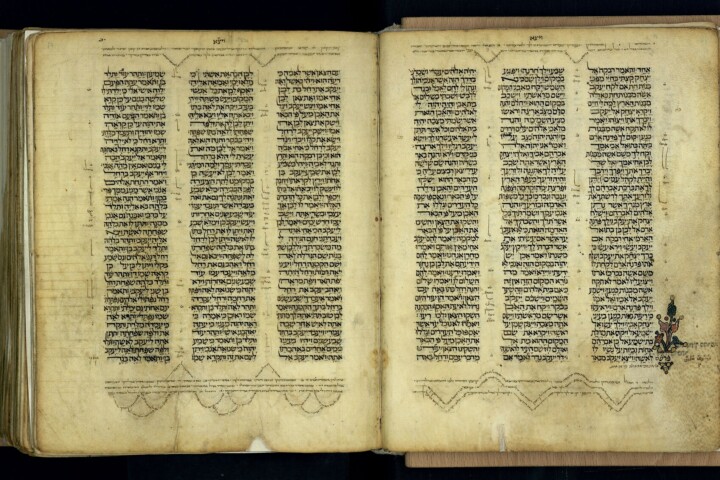
I noticed something odd with the psalm reading at Mass the other day. Our bishops’ conference here in Canada has decreed that the Mass in English – Novus Ordo – use the ‘NRSV’, the ‘New Revised Standard Version’, an ‘updated’ translation of the original RSV, first published in 1952. This ‘new translation’ has the tendency[…]Continue reading→
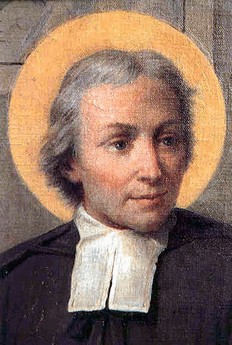
Saint Jean-Baptiste de la Salle: A Teacher for Teachers
Jean-Baptiste de la Salle (1651 – 1719), a French nobleman, ordained a priest, founded the first order in the Church’s history entirely without priests, and this came about almost by accident. I say ‘almost’, for, of course, there are no accidents with God. Destined for ordination from an early age, Jean-Baptiste never looked back, even[…]Continue reading→