
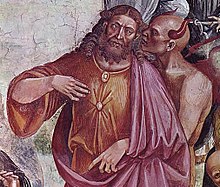
Antichrist, Apocalypse and Abortion
Children, it is the last hour; and as you have heard that antichrist is coming, so now many antichrists have come; therefore we know that it is the last hour.
So writes Saint John in today’s reading (1 John 2:18), and we may wonder who or what is this mysterious figure of the ‘antichrist’, of whom Hollywood has made much hay? Behind all the hype, our Tradition holds that towards the end of time and history, a person will appear who will be like Christ, but opposed to Him, in fact, His opposite. He will wage war upon the Church and her members, and bring about the ‘final unleashing of evil’ that will be the sign, and the prompt, of Christ’s triumphant return, His Second Coming, which will destroy not only antichrist and all his apparent triumphs, but also dissolve the world in fire, as Saint Peter says, before the Final Judgement of every human who has ever lived, and the creation of the new heavens and earth.
Whew.
We could get really wrapped in all of this, and many have, but we must keep our wits about us, a sobriety and balance, which is one reason that Saint John cautions that ‘many antichrists have already come’. For the antichrist is nothing new – only a more vivid manifestation of something we already know, and have experienced in some inchoate way.
This is the doctrine of typology, one of the primary modes of Scriptural interpretation, wherein some person, thing or event, usually in the New Testament, is prefigured and foreshadowed in the Old Testament: (The Greek ‘typos’ is literally the imprint left by a nail or other object; hence, our term ‘typography’, the image on a page from the ‘type’). Thus, David and Moses are types of Christ, the Ark a type of the Church, Naaman’s washing in the Jordan and the crossing of the Red Sea as types of Baptism, and so on.
What applies to Christ and His Church also applies, in an analogous way, to antichrist and his own reign. Here we find types not only in Scripture but, perhaps even more so, in history, for as we will see, the antichrist is limited in his power to this world alone.
There are biblical antichrists: Pharaoh, Nebuchadnezzar, Antiochus Epiphanes.
And there are any number of historical ones, from Nero, Henry VIII, Napoleon, Stalin, Hitler – all the powerful figures (in earthly terms) who persecuted the Church and her faithful.
And just as many antichrists have come, so too the antichrist will one day arrive on the scene, and it is requisite that we recognize him, so that we not be led astray by his deceptions.
So here are some signs of the antichrist, drawn from Scripture, and our Tradition. For a more complete treatment, the reader should peruse Cardinal Newman’s much more full reflection on the religion of the antichrist:
- Saint Paul describes the antichrist as a ‘man of sin’ (hamartia) and a ‘man of lawlessness’. He will present himself as virtuous, but, like the whitewashed sepulchres, will be full of all kinds of rot inside. He is described by the Fathers as a man ‘consumed with evil’.
- Saint John writes that the antichrist will deny the Incarnation, that Christ truly took our flesh and our nature. We need not look far for that spirit in our world, but it will come full bore soon. Already it is manifested in a loss of faith in the Real Presence.
- On the contrary, the antichrist will present himself as divine, exalting himself against God, and demand universal worship, the latria – adoration – that belongs to God alone.
- This religion of the antichrist will be a ‘secular messianism’, a salvation within the confines and limits of this world alone. He will be a charismatic wonderworker, bringing peace to solve some sort of worldwide calamity – more on that below – but a false peace, along with his false worship. He will be a liar, and lead many astray.
- The cost of joining this secular religion of the antichrist will be apostasy from the Truth, a denial of Christ, His Incarnation and His Church. As Saint John writes a few lines from the quotation above: Who is the liar but he who denies Jesus is the Christ? This is the antichrist, he who denies the Father and the Son.
- The sign of this apostasy – a kind of inversion of the spiritual character of Baptism – will be the ‘mark of the beast’, on one’s forehead or hand (which could be figurative), without which one will not be able to buy or sell.
- The ‘number’ of the beast, and of this mark, will be the strange ‘666’. Again, from typology, ‘six’ signifies partial perfection, the days of creation of this world, while ‘seven’ signifies full perfection, the Sabbath, on which God rested, signifying transcendence, and that this world is not all there is. See, ‘secular messianism’, above.
- Pope Saint Gregory VII writes in today’s Office of Readings: the nearer the time of Antichrist approaches, the more violently he strives to destroy the Christian religion. He will wage war upon the Church and her faithful, and there will be – as there have been – many glorious martyrs. Yet the power and the time of the antichrist will be limited, within what the omnipotence of God permits. In the end, when all things have been fulfilled, the antichrist and all who have joined him will be defeated, slain and cast into the ‘lake of fire’ by the return of Christ, while those who have remained faithful to the truth will enter everlasting joy.
The deception of the antichrist will be subtle, mixed in with much good, but with an unhealthy dose of intrinsic evil. This is partly already upon us, and has been since the time of Christ, but always perceptible to those with ‘eyes to see and ears to hear’, who remain faithful to Christ, and His Church. Whatever we do, we must not apostatize, holding fast to the Church, the Eucharist, the Sacraments, and the truth that the Second Person of the Blessed Trinity truly took flesh, and dwelt amongst us. This is what the antichrist will strive to make us deny. Some do quite freely, for Esau’s proverbial ‘bowl of pottage’ – sexual pleasure, passing scandal, money – while others take, shall we say, more coercing. But remember, that he who perseveres to the end, shall be saved.
The reader may ask, why the antichrist? Why would God allow him to exist, never mind wield such power and wreak such havoc?
This prompts a deeper question, of why evil at all, which Pope Saint John Paul II discussed in his 1984 Apostolic Letter Salvifici Doloris, alluded to in Audrey Yu’s recent article in these pages on joyful suffering.
A glimpse of an answer – or at least a response – may be found in the notion of apocalypse, which will unfold at the time of the antichrist. Apocalypse is the Greek term for revelation, the name of the last book of the Bible describing what will happen in the last days. One of the reasons God permits evil is to reveal to ourselves who we are, and what, or whom, we have chosen, at the deepest level of our being. Virtue is tested in adversity, as Aristotle wrote. Are we for Christ or – as the very name of antichrist implies – against Him?
Every calamity is a small ‘a’ apocalypse, as we may describe floods, hurricanes, plagues or economic woes. In that final tumult, however, the eschatological war of good versus evil, our hearts will be laid bare, along with all the choices we have made, even the most secret.
We will all have to choose sides, in a spiritual war for souls that has been going on since the beginning of time, but as history proceeds, increases in intensity, factions divide more deeply, as that final harvest of the wheat and the tares approaches.
One might respond: Have we not already chosen? Yes, but that choice is not fixed until the moment of our death, whether before or at the end of time, and repentance is always open to us, by the grace of God. The purpose of revealing ourselves to ourselves in the various apocalypses, and the final Apocalypse, is that we might realize what we have done, and who we are, and so may repent before that final Parousia and judgement, after which there is no repentance.
Even the antichrist has a choice, as recounted in fictional form in Michael O’Brien’s Father Elijah, when the eponymous priest confronts the ‘evil one’. All that is needed is a good confession, or at least some prayer of contrition offered to God, motivated by love of Him. There is hope for each and every one of us, even the most hardened sinner, so long as there is breath in our bodies.
A final word, as the recent Canadian March for Life is still vivid in my memory, and as we also witness a paroxysm of fury unfold south of the border in response to the possible overturning of Roe v. Wade. For abortion – the horrific slaughter of the most innocent and defenceless – is just such an ‘apocalyptic’ litmus test. I don’t think I’ve ever seen rank evil up close and personal as in those lewd, crude and all-too-young pro-abortion protestors on the other side of the fence in front of Parliament Hill, screaming their obscenities and blasphemies.
Again, to Pope John Paul II, where he writes in the conclusion of Evangelium Vitae:
It is precisely in the “flesh” of every person that Christ continues to reveal himself and to enter into fellowship with us, so that rejection of human life, in whatever form that rejection takes, is really a rejection of Christ. (par. 104)
Those who advocate for the murder of the unborn are doing the work of the antichrist, destroying God’s very image in the flesh. This is not to pronounce judgement on them, far less condemnation; that is Christ’s prerogative, and I can but paraphrase His own words, that I hope they know not what they do. The human heart is deep and mysterious, and only God can plumb its depths. And I can say that of my own sins, perhaps not quite as visible as the screaming mob, but how have I responded to, or rejected, the graces offered to me? Who of us can claim his own righteousness before the living God?
We are a people of hope, and as the darkness swirls around us, the light shines out more brightly. May we pray that all choose the side of life, truth, goodness, beauty – all that Christ offers, and reject the death, falsity, evil and ugliness of the Evil One. +
Carney’s Amoral Majority
After five defections – euphemistically described as ‘crossing the floor’ – and three by-elections, Mark Carney and his Liberals how have their coveted majority. One wonders what bowls of pottage were offered in back-room deals. In the archaic monarchical system that is the Dominion of Canada, this majority allows the newly-minted Prime Minister to rule[…]Continue reading→

Saint Kateri , Canada’s Protectress
This was the title given to Saint Kateri Tekakwitha, by Pope Benedict XVI, when he canonized her on October 28th, 2012, along with six others, in Saint Peter’ Square (she had been beatified by Pope John Paul II back in 1980). With Saint Joseph as our protector, along with the Canadian martyrs, we seem to[…]Continue reading→

A Tale of Two Benedicts
A grace-filled Holy Week to all our readers! As we await and prepare for the Resurrection about to dawn upon us, we might keep in mind two Benedicts: Pope Emeritus Benedict XVI, requiescat in pace, elected on this day in 2005; and today’s commemoration of the mystic pilgrim, Benedict Joseph Labre, who died on this[…]Continue reading→

My Name is Bernadette
April 16th is a propitious day, for besides the anniversary of Father de Valk’s death, who founded Catholic Insight in its print form decades ago, and the commemoration of the ‘two Benedicts’, mentioned in accompanying posts, today we also recall Saint Bernadette Soubirous, the young visionary to whom the Virgin Mary appeared numerous times at[…]Continue reading→

Saint Lydwina of Schiedam and Suffering Joyfully
Saint Lydwina of Schiedam (1380 – 1433) was one of the countless and glorious ‘victim souls’ in the history of the Church, those whose lives are filled with suffering, often of an unimaginable intensity, but who suffer joyfully. She was a fifteen-year old Dutch girl, out skating one day, when she fell and broke one[…]Continue reading→

The Glorious Martyrdoms of Martin and Maximus
As we enter into Eastertide, we recall on this 13th of April Pope Saint Martin I (+655), one of the noblest, if most tragic, of the successors of Saint Peter. Born in Umbria, Italy, he was of noble lineage, with great intelligence combined with charity and love of the poor and the Church. While still[…]Continue reading→

Saint Stanislaus of Szczepanów
We celebrate Saint Stanislaus today (+ April 11, 1079), in light of this Easter Octave, a bishop and martyr who accepted the episcopacy only at the direct order of Pope Alexander II. He proved a wise and courageous leader of his flock, put to death by his own king, Boleslaus, for rebuking the monarch’s ‘immoral[…]Continue reading→
Saint Gemma Galgani
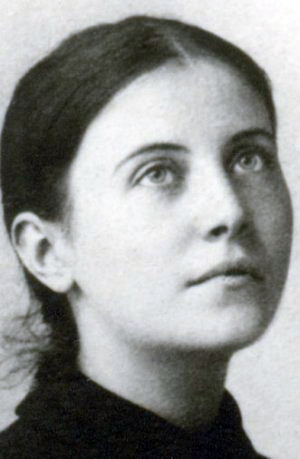
On this April 11th, in 1903 – the same year that the Italian Guiseppe Sarto was elected Pope later that summer as Pius X – a lovely, young Italian woman died, by the name of Gemma Galgani. She lived a brief life of 24 years, as did a number of other young saints, including Pier[…]Continue reading→
An Ideological and Improper Translation
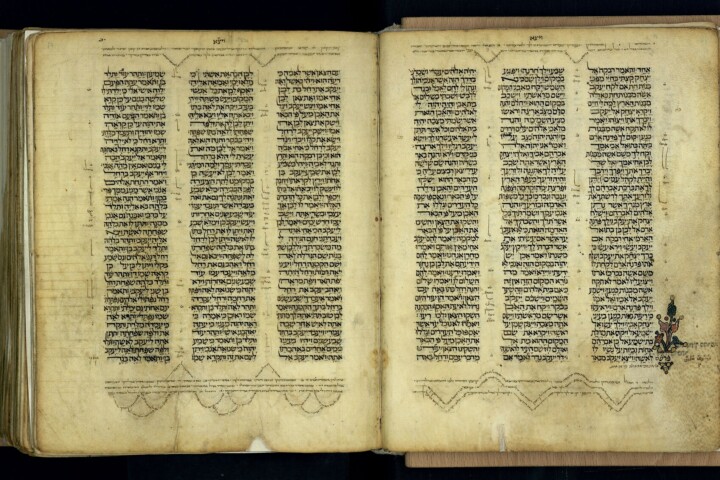
I noticed something odd with the psalm reading at Mass the other day. Our bishops’ conference here in Canada has decreed that the Mass in English – Novus Ordo – use the ‘NRSV’, the ‘New Revised Standard Version’, an ‘updated’ translation of the original RSV, first published in 1952. This ‘new translation’ has the tendency[…]Continue reading→
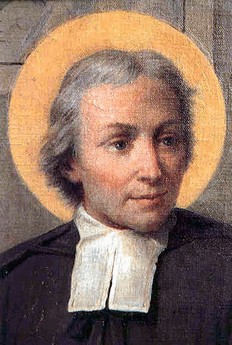
Saint Jean-Baptiste de la Salle: A Teacher for Teachers
Jean-Baptiste de la Salle (1651 – 1719), a French nobleman, ordained a priest, founded the first order in the Church’s history entirely without priests, and this came about almost by accident. I say ‘almost’, for, of course, there are no accidents with God. Destined for ordination from an early age, Jean-Baptiste never looked back, even[…]Continue reading→