
George Weigel’s Double Standard
George Weigel, papal biographer and social commentator, certainly has his fixed opinions, and I don’t mind that, even if I may at times disagree just as fixedly. I will leave aside his tendentious, one might say extreme, view of the Ukraine-Russia conflict, which comes across as slightly unhinged. Even the Pope – who publicly kissed a Ukrainian battle flag a few weeks ago – recently mused whether NATO ‘barking at the door’ may have provoked Russia (and this, without condoning Russia’s response). Others warned of this a quarter of a century ago. We seem to be witnessing Dr. Strangelove unfold in slow motion, only we hope with a more felicitous ending.
Anon. Mr. Weigel is free to speak his mind, and to express them in multiple Catholic publications. What he is not free to do, at least as a public Catholic intellectual theologian, is to support intrinsic evil, and pass it off as good, or at least justifiable.
Here is the rub: He recently condemned the bombing of Mariupol, and the deliberate targeting of civilians, and rightly so:
By the wanton slaughter of innocents in Bucha, in Mariupol’, and throughout Ukraine, Vladimir Putin has stigmatized himself with the mark of Cain.
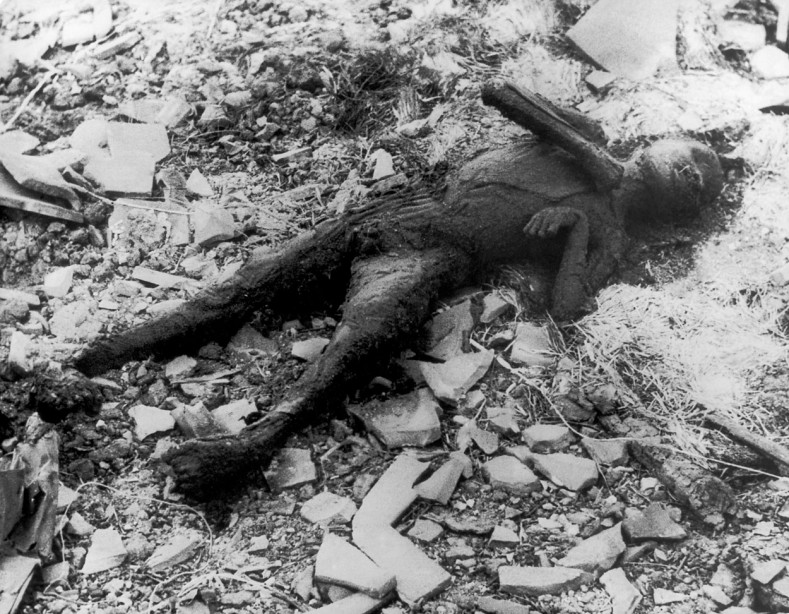
But just a couple of years ago, Mr. Weigel wrote a piece justifying Truman’s decision in 1945 to totally destroy the cities of Hiroshima and Nagasaki – men, women, children, the old, the sick, the infirm, and the unborn – by the newly-invented nuclear bomb. Weigel, following Truman, claims that such a brutal act was necessary to stop the war, and adds a bit of personal investment, that it may have saved his own father’s life, who was in the military, in preventing a long, drawn out conventional war to subdue the Japanese military.
Now, he may claim that Putin had an evil intent, while Truman had a good one, but, even if so, that that is not how morality works. Rather, as Pope John Paul II makes clear in his 1993 encyclical, Veritatis Splendor, the first and most fundamental criterion of a moral act is the object, the kind of act that is being done, before one goes on to discern intention and circumstances.
If the object is intrinsically evil, then one need go no farther, for such actions can never be done, and are condemned semper et ubique. One must on the contrary be willing to die, and even allow others to die, than commit such actions. Pope John Paul waxes eloquent on this theme for several pages.
The deliberate killing of the innocent – also known as murder – is just such an intrinsic evil. And it’s evil regardless of one’s intentions (stopping a war), or the pressing and urgent circumstances (the thousands who may die otherwise).
How can it be that Mr. Weigel, as a Catholic apologist, condones and justifies the indiscriminate incineration of Hiroshima and Nagasaki? If this be allowed, what else may follow? This question that becomes more pertinent as the possibility of the military use of nuclear weapons looms before us yet again.
I wrote of this a few years ago, when another magazine published two pieces, one before my own, and another afterwards, justifying the bombing as a ‘necessary evil’.
And many years before that, in 1956, philosopher Elizabeth Anscombe – God rest her profound and uncompromising soul – had a longer and more in-depth response, which she wrote in objection to her own college at Oxford granting Truman an honorary doctorate.
That otherwise orthodox and commendable Catholic publications would publish anything supporting such intrinsic evil is a scandal, and I would suggest that they, and Mr. Weigel, retract, for everything else they write is tainted by this.
As the Pastoral Constitution of the Church declares (80.3), quoted also in the Catechism (#2314),
Every act of war directed to the indiscriminate destruction of whole cities or vast areas with their inhabitants is a crime against God and man, which merits firm and unequivocal condemnation.
This applies to Hiroshima, Nagasaki, as well as the conventional bombings in Tokyo (on this day, May 9th, 1945), Dresden, Hamburg, Syria, Afghanistan, and Ukraine. This moral prohibition also binds the consciences of Mr. Weigel, Putin, all world leaders, Supreme Court justices, the Holy Father and every human being on the face of God’s good earth. We simply cannot – must not – kill the innocent, nor commit any moral evil, for the sake even of the highest good. We must rather trust that God’s ways are not our ways, and He will bring about His holy will in due time. It would be the worst sort of tragedy were we to lose our own souls, even to save the world.

Carney’s Amoral Majority
After five defections – euphemistically described as ‘crossing the floor’ – and three by-elections, Mark Carney and his Liberals how have their coveted majority. One wonders what bowls of pottage were offered in back-room deals. In the archaic monarchical system that is the Dominion of Canada, this majority allows the newly-minted Prime Minister to rule[…]Continue reading→

Saint Kateri , Canada’s Protectress
This was the title given to Saint Kateri Tekakwitha, by Pope Benedict XVI, when he canonized her on October 28th, 2012, along with six others, in Saint Peter’ Square (she had been beatified by Pope John Paul II back in 1980). With Saint Joseph as our protector, along with the Canadian martyrs, we seem to[…]Continue reading→

A Tale of Two Benedicts
A grace-filled Holy Week to all our readers! As we await and prepare for the Resurrection about to dawn upon us, we might keep in mind two Benedicts: Pope Emeritus Benedict XVI, requiescat in pace, elected on this day in 2005; and today’s commemoration of the mystic pilgrim, Benedict Joseph Labre, who died on this[…]Continue reading→

My Name is Bernadette
April 16th is a propitious day, for besides the anniversary of Father de Valk’s death, who founded Catholic Insight in its print form decades ago, and the commemoration of the ‘two Benedicts’, mentioned in accompanying posts, today we also recall Saint Bernadette Soubirous, the young visionary to whom the Virgin Mary appeared numerous times at[…]Continue reading→

Saint Lydwina of Schiedam and Suffering Joyfully
Saint Lydwina of Schiedam (1380 – 1433) was one of the countless and glorious ‘victim souls’ in the history of the Church, those whose lives are filled with suffering, often of an unimaginable intensity, but who suffer joyfully. She was a fifteen-year old Dutch girl, out skating one day, when she fell and broke one[…]Continue reading→

The Glorious Martyrdoms of Martin and Maximus
As we enter into Eastertide, we recall on this 13th of April Pope Saint Martin I (+655), one of the noblest, if most tragic, of the successors of Saint Peter. Born in Umbria, Italy, he was of noble lineage, with great intelligence combined with charity and love of the poor and the Church. While still[…]Continue reading→

Saint Stanislaus of Szczepanów
We celebrate Saint Stanislaus today (+ April 11, 1079), in light of this Easter Octave, a bishop and martyr who accepted the episcopacy only at the direct order of Pope Alexander II. He proved a wise and courageous leader of his flock, put to death by his own king, Boleslaus, for rebuking the monarch’s ‘immoral[…]Continue reading→
Saint Gemma Galgani
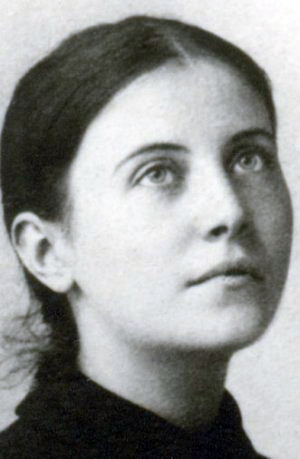
On this April 11th, in 1903 – the same year that the Italian Guiseppe Sarto was elected Pope later that summer as Pius X – a lovely, young Italian woman died, by the name of Gemma Galgani. She lived a brief life of 24 years, as did a number of other young saints, including Pier[…]Continue reading→
An Ideological and Improper Translation
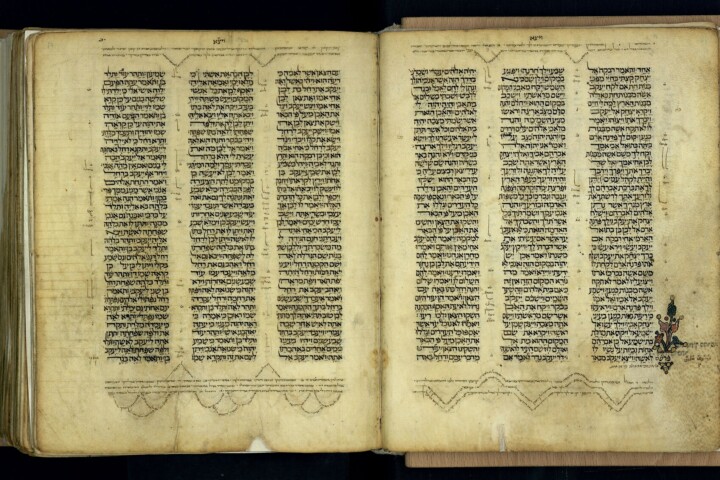
I noticed something odd with the psalm reading at Mass the other day. Our bishops’ conference here in Canada has decreed that the Mass in English – Novus Ordo – use the ‘NRSV’, the ‘New Revised Standard Version’, an ‘updated’ translation of the original RSV, first published in 1952. This ‘new translation’ has the tendency[…]Continue reading→
Saint Jean-Baptiste de la Salle: A Teacher for Teachers
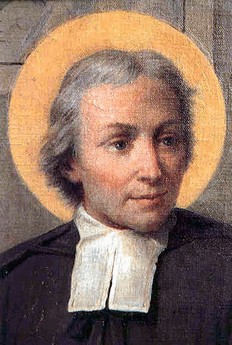
Jean-Baptiste de la Salle (1651 – 1719), a French nobleman, ordained a priest, founded the first order in the Church’s history entirely without priests, and this came about almost by accident. I say ‘almost’, for, of course, there are no accidents with God. Destined for ordination from an early age, Jean-Baptiste never looked back, even[…]Continue reading→