
Our Lord’s Baptism and Our Lady
And a voice came from heaven, ‘You are my Son, the Beloved; with you I am well pleased’ (Lk. 3:22). ⧾
Today’s Feast of the Lord’s Baptism brings to a completion our celebration of Christmas and the Epiphany. The Epiphany specifically celebrates the manifestation of Christ Our Lord to the nations and today’s Feast likewise celebrates a manifestation of Our Lord as the Son of God, the Beloved. ‘You are my Son, the Beloved; with you I am well pleased’ (Lk. 3:22). As God, Jesus did not need to receive John’s baptism of repentance but He did so as an example for us for whom baptism marks the beginning of the life of grace, our own divine filiation. An ancient antiphon from the Liturgy of the Epiphany places today’s Feast of Our Lord’s Baptism and the Christmas Mystery within the perspective of God’s plan of salvation: Three mysteries mark this holy day: today the star leads the Magi to the Infant Christ; today water is changed into wine for the wedding feast; today Christ wills to be baptized by John in the river Jordan to bring us salvation (Magnificat Antiphon, Second Vespers). Though separated chronologically, each of these events in the life of Our Lord proclaims the revelation and manifestation of His divinity.
Next Sunday we will reflect on the wedding feast. As you know, it is Our Lady who brings to attention the need for wine; and as a way of connecting today’s meditation with our reflection next Sunday, I would like with you to dwell on Our Lady’s place in the events of Christmas and the Epiphany and generally in the Mystery of Salvation as it continues to unfold in historical events and no less in the interior reality that is our own individual soul. If we give Our Lady the place she deserves in our own spiritual life, our lives will be literally transformed by her gentle and loving presence.
The role of Our Lady, the Mother of the Messiah in the unfolding of the Christian mystery is neither peripheral nor unimportant. Sometimes – and this is a very sad thing – Christians who maintain to be wholly dedicated to a biblical approach to the truth about Jesus Christ Our Saviour, claim that Our Lady has no place in the proclamation of the Gospel, and certainly no place in our personal relationship with Our Saviour. Nothing could be further from the truth and from the witness of Sacred Scripture; for if the good news of salvation is that God became Man in order to save a wayward humanity, the fact that He didn’t simply appear but sanctified every moment of human life from conception to death, then the agency of a woman was indispensable. In the fullness of time God sent forth His Son, born of a woman, born under the law, to redeem those who were under the law, so that we might receive adoption as sons (Gal. 4:4-5). That woman was Mary of Nazareth, the chosen daughter of Israel; and her place in the Christmas Mystery is central because it is prefigured in the Old Testament and fulfilled in the New. As the Mother of the Saviour, she continues to exercise a spiritual maternity for the Church as a whole and for each and every authentic disciple of Jesus Christ. In the intimate connection among the mysteries of the Christian faith (nexus mysteriorum) Our Lady is never absent. If we read Sacred Scripture attentively and without bias and prejudice, we come to see the truth of the Sacred Scriptures and the coherent truth of this Catholic approach to the Mystery of God. Simply put, one does not find Jesus without going through Mary. Ad Jesum per Mariam. To Jesus through Mary.
This was true at Our Lord’s Nativity. The shepherds went with haste to Bethlehem and found Mary and Joseph and the Child lying in a manger (Lk. 2:16). It was likewise true at Our Lord’s Epiphany: On entering the house, they saw the Child with Mary his mother; and they knelt down and worshiped him. Then opening their treasure chests, they offered him gifts of gold, frankincense, and myrrh (Mt. 2:11). Why do both Luke and Matthew draw our attention to Mary, even omitting the mention of Our Lord’s Holy Name? The Evangelists give her this prominence because they are presenting her as the Gebirah – the Queen Mother who presents her Son to the world as King (Mt. 2:2), Saviour and Lord (Lk. 2:11).
When we consider the Old Testament figure of the Queen Mother (Gebirah) and her role and function we see how Our Lady, the Mother of Our Saviour is prefigured, especially in her role as intercessor. The queen mother of Israel interceded on behalf of the subjects of the kingdom. She was their most powerful, and therefore preferred, advocate. She stood at the king’s right hand, a place of honour. The queen mother’s specific place of honour and intercession is perhaps most dramatically illustrated by Bathsheba the mother of King Solomon (Cf. 1 Kings 2:13-21).
Next Sunday we will reflect in greater depth on Our Lady’s role as intercessor and Queen as we read the account of the wedding feast at Cana in Galilee. For now, as we bring to a close our joyful observance of the Christmas Mystery which celebrates the manifestation of Christ the Lord, let us resolve in union with Mary our Mother and our Queen first to love Him as our personal Lord and Saviour; never forgetting that in her role as Mother of God Mary has been associated with the work of the Divine Redeemer. Those nations where this truth was in some cases violently denied through the destruction of Marian shrines are barely Christian today. In the aftermath of the Second Vatican Council similar efforts were made in many of our churches and the effects have been disastrous. By God’s grace, we know better. Our Lady guarantees the truth of Our Lord’s humanity and her singular privileges in view of her exalted role as Mother of the Messiah bear witness to His divinity. Christ is King from all eternity; Mary became Queen at the moment in which she conceived the Father’s Only-Begotten Son. Christ is King because He is God and Man; and Our Lady is Queen because she is His Mother and Associate.
At our own baptism we were conformed to Christ Our Lord and Saviour. On that day His Mother became our Mother and our Queen. Those who will not have Mary as their Mother cannot have Jesus as their brother; and those who do not have Jesus as their brother cannot have God as their Father. As we contemplate the nativity scene one last time today, this mosaic of humility invites us to kneel before the Saviour in the arms of His Mother, our Mother and our Queen. Before Him she is our advocate in all our needs. Devotion to her is an essential aspect of our Christian faith. She Our Lady’s faith precedes and accompanies us as a beacon and a model of Christian maturity for the disciple who endeavours to be fully trained (Cf. Lk. 6:40) As we pray for the Triumph of Our Lady’s Immaculate Heart, with great love and confidence we invoke her as Mother and Queen, confident in her powerful intercession: Turn then, O most gracious advocate, thine eyes of mercy towards us; and after this our exile show unto us the blessed fruit of thy womb, Jesus. O clement, O loving, O sweet, Virgin Mary. ⧾

Saint Kateri , Canada’s Protectress
This was the title given to Saint Kateri Tekakwitha, by Pope Benedict XVI, when he canonized her on October 28th, 2012, along with six others, in Saint Peter’ Square (she had been beatified by Pope John Paul II back in 1980). With Saint Joseph as our protector, along with the Canadian martyrs, we seem to[…]Continue reading→

Remembering Father Alphonse de Valk
(Today marks the sixth anniversary of the death of Father Alphonse de Valk, C.S.B., a faithful, courageous and indefatigable Basilian priest, pro-life-and-family apostle, and the founder of Catholic Insight magazine. Here is what we wrote those on his entering into eternity five years ago, as we continue to remember him in our prayers and thoughts)[…]Continue reading→

A Tale of Two Benedicts
A grace-filled Holy Week to all our readers! As we await and prepare for the Resurrection about to dawn upon us, we might keep in mind two Benedicts: Pope Emeritus Benedict XVI, requiescat in pace, elected on this day in 2005; and today’s commemoration of the mystic pilgrim, Benedict Joseph Labre, who died on this[…]Continue reading→

My Name is Bernadette
April 16th is a propitious day, for besides the anniversary of Father de Valk’s death, who founded Catholic Insight in its print form decades ago, and the commemoration of the ‘two Benedicts’, mentioned in accompanying posts, today we also recall Saint Bernadette Soubirous, the young visionary to whom the Virgin Mary appeared numerous times at[…]Continue reading→

Saint Lydwina of Schiedam and Suffering Joyfully
Saint Lydwina of Schiedam (1380 – 1433) was one of the countless and glorious ‘victim souls’ in the history of the Church, those whose lives are filled with suffering, often of an unimaginable intensity, but who suffer joyfully. She was a fifteen-year old Dutch girl, out skating one day, when she fell and broke one[…]Continue reading→

The Glorious Martyrdoms of Martin and Maximus
As we enter into Eastertide, we recall on this 13th of April Pope Saint Martin I (+655), one of the noblest, if most tragic, of the successors of Saint Peter. Born in Umbria, Italy, he was of noble lineage, with great intelligence combined with charity and love of the poor and the Church. While still[…]Continue reading→

Canonizing Sister Faustina and Divine Mercy
HOMILY OF THE HOLY FATHER MASS IN ST PETER’S SQUARE FOR THE CANONIZATION OF SR MARY FAUSTINA KOWALSKA Sunday, 30 April 2000 1. “Confitemini Domino quoniam bonus, quoniam in saeculum misericordia eius”; “Give thanks to the Lord for he is good; his steadfast love endures for ever” (Ps 118: 1). So the Church sings on the Octave of[…]Continue reading→

Divine Mercy Sunday – An Echo of Every Mass
Reach out your hand and put it in my side. Do not doubt but believe’… ‘My Lord and my God!’ (Jn. 20:18)). Today is Divine Mercy Sunday, and as we celebrate the end of the Easter Octave, we contemplate the wounded side of our Saviour, the Church’s source of life. On Good Friday in the[…]Continue reading→
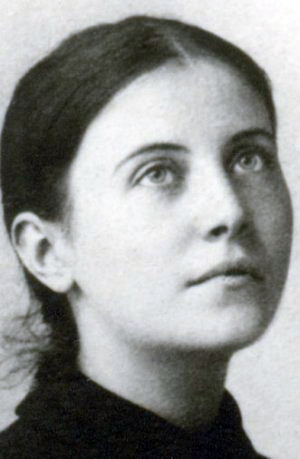
Saint Gemma Galgani
On this April 11th, in 1903 – the same year that the Italian Guiseppe Sarto was elected Pope later that summer as Pius X – a lovely, young Italian woman died, by the name of Gemma Galgani. She lived a brief life of 24 years, as did a number of other young saints, including Pier[…]Continue reading→
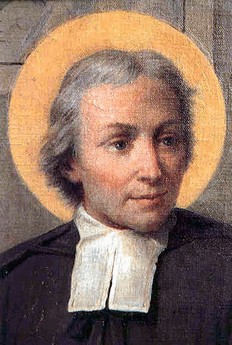
Saint Jean-Baptiste de la Salle: A Teacher for Teachers
Jean-Baptiste de la Salle (1651 – 1719), a French nobleman, ordained a priest, founded the first order in the Church’s history entirely without priests, and this came about almost by accident. I say ‘almost’, for, of course, there are no accidents with God. Destined for ordination from an early age, Jean-Baptiste never looked back, even[…]Continue reading→