
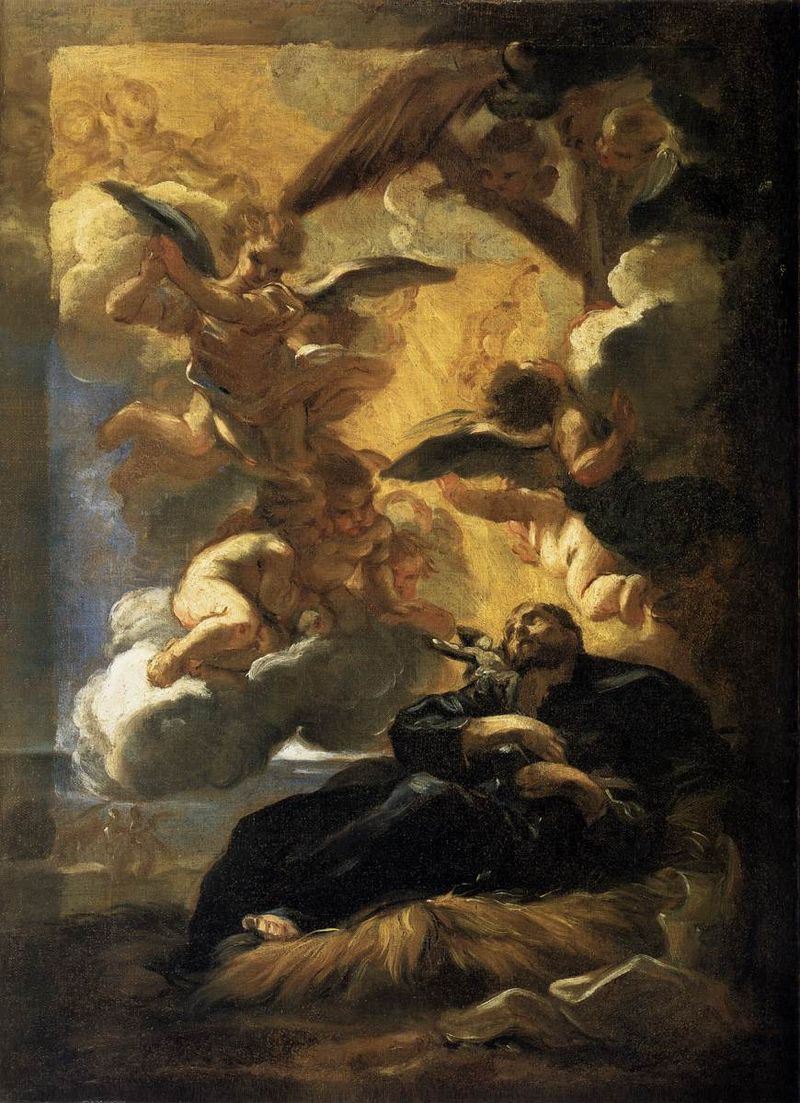
Saint Francis Xavier’s Missionary Wisdom
Francis Xavier was born on 7 April 1506, in the city of Javier, which in Basque language means “new house”, in the Kingdom of Navarre (present day Spain). He was a companion of St Ignatius of Loyola, one of the first seven Jesuits who took vows of poverty and chastity at Montmartre, Paris in 1534. He is rightly to be regarded as a co-founder of the Society of Jesus.
Following the example of St Paul, the Apostle of the Gentiles who brought the Christian message all over the world, St Francis Xavier was responsible for the expansive mission into Asia, principally within the Portuguese Empire. His sterling missionary work of evangelization brought him to India where he left the impact of his tireless ministry. Due to the fact that he conducted his missions in India and East Asia, St Francis Xavier is also known as the Apostle of the Indies. Even though some sources say that the Goa Inquisition was the idea of Francis Xavier, nevertheless his letter to the king of Portugal, John III, specifically requested for a special minister whose main office would be to advance Christianity in Goa. St Francis Xavier was the first Christian missionary to go to Japan, Borneo, the Maluku Islands, and other areas. Facing both the challenge of learning the languages of the people, as well as the opposition he was less successful than he was in India. Xavier was planning to spread his missionary preaching to China but he died on Shangchuan Island on December 3, 1552.
St Francis Xavier became a role model of what it means to be a missionary in pagan land. This motivated the effort to produce prolifically extensive material regarding his figure and works he did, particularly his epistolary. He is an example to be followed by every missionary who wants to leave an impact where he and she is sent to evangelize.
Francis Xavier was beatified by Pope Paul V on 25 October 1619 and canonized by Pope Gregory XV on 12 March 1622. In 1624, St Francis Xavier was made co-patron of Navarre. He is known as the Apostle of the Indies and Apostle of Japan. In order to remember this great missionary since the times of St Paul, Pope Pius XI, in 1927, thanks to the decree Apostolicorum in Missionibus, named Francis Xavier, together with Thérèse of Lisieux, co-patron of all foreign missions.
Let us now savour some of the wisdom God gave to this holy missionary which are so relevant for us today. First, holiness is founded on prayer and penance. Francis Xavier used to say: It is impossible to find a saint who did not take the “two P’s” seriously – Prayer and Penance. Second, true love is gratuitous. He said: You don’t have to give to me because I love you; after all, even if I didn’t expect from you what I do, I’d still love you just as much. Third, humble things make people great. He noted: Let no one foment the illusion of believing that they will stand out in great things, if they do not stand out in humble things. Fourth, love is the soul of every work we do. Xavier said: Love is what gives value to all our works; it’s not thanks to the greatness and multitude of our works that we please God, but thanks to the love with which we do them. Fifth, for Francis Xavier God’s consolations were important but too much of them might have impeded him from working tirelessly for God himself. Enough, Lord: If you send me so many consolations, you’re going to make me die of love.
Sixth, in evangelization success comes along by the way you treat others. He said: Make yourself loved, and this way you’ll influence them. If you employ friendliness and treat others well, you’ll see admirable effects. Seventh, desiring what you can do for others motivates you to serve them through that work. St Francis Xavier said: If you cannot do what you want to, then try to want to do what you can. Eighth, authentic spiritual life is measured by putting at work all the talents God endows us with. He said: I have professed your name until the end; never, Lord, have I hidden the lamp under the bed; you have given me five talents, and I’ll give you five more. Ninth, humility is the success of every good work. St Francis observed: With humility, all things are obtained; by force, nothing. Tenth, faith is pivotal in our journey to holiness. It is not the actual physical exertion that counts towards one’s progress, nor the nature of the task, but by the spirit of faith with which it is undertaken.
In order to appreciate more the wisdom God gave to St Francis Xavier let us read meditatively this portion from the address Pope Francis gave to the Community of the International College of the GESÙ in Rome, on Monday 3 December 2108 at the Consistory Hall:
Thus, to ground yourself is the first verb I would like to give you. Saint Francis Xavier, whom we are celebrating today, wrote about this: “I implore you, in all your matters, to ground yourselves totally in God” (Letter 90 from Kagoshima). In this way, he added, there is no adversity for which one cannot be prepared. You live in the house where Saint Ignatius lived, wrote the Constitutions, and sent the first companions on mission throughout the world. You are grounded on the origins. It is the grace of these years in Rome: the grace of the foundation, the grace of the origins. And you are a seedbed that leads the world to Rome and Rome to the world, the Society in the heart of the Church and the Church in the heart of the Society.
The second verb is to grow. You are called in these years to grow, establishing roots. The plant grows from the roots, which are unseen but support the whole. And it ceases to bear fruit not when it has few branches, but when the roots dry up. To have roots is to have a well grafted heart, which in God is able to expand. To God, semper maior, one responds with the magis of life, with limpid and unbridled enthusiasm, with the fire that blazes within, with that positive, ever-growing tension, which says ‘no’ to every compromise. It is Saint Paul’s “woe to me if I do not preach the gospel” (1 Cor 9:16), and Saint Francis Xavier’s “I did not stop for one instant” (Letter 20 to Saint Ignatius), and is what spurred Saint Alberto Hurtado to be a sharp arrow in the lethargic limbs of the Church. If the heart does not expand, it atrophies. Do not forget this. If one does not grow, one withers.

Saint Kateri , Canada’s Protectress
This was the title given to Saint Kateri Tekakwitha, by Pope Benedict XVI, when he canonized her on October 28th, 2012, along with six others, in Saint Peter’ Square (she had been beatified by Pope John Paul II back in 1980). With Saint Joseph as our protector, along with the Canadian martyrs, we seem to[…]Continue reading→

Remembering Father Alphonse de Valk
(Today marks the sixth anniversary of the death of Father Alphonse de Valk, C.S.B., a faithful, courageous and indefatigable Basilian priest, pro-life-and-family apostle, and the founder of Catholic Insight magazine. Here is what we wrote those on his entering into eternity five years ago, as we continue to remember him in our prayers and thoughts)[…]Continue reading→
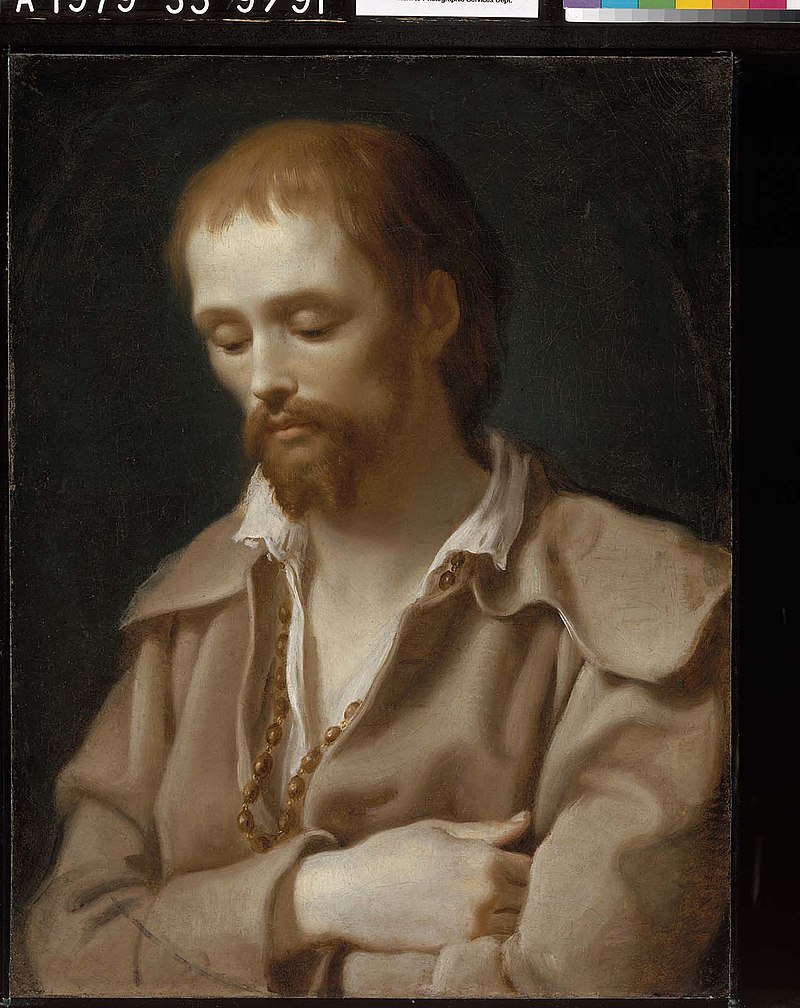
A Tale of Two Benedicts
A grace-filled Holy Week to all our readers! As we await and prepare for the Resurrection about to dawn upon us, we might keep in mind two Benedicts: Pope Emeritus Benedict XVI, requiescat in pace, elected on this day in 2005; and today’s commemoration of the mystic pilgrim, Benedict Joseph Labre, who died on this[…]Continue reading→

My Name is Bernadette
April 16th is a propitious day, for besides the anniversary of Father de Valk’s death, who founded Catholic Insight in its print form decades ago, and the commemoration of the ‘two Benedicts’, mentioned in accompanying posts, today we also recall Saint Bernadette Soubirous, the young visionary to whom the Virgin Mary appeared numerous times at[…]Continue reading→
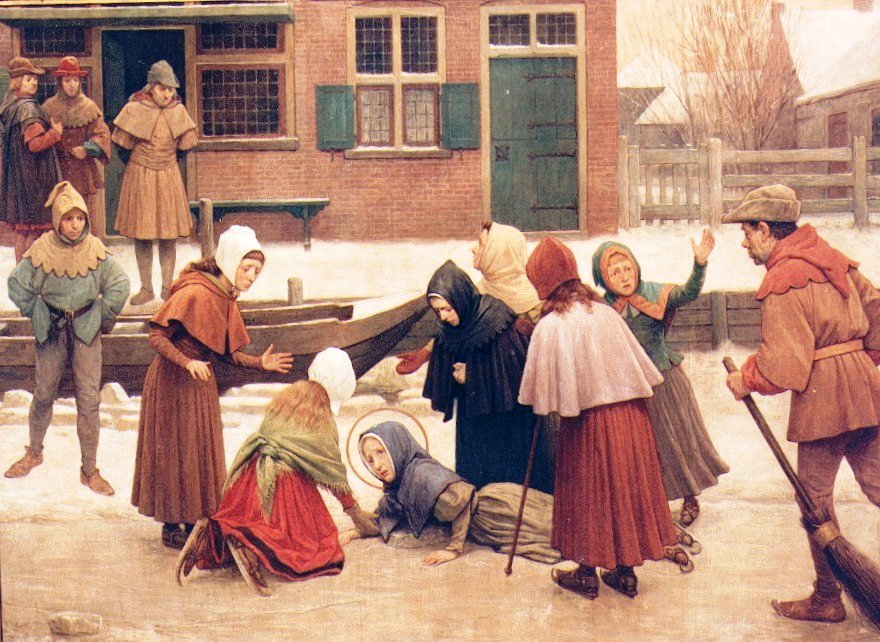
Saint Lydwina of Schiedam and Suffering Joyfully
Saint Lydwina of Schiedam (1380 – 1433) was one of the countless and glorious ‘victim souls’ in the history of the Church, those whose lives are filled with suffering, often of an unimaginable intensity, but who suffer joyfully. She was a fifteen-year old Dutch girl, out skating one day, when she fell and broke one[…]Continue reading→
The Glorious Martyrdoms of Martin and Maximus
As we enter into Eastertide, we recall on this 13th of April Pope Saint Martin I (+655), one of the noblest, if most tragic, of the successors of Saint Peter. Born in Umbria, Italy, he was of noble lineage, with great intelligence combined with charity and love of the poor and the Church. While still[…]Continue reading→

Canonizing Sister Faustina and Divine Mercy
HOMILY OF THE HOLY FATHER MASS IN ST PETER’S SQUARE FOR THE CANONIZATION OF SR MARY FAUSTINA KOWALSKA Sunday, 30 April 2000 1. “Confitemini Domino quoniam bonus, quoniam in saeculum misericordia eius”; “Give thanks to the Lord for he is good; his steadfast love endures for ever” (Ps 118: 1). So the Church sings on the Octave of[…]Continue reading→

Divine Mercy Sunday – An Echo of Every Mass
Reach out your hand and put it in my side. Do not doubt but believe’… ‘My Lord and my God!’ (Jn. 20:18)). Today is Divine Mercy Sunday, and as we celebrate the end of the Easter Octave, we contemplate the wounded side of our Saviour, the Church’s source of life. On Good Friday in the[…]Continue reading→
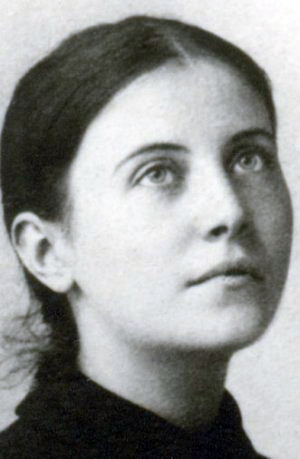
Saint Gemma Galgani
On this April 11th, in 1903 – the same year that the Italian Guiseppe Sarto was elected Pope later that summer as Pius X – a lovely, young Italian woman died, by the name of Gemma Galgani. She lived a brief life of 24 years, as did a number of other young saints, including Pier[…]Continue reading→
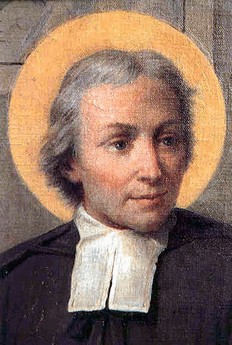
Saint Jean-Baptiste de la Salle: A Teacher for Teachers
Jean-Baptiste de la Salle (1651 – 1719), a French nobleman, ordained a priest, founded the first order in the Church’s history entirely without priests, and this came about almost by accident. I say ‘almost’, for, of course, there are no accidents with God. Destined for ordination from an early age, Jean-Baptiste never looked back, even[…]Continue reading→