
Tradition: The Weakest Possible Argument, or the Strongest?
The Weakest Possible Argument?[1]
The weakest argument is that based on authority. This fact may explain why Father Most’s article on the history of the ordination of women[2] is unlikely to change anyone’s mind, for his arguments consists of demonstrating that women have never been ordained in the Catholic Church. On the premise that Tradition is authoritative, the Church’s current ban on ordaining women follows. Unfortunately for Father Most, not many Catholics today are willing to accept that premise.
It is rejected on two grounds. While the authority of Tradition may be accepted in principle, in any particular case the data of history are scrutinized and found to be ambiguous or silent about the Church’s present position, or even against it. Effectively, the critic shows that there is no consistent Tradition governing the matter he wants to challenge: papal infallibility, the Real Presence, birth control, and so forth. Furthermore, since history shows that the Church has changed its attitude on one issue, why not on another? If on slavery, why not about ordaining women? If on usury, why not about celibacy? Such is the mode of argument used by Bishop Kenneth Untener of Saginaw, in “Forum: The Ordination of Women: Can the Horizons Widen?”[3] I wonder if he realizes the full effect of his method, which could well convince Catholics that careful study would demonstrate that there is no binding Tradition about anything. A reflective person would be faced with a choice: he could adopt the liberal agenda, or he could look for another religion—one that honours what God has revealed.
The doubts fostered by the historical theologian lead to the second approach, which is simply to deny the authority of Tradition. I met this attitude when I was asked to contribute an article on the history of celibacy to The Way, a British periodical, once Catholic but now ecumenical. To avoid spending time on an article that would in all likelihood would have been rejected, I described my position to the editor:
It may be that my views are not progressive enough for your publication. I favour obligatory celibacy for priests and look with favourable interest on those old arguments based on ritual purity that embarrass many Catholics today. I also see parallels between the celibacy of the clergy and that of religious life. Furthermore, it is my conviction that our society—remarkable for its confusion with regard to sexuality—is incapable of being wise about celibacy.
Her reply:
We are grateful for the frank account of your stance and, as you anticipated, it is not one that is compatible with the view which we consider to be the most appropriate, fruitful and, I have to say, authentic account of celibacy in Christianity at this point in its development.
She proceeds:
On a personal level and as a woman, I am not embarrassed by your viewpoint but mystified as to how anyone can sustain it without also accepting that women are inferior beings in the eyes of God and that marriage is a second-rate lifestyle of Christian witness. I certainly think that it is an unenviable position being a Western man at the moment, as all the old cultural stereotypes are shot to pieces and you are left with the question, what am I meant to be? These paradigm shifts in concept of being for both men and women may be disconcerting now, but they are in essence liberating for us all to become more fully the human person that God created us. Immovable certainty in either case does a great disservice to the mystery inherent in both the divine and human beings.
The magazine’s prospectus indicates that The Way Supplement will examine celibacy from a variety of points of view. One, however, will be missing: mine.
Much is at stake. The strength of the argument from authority depends, of course, on the nature of the authority. If we can consider the possibility that the authority is God himself, then the argument moves from being the weakest to being the strongest. But (a) has God spoken? And (b) if he has, where can we hear his voice today? If the answer to (a) is “nowhere” Christianity ceases to be religion, and there is no need for priest at all, married or celibate, men or women. If, on the other hand, God has spoken through Jesus Christ, then “in the Catholic Tradition” is not an absurd answer to our second question. It becomes the task of the Catholic theologian to examine and defend what has been unquestioned and unquestionable: the Tradition of the Church. That is how, e.g., in the second century Irenaeus set about his theological defence of Christianity against the Gnostics. Irenaeus, like his Christian contemporaries, fought Gnosticism, not by novel concepts—that was the Gnostic way—but by drawing upon the deposit of faith found in the teachings of the Church.[4] In the second century, the Gnostics were the innovative, progressive theologians. Among their tenets was a rejection of the Old Testament. Because they saw matter as evil, they viewed the God who created it as horrible. Their purpose in life was to escape matter and, in particular, the body. It was the idea that the only good human is a disembodied human that lay behind their notions about the equality of men and women.
That aspect of Gnosticism is having a vogue at present, and I can well imagine why. The puzzle is why there are few Irenaeuses to challenge it. As with that editor of The Way, there are Catholic theologians who seem prepared to discard Tradition when it doesn’t fit in with their point of view, rather than vice versa. A contemporary Irenaeus, on the other hand, discussing celibacy or the ordination of women, would start from the Church’s traditional practice which, as true, must be beneficial to those who accept it. He would then consider ways in which the various roles of men and women are enhanced by the Church’s stand on celibacy and ordination. The Old Testament would be a particularly rich vein to mine in this regard for us Catholics who oppose the implicit anti-Semitism of Gnosticism, ancient or modern. So, too, is the principle enunciated by Saint Paul in his letter to the Galatians,[5] which asserts that Christ came at just the right time, however unfortunate some of our contemporaries view the social conventions he canonized. Furthermore, there is the fact of the presence within Catholicism of Latin and Greek Christians. Implicit in this union of East and West is a willingness to be guided by the strong commitment to Tradition found in the Eastern Church. “It is critically important,” said Andrew Britz, osb, (albeit in a different context), “that we do indeed plomb eastern [i.e., Orthodox] thought.”[6] The characteristic of that thought is that in discussing the faith the conclusion precedes rather than follows the argumentation. It is necessary, of course, as times change, to find new sorts of ways to support Tradition. This can actually occur, as in Sara Butler’s “The Priest as Sacrament of Christ the Bridegroom.”[7] Other theologians, such as Hans Urs von Balthasar, have reflected on the meaning of human sexuality as revelatory of God’s presence to his creation: feminine Wisdom, receiving from the Father his creative utterance, brings forth the material world just as Mother Church brings to birth members of Christ in the waters of baptism made fecund by his word. This is theology in the Irenaean mode.
Many of the difficulties that plague the Church today arise from a confusion between the roles of the hierarchy and theologians. We want from the latter new insights into what the former continues to proclaim.
[1] Things have not much altered in thirty years. This piece appeared originally in The Canadian Catholic Review, 11 (1993) 2-4.
[2] William G. Most, “Did the Early Church Ordain Women to be Priests?” The Canadian Catholic Review, 11 (1993) 21-24.
[3] Worship 65 (1991) 50-59.
[4] Cf. Aloys Grillmeier, Christ in Christian Tradition (Louisville [KY]; Westminster Press, 1988) vol. 1, pp. 98-9.
[5] Gal 4.4.
[6] “Editorial,” The Prairie Messenger, 21 December 1992.
[7] Worship 66 (1992) 498-517.

Saint Kateri , Canada’s Protectress
This was the title given to Saint Kateri Tekakwitha, by Pope Benedict XVI, when he canonized her on October 28th, 2012, along with six others, in Saint Peter’ Square (she had been beatified by Pope John Paul II back in 1980). With Saint Joseph as our protector, along with the Canadian martyrs, we seem to[…]Continue reading→

Remembering Father Alphonse de Valk
(Today marks the sixth anniversary of the death of Father Alphonse de Valk, C.S.B., a faithful, courageous and indefatigable Basilian priest, pro-life-and-family apostle, and the founder of Catholic Insight magazine. Here is what we wrote those on his entering into eternity five years ago, as we continue to remember him in our prayers and thoughts)[…]Continue reading→

My Name is Bernadette
April 16th is a propitious day, for besides the anniversary of Father de Valk’s death, who founded Catholic Insight in its print form decades ago, and the commemoration of the ‘two Benedicts’, mentioned in accompanying posts, today we also recall Saint Bernadette Soubirous, the young visionary to whom the Virgin Mary appeared numerous times at[…]Continue reading→
Canonizing Sister Faustina and Divine Mercy
HOMILY OF THE HOLY FATHER MASS IN ST PETER’S SQUARE FOR THE CANONIZATION OF SR MARY FAUSTINA KOWALSKA Sunday, 30 April 2000 1. “Confitemini Domino quoniam bonus, quoniam in saeculum misericordia eius”; “Give thanks to the Lord for he is good; his steadfast love endures for ever” (Ps 118: 1). So the Church sings on the Octave of[…]Continue reading→

Divine Mercy Sunday – An Echo of Every Mass
Reach out your hand and put it in my side. Do not doubt but believe’… ‘My Lord and my God!’ (Jn. 20:18)). Today is Divine Mercy Sunday, and as we celebrate the end of the Easter Octave, we contemplate the wounded side of our Saviour, the Church’s source of life. On Good Friday in the[…]Continue reading→

Saint Stanislaus of Szczepanów
We celebrate Saint Stanislaus today (+ April 11, 1079), in light of this Easter Octave, a bishop and martyr who accepted the episcopacy only at the direct order of Pope Alexander II. He proved a wise and courageous leader of his flock, put to death by his own king, Boleslaus, for rebuking the monarch’s ‘immoral[…]Continue reading→
First Holy Communion: Sermon from May 16, 1943
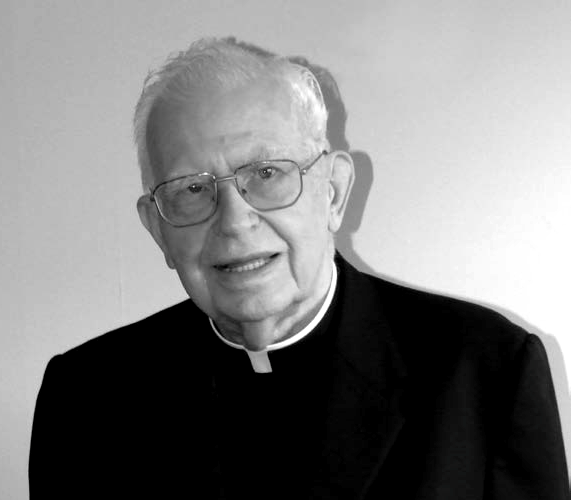
Here is a sermon from the good old days by +Rev. Msgr. Vincent Nicholas Foy (August 14, 1915 – March 13, 2017), from 1943. Readers may recall that Pope Saint Pius X, by the decree Quam Singulari in 1910, lowered the customary age of reception of Holy Communion – after the rigours of the plague[…]Continue reading→
In the Glorious Light of Easter, Alleluia!
Set your minds on things that are above, not on things that are on earth, for you have died, and your life is hidden with Christ in God. When Christ who is your life is revealed, then you also will be revealed with him in glory (Col. 3:3-4). The Resurrection of Our Lord and Saviour[…]Continue reading→
An Ancient Homily for Holy Saturday
The time between Good Friday and Easter Sunday is one of waiting, in silence, as the world wonders – anticipates – what will happen, after the death of Christ. We re-live this time each year in the anamnesis of our liturgy, and in turn look forward to the glorious re-creation of all things at the[…]Continue reading→
Europe’s Long Descent
(As we meditate on this day on Christ’s burial, and His descent into hell, it is fitting to ponder here with contributor Peter Marcus how the world seems to be heading there as well. The difference is that, although God cannot ‘redeem’ hell, nor those therein, He can and did redeem the world. There is[…]Continue reading→