
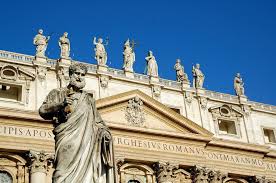
Avuncular Bishops: Evoke Thy Inner Father
I don’t discipline my brother’s children; my role is avuncular. I may exhort them to be good, and demur when they do bad; I certainly pray for them. But I leave the ‘vis et metu’, the ‘force and fear’ – as Saint Thomas says all law needs, even the ‘laws’ of the household – to the paternal vocation of my brother, complemented by the maternal role of his wife, who can, and must, mete out the discipline as required. Fathers should be loved, but they should also, at least to some small, potential extent, be feared. A father should also not fear to discipline his children, as appropriate, flowing from love, and for the sake of love. The fear of the Lord is the beginning of wisdom…
It was this blurring of roles that niggled me about Archbishop Salvatore Cordelione’s avuncular campaign of ‘roses and rosaries’ for the ‘conversion’ of his spiritual daughter – not his spiritual niece – Nancy Pelosi. I was going to write about it, and am heartened to see that Maureen Mullarkey has beaten me to the punch bowl.
Saint Thomas says that law works in two ways: It teaches us the right thing to do. And, for those still not amenable, it forces us to do so. These are the pedagogical and coercive dimensions of law. If law just teaches, it is but good advice. If law just forces, it is violence. It must do both, as an ordinance of reason for the common good.
Mrs. Pelosi has refused to listen to the teaching of the Church, that Catholics cannot in good conscience facilitate the murder of unborn children, but must do all in their power to stop such heinous crimes against life. Hence, she needs the coercive dimension. Sure, we can and should pray, even fast and do penance, for her, and urge others to do so. I’m all for the rosary, but not so sure about the roses, but perhaps they will help. But her bishop needs to do more. He cannot act like one of her siblings, or her uncle. Rather, it is his role – and his alone – to discipline, suaviter, yet fortiter, leading her back to the right path. If she refuses – as she has – like any good father who seeks the good of his children, she must be banned from the common table, sent away, and apart, to think and reflect.
There is a reason the prodigal son lived his dissolute and immoral life far off from his father’s house. It was the exile itself – the effect of his own sin – which brought him back to his senses, realizing what he had had, and had lost. He was only welcomed back once he repented. Do you think the father would have tolerated the son’s evil while under his own roof, and sharing his meals? What are we then to say of Pelosi and Biden and Trudeau, aiding, abetting, facilitating and funding the murder and mutilation of many of the father’s other children, all while sharing the Body and Blood of Christ, using the Father’s very name to justify such heinous participation in evil?
The problem here is not so much sin, with which we all are struggling, but contumaciousness and stubbornness in sin, or, in biblical terms, hardness of heart. Yes, Christ would ‘eat and drink with sinners’, but only those who were open to and seeking repentance, mercy and truth. To those Pharisees who had closed their hearts, who put their morality before that of God, He did not mince His words: Brood of vipers, whitewashed sepulchres, the blind leading the blind.
And what are we to say of His warning that what you do to the least of these little ones, you do unto me?
In a radio address in 1946, in the wake of the most dreadful war of human history, Pius XII lamented that the greatest sin of the twentieth century was the loss of the sense of sin, without which sense no repentance is possible; the only other path is perdition.
The refusal of Communion to pro-abortion politicians (and other notorious and unrepentant public sinners) is simply pointing out to them a situation that already exists, that they are ‘out of communion’ with the doxa and praxis of the Church to which they profess to belong. Such measures are required by the decrees and laws of the Church – reiterated by Pope Benedict XVI in 2004 (in a memorandum deliberately smothered by then-cardinal Theodore McCarrick). Here are the Pope’s own words, which still bind, regardless of the personal opinions of prevaricating prelates:
Regarding the grave sin of abortion or euthanasia, when a person’s formal cooperation becomes manifest (understood, in the case of a Catholic politician, as his consistently campaigning and voting for permissive abortion and euthanasia laws), his Pastor should meet with him, instructing him about the Church’s teaching, informing him that he is not to present himself for Holy Communion until he brings to an end the objective situation of sin, and warning him that he will otherwise be denied the Eucharist.
When “these precautionary measures have not had their effect or in which they were not possible,” and the person in question, with obstinate persistence, still presents himself to receive the Holy Eucharist, “the minister of Holy Communion must refuse to distribute it” (cf. Pontifical Council for Legislative Texts Declaration “Holy Communion and Divorced, Civilly Remarried Catholics” [2002], nos. 3-4). This decision, properly speaking, is not a sanction or a penalty. Nor is the minister of Holy Communion passing judgment on the person’s subjective guilt, but rather is reacting to the person’s public unworthiness to receive Holy Communion due to an objective situation of sin. (par 5 and 6)
As the Pope alludes, this is an act of mercy and charity, and whether Nancy Pelosi would see it as such, or even care, nor of the political turmoil that may ensue, are all beside the point. As Pope Saint Pius V thought back in 1570 when he excommunicated Queen Elizabeth, which created its own firestorm, at least so doing would offer her (and others) the opportunity to ‘care’, at least for the fate of her own soul, and so repent, turn back to God, His Church, and His commandments.
We must all do our duty, and let God take care of the rest. And hope – even against hope.
Estote viri!
Estote patres!
Estote sancti!
Carney’s Amoral Majority
After five defections – euphemistically described as ‘crossing the floor’ – and three by-elections, Mark Carney and his Liberals how have their coveted majority. One wonders what bowls of pottage were offered in back-room deals. In the archaic monarchical system that is the Dominion of Canada, this majority allows the newly-minted Prime Minister to rule[…]Continue reading→

Saint Kateri , Canada’s Protectress
This was the title given to Saint Kateri Tekakwitha, by Pope Benedict XVI, when he canonized her on October 28th, 2012, along with six others, in Saint Peter’ Square (she had been beatified by Pope John Paul II back in 1980). With Saint Joseph as our protector, along with the Canadian martyrs, we seem to[…]Continue reading→

A Tale of Two Benedicts
A grace-filled Holy Week to all our readers! As we await and prepare for the Resurrection about to dawn upon us, we might keep in mind two Benedicts: Pope Emeritus Benedict XVI, requiescat in pace, elected on this day in 2005; and today’s commemoration of the mystic pilgrim, Benedict Joseph Labre, who died on this[…]Continue reading→

My Name is Bernadette
April 16th is a propitious day, for besides the anniversary of Father de Valk’s death, who founded Catholic Insight in its print form decades ago, and the commemoration of the ‘two Benedicts’, mentioned in accompanying posts, today we also recall Saint Bernadette Soubirous, the young visionary to whom the Virgin Mary appeared numerous times at[…]Continue reading→

Saint Lydwina of Schiedam and Suffering Joyfully
Saint Lydwina of Schiedam (1380 – 1433) was one of the countless and glorious ‘victim souls’ in the history of the Church, those whose lives are filled with suffering, often of an unimaginable intensity, but who suffer joyfully. She was a fifteen-year old Dutch girl, out skating one day, when she fell and broke one[…]Continue reading→

The Glorious Martyrdoms of Martin and Maximus
As we enter into Eastertide, we recall on this 13th of April Pope Saint Martin I (+655), one of the noblest, if most tragic, of the successors of Saint Peter. Born in Umbria, Italy, he was of noble lineage, with great intelligence combined with charity and love of the poor and the Church. While still[…]Continue reading→

Saint Stanislaus of Szczepanów
We celebrate Saint Stanislaus today (+ April 11, 1079), in light of this Easter Octave, a bishop and martyr who accepted the episcopacy only at the direct order of Pope Alexander II. He proved a wise and courageous leader of his flock, put to death by his own king, Boleslaus, for rebuking the monarch’s ‘immoral[…]Continue reading→
Saint Gemma Galgani
On this April 11th, in 1903 – the same year that the Italian Guiseppe Sarto was elected Pope later that summer as Pius X – a lovely, young Italian woman died, by the name of Gemma Galgani. She lived a brief life of 24 years, as did a number of other young saints, including Pier[…]Continue reading→
An Ideological and Improper Translation
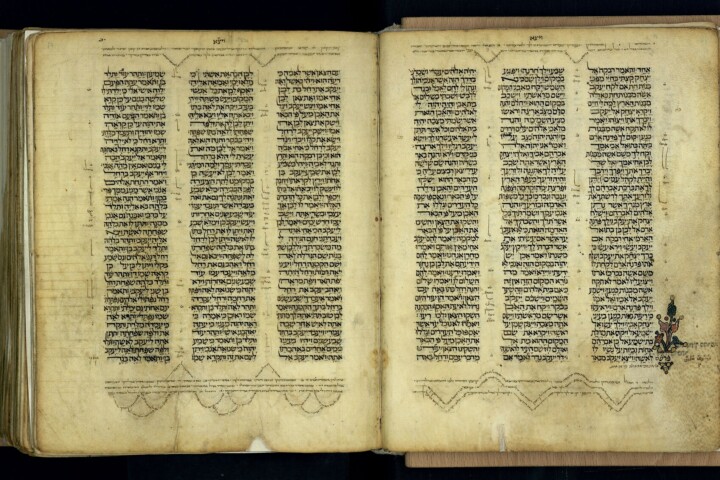
I noticed something odd with the psalm reading at Mass the other day. Our bishops’ conference here in Canada has decreed that the Mass in English – Novus Ordo – use the ‘NRSV’, the ‘New Revised Standard Version’, an ‘updated’ translation of the original RSV, first published in 1952. This ‘new translation’ has the tendency[…]Continue reading→
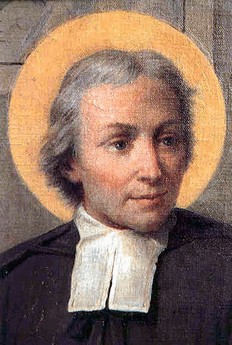
Saint Jean-Baptiste de la Salle: A Teacher for Teachers
Jean-Baptiste de la Salle (1651 – 1719), a French nobleman, ordained a priest, founded the first order in the Church’s history entirely without priests, and this came about almost by accident. I say ‘almost’, for, of course, there are no accidents with God. Destined for ordination from an early age, Jean-Baptiste never looked back, even[…]Continue reading→