
Saints and Striving
It would be unseemly for me to speak about Protestantism in any serious way, but I believe I can say one thing with some assurance; for I think I know why Martin Luther started the Protestant Reformation. It’s simple, really. Martin Luther, I am sure, became convinced that Catholicism doesn’t work, that is to say, that Catholicism did not make it possible for anyone to be saved, to go to heaven. What would draw him to that conclusion? For one thing, in 1510 he had been to Rome and was shocked by the corruption he found in high places – (or so he claimed, years after the fact. Editor). Also, there was his melancholic disposition which made it impossible for him to attain peace of mind from the rigorous asceticism of his monastery. He found relief when he put aside all personal effort in order to receive forgiveness because he was a sinner, quite independently of whether or not he had fulfilled the obligations of his way of life.
When we examine our own failings, we can, perhaps, see some justification for Luther’s position. But then we think of the saints, each in his own way demonstrating that Catholicism has been and continues to be a way of life in which the grace of Jesus can produce holiness. The saints exemplify what Scripture proclaims when it says that by baptism we have been made “partakers of the divine nature”[1] and are thereby called to be “perfect as our heavenly Father is perfect.”[2] Similarly, Saint Paul summons us “to lead a life worthy of the Gospel.”[3] Hence, Saint Irenaeus can say that “the glory of God is man fully alive.”[4] However inadequate I may have been in following Christ, the saints remind me of the powerful and empowering grace of God that can make every Christian into a saint.[5] At Mass we ask that “we may be always free from sin.”[6] That miracle of grace can be ours if we want it vehemently enough.
[1] 2 Pet 1.4.
[2] Matt 5.48.
[3] Phil 1.27.
[4] Irenaeus, Against Heresies, 4.34.7. The full statement reads, “The glory of God is man fully alive, and the life of man is the vision of God.”
[5] Cf. Catechism of the Catholic Church, ¶1692.
[6] The phrase is found in the embolism that follows the Lord’s Prayer.
A Closed, Unsustainable, Descending Loop
As a follow-up to my thoughts on Payette’s payout, here be a stark image of where are here in Canada. As the graph shows in, well, graphic terms, since 2025, the public sector has contributed to 95.5% of economic growth. The private sector – which funds the public sector, or is supposed to – has[…]Continue reading→
Presidential Pardon of Weronika Krawczyk
As a good news, follow-up to our story from Poland, of the persecution of Weronika Krawczyk for her pro-life views, we heard that she has been granted a presidential pardon. One might still wonder why one needs a presidential pardon for simply holding the long-held belief that the child within the womb is a child,[…]Continue reading→
Pope Leo and a Rosary for Peace
Pope Leo XIV has asked Catholics across the world to join him in a Rosary for peace today, at 18:00 Rome time (6 pm), which would be noon from where I write (EST). If you are able, whether at that time or another, and in whatever way you pray, to join in intercession with the[…]Continue reading→
Payette’s Payout
I was glancing through some headlines, and noticed a mention of Julie Payette – engineer and astronaut and sometime the Queen’s representative in Canada – which brought back vague memories. She was appointed Governor-General by Justin Trudeau in 2017. Ms. Payette resigned in 2021, amidst claims that she created a ‘toxic work environment’, with allegations[…]Continue reading→
Weronika Krawczyk and Injustice in Poland
Catholic Action in Poland has issued a formal statement appealing to the President of the Republic of Poland to pardon Weronika Krawczyk—convicted for warning other women against an abortion-performing gynaecologist. Catholic Action (AK) emphasizes that no apology is owed to a doctor who has performed numerous abortions and proposed others; furthermore, the organization considers the[…]Continue reading→
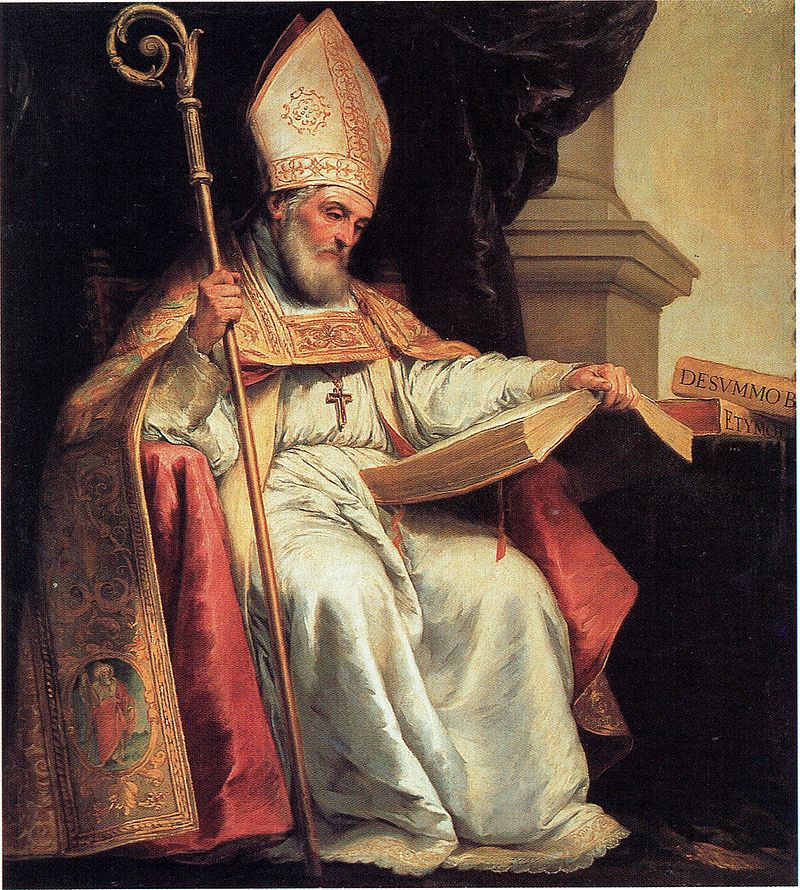
Saint Isidore of Seville, the Internet and Industriousness
Today, April 4th, muted this year by Holy Saturday, is the commemoration of Saint Isidore of Seville (560-636) a bishop and doctor of the Church during a tumultuous age, when civilization was crumbling, coming apart at its very seams, which may sound sort of au courant. Then again, the form of this world has always[…]Continue reading→
Bishop Fulton Sheen’s 58th Good Friday Reflection
Incredible, at the beginning of this reflection, that the Venerable Bishop Sheen declares that he has given nearly 58 Good Friday reflections – this, as far as I can gather, was his final one, and he seems in full vigour in mind and body. The good bishop and evangelist died in his 84th year on[…]Continue reading→
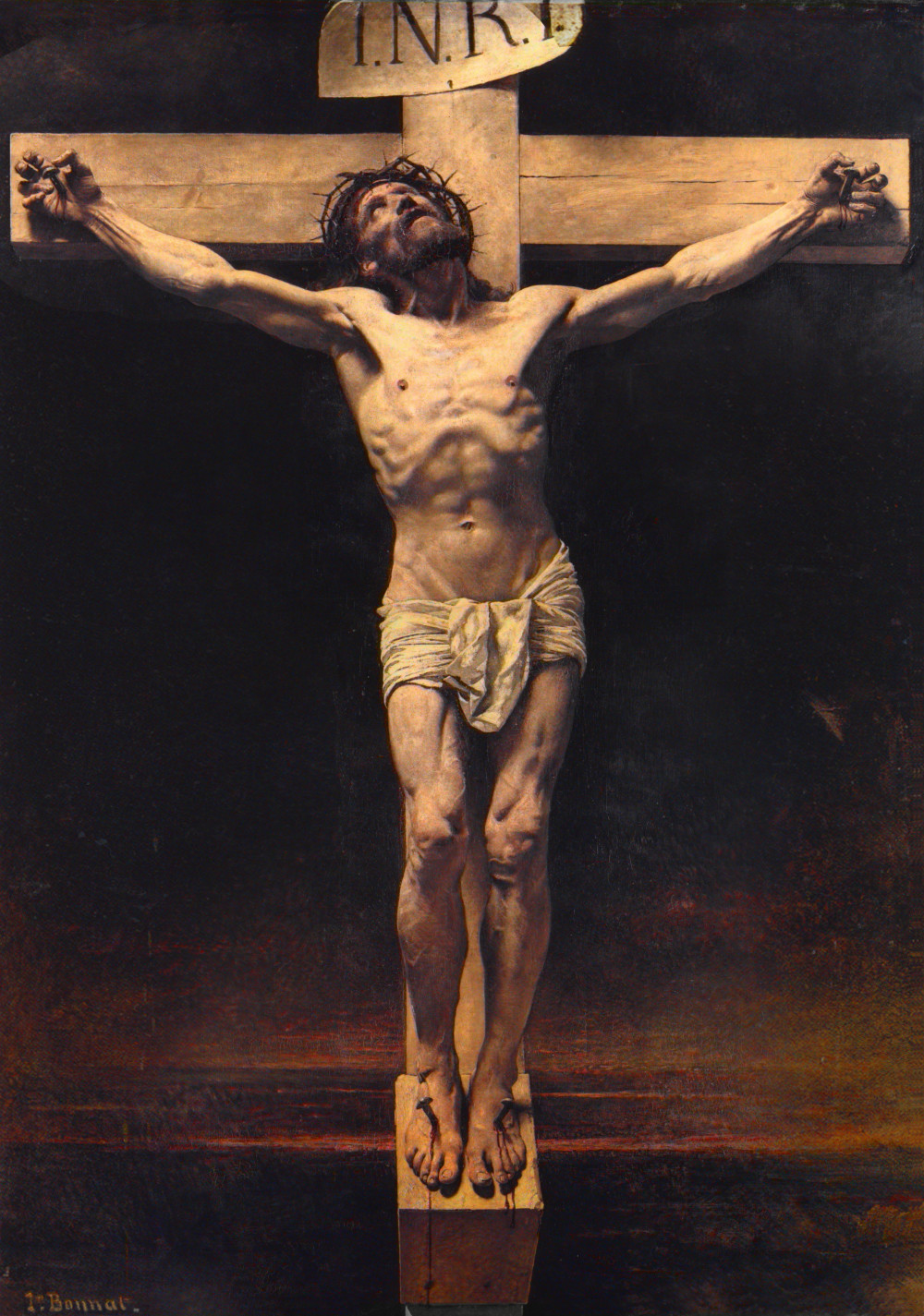
A Meditation for Good Friday: How To Undo the Effects of Sin?
Cardinal Newman, now Saint John Henry Newman, was a towering figure of nineteenth-century Catholicism who is almost universally admired. I say “almost” because not everyone likes him. I knew a priest once, Arthur Caulkins, who has become disenchanted with Newman. As an undergraduate Arthur had been enamoured of Newman, and this interest continued when he[…]Continue reading→
A Minimal Friar and the Death of a Great Pope
This April the second- overshadowed by Holy Thursday this year – marks the memorial of Saint Francis of Paola (1417-1507), founder of the ‘Minim’ friars, so called for their humility and poverty, who interpreted the rule of Saint Francis of Assisi in quite a literal sense: extreme poverty, trust in God, foregoing all animal and[…]Continue reading→
Woven versus Seamless Garments
The reflection on the worthy project by Magie Dominic was intriguing, and I thought I would offer a brief follow-up commentary. The garment woven out of many pieces is a poignant symbol, even a ‘sacramental’, inspired by prayer and grace. We are all united in some way, and should strive for such unity, wherever we[…]Continue reading→