
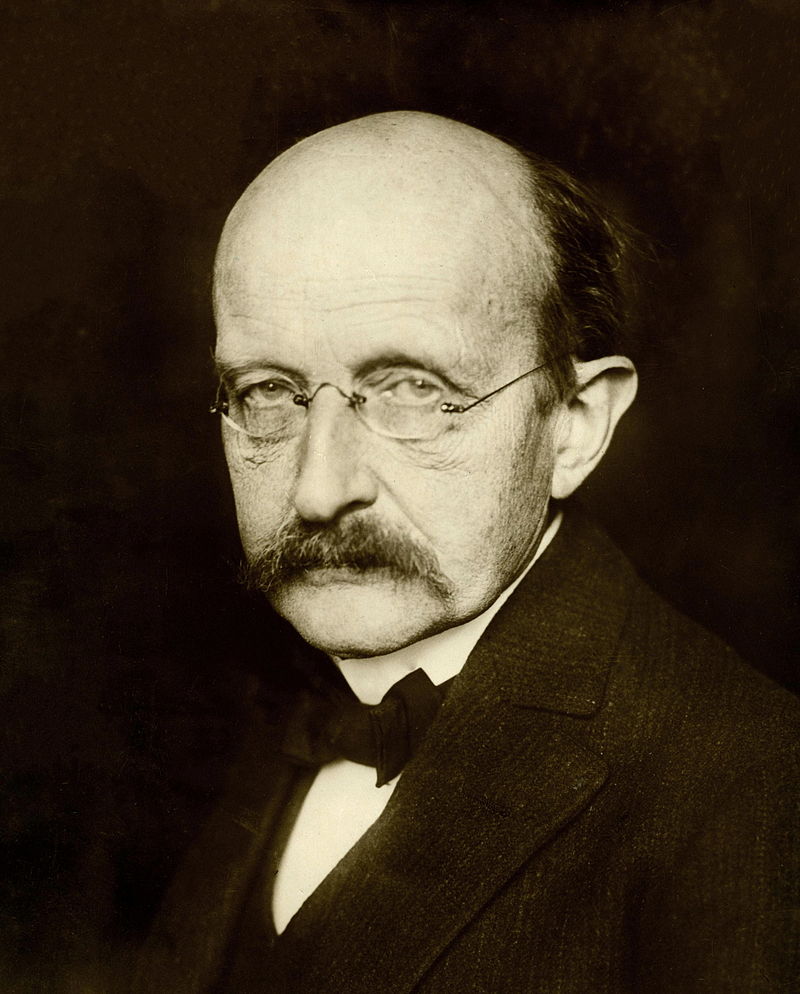
Max Planck’s Mighty Minimum
Suppose for instance someone maintained that there is a minimum magnitude; that man with his minimum would shake the foundations of mathematics.
So prophesied Aristotle more twenty-four centuries ago.[1] And, as with many things Aristotelian, how right he was.
Why it took that long for that ‘man with his minimum’ to come along is a bit of a mystery (one which Father Jaki ponders, and perhaps the theme of another reflection), but come along he eventually did, at the very dawn of the last century. And he shook not only the foundations of mathematics, but of the world.
It was on October 19th, 1900, that German physicist Max Planck first proposed a theory at the German Physical Society that seemed rather esoteric at the time, as do most original scientific publications. He had discovered that radiation – which includes everything from radio waves, to visible light, all the way to cosmic rays – was composed not of a continuous stream, as was until then theorized, but of individual and indivisible packages of energy, that he called ‘quanta’ (after the Latin for ‘how much’, or a ‘certain amount’ – in the singular, quantum).
This solved the conundrum of the ‘ultraviolet catastrophe’ that had troubled scientists – the theory that if energy from stars and such were poured forth in a continuous stream (like water from a hose), it should have all dissipated in the earliest phase of the universe. What actually happens – weirdly enough – is that such sources ‘husband’ their energy, releasing it only in these discrete quanta. More than that, when other radiating energy hits an object, that object will only release its own corresponding radiation if the incoming energy ‘resonates’ in a specific frequency. There is no a priori reason for this – it just happens.
This is why we have colour. For the electrons revolving around atoms (a limited analogy, for they rather vibrate around atoms) are also quantized. They stay firmly within their specific orbitals, and only jump between them – to another specific orbital – when prompted to do so by specific frequencies of radiation, sort of like an antenna which only picks up a specific radio frequency. Hence, a red object will absorb all visible radiation, except red, which it will radiate out into the world (and our eyes) by this jostling of its electrons.
Things get weirder with what would soon be called ‘quantum physics’. For electrons only ‘exist’ in their quantized orbitals – for when they jump between them, they disappear. For the quanta are discrete, and admit not of fractions, or parts, and are indivisible.
Hence all electromagnetic radiation whizzes around the word (at the speed of light, about 186,000 miles per second) in these specific, quantized frequencies.
And it’s not just energy. For it was later discovered that all matter – protons, neutrons and all the rest – is also quantized, which fits in well with Einstein’s discovery that energy and matter are convertible (E = Mc2 signifying that matter is in some sense energy in a very compressed form).
Hence, if we divide up matter into smaller and smaller bits – a favorite thought experiment of the scholastics and mediaevals, in their own search for that mysterious minimum – we do indeed reach a limit of indivisibility as Aristotle thought, that mighty minimum, the building blocks, if you will, from which all energy and matter is composed. This minimum is governed by a very, very small number, Planck’s constant, 6.626 x 10⁻³⁴, symbolized by an italicized h (considering that 10-12 is one trillionth, and this is many, many times smaller than that – so these sub-atomic building blocks are very, very tiny)
The energy (E) contained in each quantum is signified by a simple equation:
E = hf
Where f is the frequency of the radiation (or matter, which also vibrates): Hence, the greater the frequency, the greater the energy (which is why X-rays are far more penetrating and damaging than radio or light waves, which are mostly harmless).
All energy, matter, and perhaps even time itself, is composed of discrete multiples of Planck’s constant, and its discovery has indeed shaken our foundations. The science of ‘quantum physics’ has given us access to the very structure of the universe, allowing us not only to investigate, but manipulate energy and matter at their most fundamental level.
Almost all of our modern inventions are based on quantum physics, from radio technology, to the internet, mobile phones, computers, satellites, X-rays, MRI’s, PET scans, chemical bonding and synthetic materials, nuclear power (and bombs), virtual reality – ABBA is about to tour again, as holograms of their thirty-something selves (the ‘real’ band members are now septuagenarians) – and the burgeoning field of artificial intelligence, controlling to some extent almost every aspect of our lives. And the surface is just being scratched.
Whither will all this go? The Pastoral Constitution, Gaudium et Spes, warns, with some degree of hope:
The intellectual nature of the human person is perfected by wisdom and needs to be, for wisdom gently attracts the mind of man to a quest and a love for what is true and good. Steeped in wisdom. man passes through visible realities to those which are unseen. Our era needs such wisdom more than bygone ages if the discoveries made by man are to be further humanized. For the future of the world stands in peril unless wiser men are forthcoming.
A final though in light of this Magisterial caveat on the need for wisdom: Might there be a spiritual analogue to Planck’s mighty minimum? If so, perhaps it is Saint Therese’s ‘little way’, that the smallest act done with great love is far better than the greatest act done with a lack of love, which is really a reiteration of the widow’s last two mites, the mustard seed, or, to journey further back, the sacrifice of Abel, versus that of Cain.
For it is charity, the love of God with all our being, and our neighbour as ourselves, that will truly shake the foundations of the world.
[1] As recounted by Father Stanley Jaki in his indispensable Relevance of Physics, University of Chicago Press, 1966. (p. 33)

Carney’s Amoral Majority
After five defections – euphemistically described as ‘crossing the floor’ – and three by-elections, Mark Carney and his Liberals how have their coveted majority. One wonders what bowls of pottage were offered in back-room deals. In the archaic monarchical system that is the Dominion of Canada, this majority allows the newly-minted Prime Minister to rule[…]Continue reading→

Saint Kateri , Canada’s Protectress
This was the title given to Saint Kateri Tekakwitha, by Pope Benedict XVI, when he canonized her on October 28th, 2012, along with six others, in Saint Peter’ Square (she had been beatified by Pope John Paul II back in 1980). With Saint Joseph as our protector, along with the Canadian martyrs, we seem to[…]Continue reading→

Remembering Father Alphonse de Valk
(Today marks the sixth anniversary of the death of Father Alphonse de Valk, C.S.B., a faithful, courageous and indefatigable Basilian priest, pro-life-and-family apostle, and the founder of Catholic Insight magazine. Here is what we wrote those on his entering into eternity five years ago, as we continue to remember him in our prayers and thoughts)[…]Continue reading→
A Tale of Two Benedicts
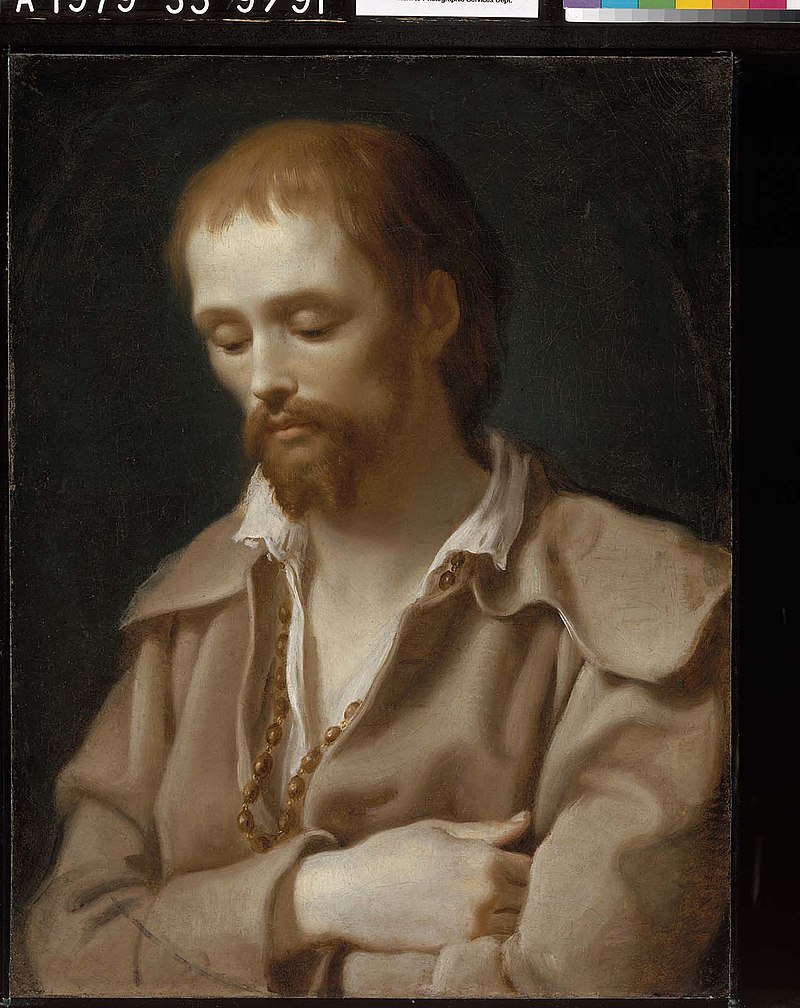
A grace-filled Holy Week to all our readers! As we await and prepare for the Resurrection about to dawn upon us, we might keep in mind two Benedicts: Pope Emeritus Benedict XVI, requiescat in pace, elected on this day in 2005; and today’s commemoration of the mystic pilgrim, Benedict Joseph Labre, who died on this[…]Continue reading→

My Name is Bernadette
April 16th is a propitious day, for besides the anniversary of Father de Valk’s death, who founded Catholic Insight in its print form decades ago, and the commemoration of the ‘two Benedicts’, mentioned in accompanying posts, today we also recall Saint Bernadette Soubirous, the young visionary to whom the Virgin Mary appeared numerous times at[…]Continue reading→
Saint Lydwina of Schiedam and Suffering Joyfully
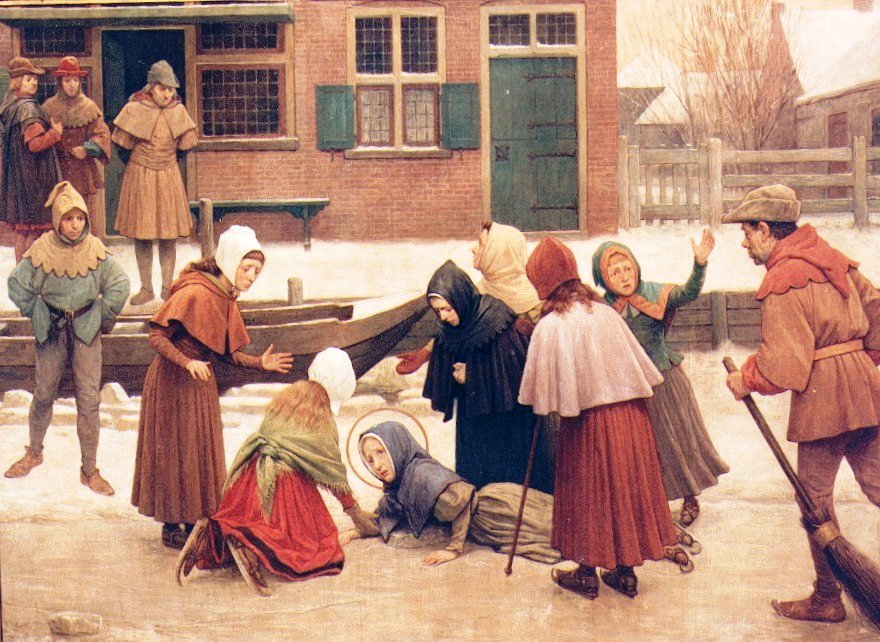
Saint Lydwina of Schiedam (1380 – 1433) was one of the countless and glorious ‘victim souls’ in the history of the Church, those whose lives are filled with suffering, often of an unimaginable intensity, but who suffer joyfully. She was a fifteen-year old Dutch girl, out skating one day, when she fell and broke one[…]Continue reading→
The Glorious Martyrdoms of Martin and Maximus
As we enter into Eastertide, we recall on this 13th of April Pope Saint Martin I (+655), one of the noblest, if most tragic, of the successors of Saint Peter. Born in Umbria, Italy, he was of noble lineage, with great intelligence combined with charity and love of the poor and the Church. While still[…]Continue reading→
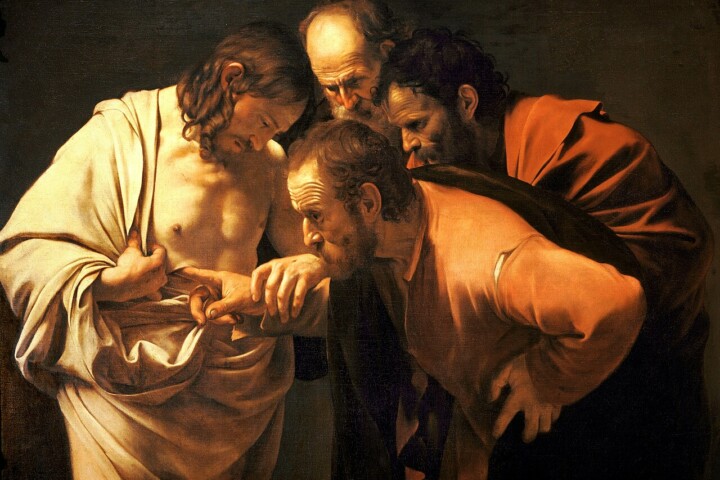
Divine Mercy Sunday – An Echo of Every Mass
Reach out your hand and put it in my side. Do not doubt but believe’… ‘My Lord and my God!’ (Jn. 20:18)). Today is Divine Mercy Sunday, and as we celebrate the end of the Easter Octave, we contemplate the wounded side of our Saviour, the Church’s source of life. On Good Friday in the[…]Continue reading→

Saint Stanislaus of Szczepanów
We celebrate Saint Stanislaus today (+ April 11, 1079), in light of this Easter Octave, a bishop and martyr who accepted the episcopacy only at the direct order of Pope Alexander II. He proved a wise and courageous leader of his flock, put to death by his own king, Boleslaus, for rebuking the monarch’s ‘immoral[…]Continue reading→
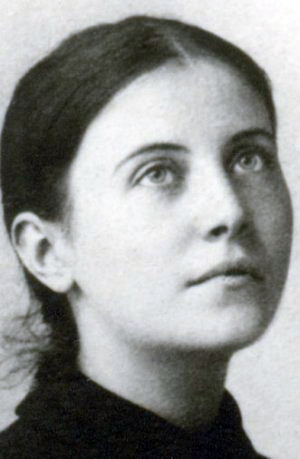
Saint Gemma Galgani
On this April 11th, in 1903 – the same year that the Italian Guiseppe Sarto was elected Pope later that summer as Pius X – a lovely, young Italian woman died, by the name of Gemma Galgani. She lived a brief life of 24 years, as did a number of other young saints, including Pier[…]Continue reading→