
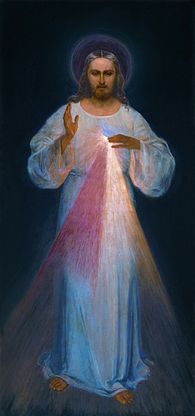
The Suffering Secretary of the Divine Mercy
October 5th is the feast day of St Faustina Kowalska. This humble Polish nun was appointed by Jesus to be the Secretary of His unfathomable Mercy.
It was Jesus himself who told her so, as we marvelously find out in her Diary entry 1605: You are the secretary of My mercy. I have chosen you for that office in this life and the next life. Obviously, being his personal secretary, Faustina can help us delving deeper into the truth and beauty of the mystery of suffering.
For Faustina, we, who are the objects of God’s mercy, are endowed with great graces. The first one is that of receiving Jesus in the Holy Eucharist and the other one is to suffer for him. In her Diary entry 1804 she tells us: If the angels were capable of envy, they would envy us for two things: one is the receiving of Holy Communion, and the other is suffering. Moreover, God, the Author of mercy, allows a person to suffer to display the holiness of that person before him. God, who is Light itself, lives in a pure and humble heart, and all sufferings and adversities serve but to reveal the soul’s holiness (Diary, 573).
Faustina teaches us that suffering purifies love. Suffering is a great grace; through suffering the soul becomes like the Savior; in suffering love becomes crystallized; the greater the suffering, the purer the love. (Diary, 57). Jesus remains our unshakeable focal point in our suffering. She writes: When pain overwhelms my soul, and the horizon darkens like night, and the heart is torn with the torment of suffering, Jesus Crucified, You are my strength (Diary, 1151). For Jesus’ Mercy Secretary, suffering united her more and more with Jesus. Sufferings, adversities, humiliations, failures and suspicions that have come my way are splinters that keep alive the fire of my love for You, O Jesus (Diary, 38). That is why Faustina was naturally led to conclude: True love is measured by the thermometer of suffering (Diary 343).
When love becomes purer it stops being something that we suffer about. The purer our love becomes, the less there will be within us for the flames of suffering to feed upon, and the suffering will cease to be a suffering for us (Diary 303). Through suffering we come to appreciate more and more Jesus, our true friend. She says: Suffering is the greatest treasure on earth; it purifies the soul. In suffering, we learn who is our true friend (Diary, 342). For those who love authentically because they suffer for those whom they love, suffering becomes their daily food. Faustina teaches us: From the moment I came to love suffering, it ceased to be a suffering for me. Suffering is the daily food of my soul (Diary, 276). Suffering keeps us focused on God’s will in our lives. Sweeter to me are the torments, sufferings, persecutions, and all manner of adversities by divine will than popularity, praise, and esteem by my own will (Diary, 678).
Suffering, by itself, does not make sense if it is not conducive to love. Faustina writes: Great love can change small things into great ones, and it is only love which lends value to our actions (Diary, 303). Love, comprehended as mercy, is God’s greatest attribute. This courageous Polish nun affirmed: And I understood that the greatest attribute of God is love and mercy. It unites the creature with the Creator (Diary, 180). Love is the sole force that keeps us going on. Our beloved saint states: Love endures everything, love is stronger than death, love fears nothing (Diary, 46).
Love refreshes our spirit amid the suffering we go through in life. O my Lord, inflame my heart with love for You, that my spirit may not grow weary amidst the storms, the sufferings and the trials (Diary, 94). Love is mercy all the way long. Jesus confirmed this essential tenet in the spiritual life when he said to Faustina: Then I heard the words, ‘I am glad you behaved like My true daughter. Be always merciful as I am merciful’ (Diary, 1695). The final teaching St Faustina gives us is that love is, in fact, a mystery which transforms anything into God’s beauty and favour. She states: Love is a mystery that transforms everything it touches into things beautiful and pleasing to God (Diary, 890).
Thank you Lord that, through St Faustina, you teach us that suffering is not a punishment but a splendid opportunity to love with all []our heart, and with all []our soul, and with all []our might (Deut 6:5).

Saint Kateri , Canada’s Protectress
This was the title given to Saint Kateri Tekakwitha, by Pope Benedict XVI, when he canonized her on October 28th, 2012, along with six others, in Saint Peter’ Square (she had been beatified by Pope John Paul II back in 1980). With Saint Joseph as our protector, along with the Canadian martyrs, we seem to[…]Continue reading→

Remembering Father Alphonse de Valk
(Today marks the sixth anniversary of the death of Father Alphonse de Valk, C.S.B., a faithful, courageous and indefatigable Basilian priest, pro-life-and-family apostle, and the founder of Catholic Insight magazine. Here is what we wrote those on his entering into eternity five years ago, as we continue to remember him in our prayers and thoughts)[…]Continue reading→
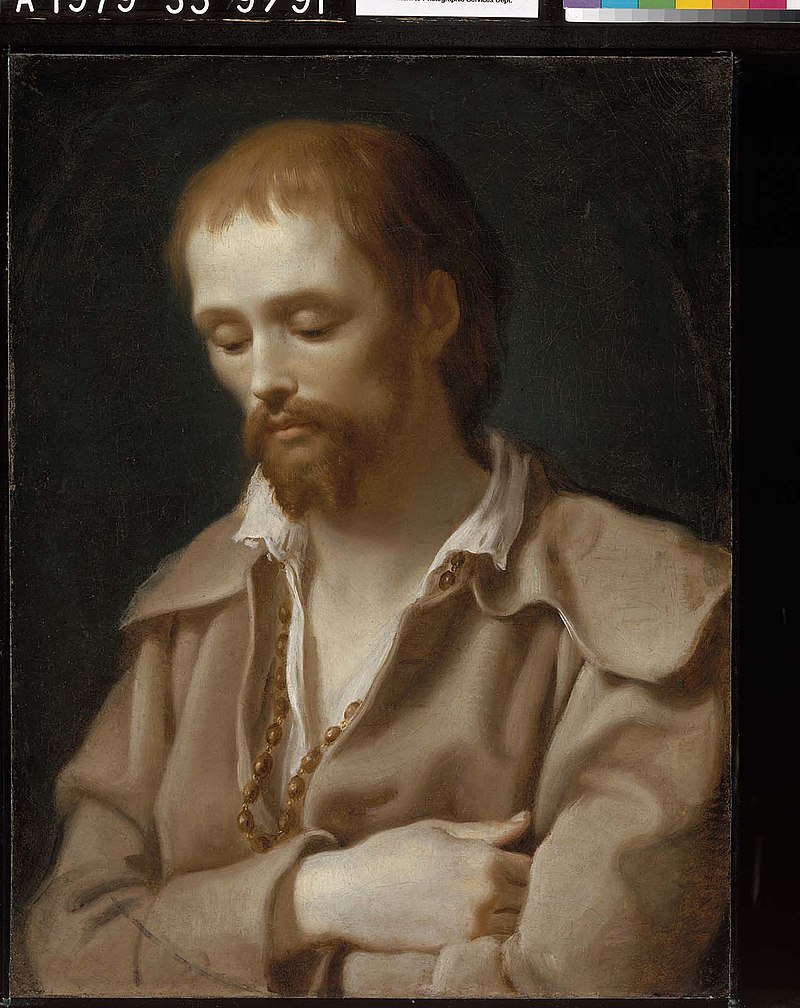
A Tale of Two Benedicts
A grace-filled Holy Week to all our readers! As we await and prepare for the Resurrection about to dawn upon us, we might keep in mind two Benedicts: Pope Emeritus Benedict XVI, requiescat in pace, elected on this day in 2005; and today’s commemoration of the mystic pilgrim, Benedict Joseph Labre, who died on this[…]Continue reading→

My Name is Bernadette
April 16th is a propitious day, for besides the anniversary of Father de Valk’s death, who founded Catholic Insight in its print form decades ago, and the commemoration of the ‘two Benedicts’, mentioned in accompanying posts, today we also recall Saint Bernadette Soubirous, the young visionary to whom the Virgin Mary appeared numerous times at[…]Continue reading→
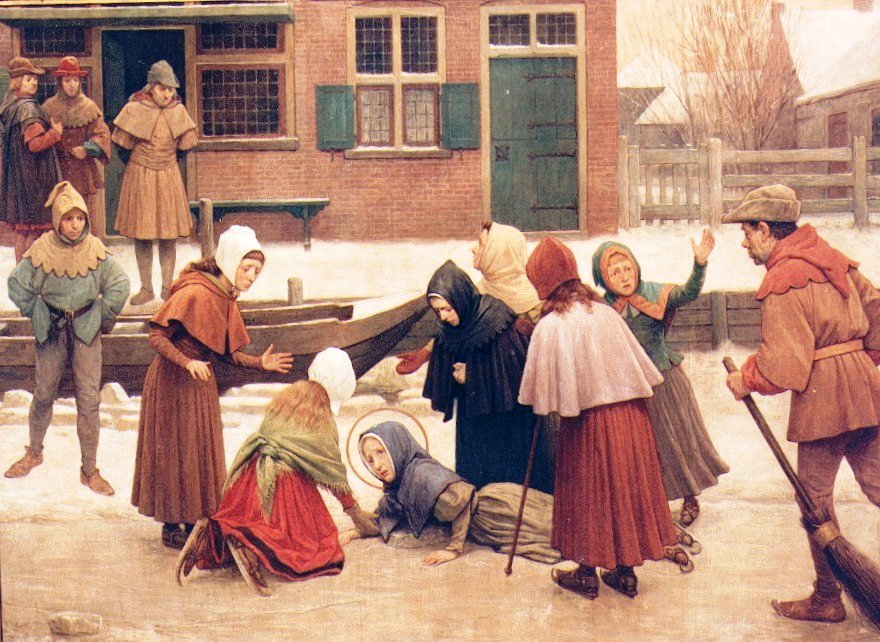
Saint Lydwina of Schiedam and Suffering Joyfully
Saint Lydwina of Schiedam (1380 – 1433) was one of the countless and glorious ‘victim souls’ in the history of the Church, those whose lives are filled with suffering, often of an unimaginable intensity, but who suffer joyfully. She was a fifteen-year old Dutch girl, out skating one day, when she fell and broke one[…]Continue reading→
The Glorious Martyrdoms of Martin and Maximus
As we enter into Eastertide, we recall on this 13th of April Pope Saint Martin I (+655), one of the noblest, if most tragic, of the successors of Saint Peter. Born in Umbria, Italy, he was of noble lineage, with great intelligence combined with charity and love of the poor and the Church. While still[…]Continue reading→

Canonizing Sister Faustina and Divine Mercy
HOMILY OF THE HOLY FATHER MASS IN ST PETER’S SQUARE FOR THE CANONIZATION OF SR MARY FAUSTINA KOWALSKA Sunday, 30 April 2000 1. “Confitemini Domino quoniam bonus, quoniam in saeculum misericordia eius”; “Give thanks to the Lord for he is good; his steadfast love endures for ever” (Ps 118: 1). So the Church sings on the Octave of[…]Continue reading→

Divine Mercy Sunday – An Echo of Every Mass
Reach out your hand and put it in my side. Do not doubt but believe’… ‘My Lord and my God!’ (Jn. 20:18)). Today is Divine Mercy Sunday, and as we celebrate the end of the Easter Octave, we contemplate the wounded side of our Saviour, the Church’s source of life. On Good Friday in the[…]Continue reading→
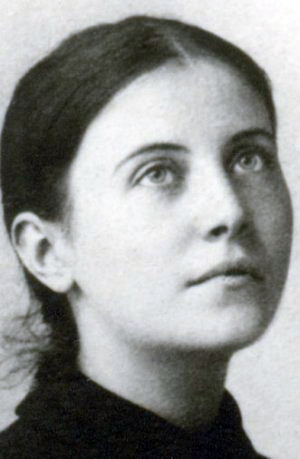
Saint Gemma Galgani
On this April 11th, in 1903 – the same year that the Italian Guiseppe Sarto was elected Pope later that summer as Pius X – a lovely, young Italian woman died, by the name of Gemma Galgani. She lived a brief life of 24 years, as did a number of other young saints, including Pier[…]Continue reading→
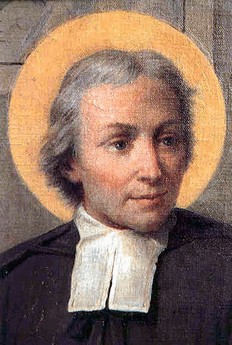
Saint Jean-Baptiste de la Salle: A Teacher for Teachers
Jean-Baptiste de la Salle (1651 – 1719), a French nobleman, ordained a priest, founded the first order in the Church’s history entirely without priests, and this came about almost by accident. I say ‘almost’, for, of course, there are no accidents with God. Destined for ordination from an early age, Jean-Baptiste never looked back, even[…]Continue reading→