
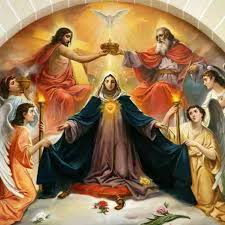
Queenship of Mary
The 22nd of August of the feast of the Queenship of Mary, which this year falls on a Sunday, one week after the Assumption. Officially this feast has a short history, as it was Pope Pius XII who established it in 1954. However its roots are very old indeed.
If we glance at Holy Scripture we realize that the Archangel Gabriel, at the Annunciation event, announced to Mary that Her Son would receive the throne of David and will rule forevermore. In the Visitation episode, Elizabeth refers to Mary as the Mother of my Lord (Luke 1:43). Mary’s queenship perfectly sums up all the mysteries of her life, in that she is intimately linked with Jesus. Where there is Jesus, there is Mary. Thus, in virtue of her maternity, Mary was given a share in Her Son’s kingship. The Old Testament idea that the king’s mother had a significant importance in court helps us understand this important point.
St Ephrem (306-373) in the fourth century frequently made reference to Mary both as “Lady” and “Queen.” He said to her: Let Heaven sustain me in its embrace, because I am honored above it. For heaven was not Thy mother, but Thou hast made it Thy throne. How much more honorable and venerable than the throne of a king is her mother (S. Ephraem, Hymni de B. Maria, ed. Th. J. Lamy, t. II, Mechliniae, 1886, hymn. XIX, p. 624). In another work he addresses to her the following salute: Majestic and Heavenly Maid, Lady, Queen, protect and keep me under your wing lest Satan the sower of destruction glory over me, lest my wicked foe be victorious against me.Oratio ad Ssmam Dei Matrem; Opera omnia, Ed. Assemani, t. III (graece), Romae, 1747, pag. 546
Ephrem was flanked by by another Father of the Church, St Gregory of Nazianzen (329-390) who referred to Mary as Mother of the King of the universe. He called her Virgin Mother who brought forth the King of the whole world. Moreover, St Jerome, who wrote the official Latin translation of the Bible, the Vulgate, had to this say about Mary’s Queenship: We should realize that Mary means Lady in the Syrian Language. We can understand this because Jesus is King. His Davidic King will stay forever according to the promise by the Archangel Gabriel at the annunciation when he said to Mary: He will be great, and will be called the Son of the Most High; and the Lord God will give to him the throne of his father David, and he will reign over the house of Jacob for ever; and of his kingdom there will be no end (Luke 1:32-33).
The feast of the Queenship of Mary is a natural corollary of her other Assumption into Heaven. In his encyclical proclaiming the Queenship of Mary, Ad Caeli Reginam, given at Rome on the feast of the Maternity of the Blessed Virgin Mary, 11 October 1954, Pope Pius XII says that it right and just to call Mary Queen due to the fact that she is the Mother God. Throughout her life Mary was always intimately linked as the New Eve in Jesus’ salvific work, because of her distinguished holiness as well as due to her unique intercessory role. Pope Pius XII says:
If Mary, in taking an active part in the work of salvation, was, by God’s design, associated with Jesus Christ, the source of salvation itself, in a manner comparable to that in which Eve was associated with Adam, the source of death, so that it may be stated that the work of our salvation was accomplished by a kind of “recapitulation,” in which a virgin was instrumental in the salvation of the human race, just as a virgin had been closely associated with its death; if, moreover, it can likewise be stated that this glorious Lady had been chosen Mother of Christ “in order that she might become a partner in the redemption of the human race”; and if, in truth, “it was she who, free of the stain of actual and original sin, and ever most closely bound to her Son, on Golgotha offered that Son to the Eternal Father together with the complete sacrifice of her maternal rights and maternal love, like a new Eve, for all the sons of Adam, stained as they were by his lamentable fall,” then it may be legitimately concluded that as Christ, the new Adam, must be called a King not merely because He is Son of God, but also because He is our Redeemer, so, analogously, the Most Blessed Virgin is queen not only because she is Mother of God, but also because, as the new Eve, she was associated with the new Adam. (#38)
Let us savor this great title which the Church has always conferred on Mary as Queen, by cherishing the following quotes from the encyclical Ad Caeli Reginam by Pope Pius XII:
From the earliest ages of the catholic church a Christian people, whether in time of triumph or more especially in time of crisis, has addressed prayers of petition and hymns of praise and veneration to the Queen of Heaven. And never has that hope wavered which they placed in the Mother of the Divine King, Jesus Christ; nor has that faith ever failed by which we are taught that Mary, the Virgin Mother of God, reigns with a mother’s solicitude over the entire world, just as she is crowned in heavenly blessedness with the glory of a Queen (no.1).
In this matter We do not wish to propose a new truth to be believed by Christians, since the title and the arguments on which Mary’s queenly dignity is based have already been clearly set forth…From early times Christians have believed, and not without reason, that she of whom was born the Son of the Most High received privileges of grace above all other beings created by God…And when Christians reflected upon the intimate connection that obtains between a mother and a son, they readily acknowledged the supreme royal dignity of the Mother of God (no.6 and 8).
The theologians of the Church, deriving their teaching from these [the Early Church Fathers] and almost innumerable other testimonies handed down long ago, have called the most Blessed Virgin the Queen of all creatures, the Queen of the world, and the Ruler of all…The Supreme Shepherds of the Church have considered it their duty to promote by eulogy and exhortation the devotion of the Christian people to the heavenly Mother and Queen (no.22 and 23).
But the Blessed Virgin Mary should be called Queen, not only because of her Divine Motherhood, but also because God has willed her to have an exceptional role in the work of our eternal salvation. “What more joyful, what sweeter thought can we have” – as Our Predecessor of happy memory, Pius XI wrote – “than that Christ is our King not only by natural right, but also by an acquired right: that which He won by the redemption?… (no.35).
Now, in the accomplishing of this work of redemption, the Blessed Virgin Mary was most closely associated with Christ; and so it is fitting to sing in the sacred liturgy: ‘Near the cross of Our Lord Jesus Christ there stood, sorrowful, the Blessed Mary, Queen of Heaven and Queen of the World.’ Hence, as the devout disciple of St. Anselm (Eadmer, ed.) wrote in the Middle Ages: ‘just as . . . God, by making all through His power, is Father and Lord of all, so the blessed Mary, by repairing all through her merits, is Mother and Queen of all; for God is the Lord of all things, because by His command He establishes each of them in its own nature, and Mary is the Queen of all things, because she restores each to its original dignity through the grace which she merited’ (no.36).
Since we are convinced, after long and serious reflection, that great good will accrue to the Church if this solidly established truth shines forth more clearly to all, like a luminous lamp raised aloft, by Our Apostolic authority We decree and establish the feast of Mary’s Queenship, which is to be celebrated every year in the whole world on the 31st of May [in the traditional calendar]. We likewise ordain that on the same day the consecration of the human race to the Immaculate Heart of the Blessed Virgin Mary be renewed, cherishing the hope that through such consecration a new era may begin, joyous in Christian peace and in the triumph of religion (no.47).
In some countries of the world there are people who are unjustly persecuted for professing their Christian faith and who are deprived of their divine and human rights to freedom; up till now reasonable demands and repeated protests have availed nothing to remove these evils. May the powerful Queen of creation, whose radiant glance banishes storms and tempests and brings back cloudless skies, look upon these her innocent and tormented children with eyes of mercy; may the Virgin, who is able to subdue violence beneath her foot, grant to them that they may soon enjoy the rightful freedom to practice their religion openly, so that, while serving the cause of the Gospel, they may also contribute to the strength and progress of nations by their harmonious cooperation, by the practice of extraordinary virtues which are a glowing example in the midst of bitter trials (no.50).
O Mary Immaculate Queen, look down upon this distressed and suffering world. You know our misery and our weakness. O thou who art our Mother, saving us in the hour of peril, have compassion on us in these days of great and heavy trial. Jesus has confided to you the treasure of His grace, and through you He wills to grant us pardon and mercy. In these hours of anguish, therefore, your children come to you as their hope.
We recognize your Queenship and ardently desire your triumph. We need a Mother and a Mother’s Heart. You are for us the luminous dawn which dissipates our darkness and points out the way to life. In your clemency obtain for us the courage and the confidence of which we have such need.
Most Holy and Adorable Trinity, You Who did crown with glory in Heaven the Blessed Virgin Mary, Mother of the Savior, grant that all her children on earth may acknowledge her as their Sovereign Queen, that all hearts, homes, and nations may recognize her rights as Mother and as Queen.
Mary Immaculate Queen, triumph and reign! Amen.

Saint Kateri , Canada’s Protectress
This was the title given to Saint Kateri Tekakwitha, by Pope Benedict XVI, when he canonized her on October 28th, 2012, along with six others, in Saint Peter’ Square (she had been beatified by Pope John Paul II back in 1980). With Saint Joseph as our protector, along with the Canadian martyrs, we seem to[…]Continue reading→

Remembering Father Alphonse de Valk
(Today marks the sixth anniversary of the death of Father Alphonse de Valk, C.S.B., a faithful, courageous and indefatigable Basilian priest, pro-life-and-family apostle, and the founder of Catholic Insight magazine. Here is what we wrote those on his entering into eternity five years ago, as we continue to remember him in our prayers and thoughts)[…]Continue reading→

My Name is Bernadette
April 16th is a propitious day, for besides the anniversary of Father de Valk’s death, who founded Catholic Insight in its print form decades ago, and the commemoration of the ‘two Benedicts’, mentioned in accompanying posts, today we also recall Saint Bernadette Soubirous, the young visionary to whom the Virgin Mary appeared numerous times at[…]Continue reading→

Canonizing Sister Faustina and Divine Mercy
HOMILY OF THE HOLY FATHER MASS IN ST PETER’S SQUARE FOR THE CANONIZATION OF SR MARY FAUSTINA KOWALSKA Sunday, 30 April 2000 1. “Confitemini Domino quoniam bonus, quoniam in saeculum misericordia eius”; “Give thanks to the Lord for he is good; his steadfast love endures for ever” (Ps 118: 1). So the Church sings on the Octave of[…]Continue reading→
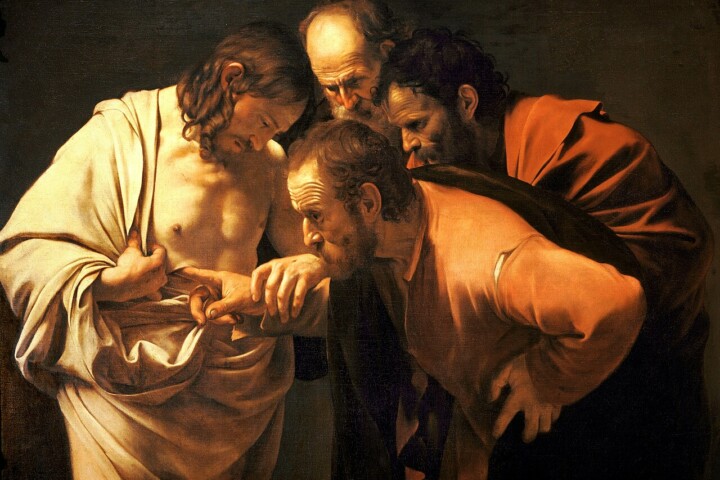
Divine Mercy Sunday – An Echo of Every Mass
Reach out your hand and put it in my side. Do not doubt but believe’… ‘My Lord and my God!’ (Jn. 20:18)). Today is Divine Mercy Sunday, and as we celebrate the end of the Easter Octave, we contemplate the wounded side of our Saviour, the Church’s source of life. On Good Friday in the[…]Continue reading→

Saint Stanislaus of Szczepanów
We celebrate Saint Stanislaus today (+ April 11, 1079), in light of this Easter Octave, a bishop and martyr who accepted the episcopacy only at the direct order of Pope Alexander II. He proved a wise and courageous leader of his flock, put to death by his own king, Boleslaus, for rebuking the monarch’s ‘immoral[…]Continue reading→
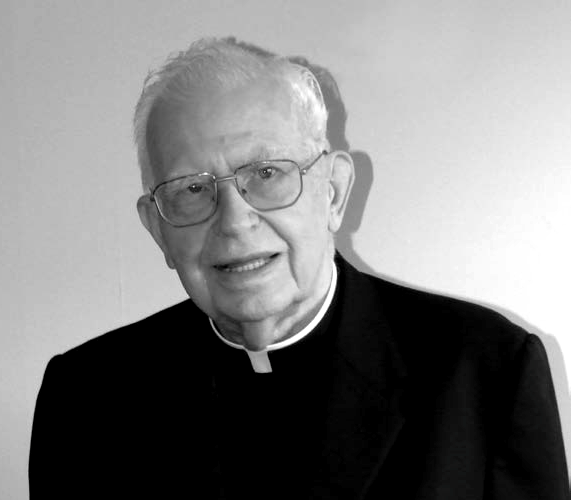
First Holy Communion: Sermon from May 16, 1943
Here is a sermon from the good old days by +Rev. Msgr. Vincent Nicholas Foy (August 14, 1915 – March 13, 2017), from 1943. Readers may recall that Pope Saint Pius X, by the decree Quam Singulari in 1910, lowered the customary age of reception of Holy Communion – after the rigours of the plague[…]Continue reading→
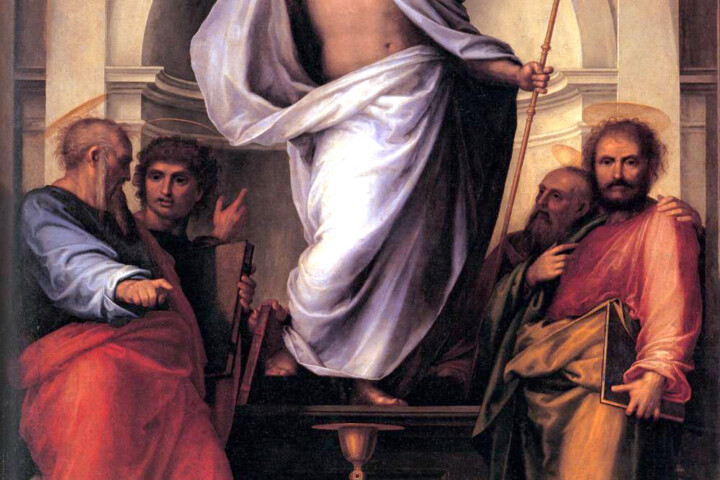
In the Glorious Light of Easter, Alleluia!
Set your minds on things that are above, not on things that are on earth, for you have died, and your life is hidden with Christ in God. When Christ who is your life is revealed, then you also will be revealed with him in glory (Col. 3:3-4). The Resurrection of Our Lord and Saviour[…]Continue reading→
An Ancient Homily for Holy Saturday
The time between Good Friday and Easter Sunday is one of waiting, in silence, as the world wonders – anticipates – what will happen, after the death of Christ. We re-live this time each year in the anamnesis of our liturgy, and in turn look forward to the glorious re-creation of all things at the[…]Continue reading→
Europe’s Long Descent
(As we meditate on this day on Christ’s burial, and His descent into hell, it is fitting to ponder here with contributor Peter Marcus how the world seems to be heading there as well. The difference is that, although God cannot ‘redeem’ hell, nor those therein, He can and did redeem the world. There is[…]Continue reading→