
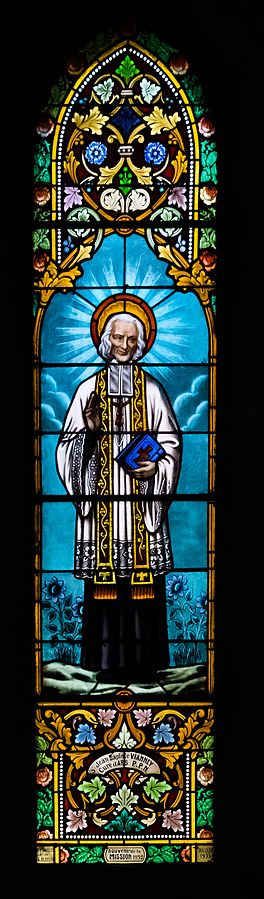
God’s Shining Holiness in a Humble Priest
Wednesday 4 August 2021 is a special day for both shepherds and the flock – the feast of the holy Curé of Ars St John Mary Vianney! His feast brings much hope to the whole church and particularly to the ministerial priesthood.
John was born on May 8, 1786, in Dardilly, in the outskirts of Lyon in France. He came from a humble origin, his family, farmers. Hampered by his lack of scholarly aptitude, it seemed that it was almost impossible for him to be ordained a priest. However, God was on his side. As Pope Emeritus Benedict XVI said in his catechesis on the holy Curé of Ars, on Wednesday 5 August 2009, with the help of far-sighted priests who did not stop at considering his human limitations but looked beyond them and glimpsed the horizon of holiness that shone out in that truly unusual young man, he managed to overcome the misunderstandings and ordeals that presented themselves to him on the way, and finally was ordained a priest on 23 June 1815, at the age of 29.
His superiors sent him to Ars, a remote Catholic community in 1818 to serve as parish priest. When he arrived there Vianney did not lose time, but swiftly started to pray and work for the conversion of his parishioners. The more he became conscious of his setbacks, the more he opened himself to the sanctifying grace of the Holy Spirit which, in turn, not only changed him but also won over the people he lovingly accompanied.
St John Vianney provided for both the physical and spiritual well being of his parishioners. To begin with, besides refurbishing the church building, he instituted an orphanage, which was named “La Providence”, to care for the poor. Moreover, and deeply led by the Holy Spirit, he delivered powerful homilies on God’s loving mercy. These homilies were so penetrating that even the hardest of sinners surrendered to God’s grace. Vianney was also reputed for being an exemplary confessor, his reputation spread like wildfire, so that many pilgrims began to come from all over France to confess to him. Since he knew the paramount importance of the Sacrament of Reconciliation, Vianney would spend some 16 hours a day in the confessional.
Notwithstanding the many attacks he had to suffer from the devil St John Vianney kept persevering in his life of holiness. His loving devotion to the Blessed Sacrament and Our Lady helped him greatly to be that faithful servant of whom the Gospel tells us: Well done, good and faithful servant; you have been faithful over a little, I will set you over much; enter into the joy of your master (Matt 25:21.23). He endless marathons of prayer and fasting, eating frugally and sleeping practically almost none, his indefatigable work together with the practice of much mortification, made him more humble, gentle, patient and cheerful. He breathed his last on August 4, 1859. Among over 1,000 people who attended to his funeral there were many priests and the bishop of the diocese who, in John Mary Vianney’s life, they detected an extraordinary model of priestly holiness. The Holy Curé of Ars was canonized by Pope Pius XI in 1925.
In his letter proclaiming the year for priests on the 150th anniversary of the “Dies Natalis” of the Curé of Ars on June 16, 2009, Pope Emeritus Benedict XVI beautifully presented to us the essential features of St John Vianney’s holiness.
In today’s world, as in the troubled times of the Curé of Ars, the lives and activity of priests need to be distinguished by a determined witness to the Gospel. As Pope Paul VI rightly noted, “modern man listens more willingly to witnesses than to teachers, and if he does listen to teachers, it is because they are witnesses”. [32] Lest we experience existential emptiness and the effectiveness of our ministry be compromised, we need to ask ourselves ever anew: “Are we truly pervaded by the word of God? Is that word truly the nourishment we live by, even more than bread and the things of this world? Do we really know that word? Do we love it? Are we deeply engaged with this word to the point that it really leaves a mark on our lives and shapes our thinking?”. [33] Just as Jesus called the Twelve to be with him (cf. Mk 3:14), and only later sent them forth to preach, so too in our days priests are called to assimilate that “new style of life” which was inaugurated by the Lord Jesus and taken up by the Apostles.[34]
It was complete commitment to this “new style of life” which marked the priestly ministry of the Curé of Ars. Pope John XXIII, in his Encyclical Letter Sacerdotii nostri primordia, published in 1959 on the first centenary of the death of Saint John Mary Vianney, presented his asceticism with special reference to the “three evangelical counsels” which the Pope considered necessary also for diocesan priests: “even though priests are not bound to embrace these evangelical counsels by virtue of the clerical state, these counsels nonetheless offer them, as they do all the faithful, the surest road to the desired goal of Christian perfection”.[35] The Curé of Ars lived the “evangelical counsels” in a way suited to his priestly state. His poverty was not the poverty of a religious or a monk, but that proper to a priest: while managing much money (since well-to-do pilgrims naturally took an interest in his charitable works), he realized that everything had been donated to his church, his poor, his orphans, the girls of his “Providence”, [36] his families of modest means. Consequently, he “was rich in giving to others and very poor for himself”.[37] As he would explain: “My secret is simple: give everything away; hold nothing back”.[38] When he lacked money, he would say amiably to the poor who knocked at his door: “Today I’m poor just like you, I’m one of you”. [39] At the end of his life, he could say with absolute tranquillity: “I no longer have anything. The good Lord can call me whenever he wants!” [40] His chastity, too, was that demanded of a priest for his ministry. It could be said that it was a chastity suited to one who must daily touch the Eucharist, who contemplates it blissfully and with that same bliss offers it to his flock. It was said of him that “he radiated chastity”; the faithful would see this when he turned and gazed at the tabernacle with loving eyes”. [41] Finally, Saint John Mary Vianney’s obedience found full embodiment in his conscientious fidelity to the daily demands of his ministry. We know how he was tormented by the thought of his inadequacy for parish ministry and by a desire to flee “in order to bewail his poor life, in solitude”.[42] Only obedience and a thirst for souls convinced him to remain at his post. As he explained to himself and his flock: “There are no two good ways of serving God. There is only one: serve him as he desires to be served”.[43] He considered this the golden rule for a life of obedience: “Do only what can be offered to the good Lord”.[44]
Lord Jesus, sanctify our priests with the same Holy Spirit you sanctified with your Holy Curé of Ars! St John Mary Vianney, pray for us!

Saint Kateri , Canada’s Protectress
This was the title given to Saint Kateri Tekakwitha, by Pope Benedict XVI, when he canonized her on October 28th, 2012, along with six others, in Saint Peter’ Square (she had been beatified by Pope John Paul II back in 1980). With Saint Joseph as our protector, along with the Canadian martyrs, we seem to[…]Continue reading→

Remembering Father Alphonse de Valk
(Today marks the sixth anniversary of the death of Father Alphonse de Valk, C.S.B., a faithful, courageous and indefatigable Basilian priest, pro-life-and-family apostle, and the founder of Catholic Insight magazine. Here is what we wrote those on his entering into eternity five years ago, as we continue to remember him in our prayers and thoughts)[…]Continue reading→
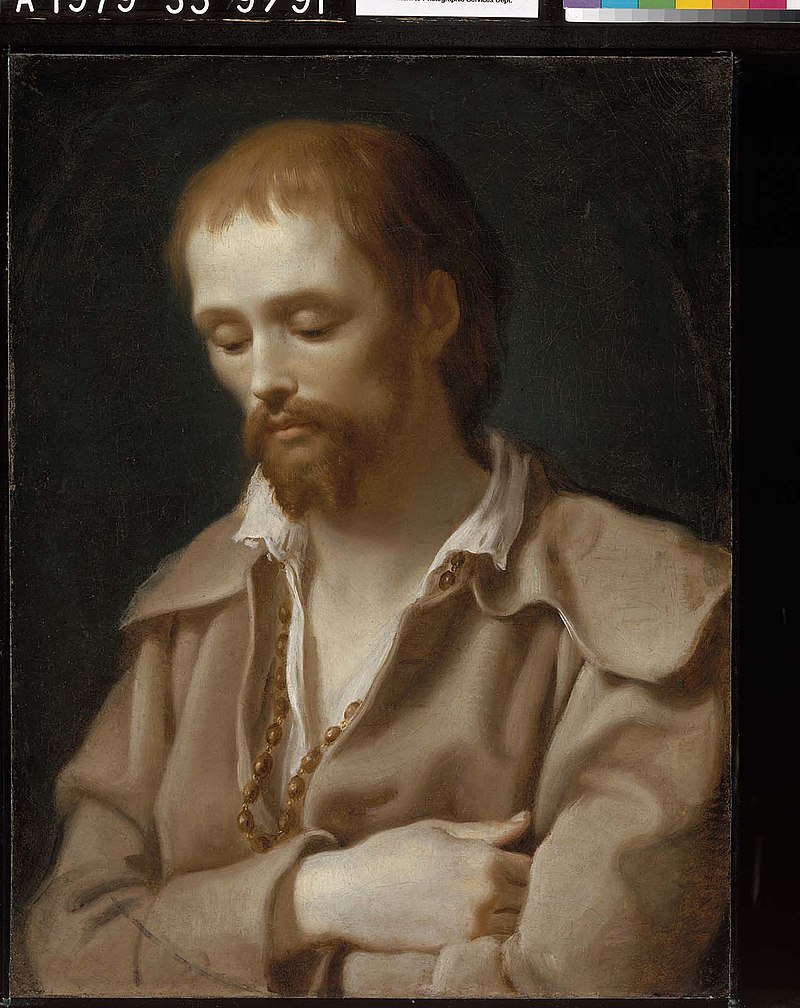
A Tale of Two Benedicts
A grace-filled Holy Week to all our readers! As we await and prepare for the Resurrection about to dawn upon us, we might keep in mind two Benedicts: Pope Emeritus Benedict XVI, requiescat in pace, elected on this day in 2005; and today’s commemoration of the mystic pilgrim, Benedict Joseph Labre, who died on this[…]Continue reading→

My Name is Bernadette
April 16th is a propitious day, for besides the anniversary of Father de Valk’s death, who founded Catholic Insight in its print form decades ago, and the commemoration of the ‘two Benedicts’, mentioned in accompanying posts, today we also recall Saint Bernadette Soubirous, the young visionary to whom the Virgin Mary appeared numerous times at[…]Continue reading→
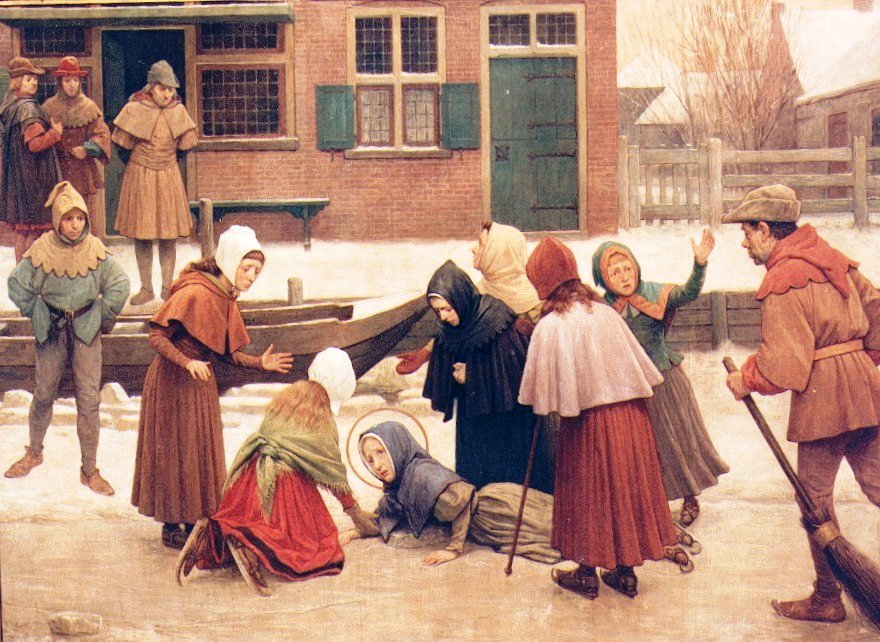
Saint Lydwina of Schiedam and Suffering Joyfully
Saint Lydwina of Schiedam (1380 – 1433) was one of the countless and glorious ‘victim souls’ in the history of the Church, those whose lives are filled with suffering, often of an unimaginable intensity, but who suffer joyfully. She was a fifteen-year old Dutch girl, out skating one day, when she fell and broke one[…]Continue reading→
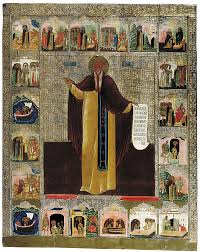
The Glorious Martyrdoms of Martin and Maximus
As we enter into Eastertide, we recall on this 13th of April Pope Saint Martin I (+655), one of the noblest, if most tragic, of the successors of Saint Peter. Born in Umbria, Italy, he was of noble lineage, with great intelligence combined with charity and love of the poor and the Church. While still[…]Continue reading→
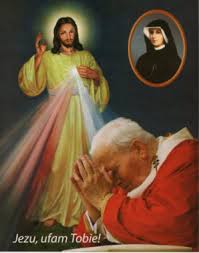
Canonizing Sister Faustina and Divine Mercy
HOMILY OF THE HOLY FATHER MASS IN ST PETER’S SQUARE FOR THE CANONIZATION OF SR MARY FAUSTINA KOWALSKA Sunday, 30 April 2000 1. “Confitemini Domino quoniam bonus, quoniam in saeculum misericordia eius”; “Give thanks to the Lord for he is good; his steadfast love endures for ever” (Ps 118: 1). So the Church sings on the Octave of[…]Continue reading→

Divine Mercy Sunday – An Echo of Every Mass
Reach out your hand and put it in my side. Do not doubt but believe’… ‘My Lord and my God!’ (Jn. 20:18)). Today is Divine Mercy Sunday, and as we celebrate the end of the Easter Octave, we contemplate the wounded side of our Saviour, the Church’s source of life. On Good Friday in the[…]Continue reading→

Saint Stanislaus of Szczepanów
We celebrate Saint Stanislaus today (+ April 11, 1079), in light of this Easter Octave, a bishop and martyr who accepted the episcopacy only at the direct order of Pope Alexander II. He proved a wise and courageous leader of his flock, put to death by his own king, Boleslaus, for rebuking the monarch’s ‘immoral[…]Continue reading→
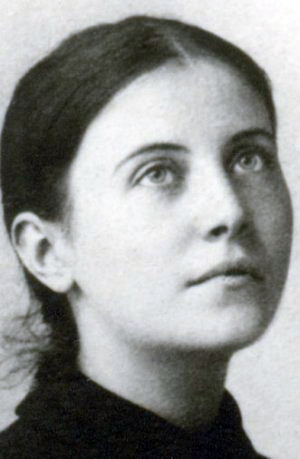
Saint Gemma Galgani
On this April 11th, in 1903 – the same year that the Italian Guiseppe Sarto was elected Pope later that summer as Pius X – a lovely, young Italian woman died, by the name of Gemma Galgani. She lived a brief life of 24 years, as did a number of other young saints, including Pier[…]Continue reading→