
The Bible, as History and Theology
There was a theologian a few years ago who made quite a splash in the media by criticizing the Bible. A lot of people do the same, but we don’t expect a Christian to do so. The basis of his critique was the fact that the Bible is old, as undoubtedly it is. “Would you want your doctor to treat you as doctors did 2,000 year ago?” he asked. And of course, we all say, “No!” “And what about engineering and mathematics, not to mention astronomy,” he said.” We have far surpassed anything that the ancients ever accomplished in those areas.” An again we would have to agree. “Then why,” he went on, “would we resort to a Bible that dates backs thousands of years for our religious beliefs?” Well, there is a response to that challenge that allows intelligent people like you to continue honouring Sacred Scripture. It is simply the fact that not all areas of human activity are time conditioned. In fact, there are two areas that we all recognize as being as still as valid today as they were in antiquity. I’m thinking of art and morality.
Let us begin with art. We look upon the literature and architecture of ancient Greece, to take but one example, with admiration. The plays of its dramatists are still produced today, and Homer, the Greek poet, is regarded with the same reverence and awe as are Dante and Shakespeare. Our art and literature are different, admittedly, but no one would say that they are better. (To be honest, if I were to consult my own convictions, I would say that ours are worse.) Styles in music also change with time, but I cannot regard rap or hip-hop as more beautiful than those old masters, Mozart and Beethoven. One wonders what the music of ancient Greece was like. We don’t know, but the Greeks said that music was the most perfect of all their arts. Given their other accomplishments, one can only imagine how wonderful it must have been. And as for painting, there are some impressive frescos in a cave at Lascaux in France that are 16,000 years old.
Similar observations can be applied to morality. Socrates, Plato’s mentor, is as powerful a moral critic today as he was back in 400 B.C. The Dialogues of Plato are studied not as out-of-date relics of the past, but as vital comments on human nature. Fashions in art and even morality may alter, but the fundamental principles are constant. Nobody admires a liar or a cheat, whether he lived 2,000 years ago or whether he is alive and kicking now. Even people who challenge traditional morality most openly—“Times have changed” is their mantra—recognize universal moral principles that are valid for all times and places. Take women’s rights, for instance. No feminist would say, “It was morally acceptable for a man to beat his wife in the past, but not now, for times have changed.” Instead, they decry the practices of earlier times as simply and unequivocally wrong, and prove their point from history, in that they discover some ancient or remote society in which women were equal—or more than equal—to men.[1]
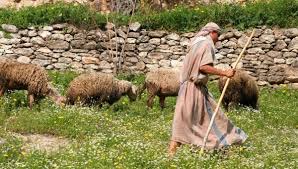
There is, consequently, no need to abandon the Sermon on the Mount for today’s pundit. The readings at Mass also illustrate the perennial wisdom of the Bible. as in the good advice we find in the letter to the Ephesians: “Do not get drunk with wine.[2] . . . Let all bitterness and wrath and anger and clamour and slander be put away from you with all malice; and be kind to one another, tender hearted, forgiving one another as God in Christ forgave you.”[3] Hence, we may open our Bibles with confidence. But there is one difficulty, namely, the cultural shifts that have taken place since Saint Paul wrote and we read him today. We need help from the historian to profit from our encounter with the word of God. I’m not suggesting that the historian should push aside the priest in order to mount the pulpit on Sunday mornings. But he can, for instance, tell us something about shepherds and thus enhance the understanding of today’s readings for us urbanites, most of whom have never seen a shepherd . . . or even a sheep. Learning that the first Israelites were nomads, moving from place to place with their flocks, lets us understand why shepherds are always presented favourably, unlike farmers or city dwellers.
The weakness of the historical approach, however, lies in its limitation: it ignores the Bible as the word of God, as the vehicle of revelation. We need more than a description of antique shepherds. We need to recognize in the care of a shepherd for his flock an image of God’s providence at work in our lives, mysterious as it must ever be: “The Lord is my shepherd, I shall not want.”[4] Furthermore, we find in Scripture God’s ultimate providential act in the coming of Jesus, our Saviour. He has compassion on the crowd “because they were like sheep without a shepherd, and he began to teach them many things.”[5] And, as we commemorate in every Mass, it is by his death on the cross that Jesus has reconciled us, who are sinners, with the Father. In the second reading Saint Paul provides a typically dramatic expression of this fact: “In Christ Jesus, you who once were far off have been brought near by the blood of Christ.” And he goes on to point out that we gentiles can now fully share in the privileges the Jews enjoyed as the chosen people: “He has broken down the dividing wall, that is, the hostility between us . . . thus making peace and [reconciling] both groups to God in one body through the Cross.” He closes this passage with a reference to the Trinity: “For through him [Christ Jesus] both of us, [Jews and gentiles alike] have access on one Spirit to the Father.”[6]
And there you have the difference between the historian and the believer. The former limits himself to what happened, but the preacher tells us why it happened and what it has accomplished.
[1] Cf. Mary Beard, Women & Power: A Manifesto (London: Liveright Publishing, 2017).
[2] Eph 5.18.
[3] Eph 4.31-32.
[4] Ps 22.23: today’s responsorial Psalm.
[5] Mark 6: today’s Gospel.
[6] Eph 2: today’s second reading.

Remembering Father Alphonse de Valk
(Today marks the sixth anniversary of the death of Father Alphonse de Valk, C.S.B., a faithful, courageous and indefatigable Basilian priest, pro-life-and-family apostle, and the founder of Catholic Insight magazine. Here is what we wrote those on his entering into eternity five years ago, as we continue to remember him in our prayers and thoughts)[…]Continue reading→

Divine Mercy Sunday – An Echo of Every Mass
Reach out your hand and put it in my side. Do not doubt but believe’… ‘My Lord and my God!’ (Jn. 20:18)). Today is Divine Mercy Sunday, and as we celebrate the end of the Easter Octave, we contemplate the wounded side of our Saviour, the Church’s source of life. On Good Friday in the[…]Continue reading→

Saint Stanislaus of Szczepanów
We celebrate Saint Stanislaus today (+ April 11, 1079), in light of this Easter Octave, a bishop and martyr who accepted the episcopacy only at the direct order of Pope Alexander II. He proved a wise and courageous leader of his flock, put to death by his own king, Boleslaus, for rebuking the monarch’s ‘immoral[…]Continue reading→

First Holy Communion: Sermon from May 16, 1943
Here is a sermon from the good old days by +Rev. Msgr. Vincent Nicholas Foy (August 14, 1915 – March 13, 2017), from 1943. Readers may recall that Pope Saint Pius X, by the decree Quam Singulari in 1910, lowered the customary age of reception of Holy Communion – after the rigours of the plague[…]Continue reading→

In the Glorious Light of Easter, Alleluia!
Set your minds on things that are above, not on things that are on earth, for you have died, and your life is hidden with Christ in God. When Christ who is your life is revealed, then you also will be revealed with him in glory (Col. 3:3-4). The Resurrection of Our Lord and Saviour[…]Continue reading→

An Ancient Homily for Holy Saturday
The time between Good Friday and Easter Sunday is one of waiting, in silence, as the world wonders – anticipates – what will happen, after the death of Christ. We re-live this time each year in the anamnesis of our liturgy, and in turn look forward to the glorious re-creation of all things at the[…]Continue reading→

Europe’s Long Descent
(As we meditate on this day on Christ’s burial, and His descent into hell, it is fitting to ponder here with contributor Peter Marcus how the world seems to be heading there as well. The difference is that, although God cannot ‘redeem’ hell, nor those therein, He can and did redeem the world. There is[…]Continue reading→
Pope Saint John Paul II’s First Good Friday Homily
ADDRESS OF HIS HOLINESS JOHN PAUL II AT THE CONCLUSION OF THE STATIONS OF THE CROSS AT THE COLOSSEUM Good Friday, 13 April 1979 When we make the Way of the Cross from one station to the next, in spirit we are always at the spot wherethis journey had its “historical” place: where it[…]Continue reading→
A Meditation for Good Friday: How To Undo the Effects of Sin?
Cardinal Newman, now Saint John Henry Newman, was a towering figure of nineteenth-century Catholicism who is almost universally admired. I say “almost” because not everyone likes him. I knew a priest once, Arthur Caulkins, who has become disenchanted with Newman. As an undergraduate Arthur had been enamoured of Newman, and this interest continued when he[…]Continue reading→
Pope Benedict’s Last Holy Thursday Homily
MASS OF THE LORD’S SUPPER HOMILY OF HIS HOLINESS BENEDICT XVI Basilica of St John Lateran Holy Thursday, 5 April 2012 Photo Gallery (Video) Dear Brothers and Sisters! Holy Thursday is not only the day of the institution of the Most Holy Eucharist, whose splendour bathes all else and in some ways draws it to[…]Continue reading→