
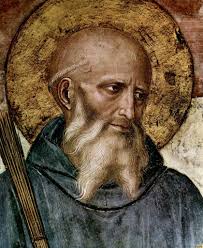
Saint Benedict, and Finding God in the Here and Now
July 11th is the day we normally celebrate the feast of St Benedict. Even if the day this year is taken by the Sunday, we might still gain much benefit from asking who was St Benedict? And why is he a very important figure within the history of Western Christianity?
As the history of consecrated life tells us, St Benedict is the Father of Western Monasticism. He brought about a revolution both within the Church as well as society as such. In his post-synodal apostolic exhortation on the consecrated life and its mission in the Church and in the World Pope St John Paul II tells us:
In its present form, inspired above all by Saint Benedict, Western monasticism is the heir of the great number of men and women who, leaving behind life in the world, sought God and dedicated themselves to him, “preferring nothing to the love of Christ”. The monks of today likewise strive to create a harmonious balance between the interior life and work in the evangelical commitment to conversion of life, obedience and stability, and in persevering dedication to meditation on God’s word (lectio divina), the celebration of the Liturgy and prayer. In the heart of the Church and the world, monasteries have been and continue to be eloquent signs of communion, welcoming abodes for those seeking God and the things of the spirit, schools of faith and true places of study, dialogue and culture for the building up of the life of the Church and of the earthly city itself, in expectation of the heavenly city (no.6).
Saint Benedict was born at Norcia circa 480. His birth came providentially as the Western Roman Empire officially crumbled due to the deposition of its last Emperor, Romulus Augustulus. In this very challenging time, Benedict’s arrival in this world was heralding a new order which was to impact the Church and society at large. Since his life history was not written when he was still living, the primary resource available we have is that found in the second book of Pope Saint Gregory’s Dialogues, presumably composed between 593-594.
Following his initial formation at primary schools in Norcia, Benedict transferred to Rome to deepen his studies in literature and law. Nevertheless the reckless way of life of his companions coupled with Roman’s political instability motivated him to retreat to Affile with a group of priests, together with his old nurse who acted as his servant.
In this town St Benedict made his first miracle when he restored to perfect condition an earthenware wheat sifter which his man-servant had accidentally broken. When the miracle reached the people he felt to retire more from social life, choosing for himself a cave in the ruins of Nero’s village, in the proximity of Subiaco, and started to live there as a hermit. Deeply immersed in solitude with God, Benedict spent entire days and months praying. The only contact he had with the outside world was through a monk named Romanus, whose monastery was close to where Benedict was. It was Romanus who provided Benedict with a monk’s habit and cared for his spiritual and material needs. In these three solitary years Benedict let the Lord form him in his Word, during which time he grew in God’s wisdom so much so that he developed the pastoral and apostolic principles which were later to be the very backbone of the Benedictine Order.
Following the victory of a strong temptation against the virtue of chastity, Benedict deeply felt that the time had arrived for him to live community life on the example of the ancient Fathers of Christian Monasticism. The community of Vicovaro wanted him as their abbot. However, the failed attempt by a monk to poison him persuaded Benedict that it was wise for him to go back to his solitude.
As time passed he founded twelve monasteries and provided twelve monks to each and every monastery of them. On top of this Benedict also founded a thirteenth monastery for novices and those in need of education. His fame spread so rapidly in Rome that two famous men of the time, Equizius and the nobleman Tertullus, entrusted him with their two sons who were later to become the first two gems of the Benedictine family, Maurus and Placidus.
Throughout his life Benedict worked many miracles. Unfortunately, a priest called Florentius was so jealous of him that forced him to leave Subiaco. From here Benedict went to Montecassino and founded this famous Abbey between the year 525 and 529. Under his leadership the old acropolis-sanctuary towering above the declined Roman municipium of Casinum became a monastery that was much bigger than those built at Subiaco. Benedict managed to turn what is pagan into Christian. In fact, on the remains of the altar dedicated to Apollo he built a chapel dedicated to St John the Baptist, while the temple of Apollo itself was converted into an oratory for the monks and dedicated to St Martin of Tours.
At Montecassino Benedict supervised the monastery’s building, founded a monastic order and did many miracles. In autumn of 542, as the Goth King Totila was marching through Cassino en route to Naples to attack it, he decided to test St Benedict. Consequently, Totila dispatched his squire dressed as a king to greet the monk. However Benedict immediately unmasked him. When he ultimately encountered Totila, he admonished him with a serious prediction: “You have hurt many and you continue to do it, now stop behaving badly! You will enter Rome, you will cross the vast sea, you will reign for nine years; however in the tenth year, you will die.” Circumstances proved St Benedict’s prediction right.
Benedict devoted his life to evangelize the local people who were pagans. Before he died he had the grace of seeing the soul of his sister, Saint Scholastica, going to heaven in the form of a dove. According to Pope St Gregory the Great, such a vision showed Benedict’s close union with God. As tradition has it, St Benedict died on March 21, 547 AD. He foresaw his imminent death, informing his close and distant disciples that the end was near. On his orders six days before his passing away, he had the grave which he was to share with his deceased sister Saint Scholastica, opened already. Then, totally drained, Benedict asked to be taken into his oratory where, after receiving the Eucharist for the last time, he commended his spirit to God, accompanied by his monks he loved till the end.
Pope St Paul VI put St Benedict as the Patron Saint of Europe, and Pope Emeritus Benedict XVI, in his general audience of Wednesday 9 April 2008 on St Benedict of Norcia, said that he intended to recognize the marvellous work the Saint achieved with his Rule for the formation of the civilization and culture of Europe”.
Nowadays the European continent craves for a solid identity deeply damaged by two devastating World Wars together with the collapse of great ideologies. In the former Pope’s words, Saint Benedict can be of great help not merely to create new and lasting unity, political, economic and juridical instruments … but … also to awaken an ethical and spiritual renewal which draws on the Christian roots of the Continent, otherwise a new Europe cannot be built. Hence, Pope Benedict rightly and wisely encourages us: Today, in seeking true progress, let us also listen to the Rule of St Benedict as a guiding light on our journey. The great monk is still a true master at whose school we can learn to become proficient in true humanism.
St Benedict, pray for us!

Saint Kateri , Canada’s Protectress
This was the title given to Saint Kateri Tekakwitha, by Pope Benedict XVI, when he canonized her on October 28th, 2012, along with six others, in Saint Peter’ Square (she had been beatified by Pope John Paul II back in 1980). With Saint Joseph as our protector, along with the Canadian martyrs, we seem to[…]Continue reading→

Remembering Father Alphonse de Valk
(Today marks the sixth anniversary of the death of Father Alphonse de Valk, C.S.B., a faithful, courageous and indefatigable Basilian priest, pro-life-and-family apostle, and the founder of Catholic Insight magazine. Here is what we wrote those on his entering into eternity five years ago, as we continue to remember him in our prayers and thoughts)[…]Continue reading→

My Name is Bernadette
April 16th is a propitious day, for besides the anniversary of Father de Valk’s death, who founded Catholic Insight in its print form decades ago, and the commemoration of the ‘two Benedicts’, mentioned in accompanying posts, today we also recall Saint Bernadette Soubirous, the young visionary to whom the Virgin Mary appeared numerous times at[…]Continue reading→

Canonizing Sister Faustina and Divine Mercy
HOMILY OF THE HOLY FATHER MASS IN ST PETER’S SQUARE FOR THE CANONIZATION OF SR MARY FAUSTINA KOWALSKA Sunday, 30 April 2000 1. “Confitemini Domino quoniam bonus, quoniam in saeculum misericordia eius”; “Give thanks to the Lord for he is good; his steadfast love endures for ever” (Ps 118: 1). So the Church sings on the Octave of[…]Continue reading→

Divine Mercy Sunday – An Echo of Every Mass
Reach out your hand and put it in my side. Do not doubt but believe’… ‘My Lord and my God!’ (Jn. 20:18)). Today is Divine Mercy Sunday, and as we celebrate the end of the Easter Octave, we contemplate the wounded side of our Saviour, the Church’s source of life. On Good Friday in the[…]Continue reading→

Saint Stanislaus of Szczepanów
We celebrate Saint Stanislaus today (+ April 11, 1079), in light of this Easter Octave, a bishop and martyr who accepted the episcopacy only at the direct order of Pope Alexander II. He proved a wise and courageous leader of his flock, put to death by his own king, Boleslaus, for rebuking the monarch’s ‘immoral[…]Continue reading→
First Holy Communion: Sermon from May 16, 1943
Here is a sermon from the good old days by +Rev. Msgr. Vincent Nicholas Foy (August 14, 1915 – March 13, 2017), from 1943. Readers may recall that Pope Saint Pius X, by the decree Quam Singulari in 1910, lowered the customary age of reception of Holy Communion – after the rigours of the plague[…]Continue reading→
In the Glorious Light of Easter, Alleluia!
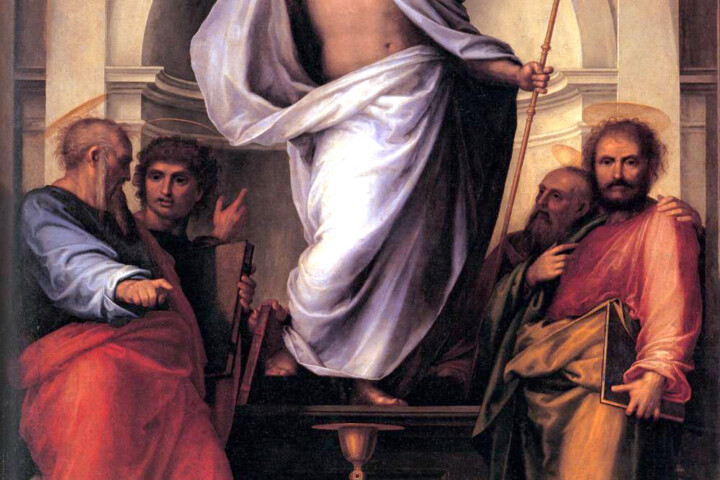
Set your minds on things that are above, not on things that are on earth, for you have died, and your life is hidden with Christ in God. When Christ who is your life is revealed, then you also will be revealed with him in glory (Col. 3:3-4). The Resurrection of Our Lord and Saviour[…]Continue reading→
An Ancient Homily for Holy Saturday
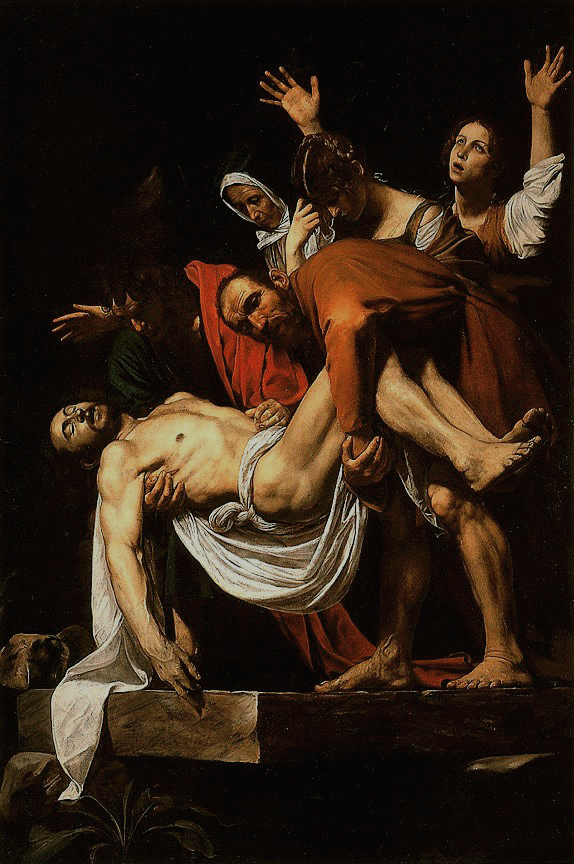
The time between Good Friday and Easter Sunday is one of waiting, in silence, as the world wonders – anticipates – what will happen, after the death of Christ. We re-live this time each year in the anamnesis of our liturgy, and in turn look forward to the glorious re-creation of all things at the[…]Continue reading→
Europe’s Long Descent
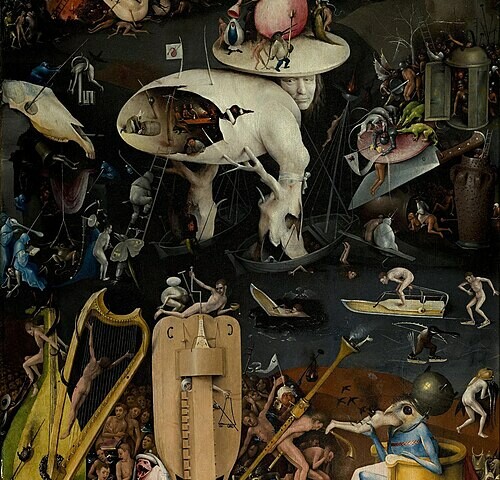
(As we meditate on this day on Christ’s burial, and His descent into hell, it is fitting to ponder here with contributor Peter Marcus how the world seems to be heading there as well. The difference is that, although God cannot ‘redeem’ hell, nor those therein, He can and did redeem the world. There is[…]Continue reading→