
The Holy Mass Part I: A Reflection on the Traditional Mass
Fifteenth Sunday Per Annum (B)
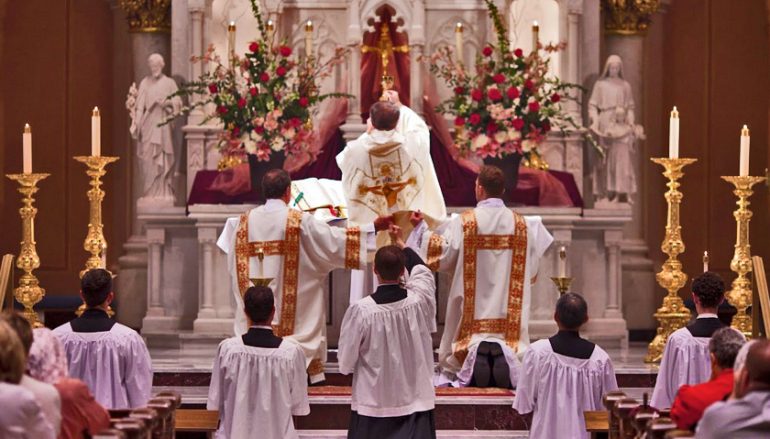
This Sunday’s reflection begins a series of meditations on the Holy Sacrifice of the Mass, with specific references to the Ancient Rite of the Mass in an effort to introduce those who are not familiar with this Rite to its spiritual and mystical depth. Of late there has been a lot of discussion about Summorum Pontificum, the Motu Proprio of Pope Benedict XVI which recognised that this Rite was never abrogated by the Second Vatican Council. Some scholars have rightly noted that in view of its ancient origin and continuous use in the Roman Church, this ought to be considered the Ordinary Form of the Roman Rite. There are many books in circulation that illustrate the theological and spiritual cohesion of the Ancient Rite of the Mass. It is the Rite that sustained and nourished the spiritual life of countless saints and which gave birth to Christian culture. As Pope Benedict observed in the letter accompanying his Motu Proprio, ‘what earlier generations held as sacred, remains sacred and great for us too, and it cannot be all of a sudden entirely forbidden or even considered harmful.’ ⧾
So the twelve went out and proclaimed that all should repent (Mk.6:13).
The call to repentance is fundamental to the preaching of Our Lord Jesus Christ as it was also in the preaching of St. John the Baptist, the Lord’s precursor and the culmination of all the prophets before him, including Amos, whose prophecy is contained in the first reading of today’s Mass. Not surprisingly, Amos is told to go away because his prophecy condemns external religious ceremony that covers moral corruption and is not accompanied by interior conversion of the heart to the Lord our God. The prophet Amos makes it clear that repentance entails more than religious observance and so we recognize that this call to repentance is no less addressed to us as it is to those whose thinking and lifestyle are directly opposed to the law of God.
The call to repentance has never been popular but it is always necessary and relevant because the Christian life is a progressive identification with the life of Jesus; and as we enter more deeply into the Mystery of Christ we discover that our growth towards our transformation in Christ is an continuous process. We heed the call to repentance daily and see it as an invitation to union with Jesus through grace, love and imitation. In the Divine Office, the official prayer of the Church, each day begins with the recitation of Psalm 95: If today you hear His voice, harden not your hearts. St. Clement, one of the earliest popes, observes that it is better for a man to confess his sins than to harden his heart (From a letter to the Corinthians, Liturgy of the Hours, Vol. III, p. 474).
At the celebration of the Holy Sacrifice of the Mass the call to repentance and to a reflective manner of life is issued in what is called the Penitential Rite. In the Traditional Rite of the Mass, the Penitential Rite is contained in the Prayers at the Foot of the Altar. These are recited outside the Sanctuary and begin with the recitation of Psalm 42. The priest then makes his own confession of sin reciting the Confiteor /I confess. This is followed by the people’s confession of sin in a second Confiteor customarily recited by a server. The double recitation recognises the difference in essence between the ordained priesthood and the priesthood of the baptized.
The Confiteor is the traditional formula for confessing our sins in which we humbly acknowledge sins of commission and sins of omission; and in which we also call upon Our Lady, the Mother of mercy and the angels and the saints to intercede on our behalf in our struggle with sin. St. John reminds us that if we say we have no sin, we deceive ourselves (1 Jn. 1:8). Our Lord taught us the importance of humility and of acknowledging our sinfulness in the parable of the Pharisee and the Publican. God cannot forgive us if we are not sorry and the necessary sorrow for ours sins is called contrition, which comes from the Latin conterere, meaning to break. Thus as we recite the Confiteor, we strike our breast three times: through my fault, through my fault, through my most grievous fault – as if to break our stony hearts. The oldest of the teachings of the early Church Fathers, called the Didache or The Teachings of the Twelve Apostles, stressed the importance of confessing our sins before participating in the Eucharistic Sacrifice: …But every Lord’s day gather yourselves together, and break bread, and give thanksgiving after having confessed your transgression, that your sacrifice may be pure.
In the Traditional Rite of the Mass, having confessed his sins, the priest ascends the Altar steps and as he does he prays quietly this beautiful prayer known as the Aufer a nobis: Take away from us our iniquities, we beseech Thee, O Lord, that with pure minds we may worthily enter into the holy of holies. Through Christ our Lord. Amen. The Sanctuary where the sacred mysteries are celebrated is likened to the Holy of Holies in the Temple in Jerusalem. The Holy of Holies was where the Ark of the Covenant was kept and no one could pass through the veil except the High Priest, and then only once a year, on the Day of Atonement – after specially preparing himself for six days through rites of purification.
On Good Friday, at the ninth hour when Our Lord died, the veil which separated the Holy of Holies from the rest of the Temple was torn in two; signifying that the New Covenant in Jesus’ Blood had replaces the old. Through His saving Sacrifice we have gained access to the Father. As we read in the Epistle to the Hebrews, since then we have a great high priest who has passed through the heavens, Jesus, the Son of God, let us hold fast our confession…. Let us then with confidence draw near to the throne of grace, that we may receive mercy and find grace to help in time of need (4:14-16).
The confession of sin which begins the celebration of every Mass is a confident affirmation of our trust in the merciful love of God that endures forever. It is no less a reminder of our constant need to repent and to be renewed so that we might reflect the goodness and love of our Saviour. Our plea for mercy: Kyrie eleison, Christe eleison, Kyrie eleison – disposes our hearts and minds to praise the most Holy Trinity in the Gloria, a Great Doxology; the hymn of praise that gives voice to the four ends of sacrifice: adoration, atonement, thanksgiving and petition.
It is Christ Our Lord Himself, the Eternal High Priest whom we see and hear in the celebration of the sacred mysteries. Following Christ is the greatest good for men; history clearly illustrates the truth of this statement. The first step along this path is always repentance and this first step sets the pace for the path of our devout discipleship; a life of union with Jesus through grace, love and imitation. The lives of the saints, especially those who experienced a dramatic conversion from a life of sin, are sufficient proof of the value of repentance. Therefore, since we are surrounded by so great a cloud of witnesses, let us also lay aside every weight, and sin which clings so closely, and let us run with perseverance the race that is set before us, looking to Jesus the pioneer and perfecter of our faith (Heb. 12: 1-2).
In the Traditional Rite of the Mass, having entered the Sanctuary, our Holy of Holies, the priest kisses the Altar in veneration and quietly recites this prayer which acknowledges our participation in the communion of saints: We beseech Thee, O Lord, by the merits of Thy saints whose relics are here, and of all the saints, that Thou wouldst vouchsafe to forgive me all my sins. Amen. In this sacred union of prayer and communion of adoration and praise, we pray that our participation in the sacred rites may be attentive, devout and spiritually fruitful.

Remembering Father Alphonse de Valk
(Today marks the sixth anniversary of the death of Father Alphonse de Valk, C.S.B., a faithful, courageous and indefatigable Basilian priest, pro-life-and-family apostle, and the founder of Catholic Insight magazine. Here is what we wrote those on his entering into eternity five years ago, as we continue to remember him in our prayers and thoughts)[…]Continue reading→

Divine Mercy Sunday – An Echo of Every Mass
Reach out your hand and put it in my side. Do not doubt but believe’… ‘My Lord and my God!’ (Jn. 20:18)). Today is Divine Mercy Sunday, and as we celebrate the end of the Easter Octave, we contemplate the wounded side of our Saviour, the Church’s source of life. On Good Friday in the[…]Continue reading→

Saint Stanislaus of Szczepanów
We celebrate Saint Stanislaus today (+ April 11, 1079), in light of this Easter Octave, a bishop and martyr who accepted the episcopacy only at the direct order of Pope Alexander II. He proved a wise and courageous leader of his flock, put to death by his own king, Boleslaus, for rebuking the monarch’s ‘immoral[…]Continue reading→

First Holy Communion: Sermon from May 16, 1943
Here is a sermon from the good old days by +Rev. Msgr. Vincent Nicholas Foy (August 14, 1915 – March 13, 2017), from 1943. Readers may recall that Pope Saint Pius X, by the decree Quam Singulari in 1910, lowered the customary age of reception of Holy Communion – after the rigours of the plague[…]Continue reading→

In the Glorious Light of Easter, Alleluia!
Set your minds on things that are above, not on things that are on earth, for you have died, and your life is hidden with Christ in God. When Christ who is your life is revealed, then you also will be revealed with him in glory (Col. 3:3-4). The Resurrection of Our Lord and Saviour[…]Continue reading→

An Ancient Homily for Holy Saturday
The time between Good Friday and Easter Sunday is one of waiting, in silence, as the world wonders – anticipates – what will happen, after the death of Christ. We re-live this time each year in the anamnesis of our liturgy, and in turn look forward to the glorious re-creation of all things at the[…]Continue reading→

Europe’s Long Descent
(As we meditate on this day on Christ’s burial, and His descent into hell, it is fitting to ponder here with contributor Peter Marcus how the world seems to be heading there as well. The difference is that, although God cannot ‘redeem’ hell, nor those therein, He can and did redeem the world. There is[…]Continue reading→
Pope Saint John Paul II’s First Good Friday Homily
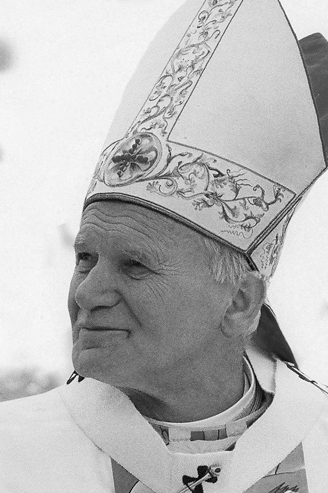
ADDRESS OF HIS HOLINESS JOHN PAUL II AT THE CONCLUSION OF THE STATIONS OF THE CROSS AT THE COLOSSEUM Good Friday, 13 April 1979 When we make the Way of the Cross from one station to the next, in spirit we are always at the spot wherethis journey had its “historical” place: where it[…]Continue reading→
A Meditation for Good Friday: How To Undo the Effects of Sin?
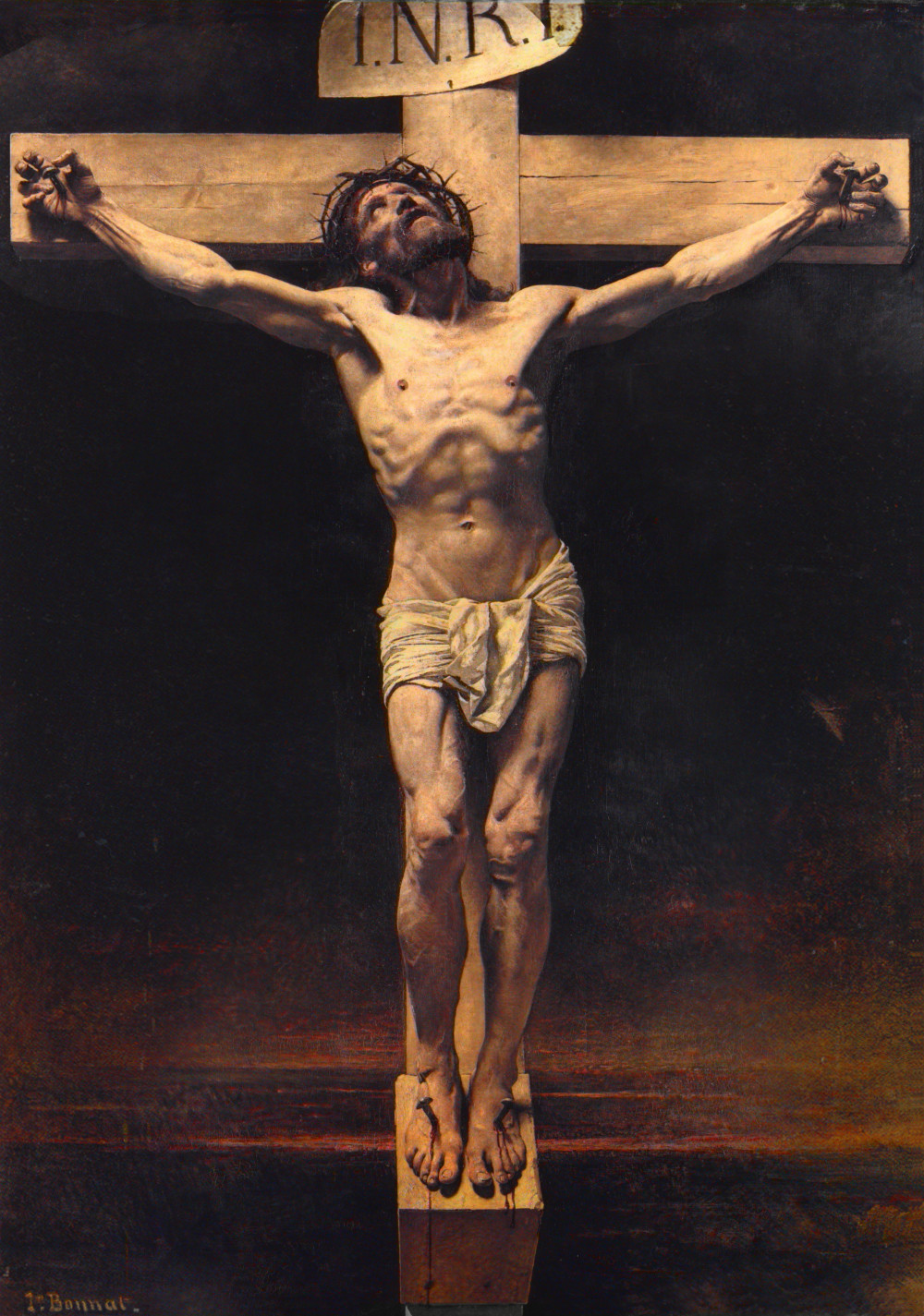
Cardinal Newman, now Saint John Henry Newman, was a towering figure of nineteenth-century Catholicism who is almost universally admired. I say “almost” because not everyone likes him. I knew a priest once, Arthur Caulkins, who has become disenchanted with Newman. As an undergraduate Arthur had been enamoured of Newman, and this interest continued when he[…]Continue reading→
Pope Benedict’s Last Holy Thursday Homily
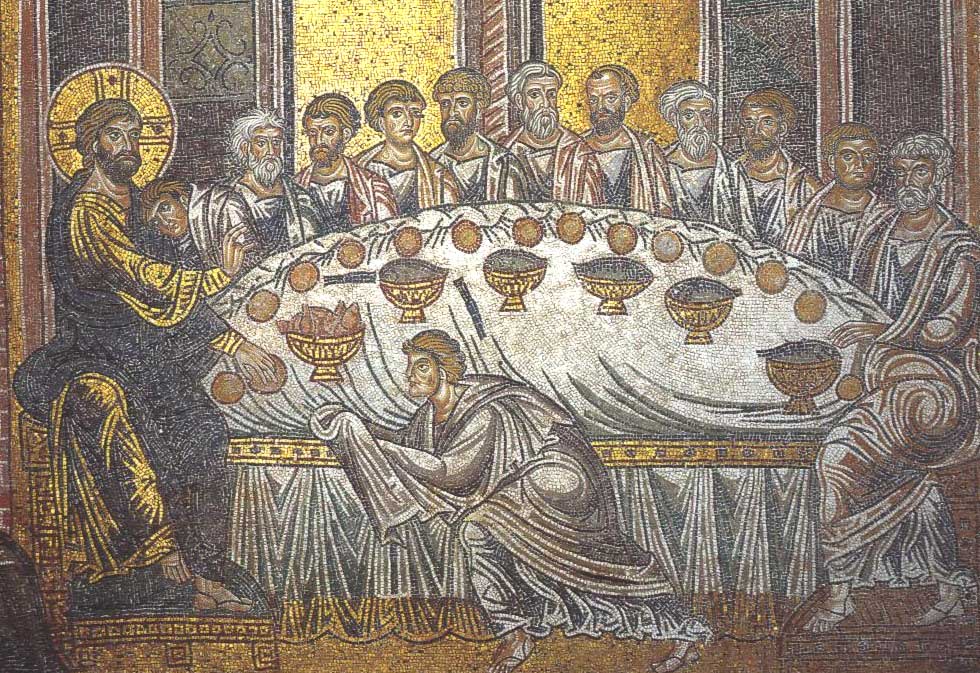
MASS OF THE LORD’S SUPPER HOMILY OF HIS HOLINESS BENEDICT XVI Basilica of St John Lateran Holy Thursday, 5 April 2012 Photo Gallery (Video) Dear Brothers and Sisters! Holy Thursday is not only the day of the institution of the Most Holy Eucharist, whose splendour bathes all else and in some ways draws it to[…]Continue reading→