
Revitalizing Catechetics
On May 10th, the memorial of Saint John of Avila, priest and doctor of the Church, Pope Francis promulgated the Motu Proprio Antiquum Ministerium, instituting, or re-instituting as its title suggests, the ministry of Catechist, those deputed to teach and hand on the revealed truths of our Faith. This office joins the other two ministries, lector and acolyte, instituted by Paul VI in his own Apostolic Letter of August 15th, 1972, Ministeria Quaedam, in which he abolished (well, for the Novus Ordo, for they are still bestowed in the usus antiquior) the four minor orders (porter, lector, exorcist, acolyte), leaving lector and acolyte as ministries open to laymen. We say ‘men’, since they were reserved to men (vir), until Pope Francis opened them both to women, by his Motu Proprio of January 10th, 2021, Spiritus Domini.
So, now, after all that, we now have three ministries – lector, acolyte, and catechist – open to any suitable member of the lay faithful.
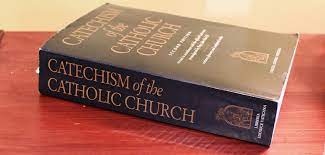
The importance of catechetics can scarcely be overstated, emphasized by all recent Popes, perhaps most of all by John Paul II, who promulgated his great clarion call to revitalize catechetics, Catechesi Tradendae on the first anniversary of his election as Pope (October 16th, 1979). My people perish for lack of truth, cried the prophet Hosea, and the great teaching Pope saw the ignorance of so many Catholics of even the basic revealed truths of our Faith as a large part of our current malaise. Pope John Paul later oversaw the development of a new, universal Catechism (the last, and still authoritative, universal Catechism was that of the Council of Trent, called ‘the Roman’, published in 1566, a year after the close of the council). The Catechism of the Catholic Church was promulgated in 1992, a sure summary of what we believe, by which we may begin to fulfill what the Word Himself declared: And eternal life is this: to know you, the only true God, and Jesus Christ whom you have sent (John 17:2) We cannot love what we do not know.
We know ‘God and the One He has sent’ by knowing the truth He has revealed for our salvation, and, along with Holy Scripture, what better place to begin than the Catechism, which Pope John Paul described as a faithful and systematic presentation of “the teaching of Sacred Scripture, the living Tradition in the Church and the authentic Magisterium, as well as the spiritual heritage of the Fathers, Doctors, and saints of the Church, to allow for a better knowledge of the Christian mystery and for enlivening the faith of the People of God (Apostolic Constitution, Fidei Depositum, #2)
To instill this in the minds and hearts of all the faithful is a high and lofty goal, no doubt, but a necessary one, and a work to which this writer has devoted much of his life. How this new ministry will play into this, I know not. We are all aware of the wayward liturgical and doctrinal tendencies of the Church of recent times – and by ‘recent’, we mean the past half century. To the point at hand, RCIA programs – the ‘Rite of Christian Initiation’, the standard catechetical program by which those entering the Church would be catechized, in which such hope was placed in the wake of the Council – are, shall we say, not known for their orthodoxy, and anecdotes abound of bizarre heresies and moral aberrancies being taught to such would-be converts, who are left befuddled, benighted, bereft, and all too often un-Catholic. Perhaps even the Pope has realized that modern catechetics – insofar as we even describe what is being done, or not done – are a near-unmitigated disaster.
I have an Irish mind that tends towards seeing the worst that might happen (but, then, on the bright side, is not one more prepared that way?) This ministry could allow bishops of a certain ‘liberal’ ideological bent – and we need not name names – to limit any teaching of the faith in their diocese to those of like mind, and shore up ranks even further.
But we may, and should, hope for the best, or at least the better. This new-yet-ancient ministry could do much to improve the situation, ensuring that catechists will be suitably and fittingly vetted and prepared, spiritually and intellectually, and elevated by the grace of office.
Only so may all know come to know and love those salvific truths – and the Truth, Who is their source and end – which will set them free.

Carney’s Amoral Majority
After five defections – euphemistically described as ‘crossing the floor’ – and three by-elections, Mark Carney and his Liberals how have their coveted majority. One wonders what bowls of pottage were offered in back-room deals. In the archaic monarchical system that is the Dominion of Canada, this majority allows the newly-minted Prime Minister to rule[…]Continue reading→

Saint Kateri , Canada’s Protectress
This was the title given to Saint Kateri Tekakwitha, by Pope Benedict XVI, when he canonized her on October 28th, 2012, along with six others, in Saint Peter’ Square (she had been beatified by Pope John Paul II back in 1980). With Saint Joseph as our protector, along with the Canadian martyrs, we seem to[…]Continue reading→

A Tale of Two Benedicts
A grace-filled Holy Week to all our readers! As we await and prepare for the Resurrection about to dawn upon us, we might keep in mind two Benedicts: Pope Emeritus Benedict XVI, requiescat in pace, elected on this day in 2005; and today’s commemoration of the mystic pilgrim, Benedict Joseph Labre, who died on this[…]Continue reading→

My Name is Bernadette
April 16th is a propitious day, for besides the anniversary of Father de Valk’s death, who founded Catholic Insight in its print form decades ago, and the commemoration of the ‘two Benedicts’, mentioned in accompanying posts, today we also recall Saint Bernadette Soubirous, the young visionary to whom the Virgin Mary appeared numerous times at[…]Continue reading→

Saint Lydwina of Schiedam and Suffering Joyfully
Saint Lydwina of Schiedam (1380 – 1433) was one of the countless and glorious ‘victim souls’ in the history of the Church, those whose lives are filled with suffering, often of an unimaginable intensity, but who suffer joyfully. She was a fifteen-year old Dutch girl, out skating one day, when she fell and broke one[…]Continue reading→

The Glorious Martyrdoms of Martin and Maximus
As we enter into Eastertide, we recall on this 13th of April Pope Saint Martin I (+655), one of the noblest, if most tragic, of the successors of Saint Peter. Born in Umbria, Italy, he was of noble lineage, with great intelligence combined with charity and love of the poor and the Church. While still[…]Continue reading→

Saint Stanislaus of Szczepanów
We celebrate Saint Stanislaus today (+ April 11, 1079), in light of this Easter Octave, a bishop and martyr who accepted the episcopacy only at the direct order of Pope Alexander II. He proved a wise and courageous leader of his flock, put to death by his own king, Boleslaus, for rebuking the monarch’s ‘immoral[…]Continue reading→

Saint Gemma Galgani
On this April 11th, in 1903 – the same year that the Italian Guiseppe Sarto was elected Pope later that summer as Pius X – a lovely, young Italian woman died, by the name of Gemma Galgani. She lived a brief life of 24 years, as did a number of other young saints, including Pier[…]Continue reading→

An Ideological and Improper Translation
I noticed something odd with the psalm reading at Mass the other day. Our bishops’ conference here in Canada has decreed that the Mass in English – Novus Ordo – use the ‘NRSV’, the ‘New Revised Standard Version’, an ‘updated’ translation of the original RSV, first published in 1952. This ‘new translation’ has the tendency[…]Continue reading→
Saint Jean-Baptiste de la Salle: A Teacher for Teachers
Jean-Baptiste de la Salle (1651 – 1719), a French nobleman, ordained a priest, founded the first order in the Church’s history entirely without priests, and this came about almost by accident. I say ‘almost’, for, of course, there are no accidents with God. Destined for ordination from an early age, Jean-Baptiste never looked back, even[…]Continue reading→