
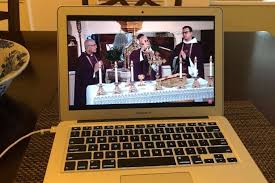
To the Catacombs with the Virtual Mass?
I read recently a comparison between early Christians forced underground to Mass in the catacombs, and modern Catholics relegated to Mass on the Ethernet (Internet?). It made me wonder: There may be some similarity, but the analogy is quite a limited one, and in fact, like most analogies, they are more different than alike.
For some, watching Mass on a screen may be pious, uplifting, a relief, a substitute and a solace. But it is not ‘Mass’, nor what we might call ‘attending Mass’, for which, as the saying goes, one has to ‘be there’.
The sacraments – and especially the sacramentum sacramentorum of the Holy Eucharist – are incarnational, operating through our senses, through which God gives His grace. They are also relational, requiring a real, live interaction between the minister (usually a priest) and the recipient.
One definition of a sacrament, is an outward and visible sign of an inward and invisible grace, which cause what they signify.
In other words, they cause by signifying, and when they are made present to our senses, their graces and effects are also made present – the reality is there, regardless of the imperfection, even to a large extent the intentions, of the minister or the recipient.
The expression for this is ex opere operato – the sacraments work from ‘the very fact of their being performed’ (literally, ‘from the work having been worked’).
This is different for holy things or signs that are not sacraments, but rather sacramentals – the Rosary, scapular, holy water, blessings, images and icons, and the innumerable prayers in our tradition. The efficacy of these, in general, ex opere operantis, from the devotion of the one performing the action (literally, ‘from the work of the one working’).
Mass on a screen falls into the latter category than the former: It is more a sacramental than a sacrament. Of course, those present at that Mass are participating in a sacrament, and receive all the graces thereof.
In other words, virtual Masses are not a substitute for being present at Mass, and we should not get too comfortable with them, if we use them at all. For there is no obligation to do so, and one may substitute for the substitute, so to speak, some other ‘sacramental’, such as praying together through the Mass with a Missal and lectionary, sans screen, or praying privately or in a small group, perhaps at the same time as a nearby Mass (say, in your local parish). This may for some be more devotional than watching pixels on a monitor.
As a related aside: Similar thoughts came to mind years ago – well before Zoom and internet liturgies – at a World Youth Day Mass, where I was ‘relegated’ to well over a mile from the altar (which I could scarcely see, if at all), watching Mass on a monitor, which went blank part way through. A priest friend mentioned that such technical glitches are quite common in setting up streamed Masses. The WYD Masses were exceptional and rare (and perhaps with some relief, cancelled for the foreseeable future), and only streamed on jumbotrons for those actually present at the Mass. Now, such Masses can be beamed into the ‘cloud’, and who knows who’s watching, or not? How does one even know whether the Mass itself is live, or recorded? Does watching a Mass on EWTN from twenty years ago count?
Which brings us back to the catacombs and the internet, between which there are at least five differences that come to my own mind:
- Unlike the early Christians, who were resisting the directives of Nero and his successors, we Christians of the 21st century are doing just what the State wants us to do.
- Hence there is no danger, nothing contra mundum, to watching Mass on a screen. In fact, it is quite comfortable, and one can fall out of bed and turn on the computer. Or why not just stay in bed? Why get dressed at all? Why not just use the i-phone in the background propped against the espresso maker, as you whip up brunch?
- There is no real communal worship in a virtual Mass, and whoever is celebrating, or anyone else present, or anyone in the ‘virtual community’ has no idea you are even there. What of Sunday obligation and the need to gather together?
- While praying at such a Mass, in what direction does one pray and kneel? Does anyone else find it odd to genuflect before a screen? The words of Simon and Garfunkel come back to me (in shades of mediocrity – not theirs, but our own): And the people bowed and prayed, to a neon god they’d made. Of course, virtual Masses are not idolatry, and, as said, may help many, but I wonder where all this is headed. Are we being primed for something even less connected, or even contrary, to real Liturgy, or the permanent loss thereof?
- And, most of all, there is no Eucharist at a virtual Mass, no Holy Communion, present or received. There is no way to partake of the ‘Body and Blood of Jesus Christ,’ the very food of eternal life, through a screen.
The early Christians appreciated the Eucharist as a real, lived, personal, relational, incarnational, consumed and consuming Sacrament. They were determined that their right and their visceral need for the Mass was something for which they were willing to risk everything – even their very lives.
Are we?
Carney’s Amoral Majority
After five defections – euphemistically described as ‘crossing the floor’ – and three by-elections, Mark Carney and his Liberals how have their coveted majority. One wonders what bowls of pottage were offered in back-room deals. In the archaic monarchical system that is the Dominion of Canada, this majority allows the newly-minted Prime Minister to rule[…]Continue reading→

Saint Kateri , Canada’s Protectress
This was the title given to Saint Kateri Tekakwitha, by Pope Benedict XVI, when he canonized her on October 28th, 2012, along with six others, in Saint Peter’ Square (she had been beatified by Pope John Paul II back in 1980). With Saint Joseph as our protector, along with the Canadian martyrs, we seem to[…]Continue reading→

A Tale of Two Benedicts
A grace-filled Holy Week to all our readers! As we await and prepare for the Resurrection about to dawn upon us, we might keep in mind two Benedicts: Pope Emeritus Benedict XVI, requiescat in pace, elected on this day in 2005; and today’s commemoration of the mystic pilgrim, Benedict Joseph Labre, who died on this[…]Continue reading→

My Name is Bernadette
April 16th is a propitious day, for besides the anniversary of Father de Valk’s death, who founded Catholic Insight in its print form decades ago, and the commemoration of the ‘two Benedicts’, mentioned in accompanying posts, today we also recall Saint Bernadette Soubirous, the young visionary to whom the Virgin Mary appeared numerous times at[…]Continue reading→

Saint Lydwina of Schiedam and Suffering Joyfully
Saint Lydwina of Schiedam (1380 – 1433) was one of the countless and glorious ‘victim souls’ in the history of the Church, those whose lives are filled with suffering, often of an unimaginable intensity, but who suffer joyfully. She was a fifteen-year old Dutch girl, out skating one day, when she fell and broke one[…]Continue reading→

The Glorious Martyrdoms of Martin and Maximus
As we enter into Eastertide, we recall on this 13th of April Pope Saint Martin I (+655), one of the noblest, if most tragic, of the successors of Saint Peter. Born in Umbria, Italy, he was of noble lineage, with great intelligence combined with charity and love of the poor and the Church. While still[…]Continue reading→

Saint Stanislaus of Szczepanów
We celebrate Saint Stanislaus today (+ April 11, 1079), in light of this Easter Octave, a bishop and martyr who accepted the episcopacy only at the direct order of Pope Alexander II. He proved a wise and courageous leader of his flock, put to death by his own king, Boleslaus, for rebuking the monarch’s ‘immoral[…]Continue reading→
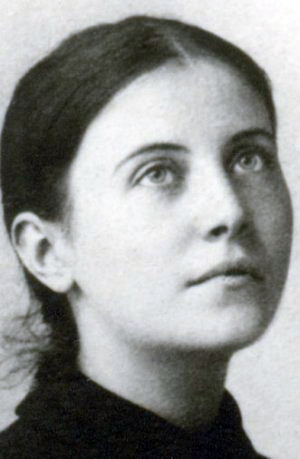
Saint Gemma Galgani
On this April 11th, in 1903 – the same year that the Italian Guiseppe Sarto was elected Pope later that summer as Pius X – a lovely, young Italian woman died, by the name of Gemma Galgani. She lived a brief life of 24 years, as did a number of other young saints, including Pier[…]Continue reading→
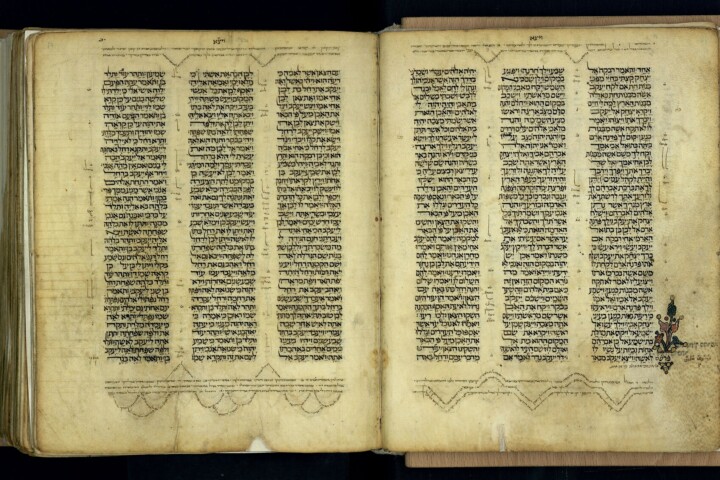
An Ideological and Improper Translation
I noticed something odd with the psalm reading at Mass the other day. Our bishops’ conference here in Canada has decreed that the Mass in English – Novus Ordo – use the ‘NRSV’, the ‘New Revised Standard Version’, an ‘updated’ translation of the original RSV, first published in 1952. This ‘new translation’ has the tendency[…]Continue reading→
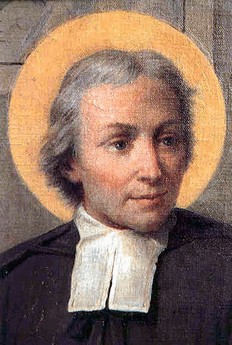
Saint Jean-Baptiste de la Salle: A Teacher for Teachers
Jean-Baptiste de la Salle (1651 – 1719), a French nobleman, ordained a priest, founded the first order in the Church’s history entirely without priests, and this came about almost by accident. I say ‘almost’, for, of course, there are no accidents with God. Destined for ordination from an early age, Jean-Baptiste never looked back, even[…]Continue reading→