
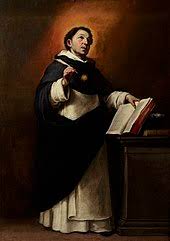
Everyday Advice from Saint Thomas
One of the greatest minds of all time is certainly that of St Thomas Aquinas (1225-1274), whose feast we celebrate on this January 28th.
Even if he lived at the zenith of the Middle Ages, however his teaching is so clear, strong and persuasive that it has stood its ground for some eight millennia, making it little wonder why St Thomas Aquinas’ teaching is a very supportive pillar for the Church’s teaching. In his first catechesis on St Thomas Aquinas of Wednesday 2 June 2010, Pope Benedict XVI said of him: “In his Encyclical Fides et Ratio my venerable Predecessor, Pope John Paul II, recalled that ‘the Church has been justified in consistently proposing St Thomas as a master of thought and a model of the right way to do theology” (n. 43). It is not surprising that, after St Augustine, among the ecclesiastical writers mentioned in the Cathecism of the Catholic Church St Thomas is cited more than any other, at least 61 times!”
When one mentions the great name of Thomas Aquinas one immediately thinks of philosophy and theology. However we would be doing a huge injustice to the man if we just confine him to a cold university bench or merely a speculative thinker. More than we think, St Thomas Aquinas has some very insightful and practical tips for our everyday lives.
As an excellent teacher Thomas always held the view that grace and nature walk together in dialogue and never disparate from one another. In his second catechesis on Thomas Aquinas of June 16 2010, Pope Benedict said that according to the Doctor Communis, “Divine Grace does not annihilate but presupposes and perfects human nature”. This fact is so visible when Thomas speaks about the Sacrament of Confession. He says the following: “In the life of the body a man is sometimes sick, and unless he takes medicine, he will die. Even so in the spiritual life a man is sick on account of sin. For that reason he needs medicine so that he may be restored to health; and this grace is bestowed in the Sacrament of Penance”. This neat example magnificently shows how the Divine Grace of having one’s soul restored can be likened to the dictates of nature, that is the wellbeing of the body.
The speculative Thomas is also the social Thomas. In his writings the Angelic Doctor emphasizes the common good of society, and rightly so: It is only in view of the latter that true justice and equality is really served. He says: Whatever a man has in superabundance is owed, of natural right, to the poor for their sustenance. So Ambrosius says, and it is also to be found in the Decretum Gratiani: The bread which you withhold belongs to the hungry: the clothing you shut away, to the naked: and the money you bury in the earth is the redemption and freedom of the penniless. To put it simply, when we hear about the world’s poverty it is not because God did not provide enough for everyone under the sun but it is simply because the riches of our world are in the hands of the few – some of whom are greedy for more.
St Thomas’ words powerfully remind us of what Pope Francis stressed upon during his homily at the Mass on the occasion of the World Day of the Poor of November 17, 2019. In this context, Pope Francis was speaking about the temptation of haste, of having everything available, right now!
The Holy Father said: For Jesus, we must not follow those who tell us that the end is coming immediately, that “the time is at hand” (Lk 21:8). That is, we must not follow the alarmists who fuel fear of others and of the future, for fear paralyzes the heart and mind. Yet how often do we let ourselves be seduced by a frantic desire to know everything right now, by the itch of curiosity, by the latest sensational or scandalous news, by lurid stories, by the screaming those who shout loudest and angriest, by those who tell us it is “now or never”. This haste, this everything right now, does not come from God. If we get worked up about the right now, we forget what remains forever: we follow the passing clouds and lose sight of the sky. Drawn by the latest outcry, we no longer find time for God or for our brother and sister living next door. How true this is today! In the frenzy of running, of achieving everything right now, anyone left behind is viewed as a nuisance. And considered disposable. How many elderly, unborn, disabled and poor persons are considered useless. We go our way in haste, without worrying that gaps are increasing, that the greed of a few is adding to the poverty of many others.
Against the present culture of frenetic pace Thomas, on the contrary, teaches us the value of patience. He even moves to the spiritual plain by reminding us of that fantastic work of mercy of instructing the ignorant when he tells us: To convert somebody go and take them by the hand and guide them. Such an honorable act necessarily demands patience in giving time to the person and even to ourselves to learn our faith and be open to share it with others. Within the same vein the same holds true when we talk about the concomitant spiritual work of mercy, counselling the doubtful. Even if all of us are assailed with moments of doubt in our faith journey, let us always remember that Christ is the Way, the Truth and the Life. He is the focal point of our journey and our true Companion who never leaves us by our own, whatever happens in our lives. That is why we should always show great compassion, respect and be perseverant in accompanying those who feel lost along the way. Thus, accompanying a friend who is struggling with believing to join a parish group for service or faith formation, sharing a book you found useful in dealing with your friend’s faith concern, and worship at Sunday Mass are all very practical ways of taking him/her by the hand and guiding them.
As a great Doctor of the Church, St Thomas Aquinas presents to us the way of being Christian which is relevant to any life situation and age we and future Christians, will live in: If, then, you are looking for the way by which you should go, take Christ, because He Himself is the way. In other words, Thomas is openly inviting you and me to ask the question: “If Christ was in my place how would he act?” Such a question undoubtedly helps us a great deal to do the right discernment before we act.
After all, as Aquinas would say, in deliberation we may hesitate; but a deliberate act must be performed swiftly. Thus, let us act Christly quickly! What a great contribution St Thomas Aquinas has left for the Church and for all the people of good will!

Saint Kateri , Canada’s Protectress
This was the title given to Saint Kateri Tekakwitha, by Pope Benedict XVI, when he canonized her on October 28th, 2012, along with six others, in Saint Peter’ Square (she had been beatified by Pope John Paul II back in 1980). With Saint Joseph as our protector, along with the Canadian martyrs, we seem to[…]Continue reading→

Remembering Father Alphonse de Valk
(Today marks the sixth anniversary of the death of Father Alphonse de Valk, C.S.B., a faithful, courageous and indefatigable Basilian priest, pro-life-and-family apostle, and the founder of Catholic Insight magazine. Here is what we wrote those on his entering into eternity five years ago, as we continue to remember him in our prayers and thoughts)[…]Continue reading→

My Name is Bernadette
April 16th is a propitious day, for besides the anniversary of Father de Valk’s death, who founded Catholic Insight in its print form decades ago, and the commemoration of the ‘two Benedicts’, mentioned in accompanying posts, today we also recall Saint Bernadette Soubirous, the young visionary to whom the Virgin Mary appeared numerous times at[…]Continue reading→

Canonizing Sister Faustina and Divine Mercy
HOMILY OF THE HOLY FATHER MASS IN ST PETER’S SQUARE FOR THE CANONIZATION OF SR MARY FAUSTINA KOWALSKA Sunday, 30 April 2000 1. “Confitemini Domino quoniam bonus, quoniam in saeculum misericordia eius”; “Give thanks to the Lord for he is good; his steadfast love endures for ever” (Ps 118: 1). So the Church sings on the Octave of[…]Continue reading→

Divine Mercy Sunday – An Echo of Every Mass
Reach out your hand and put it in my side. Do not doubt but believe’… ‘My Lord and my God!’ (Jn. 20:18)). Today is Divine Mercy Sunday, and as we celebrate the end of the Easter Octave, we contemplate the wounded side of our Saviour, the Church’s source of life. On Good Friday in the[…]Continue reading→

Saint Stanislaus of Szczepanów
We celebrate Saint Stanislaus today (+ April 11, 1079), in light of this Easter Octave, a bishop and martyr who accepted the episcopacy only at the direct order of Pope Alexander II. He proved a wise and courageous leader of his flock, put to death by his own king, Boleslaus, for rebuking the monarch’s ‘immoral[…]Continue reading→
First Holy Communion: Sermon from May 16, 1943
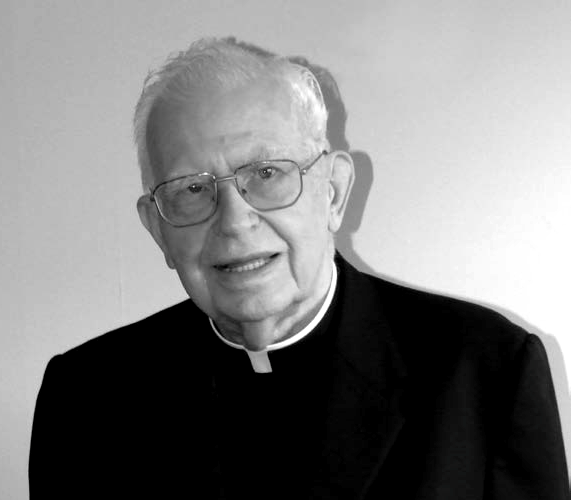
Here is a sermon from the good old days by +Rev. Msgr. Vincent Nicholas Foy (August 14, 1915 – March 13, 2017), from 1943. Readers may recall that Pope Saint Pius X, by the decree Quam Singulari in 1910, lowered the customary age of reception of Holy Communion – after the rigours of the plague[…]Continue reading→
In the Glorious Light of Easter, Alleluia!
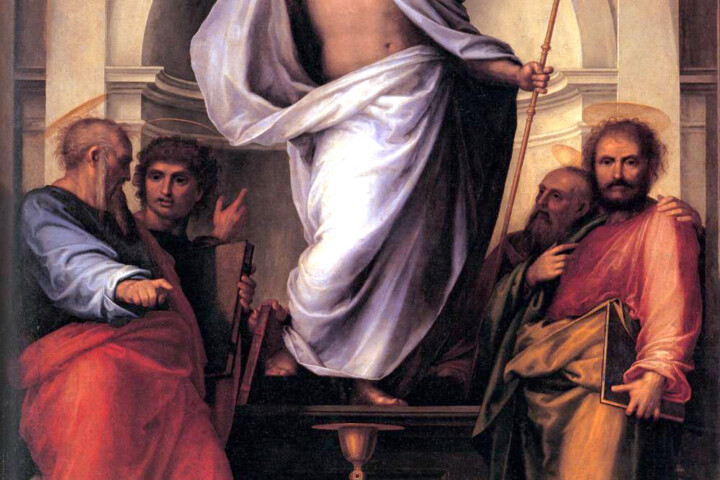
Set your minds on things that are above, not on things that are on earth, for you have died, and your life is hidden with Christ in God. When Christ who is your life is revealed, then you also will be revealed with him in glory (Col. 3:3-4). The Resurrection of Our Lord and Saviour[…]Continue reading→
An Ancient Homily for Holy Saturday
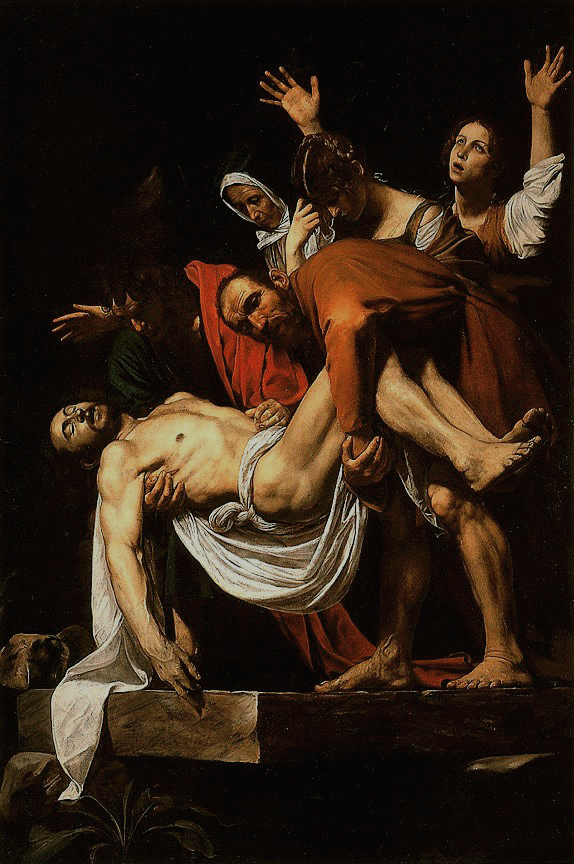
The time between Good Friday and Easter Sunday is one of waiting, in silence, as the world wonders – anticipates – what will happen, after the death of Christ. We re-live this time each year in the anamnesis of our liturgy, and in turn look forward to the glorious re-creation of all things at the[…]Continue reading→
Europe’s Long Descent
(As we meditate on this day on Christ’s burial, and His descent into hell, it is fitting to ponder here with contributor Peter Marcus how the world seems to be heading there as well. The difference is that, although God cannot ‘redeem’ hell, nor those therein, He can and did redeem the world. There is[…]Continue reading→