
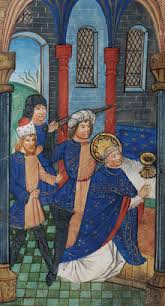
Saint Thomas à Becket’s 850th
A blessed continuing ‘merrie Christmas!’ to all our readers, as we celebrate all these twelve days, right up to the Epiphany and the Baptism of our Lord. So keep those lights and candles burning, the decorations up! Christmas has just begun!
Today is the memorial of Saint Thomas à Becket, the glorious bishop of Canterbury – in its own glory days before its usurpation by the Anglican reformers, which is to say, by the State and her minions. Thomas was martyred 850 years ago on this day in 1170, a century after the great cathedral’s completion, offering his life for the rights of the Church, as independent of the King (see my reflection on the diminution of this truth in our current crisis – we need a new Becket!). Henry II’s thirst for power encroached upon the Church’s lawful autonomy, to the resistance of his former chancellor and boon companion, Thomas, whom he had appointed bishop of the primary see of England. Henry thought that the carousing Thomas would be a pliant tool in his royal hands – but how wrong he was. Thomas underwent a deep conversion upon his ordination as bishop, and actually took his spiritual duties seriously, as though, one day, he were to be asked to give an account for them before His Maker and Judge.
The King – as is the wont of most petty tyrants – could not stand to be contradicted, and Thomas was exiled for seven years before an uneasy truce was arranged. Warned of a trap, he nevertheless courageously returned to his see and rightful place, and would not budge an inch on the Church’s fundamental rights. Eventually, the king’s simmering resentment burst forth in ungoverned anger and harsh words burst forth, perhaps under the influence of too much mulled wine:
What miserable drones and traitors have I nourished and brought up in my household, who let their lord be treated with such shameful contempt by a low-born cleric?
And, as the story goes, four knights took this as an implicit command to deal with the bishop as they saw fit, violating the very sanctuary of God.
Thomas’ brutal murder and martyrdom before the altar was a sign of the Church’s unbending courage, independence against the folly of kings, and Henry knew he had committed a grave sin – for which Henry repented publicly, having himself scourged in full view by the monks.
But what Henry II began, another Henry – the eighth by that name, and less repentant than his predecessor – would bring to completion four centuries afterward in the bitter fruit of the Protestant ‘reformation’. As a definitive sign of the end of what was once England, Henry VIII had the shrine of Becket – the destination of the Canterbury Tales pilgrims, and the most popular holy site of England, along with Walsingham – destroyed in 1541, and the martyr’s relics dispersed to the four winds, which is about where the faith of England is now going, or gone.
Ironic that Thomas à Becket is now honoured as a saint in the Anglican communion, and I must confess I find it rather odd that the great English poet Thomas Stearns Eliot could write a brilliant dramatic play on the murder, yet not see the deeper issues at work, that Becket’s death presaged the loss of the Faith in England, that Anglicanism has not the foundation to withstand the assaults of secularism and, now, Islamism, and is now in its own death throes. There is only one, true Church, as countless martyrs before and after the bishop Thomas saw so clearly, and for which they were willing to suffer and die.
See the analysis of Becket’s complex character by Dan Hitchens.
And, for lighter reading, feel free to peruse my thoughts on Canterbury upon my pilgrimage there a couple of summers ago, when one could travel and pilgrimage freely. Oh, that such days may arrive again, before our Saviour does.
Saint Thomas à Becket, ora pro nobis!
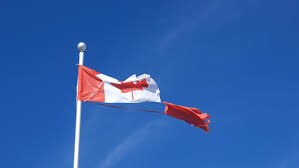
Carney’s Amoral Majority
After five defections – euphemistically described as ‘crossing the floor’ – and three by-elections, Mark Carney and his Liberals how have their coveted majority. One wonders what bowls of pottage were offered in back-room deals. In the archaic monarchical system that is the Dominion of Canada, this majority allows the newly-minted Prime Minister to rule[…]Continue reading→

Saint Kateri , Canada’s Protectress
This was the title given to Saint Kateri Tekakwitha, by Pope Benedict XVI, when he canonized her on October 28th, 2012, along with six others, in Saint Peter’ Square (she had been beatified by Pope John Paul II back in 1980). With Saint Joseph as our protector, along with the Canadian martyrs, we seem to[…]Continue reading→
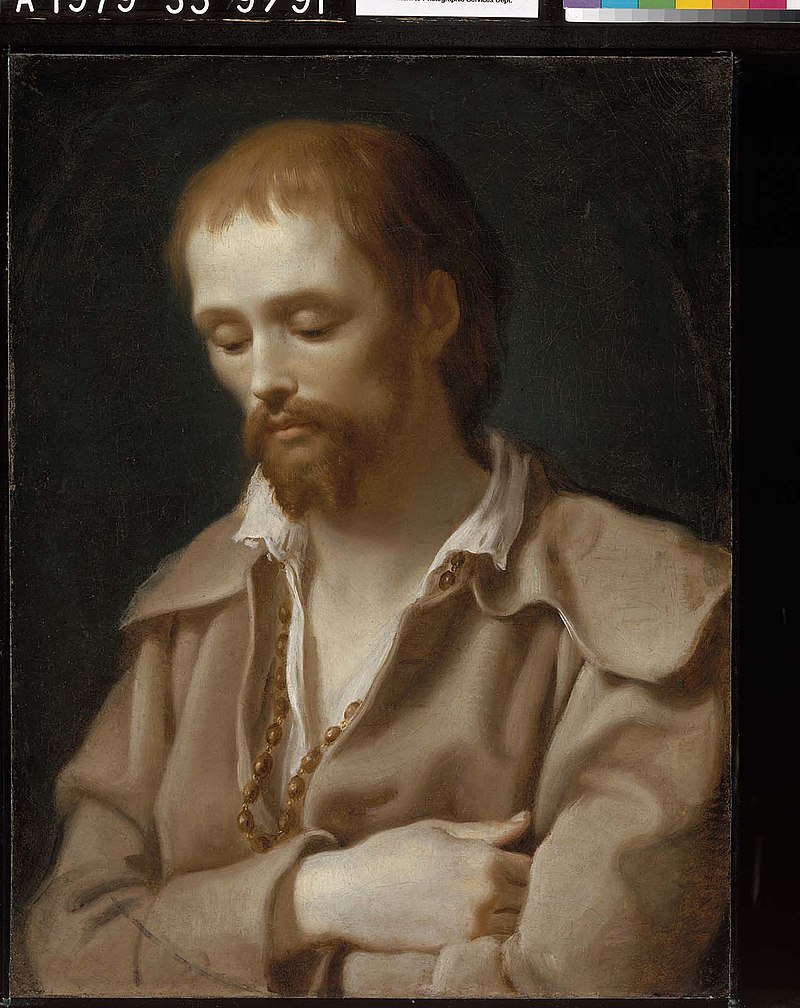
A Tale of Two Benedicts
A grace-filled Holy Week to all our readers! As we await and prepare for the Resurrection about to dawn upon us, we might keep in mind two Benedicts: Pope Emeritus Benedict XVI, requiescat in pace, elected on this day in 2005; and today’s commemoration of the mystic pilgrim, Benedict Joseph Labre, who died on this[…]Continue reading→

My Name is Bernadette
April 16th is a propitious day, for besides the anniversary of Father de Valk’s death, who founded Catholic Insight in its print form decades ago, and the commemoration of the ‘two Benedicts’, mentioned in accompanying posts, today we also recall Saint Bernadette Soubirous, the young visionary to whom the Virgin Mary appeared numerous times at[…]Continue reading→
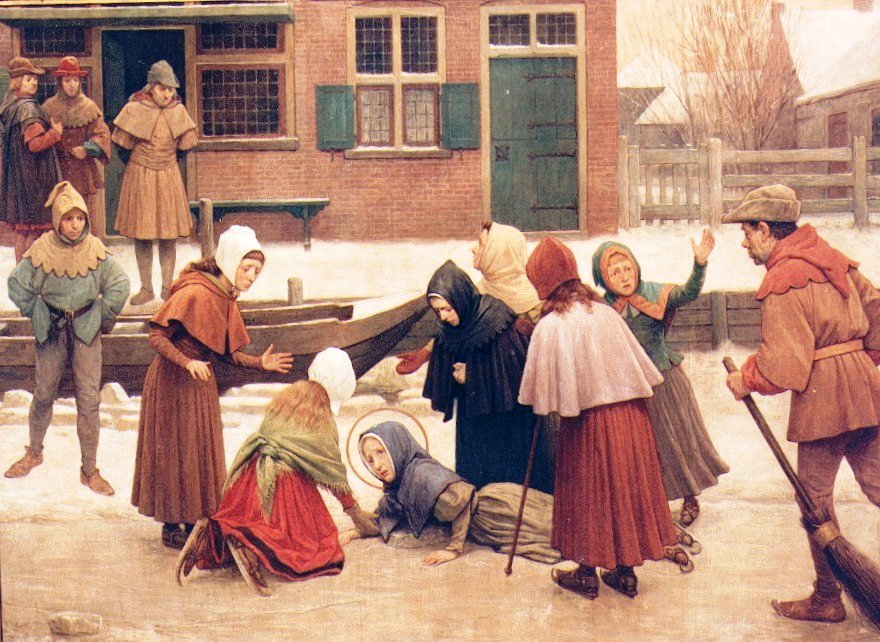
Saint Lydwina of Schiedam and Suffering Joyfully
Saint Lydwina of Schiedam (1380 – 1433) was one of the countless and glorious ‘victim souls’ in the history of the Church, those whose lives are filled with suffering, often of an unimaginable intensity, but who suffer joyfully. She was a fifteen-year old Dutch girl, out skating one day, when she fell and broke one[…]Continue reading→
The Glorious Martyrdoms of Martin and Maximus
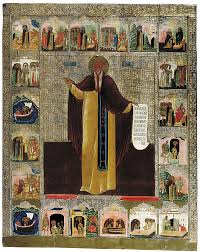
As we enter into Eastertide, we recall on this 13th of April Pope Saint Martin I (+655), one of the noblest, if most tragic, of the successors of Saint Peter. Born in Umbria, Italy, he was of noble lineage, with great intelligence combined with charity and love of the poor and the Church. While still[…]Continue reading→

Saint Stanislaus of Szczepanów
We celebrate Saint Stanislaus today (+ April 11, 1079), in light of this Easter Octave, a bishop and martyr who accepted the episcopacy only at the direct order of Pope Alexander II. He proved a wise and courageous leader of his flock, put to death by his own king, Boleslaus, for rebuking the monarch’s ‘immoral[…]Continue reading→
Saint Gemma Galgani
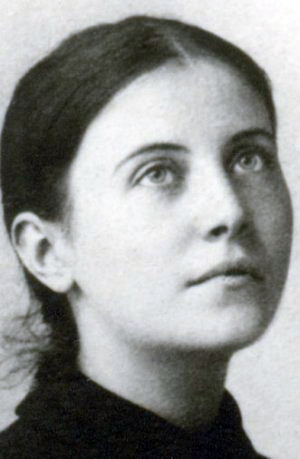
On this April 11th, in 1903 – the same year that the Italian Guiseppe Sarto was elected Pope later that summer as Pius X – a lovely, young Italian woman died, by the name of Gemma Galgani. She lived a brief life of 24 years, as did a number of other young saints, including Pier[…]Continue reading→
An Ideological and Improper Translation
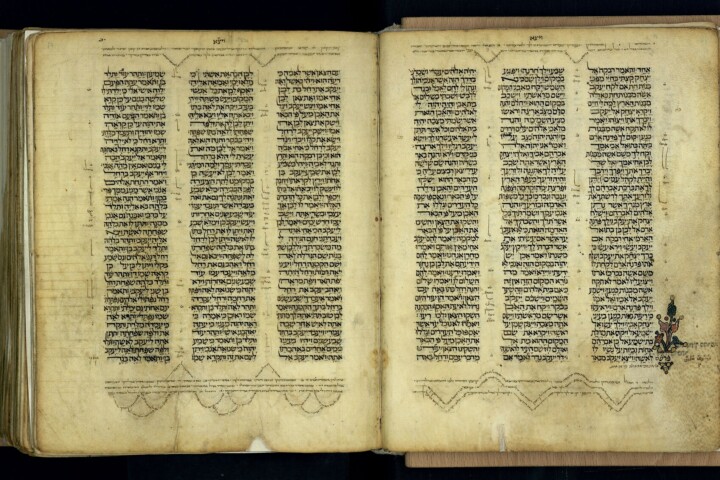
I noticed something odd with the psalm reading at Mass the other day. Our bishops’ conference here in Canada has decreed that the Mass in English – Novus Ordo – use the ‘NRSV’, the ‘New Revised Standard Version’, an ‘updated’ translation of the original RSV, first published in 1952. This ‘new translation’ has the tendency[…]Continue reading→
Saint Jean-Baptiste de la Salle: A Teacher for Teachers
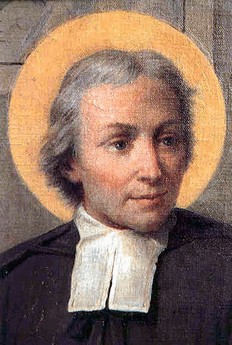
Jean-Baptiste de la Salle (1651 – 1719), a French nobleman, ordained a priest, founded the first order in the Church’s history entirely without priests, and this came about almost by accident. I say ‘almost’, for, of course, there are no accidents with God. Destined for ordination from an early age, Jean-Baptiste never looked back, even[…]Continue reading→