
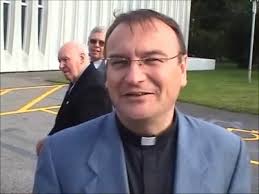
Some Thoughts on the Alleged Prophecies of Father Michel Rodrigue
(A re-post of this earlier article in July, with a comment at the end that all readers should peruse, and follow the link…the plot doth thickeneth)
Father Michel Rodrigue is a Quebecois priest, currently incardinated and living in the village of Amos, in the northern reaches of la belle province, nearly halfway to the shores of James Bay from Montreal, population 12,823. Curiously, it is named after the unwilling prophet of the Old Testament book, a ‘dresser of sycamore trees’, for Father Rodrigue resents himself as a sort of seer and sage, with a number of visions of the future, from God the Father, Who has apparently spoken to him since Michel was a little lad, the youngest of 21 children.
Currently, Father Rodrigue is setting up some sort of seminary-monastery-new religious order. I have not had much success finding out many details of any of these, or stages of development, or rule of the new order, but we may wish him well – northern Quebec cannot be easy!
I have listened to one of his talks, on-line, and have spoken a number of times with a friend, who is a devotee, and who has listened to far more of Father Rodrigue’s life and alleged locutions and visions. He speaks in a simple style, with humour and self-effacement, and says many beneficial things. But his message also contains many odd and unsettling elements, apocalyptic scenarios, nuclear wars, battles within the Church, an antichrist figure, currently alive, who is some sort of cleric, dubious conclaves, martyred Popes, and so on.
We all need a good warning now and again, to wake us up, but, to my mind, Father Rodrigues’ seem too specific – in terms of the ‘day and the hour’ as well – as well as being mighty grim.
People say, well at least he is bringing people back to their faith. and I wonder whether this fascination with the fear of the imminently apocalyptic is the best motivator for the practice of our Faith?
Besides that, there, is another element that perhaps is even more unsettling, and that is his prediction of an era of peace (some have reported that this is the so-called alleged ‘thousand year reign of peace’, but the actual time frame and specifics seem difficult to ascertain) after the terrifying tribulation, during which the Church will be triumphant – and we will all – everyone on earth – live happily as Catholics, everyone doing God’s perfect will – like an extended Garden with the Fall – then, yes only then, will the real tribulation occur, with another, and more real, Antichrist.
Yet, this is not quite what the Catechism says, which rather warns:
The Antichrist’s deception already begins to take shape in the world every time the claim is made to realize within history that messianic hope which can only be realized beyond history through the eschatological judgement. the Church has rejected even modified forms of this falsification of the kingdom to come under the name of millenarianism, especially the “intrinsically perverse” political form of a secular messianism. (emphasis my own).
The Church will enter the glory of the kingdom only through this final Passover, when she will follow her Lord in his death and Resurrection. The kingdom will be fulfilled, then, not by a historic triumph of the Church through a progressive ascendancy, but only by God’s victory over the final unleashing of evil, which will cause his Bride to come down from heaven. God’s triumph over the revolt of evil will take the form of the Last Judgement after the final cosmic upheaval of this passing world. (cf., 676, 677).
As mentioned, it’s not easy to get details about all of this, or how it differs from this rejected notion of ‘millennarianism’. After all, why would we want to eke out another millennium – or however long – here in this temporal phase – paradise or not – when the eternal new heavens and new earth is that for which we should be striving? Christ specifically did not promise any quasi-heaven here or earthly reign – in fact, He emphasized that His kingdom is most definitely not of this world. And every attempt to build one has only resulted in different kinds of earthly hells.
What really is going on here, and what are we striving for? More time on this earth, or to sanctify ourselves, so as to get as ‘efficiently’ as we might to heaven? Should we not at some level want to die – dissolve, as Saint Paul puts it – and be with Christ, and all the saints?
God does send visions, but we must discern which are from Him, and which not. Such private revelations must always lead us back to public revelation, to what I like to call ‘meat and potatoes’ Catholicism: Going to Mass and Confession regularly, living out our Baptismal promises; praying, and offering things up. We should keep our spirits and souls vigilant, and our loins girded, by doing the duty of the moment, and of our life.
Again, to return to the Catechism:
Throughout the ages, there have been so-called “private” revelations, some of which have been recognized by the authority of the Church. They do not belong, however, to the deposit of faith. It is not their role to improve or complete Christ’s definitive Revelation, but to help live more fully by it in a certain period of history. Guided by the Magisterium of the Church, the sensus fidelium knows how to discern and welcome in these revelations whatever constitutes an authentic call of Christ or his saints to the Church. (67)
Such visions ‘recognized by the authority of the Church’ are generally – I would say never – all that specific. They do not give dates and times, when calamities will certainly arrive, or what specifically to do when they do arrive, nor all the minutiae of preparing for such. Let the day’s own trouble be sufficient for the day…(Mt 6:34)
All that we do, we should do for heaven, to bring ourselves thither and as many others as we might by God’s grace, and not focusing all, or most, of our efforts building bunkers and storing up food and water to survive some putative, imminent earthly tribulation – and there seems to be lots of that in Father Rodrigue’s prophecies, instilling what must be a sense of dread in many, as they build redoubts and refuges, stocked with provisions.
But are we not all going to face our own private apocalypse one way or the other – cancer, accident, stroke – and should we not best use our time, energy and focus preparing our souls and minds for that? Watch therefore, for you know neither the day nor the hour…(Mt 25:13)
Well, anon, enough for now, and I am happy for any of this to be clarified. On that note, if this is a controversy that has come across your radar, feel fee to peruse this critique by Dr. Mark Miravalle, a Mariologist at the Franciscan University of Steubenville.
And I should add a response to this critique from a certain Daniel O’Connor – who is working on his doctorate, who is described as a college professor, but I could not find where that might be (addendum: A reader pointed out that he is an adjunct professor at Hudson Valley Community College in New York, if this be he).
Whatever you discern, and whatever good we may take from the words of Father Rodrigue and others, stay grounded, dear reader, in the truth. Also keep up the joy and humour, for our reward will be great in heaven, if we but remain faithful. The purpose of all private revelation is to help us live out more fully public revelation – Scripture, Tradition, the Magisterium – and we had best spend some good portion of the time we have delving into and immersing ourselves in that rich treasure, whose rewards are well worth the work, now and in eternity.
Carney’s Amoral Majority
After five defections – euphemistically described as ‘crossing the floor’ – and three by-elections, Mark Carney and his Liberals how have their coveted majority. One wonders what bowls of pottage were offered in back-room deals. In the archaic monarchical system that is the Dominion of Canada, this majority allows the newly-minted Prime Minister to rule[…]Continue reading→

Saint Kateri , Canada’s Protectress
This was the title given to Saint Kateri Tekakwitha, by Pope Benedict XVI, when he canonized her on October 28th, 2012, along with six others, in Saint Peter’ Square (she had been beatified by Pope John Paul II back in 1980). With Saint Joseph as our protector, along with the Canadian martyrs, we seem to[…]Continue reading→
A Tale of Two Benedicts
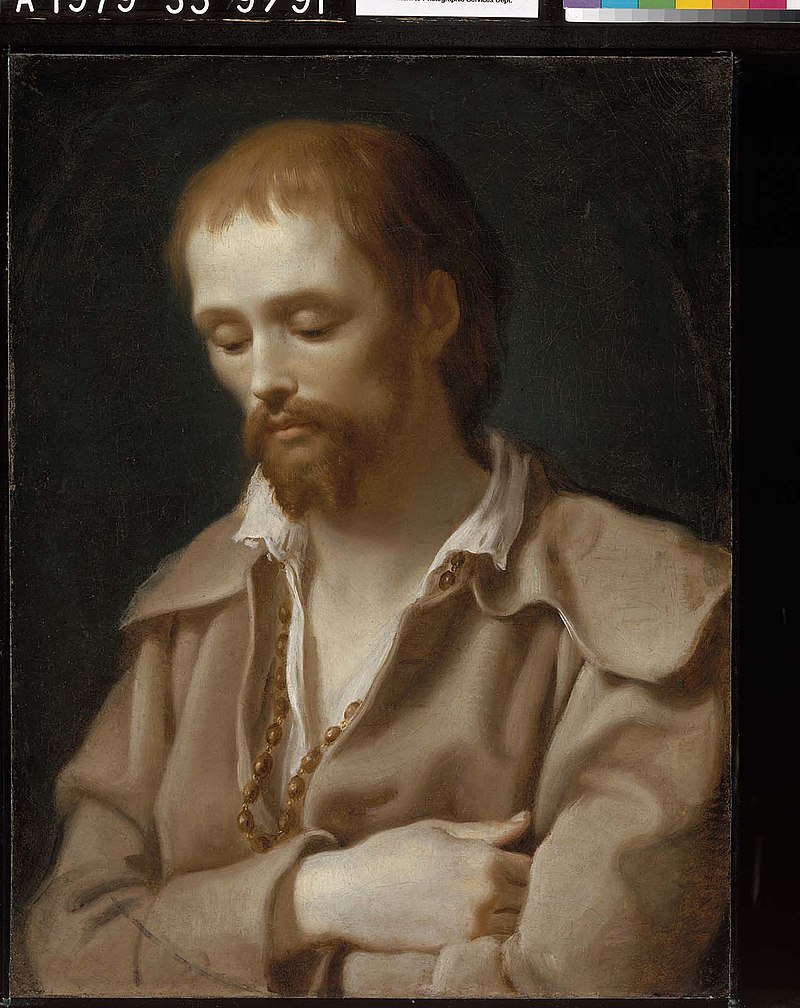
A grace-filled Holy Week to all our readers! As we await and prepare for the Resurrection about to dawn upon us, we might keep in mind two Benedicts: Pope Emeritus Benedict XVI, requiescat in pace, elected on this day in 2005; and today’s commemoration of the mystic pilgrim, Benedict Joseph Labre, who died on this[…]Continue reading→

My Name is Bernadette
April 16th is a propitious day, for besides the anniversary of Father de Valk’s death, who founded Catholic Insight in its print form decades ago, and the commemoration of the ‘two Benedicts’, mentioned in accompanying posts, today we also recall Saint Bernadette Soubirous, the young visionary to whom the Virgin Mary appeared numerous times at[…]Continue reading→
Saint Lydwina of Schiedam and Suffering Joyfully
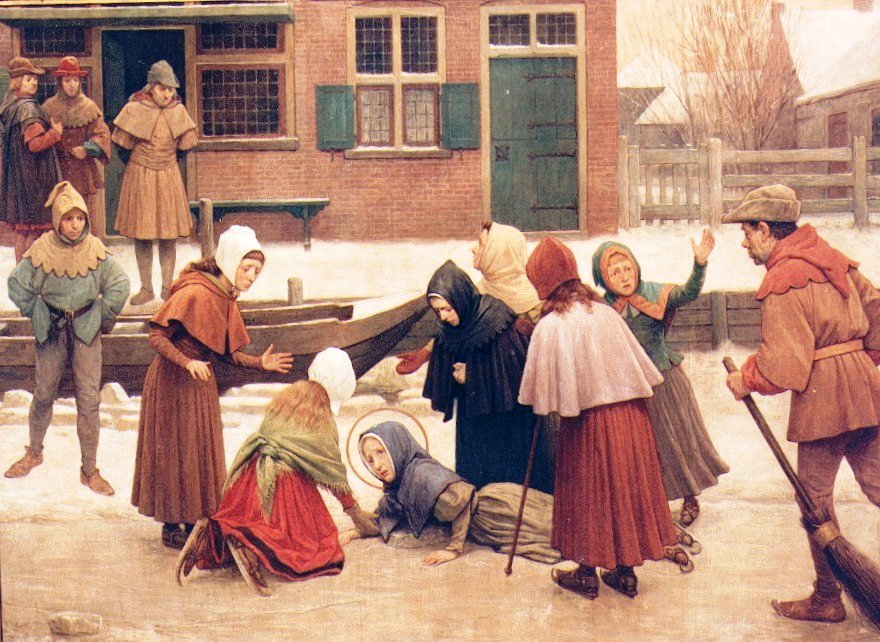
Saint Lydwina of Schiedam (1380 – 1433) was one of the countless and glorious ‘victim souls’ in the history of the Church, those whose lives are filled with suffering, often of an unimaginable intensity, but who suffer joyfully. She was a fifteen-year old Dutch girl, out skating one day, when she fell and broke one[…]Continue reading→
The Glorious Martyrdoms of Martin and Maximus
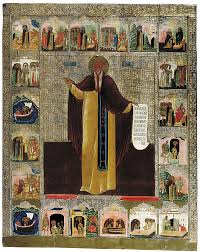
As we enter into Eastertide, we recall on this 13th of April Pope Saint Martin I (+655), one of the noblest, if most tragic, of the successors of Saint Peter. Born in Umbria, Italy, he was of noble lineage, with great intelligence combined with charity and love of the poor and the Church. While still[…]Continue reading→

Saint Stanislaus of Szczepanów
We celebrate Saint Stanislaus today (+ April 11, 1079), in light of this Easter Octave, a bishop and martyr who accepted the episcopacy only at the direct order of Pope Alexander II. He proved a wise and courageous leader of his flock, put to death by his own king, Boleslaus, for rebuking the monarch’s ‘immoral[…]Continue reading→
Saint Gemma Galgani
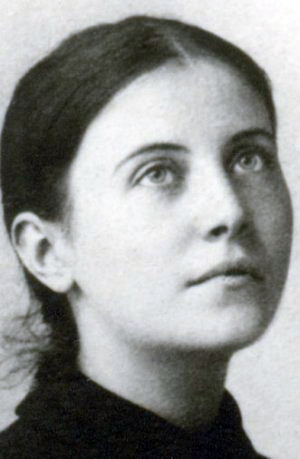
On this April 11th, in 1903 – the same year that the Italian Guiseppe Sarto was elected Pope later that summer as Pius X – a lovely, young Italian woman died, by the name of Gemma Galgani. She lived a brief life of 24 years, as did a number of other young saints, including Pier[…]Continue reading→
An Ideological and Improper Translation
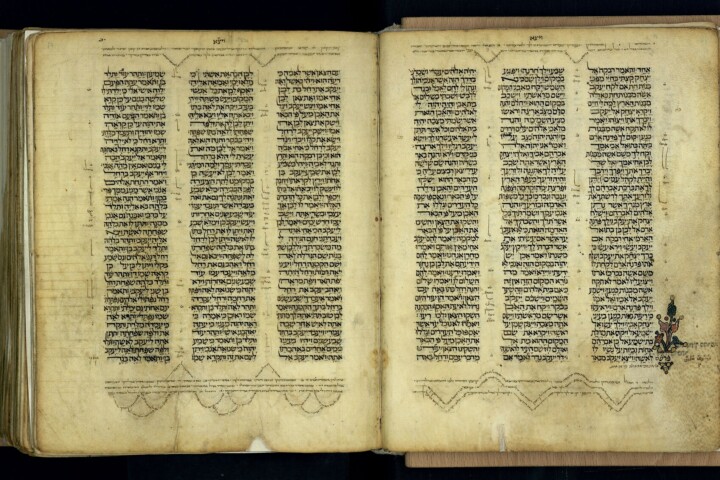
I noticed something odd with the psalm reading at Mass the other day. Our bishops’ conference here in Canada has decreed that the Mass in English – Novus Ordo – use the ‘NRSV’, the ‘New Revised Standard Version’, an ‘updated’ translation of the original RSV, first published in 1952. This ‘new translation’ has the tendency[…]Continue reading→
Saint Jean-Baptiste de la Salle: A Teacher for Teachers
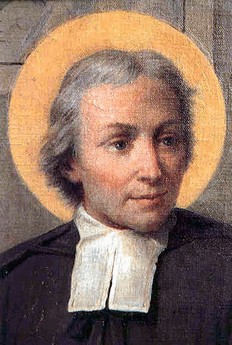
Jean-Baptiste de la Salle (1651 – 1719), a French nobleman, ordained a priest, founded the first order in the Church’s history entirely without priests, and this came about almost by accident. I say ‘almost’, for, of course, there are no accidents with God. Destined for ordination from an early age, Jean-Baptiste never looked back, even[…]Continue reading→