
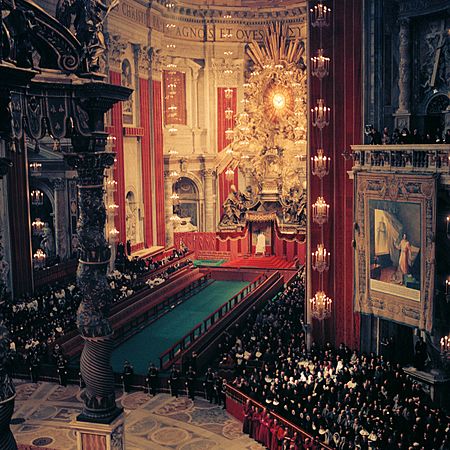
Constance and the Vatican
The historian Roberto Mattei penned an article recently for LifeSiteNews, in which he argues that if sections of the ecumenical Council of Constance (1414-15) could be declared null and void –then so could the Second Vatican Council, “in part or en bloc”, in his own words.
We should be clear that the two councils are not the same, neither historically, nor canonically, and one should be very hesitant in comparing these two Councils, and especially in using this limited comparison to begin rejecting most or all of the Second Vatican Council, in part or in its entirety.
The Council of Constance was called in the midst of the Great Western Schism, wherein, by a complex series of events beginning with a problematical conclave in April 8th, 1378 which elected Bartolomeo Prignano as Urban VI, after the death of Pope Gregory XI on March 27th, after his triumphal return from exile in Avignon on January 17, 1377. Some declared the conclave that elected Urban invalid (there was some coercion in the election, but, as was later attested, not enough to invalidate).
We need not traverse all the details, but the sedevacantists – those who said Urban wasn’t the real Pope – held another conclave in Avignon on September 20th of that year, electing Robert of Geneva as ‘Clement VII’. Then, another group at an abortive council in Pisa on June 5th, 1409, declared this election null and void, and elected yet another ‘Pope’, Alexander V, so that we then had three men were all claiming to be Pope. Like that game show in the seventies, only one was the real Pope (the one, it turned out, stemming from the original ‘Roman’ line).
The Council was called and organized by the Emperor Sigismund, with the second Pope of the Pisan line (John XXII, after Alexander’s death in 1410) which was not all that unusual (Constantine had done the same with the first Council of Nicaea).
Here is the rub, to cut to the conciliar chase: Although a Council may be convened and even run by laymen or ordinary bishops or even an anti-Pope, only the Pope – real and canonically elected – can fulfill the third, and most essential, element in a Council, and that is confirmation, or ratification, of its decisions and teachings.
As de Mattei points out, the Council of Constance attempted to promulgate some erroneous teachings, such as the notion of mandatory councils at set time intervals, and the principle of conciliarism (that councils can be called and ratified without the Pope, and can over-rule him). But there were never ‘confirmed and ratified’ by the Pope (St. Martin V) and his successors. In fact, they were explicitly rejected.
The Second Vatican Council was a different kettle of fish: There was no schism, no problematical conclave, no emperor. An ecumenical council called by a reigning pontiff, at which were present almost all the bishops of the Catholic Church, who debated and discussed in freedom over four years, voting for each of the documents, almost all of which passed by overwhelming majorities.
In contrast to Constance, all of the ‘decisions and teachings’ of the Second Vatican Council were indeed ‘confirmed and ratified’ by the reigning Pontiff, Paul VI, without qualifications or conditions. And I will re-iterate: There is no heresy in the documents of the Council. Statements that could be rephrased and clarified, sure, but nothing that would call for repudiation, and much in the documents that is good, conservative, properly reformatory and in many ways, much needed to bring the Gospel to the modern world.
And not only that, but in rejecting the Council (an act that itself, to my mind, would be canonically impossible, without undermining the entire idea of an ecumenical council) all of the post-conciliar teaching right up to the present day – the Magisteria of Paul VI, John Paul II and Benedict XVI – also hang in the balance. All these Pontiffs saw their teachings as based upon and extending the work of the Council, as even a brief perusal will attest – were they all woefully deluded?
We would, in sum, also be rejecting the past half-century of the Church. At the very least, such would be up for grabs, and a lot more uncertain. The very edifice of the Church herself would totter.
There is no nuclear re-set option in the Catholic Church, which is a living entity, and must absorb and assimilate her own history, as it were. Rather, we must follow Pope Benedict’s call to accept and apply whatever was taught at the Council in that ‘hermeneutic of continuity’, with previous teachings, councils, the whole Tradition of the Church.
Only so can we go forward in serenity and solidity, in, and with, the mind of Christ.
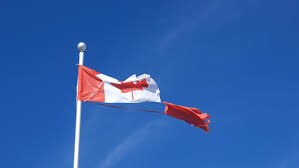
Carney’s Amoral Majority
After five defections – euphemistically described as ‘crossing the floor’ – and three by-elections, Mark Carney and his Liberals how have their coveted majority. One wonders what bowls of pottage were offered in back-room deals. In the archaic monarchical system that is the Dominion of Canada, this majority allows the newly-minted Prime Minister to rule[…]Continue reading→

Saint Kateri , Canada’s Protectress
This was the title given to Saint Kateri Tekakwitha, by Pope Benedict XVI, when he canonized her on October 28th, 2012, along with six others, in Saint Peter’ Square (she had been beatified by Pope John Paul II back in 1980). With Saint Joseph as our protector, along with the Canadian martyrs, we seem to[…]Continue reading→
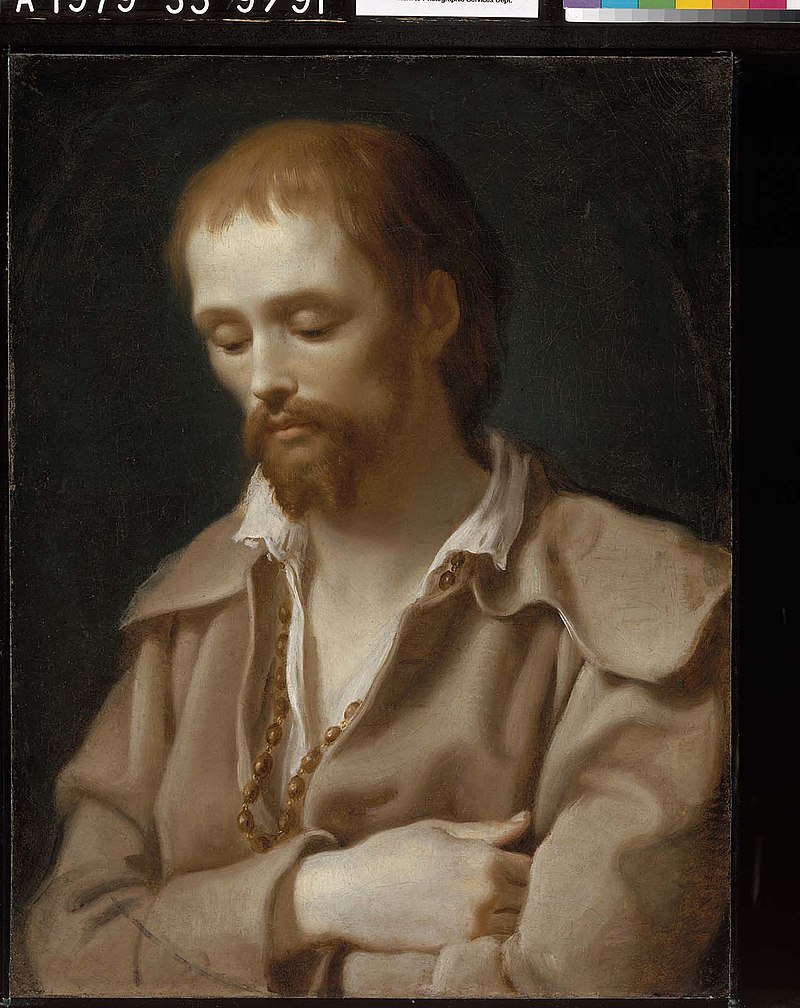
A Tale of Two Benedicts
A grace-filled Holy Week to all our readers! As we await and prepare for the Resurrection about to dawn upon us, we might keep in mind two Benedicts: Pope Emeritus Benedict XVI, requiescat in pace, elected on this day in 2005; and today’s commemoration of the mystic pilgrim, Benedict Joseph Labre, who died on this[…]Continue reading→

My Name is Bernadette
April 16th is a propitious day, for besides the anniversary of Father de Valk’s death, who founded Catholic Insight in its print form decades ago, and the commemoration of the ‘two Benedicts’, mentioned in accompanying posts, today we also recall Saint Bernadette Soubirous, the young visionary to whom the Virgin Mary appeared numerous times at[…]Continue reading→
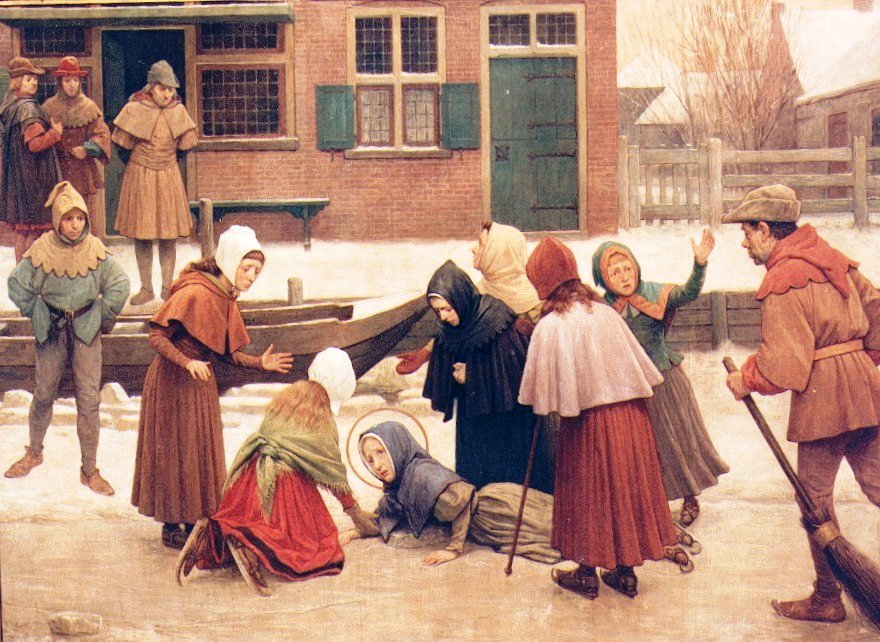
Saint Lydwina of Schiedam and Suffering Joyfully
Saint Lydwina of Schiedam (1380 – 1433) was one of the countless and glorious ‘victim souls’ in the history of the Church, those whose lives are filled with suffering, often of an unimaginable intensity, but who suffer joyfully. She was a fifteen-year old Dutch girl, out skating one day, when she fell and broke one[…]Continue reading→
The Glorious Martyrdoms of Martin and Maximus
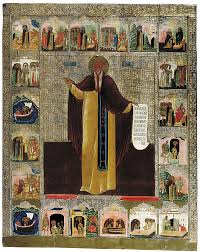
As we enter into Eastertide, we recall on this 13th of April Pope Saint Martin I (+655), one of the noblest, if most tragic, of the successors of Saint Peter. Born in Umbria, Italy, he was of noble lineage, with great intelligence combined with charity and love of the poor and the Church. While still[…]Continue reading→

Saint Stanislaus of Szczepanów
We celebrate Saint Stanislaus today (+ April 11, 1079), in light of this Easter Octave, a bishop and martyr who accepted the episcopacy only at the direct order of Pope Alexander II. He proved a wise and courageous leader of his flock, put to death by his own king, Boleslaus, for rebuking the monarch’s ‘immoral[…]Continue reading→
Saint Gemma Galgani
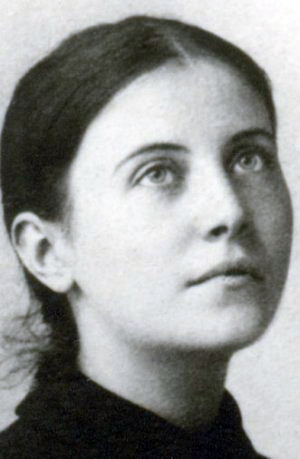
On this April 11th, in 1903 – the same year that the Italian Guiseppe Sarto was elected Pope later that summer as Pius X – a lovely, young Italian woman died, by the name of Gemma Galgani. She lived a brief life of 24 years, as did a number of other young saints, including Pier[…]Continue reading→
An Ideological and Improper Translation
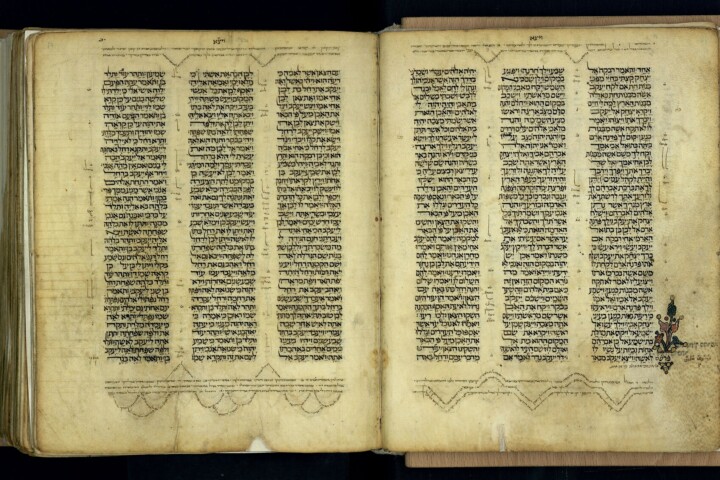
I noticed something odd with the psalm reading at Mass the other day. Our bishops’ conference here in Canada has decreed that the Mass in English – Novus Ordo – use the ‘NRSV’, the ‘New Revised Standard Version’, an ‘updated’ translation of the original RSV, first published in 1952. This ‘new translation’ has the tendency[…]Continue reading→
Saint Jean-Baptiste de la Salle: A Teacher for Teachers
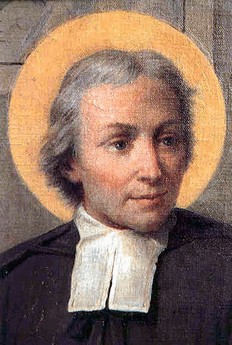
Jean-Baptiste de la Salle (1651 – 1719), a French nobleman, ordained a priest, founded the first order in the Church’s history entirely without priests, and this came about almost by accident. I say ‘almost’, for, of course, there are no accidents with God. Destined for ordination from an early age, Jean-Baptiste never looked back, even[…]Continue reading→