
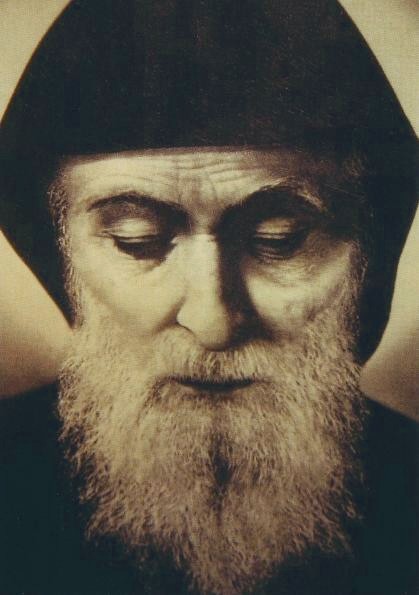
Saint Charbel and the Catholic ‘Mosque’
The Muslims know how to pick their days. But, then, so does God. As mentioned a few days ago, for the first time in nearly a century, the ancient church of Hagia Sophia, one of the glories of Christendom, constructed ad maiorem Dei gloriam in the 6th century under Emperor Justininan, is once again echoing with Islamic prayers to Allah. Conquered and pillaged by the army of Mehmet II on May 29th, 1453, with the murder, rape, and enslavement of untold thousands of Christians, the basilica was used as a mosque for centuries – until being converted into a museum under Kemal Ataturk, in his attempt to bring Turkey (the former Ottoman Empire) into the modern, secular era.
Recip Erdogan is not so secular – far from it, but sees himself as a modern invigorator of the Ottoman conquering spirit – and that zeal is a religious one. Hence, the cries to prayer, and to jihad, of one form or another. He has invited the Pope to visit the new ‘mosque’, which, from a certain point of view, is like asking the Vicar of Christ to grovel at his feet. What is he to do, and what will he do?
God has His ways, often quiet, for this day is also the memorial of Saint Charbel Maklouf (+1898), an ascetic, chaste, humble example of monastic sanctity, who spent his life as a priest-hermit in a monastery in Lebanon, hidden from the world, praying and sacrificing for the world and for souls. Saint Charbel’s life was completely devoted to God from his early youth, fruitful far beyond what our limited senses can tell us, the ‘hundred fold’ of which Christ speaks in today’s Gospel.
Charbel died on Christmas Eve, two years before the turn of a century that would see the world change dramatically. His body was found incorrupt months afterward, and decades after that (his tomb was last opened in 1955) miracles, especially at his tomb, have never stopped, for regardless of how much happens, good and bad, the Cross – the truth and love – of Christ stand forever.
Saint Charbel was known for bringing peace between Muslims and Christians. The two religions may be incompatible, but individual persons may find, and have found, common ground of co-existence.
Yet this is also the vigil of Saint James, the greater, known for his help in the defence of Christendom, and his intercession on behalf of the Catholic Crusaders. As the saying goes, si vis pacem, para bellum – if you want peace, prepare for war. Cathedrals and churches burning, statues beheaded and defaced; things aren’t all that pretty out there.
But our battle is not primarily of this world, as Saint Paul warns: For we are not contending against flesh and blood, but against the principalities, against the powers, against the world rulers of this present darkness, against the spiritual hosts of wickedness in the heavenly places. (Eph 6:12)
Hence, peace also arrives, and arrives more assuredly, by prayer, with a life offered up to God in reparation, by prayer and repentance, the whole notion of metanoia discussed yesterday with the Magdalene. For one truly converted soul can in turn convert the world – and restore Hagia Sophia – whose only purpose was and is as a Catholic church – once again to the true, revealed religion, the worship of Holy Wisdom Himself.
Saint Charbel Maklouf, ora pro nobis!

Carney’s Amoral Majority
After five defections – euphemistically described as ‘crossing the floor’ – and three by-elections, Mark Carney and his Liberals how have their coveted majority. One wonders what bowls of pottage were offered in back-room deals. In the archaic monarchical system that is the Dominion of Canada, this majority allows the newly-minted Prime Minister to rule[…]Continue reading→

Saint Kateri , Canada’s Protectress
This was the title given to Saint Kateri Tekakwitha, by Pope Benedict XVI, when he canonized her on October 28th, 2012, along with six others, in Saint Peter’ Square (she had been beatified by Pope John Paul II back in 1980). With Saint Joseph as our protector, along with the Canadian martyrs, we seem to[…]Continue reading→

A Tale of Two Benedicts
A grace-filled Holy Week to all our readers! As we await and prepare for the Resurrection about to dawn upon us, we might keep in mind two Benedicts: Pope Emeritus Benedict XVI, requiescat in pace, elected on this day in 2005; and today’s commemoration of the mystic pilgrim, Benedict Joseph Labre, who died on this[…]Continue reading→

My Name is Bernadette
April 16th is a propitious day, for besides the anniversary of Father de Valk’s death, who founded Catholic Insight in its print form decades ago, and the commemoration of the ‘two Benedicts’, mentioned in accompanying posts, today we also recall Saint Bernadette Soubirous, the young visionary to whom the Virgin Mary appeared numerous times at[…]Continue reading→

Saint Lydwina of Schiedam and Suffering Joyfully
Saint Lydwina of Schiedam (1380 – 1433) was one of the countless and glorious ‘victim souls’ in the history of the Church, those whose lives are filled with suffering, often of an unimaginable intensity, but who suffer joyfully. She was a fifteen-year old Dutch girl, out skating one day, when she fell and broke one[…]Continue reading→

The Glorious Martyrdoms of Martin and Maximus
As we enter into Eastertide, we recall on this 13th of April Pope Saint Martin I (+655), one of the noblest, if most tragic, of the successors of Saint Peter. Born in Umbria, Italy, he was of noble lineage, with great intelligence combined with charity and love of the poor and the Church. While still[…]Continue reading→

Saint Stanislaus of Szczepanów
We celebrate Saint Stanislaus today (+ April 11, 1079), in light of this Easter Octave, a bishop and martyr who accepted the episcopacy only at the direct order of Pope Alexander II. He proved a wise and courageous leader of his flock, put to death by his own king, Boleslaus, for rebuking the monarch’s ‘immoral[…]Continue reading→

Saint Gemma Galgani
On this April 11th, in 1903 – the same year that the Italian Guiseppe Sarto was elected Pope later that summer as Pius X – a lovely, young Italian woman died, by the name of Gemma Galgani. She lived a brief life of 24 years, as did a number of other young saints, including Pier[…]Continue reading→
An Ideological and Improper Translation
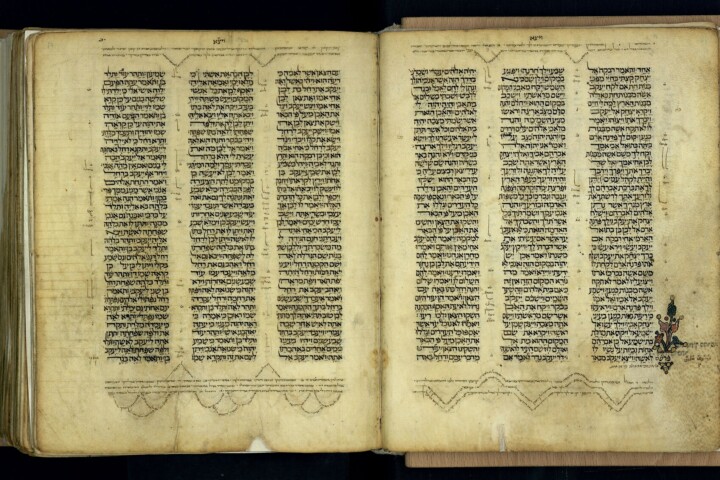
I noticed something odd with the psalm reading at Mass the other day. Our bishops’ conference here in Canada has decreed that the Mass in English – Novus Ordo – use the ‘NRSV’, the ‘New Revised Standard Version’, an ‘updated’ translation of the original RSV, first published in 1952. This ‘new translation’ has the tendency[…]Continue reading→
Saint Jean-Baptiste de la Salle: A Teacher for Teachers
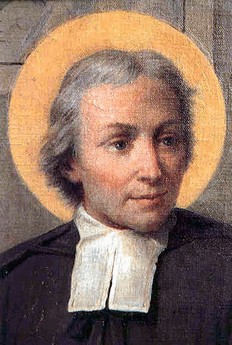
Jean-Baptiste de la Salle (1651 – 1719), a French nobleman, ordained a priest, founded the first order in the Church’s history entirely without priests, and this came about almost by accident. I say ‘almost’, for, of course, there are no accidents with God. Destined for ordination from an early age, Jean-Baptiste never looked back, even[…]Continue reading→