
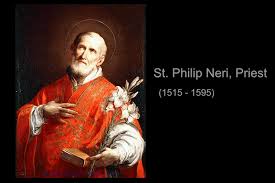
Philip’s Spirit of Joy
We celebrate today one of the most joyful and idiosyncratic – the two are not unrelated – of saints, Philip Neri, (+1595), the founder of the Congregation of the Oratory named after him. From the great city of Florence, which has produced a whole host of luminaries from Dante to da Vinci to Galileo, Philip as a young man made his way to Rome (the city of which he was called the ‘second Apostle’), where he lived sort of as a tutoring hermit, devoted to prayer – his winning personality and charisma evinced the great joy that should be a hallmark of our Faith, and he led many souls to God.
His confessor more or less ordered him to become a priest, and, sure enough, other priests gathered around him. They lived in community, praying, administering the sacraments, preaching, fostering beautiful liturgy and music – Palestrina was a spiritual disciple of Saint Philp. What we now know as the ‘Oratory’ grew around Father Philip, now with houses now throughout the world. John Henry Newman joined the Oratory when he converted to Catholicism, who brought it to England, whence it came to Canada and America.
Philip was known for his perennially youthful, exuberant spirit, the antithesis of the sadness, depression and ennui – in all of which the Devil rejoices – that so palls our modern world, not least in these Covidian days. As he used to quip, ‘I’ll have no sad saints in my house!’ In the Catholic faith, even our sorrow is tinged always with joy – for as Saint Paul says, what can they – and we all know who ‘they’ are – do to us? We’re on our way to heaven, and being martyred – upon which Saint Philip recommended we meditate often – is simply a shortcut thereto.
After death, his heart was physically twice its normal size, so filled was he with the love of God. The house of the Oratory was open to one and all, and when his fellow priests complained about the rambunctious young people making too much noise, Philip would reply that ‘he would have them chop wood on my back, if it would keep them from sin’.
Father Philip was a saint of the ‘counter-Reformation’ more properly called the Catholic restoration, a much-needed antidote to the gloominess and grimness of the Calvinism and Jansenism leading souls to despair, the answer to which is not a hedonistic paganism – itself a subtle form of despair – but Christ’s true message of hope and salvation.
Catholics should be known for their cheerfulness and happiness, even if we carry some, or many, sorrows. For beneath the surface turbulence, at a deeper level, we should have that peace and joy that transcends understanding. In living out God’s will there is light, and the Light, at the end of the tunnel, however long and dark it may seem.
Pope John Paul’s message to youth (and his spirit resembled Saint Philip’s in many ways) was to cast into the deep and be not afraid, be who you are meant to be. God always loves you and wants to bring you higher – Pier Giorgio! – to Himself. The only way we can be truly sad is to live apart from Him, our Creator, our Redeemer, our Sanctifier, in Whom delights know no end.
The best way to fight acedia and sadness, the Fathers taught, was to give God that initial ‘yes’, an act of the will that at first may seem difficult, but, once given, we find that His yoke really is easy, and burden light. As Saint Thomas put it, even great and difficult works, if done with love, seem insignificant, and we will always want to do more, with that joy and zeal that should be the hallmarks of sanctity, to which we are all called.
Philip lived that message until his 79th year, when he died peacefully after leading untold numbers of souls to God. He was one of the most remarkable of confessors, able to read hearts, and leading his penitents to see the true evil of sin, and the true goodness of virtue. He had all his writing and letters burned, but his spirit, his sayings, maxims, counsel, but most of his example, will live on through the ages, until the end of time.
So rejoice and be glad, for our salvation is always near at hand.
Saint Philip Neri, ora pro nobis!
Carney’s Amoral Majority
After five defections – euphemistically described as ‘crossing the floor’ – and three by-elections, Mark Carney and his Liberals how have their coveted majority. One wonders what bowls of pottage were offered in back-room deals. In the archaic monarchical system that is the Dominion of Canada, this majority allows the newly-minted Prime Minister to rule[…]Continue reading→

Saint Kateri , Canada’s Protectress
This was the title given to Saint Kateri Tekakwitha, by Pope Benedict XVI, when he canonized her on October 28th, 2012, along with six others, in Saint Peter’ Square (she had been beatified by Pope John Paul II back in 1980). With Saint Joseph as our protector, along with the Canadian martyrs, we seem to[…]Continue reading→

A Tale of Two Benedicts
A grace-filled Holy Week to all our readers! As we await and prepare for the Resurrection about to dawn upon us, we might keep in mind two Benedicts: Pope Emeritus Benedict XVI, requiescat in pace, elected on this day in 2005; and today’s commemoration of the mystic pilgrim, Benedict Joseph Labre, who died on this[…]Continue reading→

My Name is Bernadette
April 16th is a propitious day, for besides the anniversary of Father de Valk’s death, who founded Catholic Insight in its print form decades ago, and the commemoration of the ‘two Benedicts’, mentioned in accompanying posts, today we also recall Saint Bernadette Soubirous, the young visionary to whom the Virgin Mary appeared numerous times at[…]Continue reading→

Saint Lydwina of Schiedam and Suffering Joyfully
Saint Lydwina of Schiedam (1380 – 1433) was one of the countless and glorious ‘victim souls’ in the history of the Church, those whose lives are filled with suffering, often of an unimaginable intensity, but who suffer joyfully. She was a fifteen-year old Dutch girl, out skating one day, when she fell and broke one[…]Continue reading→

The Glorious Martyrdoms of Martin and Maximus
As we enter into Eastertide, we recall on this 13th of April Pope Saint Martin I (+655), one of the noblest, if most tragic, of the successors of Saint Peter. Born in Umbria, Italy, he was of noble lineage, with great intelligence combined with charity and love of the poor and the Church. While still[…]Continue reading→

Saint Stanislaus of Szczepanów
We celebrate Saint Stanislaus today (+ April 11, 1079), in light of this Easter Octave, a bishop and martyr who accepted the episcopacy only at the direct order of Pope Alexander II. He proved a wise and courageous leader of his flock, put to death by his own king, Boleslaus, for rebuking the monarch’s ‘immoral[…]Continue reading→
Saint Gemma Galgani
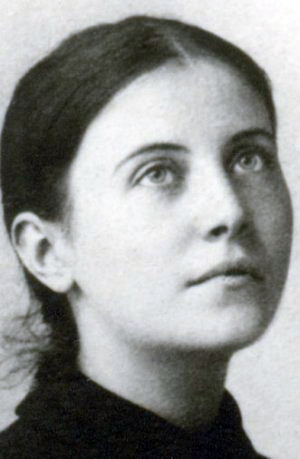
On this April 11th, in 1903 – the same year that the Italian Guiseppe Sarto was elected Pope later that summer as Pius X – a lovely, young Italian woman died, by the name of Gemma Galgani. She lived a brief life of 24 years, as did a number of other young saints, including Pier[…]Continue reading→
An Ideological and Improper Translation
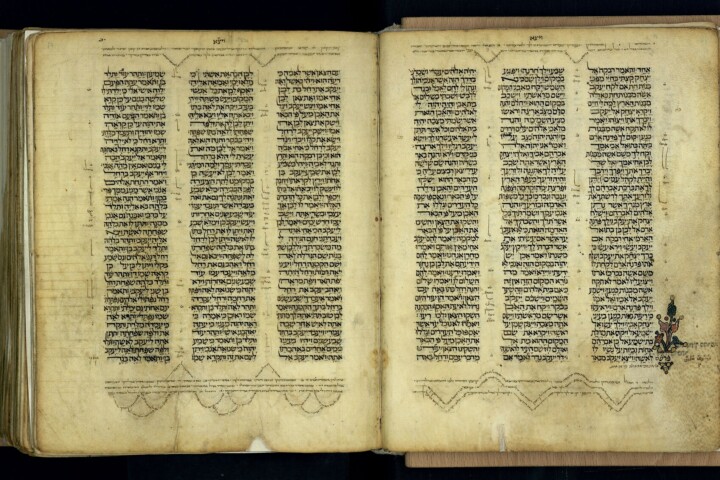
I noticed something odd with the psalm reading at Mass the other day. Our bishops’ conference here in Canada has decreed that the Mass in English – Novus Ordo – use the ‘NRSV’, the ‘New Revised Standard Version’, an ‘updated’ translation of the original RSV, first published in 1952. This ‘new translation’ has the tendency[…]Continue reading→
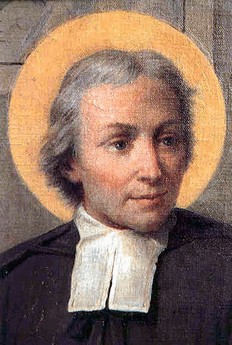
Saint Jean-Baptiste de la Salle: A Teacher for Teachers
Jean-Baptiste de la Salle (1651 – 1719), a French nobleman, ordained a priest, founded the first order in the Church’s history entirely without priests, and this came about almost by accident. I say ‘almost’, for, of course, there are no accidents with God. Destined for ordination from an early age, Jean-Baptiste never looked back, even[…]Continue reading→