
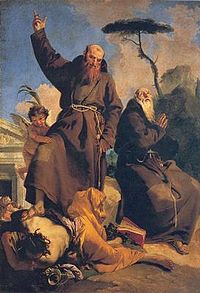
Saint Fidelis’ Greatest Sermon
Today is the feast of Saint Fidelis of Sigmaringen, (+1622) whose original name was Mark Rey: His names comes from his birthplace, with the Fidelis his name in religion, after he joined the Capuchins in the first decade of the 1600’s, as Shakespeare – whose death day was yesterday, eight years before Fidelis’ – was writing his sonnets and plays in England just after the Elizabethan era, and the so-called ‘Reformation’ at its height.
Mark’s first job was as a lawyer, in which task he was known for his honesty – yes, I know – and his pro bono work for the poor, definitely not in the normally pecunious profession for the money or prestige, but, still, the moral compromises compromised his conscience, and rather than continuing in sorrow, young Mark Rey was prompted to ‘come higher’, sell everything, and follow Christ, his hand firmly on the plow without looking back.
He entered the austere Capuchin Franciscans, founded a century before by Matteo da Bascio, and was sent to preach and convert the Calvinists, still in the throes of their early misguided zeal. But Father Fidelis’ own zeal was deeper and more pure, founded on the truth of Catholicism, flowing from the sacraments and the prayers of all the saints who had gone before him.
Father Fidelis’ was a persuasive preacher, steeped in the Faith, and using his logical and rhetorical skills to present the truth in a way that was irresistible. His phenomenal success in converting the wayward Calvinists back to Catholicism was such that their only response was, well, to kill him – the old ad baculum fallacy of which Aristotle speaks – to the stick. Beat thine opponent into submission, or death.
On April 24th, 1622, the priest gave an unusually eloquent sermon, even for him, after which he gazed into heaven in ecstasy. What he foretold in the days and weeks previously, when he began signing his letters, P. Fidelis, prope diem esca vermium was now to be fulfilled: ‘Father Fidelis, close to the day he will be the food for worms’
After that fateful homily, in a church nestled in the breathtakingly beautiful canton of Seewis, Switzerland, Fidelis was confronted by a group of Calvinist soldiers, with their pastor at their head, who had just roused them to fury with his own sermon. They demanded he renounce his Catholicism and join them, an offer which he of course refused, instead declaring that he had come to convert them from their heresy. One soldier smacked him on the head with his sword, and the priest, gaining his senses, prayed that their sin be not held against them, that they knew not what they did:
Pardon my enemies, O Lord: blinded by passion they know not what they do. Lord Jesus, have mercy on me. Mary, Mother of God, succor me!
The soldiers split his head open, stabbed him numerous times, and chopped off one of his legs in revenge for its bringing him on so many missions to spread the faith.
The Calvinist pastor, realizing what he had done – killed a saint – eventually realized the error of his ways, and converted to Catholicism, we may presume at the intercession of Saint Fidelis, and so, we may hope, did some of the soldiers.
Pope Benedict in his Regensburg address in 2006 declared, using the words of the early emperor Manuel II Paleologus, about another certain religion which uses violence to ‘convert’ those they see as ‘infidels’:
God”, he says, “is not pleased by blood – and not acting reasonably (σὺν λόγω) is contrary to God’s nature. Faith is born of the soul, not the body. Whoever would lead someone to faith needs the ability to speak well and to reason properly, without violence and threats… To convince a reasonable soul, one does not need a strong arm, or weapons of any kind, or any other means of threatening a person with death
Faith must be free, prompted by our own reason, or it is not faith. The same may be said for anything held by our ‘reason’, opposed to any form of exterior coercion.
But, eventually, we must be beyond reasons, when words fail us. The witness of martyrdom has its own voice, and the glorious death of Saint Fidelis is perhaps the best, and most rational, sermon he ever gave.
Ora pro nobis, servus Dei.

Carney’s Amoral Majority
After five defections – euphemistically described as ‘crossing the floor’ – and three by-elections, Mark Carney and his Liberals how have their coveted majority. One wonders what bowls of pottage were offered in back-room deals. In the archaic monarchical system that is the Dominion of Canada, this majority allows the newly-minted Prime Minister to rule[…]Continue reading→

Saint Kateri , Canada’s Protectress
This was the title given to Saint Kateri Tekakwitha, by Pope Benedict XVI, when he canonized her on October 28th, 2012, along with six others, in Saint Peter’ Square (she had been beatified by Pope John Paul II back in 1980). With Saint Joseph as our protector, along with the Canadian martyrs, we seem to[…]Continue reading→

A Tale of Two Benedicts
A grace-filled Holy Week to all our readers! As we await and prepare for the Resurrection about to dawn upon us, we might keep in mind two Benedicts: Pope Emeritus Benedict XVI, requiescat in pace, elected on this day in 2005; and today’s commemoration of the mystic pilgrim, Benedict Joseph Labre, who died on this[…]Continue reading→

My Name is Bernadette
April 16th is a propitious day, for besides the anniversary of Father de Valk’s death, who founded Catholic Insight in its print form decades ago, and the commemoration of the ‘two Benedicts’, mentioned in accompanying posts, today we also recall Saint Bernadette Soubirous, the young visionary to whom the Virgin Mary appeared numerous times at[…]Continue reading→

Saint Lydwina of Schiedam and Suffering Joyfully
Saint Lydwina of Schiedam (1380 – 1433) was one of the countless and glorious ‘victim souls’ in the history of the Church, those whose lives are filled with suffering, often of an unimaginable intensity, but who suffer joyfully. She was a fifteen-year old Dutch girl, out skating one day, when she fell and broke one[…]Continue reading→

The Glorious Martyrdoms of Martin and Maximus
As we enter into Eastertide, we recall on this 13th of April Pope Saint Martin I (+655), one of the noblest, if most tragic, of the successors of Saint Peter. Born in Umbria, Italy, he was of noble lineage, with great intelligence combined with charity and love of the poor and the Church. While still[…]Continue reading→

Saint Stanislaus of Szczepanów
We celebrate Saint Stanislaus today (+ April 11, 1079), in light of this Easter Octave, a bishop and martyr who accepted the episcopacy only at the direct order of Pope Alexander II. He proved a wise and courageous leader of his flock, put to death by his own king, Boleslaus, for rebuking the monarch’s ‘immoral[…]Continue reading→

Saint Gemma Galgani
On this April 11th, in 1903 – the same year that the Italian Guiseppe Sarto was elected Pope later that summer as Pius X – a lovely, young Italian woman died, by the name of Gemma Galgani. She lived a brief life of 24 years, as did a number of other young saints, including Pier[…]Continue reading→
An Ideological and Improper Translation
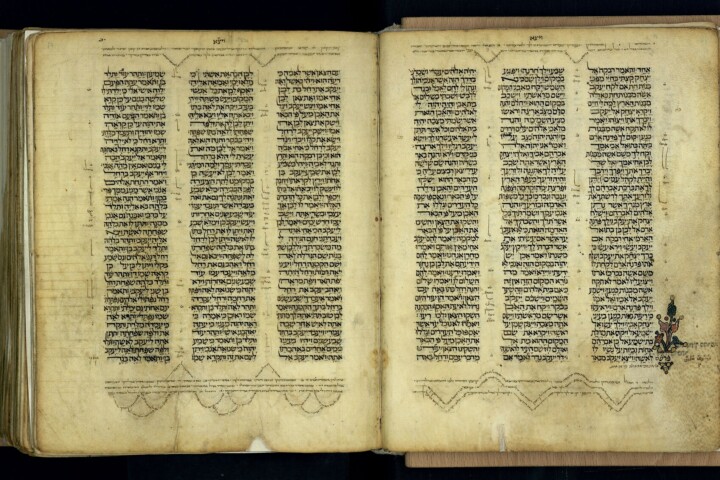
I noticed something odd with the psalm reading at Mass the other day. Our bishops’ conference here in Canada has decreed that the Mass in English – Novus Ordo – use the ‘NRSV’, the ‘New Revised Standard Version’, an ‘updated’ translation of the original RSV, first published in 1952. This ‘new translation’ has the tendency[…]Continue reading→
Saint Jean-Baptiste de la Salle: A Teacher for Teachers
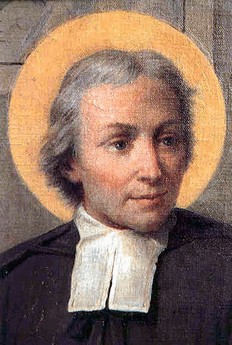
Jean-Baptiste de la Salle (1651 – 1719), a French nobleman, ordained a priest, founded the first order in the Church’s history entirely without priests, and this came about almost by accident. I say ‘almost’, for, of course, there are no accidents with God. Destined for ordination from an early age, Jean-Baptiste never looked back, even[…]Continue reading→