
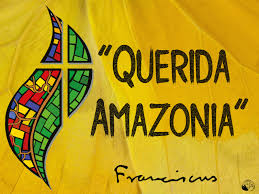
Whither and Whence, Amazonia?
A few words on the post-synodal letter on the Amazon, Querida Amazonia. ‘There is much upon which to ponder in the document, and I would recommend a read through, so please permit my pointing out a few warning signs, whatever may be intended by them. On that note, the document seems to satisfy neither conservatives or liberals, even if those terms are rather limited as applied to the Church.
On that note, one may find any number of reviews and summaries, so just a few sentences from yours truly, after a read-through the document this morning: There is much that is good and hopeful: A call for holiness, and emphasis on the Eucharist and Confession, which only ordained priests may offer; no explicit call for abandoning priestly celibacy, nor for deaconesses, nor for any major change in discipline or doctrine; an awareness of the difficulties involved in that vast and remote region, the need to preach and nourish the poor. But there are also excerpts offering some level of hope or fear, depending on your point of view.
First, the title, ‘Dear Amazon’ – I’m not sure what to make of calling a region of rain forest ‘dear’. Perhaps better ‘dear people‘ of the Amazon. A quibble? This is not helped by the anthropomorphic description of the region – with the ‘blood’, the ‘bleeding’, and the ‘veins’ of ‘mother Earth’. The Holy Father also persists in his fear of anthropogenic, carbon-caused global warming, the evidence for which, behind the ‘veil of consensus’ and computer-modeling, is rather slim.
And what of revelation itself? The term is stretched to poetic limits in the following:
The very flowers of the field and the birds which his human eyes contemplated and admired are now imbued with his radiant presence”. For all these reasons, we believers encounter in the Amazon region a theological locus, a space where God himself reveals himself and summons his sons and daughters.
God may ‘reveal’ Himself in nature, and we all may ‘see’ God in the great outdoors, but this is not quite the same as a ‘theological locus’, a term usually reserved for specific historical places – written texts, the Scriptures, the Liturgy, or apostolic persons – wherein the Almighty has offered some aspect of His eternal salvific truths.
As readers know by now, I am no fan of theological ambiguity, and a passage like the following provides enough through which some future interpreter might one day drive a truckload of married priests, children in tow:
Nor is there room, in the presence of the poor and forgotten of the Amazon region, for a discipline that excludes and turns people away, for in that way they end up being discarded by a Church that has become a toll-house. Rather, “in such difficult situations of need, the Church must be particularly concerned to offer understanding, comfort and acceptance, rather than imposing straightaway a set of rules that only lead people to feel judged and abandoned by the very Mother called to show them God’s mercy” (#84)
And what of the Pachamamas and other seemingly idolatrous images, statuary and their veneration, if not apparent worship?
It is possible to take up an indigenous symbol in some way, without necessarily considering it as idolatry. A myth charged with spiritual meaning can be used to advantage and not always considered a pagan error. Some religious festivals have a sacred meaning and are occasions for gathering and fraternity, albeit in need of a gradual process of purification or maturation. (#79)
But what if it looks and walks a lot like a ‘pagan error’? Are all such wayward religious practices able to the purified and matured in a Catholic sense? One ponders the 17th century Chinese Rites controversy, but this seems somehow one step further.
And we may fear that Gregorian chant, polyphony, Latin, church architecture – the whole Greco-Roman-European milieu in which the Faith took its traditional form – may be in a bit of trouble:
There is a risk that evangelizers who come to a particular area may think that they must not only communicate the Gospel but also the culture in which they grew up, failing to realize that it is not essential “to impose a specific cultural form, no matter how beautiful or ancient it may be” (#69)
What of those historically-embedded aspects of the ‘Roman Catholic Church’ – her music, buildings, philosophy, theology, described so eloquently by Pope Benedict in his 2006 Regensburg Address – which may not be arbitrarily discarded?
There are indeed serious issues facing the Amazon, and the document indeed raises these issues, providing some initial hopes for an answer and a response. But whatever is done, I don’t think the people of South America need an ‘Amazonian church’. Whatever adaptations are made, the people of South America – and everywhere in God’s good earth – need the Catholic Church, one, holy, Roman, apostolic, integral, transcendent in her historical glory and grandeur, and the one path of salvation to all mankind.
Carney’s Amoral Majority
After five defections – euphemistically described as ‘crossing the floor’ – and three by-elections, Mark Carney and his Liberals how have their coveted majority. One wonders what bowls of pottage were offered in back-room deals. In the archaic monarchical system that is the Dominion of Canada, this majority allows the newly-minted Prime Minister to rule[…]Continue reading→

Saint Kateri , Canada’s Protectress
This was the title given to Saint Kateri Tekakwitha, by Pope Benedict XVI, when he canonized her on October 28th, 2012, along with six others, in Saint Peter’ Square (she had been beatified by Pope John Paul II back in 1980). With Saint Joseph as our protector, along with the Canadian martyrs, we seem to[…]Continue reading→

A Tale of Two Benedicts
A grace-filled Holy Week to all our readers! As we await and prepare for the Resurrection about to dawn upon us, we might keep in mind two Benedicts: Pope Emeritus Benedict XVI, requiescat in pace, elected on this day in 2005; and today’s commemoration of the mystic pilgrim, Benedict Joseph Labre, who died on this[…]Continue reading→

My Name is Bernadette
April 16th is a propitious day, for besides the anniversary of Father de Valk’s death, who founded Catholic Insight in its print form decades ago, and the commemoration of the ‘two Benedicts’, mentioned in accompanying posts, today we also recall Saint Bernadette Soubirous, the young visionary to whom the Virgin Mary appeared numerous times at[…]Continue reading→

Saint Lydwina of Schiedam and Suffering Joyfully
Saint Lydwina of Schiedam (1380 – 1433) was one of the countless and glorious ‘victim souls’ in the history of the Church, those whose lives are filled with suffering, often of an unimaginable intensity, but who suffer joyfully. She was a fifteen-year old Dutch girl, out skating one day, when she fell and broke one[…]Continue reading→

The Glorious Martyrdoms of Martin and Maximus
As we enter into Eastertide, we recall on this 13th of April Pope Saint Martin I (+655), one of the noblest, if most tragic, of the successors of Saint Peter. Born in Umbria, Italy, he was of noble lineage, with great intelligence combined with charity and love of the poor and the Church. While still[…]Continue reading→

Saint Stanislaus of Szczepanów
We celebrate Saint Stanislaus today (+ April 11, 1079), in light of this Easter Octave, a bishop and martyr who accepted the episcopacy only at the direct order of Pope Alexander II. He proved a wise and courageous leader of his flock, put to death by his own king, Boleslaus, for rebuking the monarch’s ‘immoral[…]Continue reading→

Saint Gemma Galgani
On this April 11th, in 1903 – the same year that the Italian Guiseppe Sarto was elected Pope later that summer as Pius X – a lovely, young Italian woman died, by the name of Gemma Galgani. She lived a brief life of 24 years, as did a number of other young saints, including Pier[…]Continue reading→
An Ideological and Improper Translation
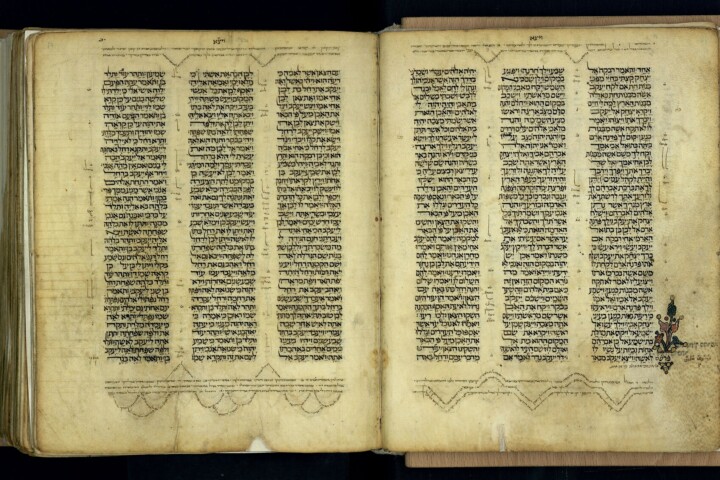
I noticed something odd with the psalm reading at Mass the other day. Our bishops’ conference here in Canada has decreed that the Mass in English – Novus Ordo – use the ‘NRSV’, the ‘New Revised Standard Version’, an ‘updated’ translation of the original RSV, first published in 1952. This ‘new translation’ has the tendency[…]Continue reading→
Saint Jean-Baptiste de la Salle: A Teacher for Teachers
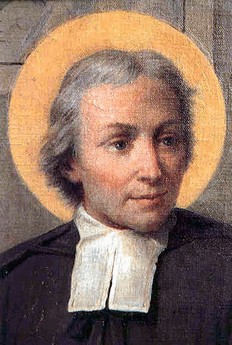
Jean-Baptiste de la Salle (1651 – 1719), a French nobleman, ordained a priest, founded the first order in the Church’s history entirely without priests, and this came about almost by accident. I say ‘almost’, for, of course, there are no accidents with God. Destined for ordination from an early age, Jean-Baptiste never looked back, even[…]Continue reading→