
Impurity and Self-Idolatry
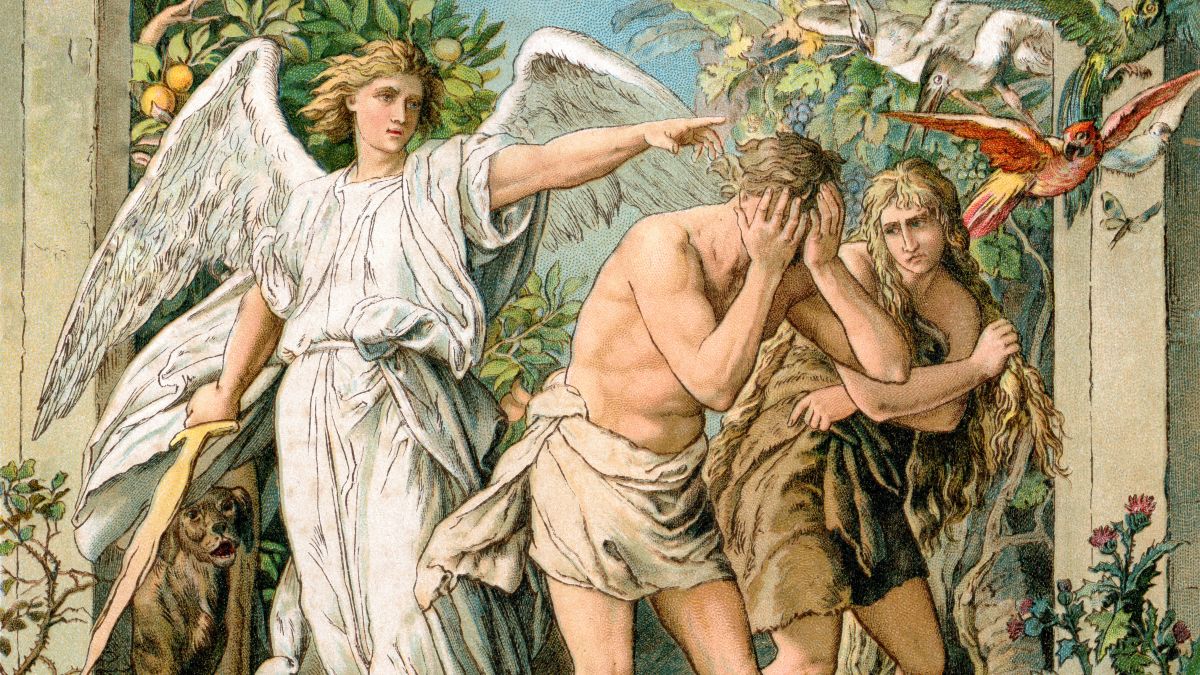
Our whole human condition is enlightened by understanding the addictive process that leads to impurity. In a sense, all sin is a form of idolatry of the false god of self, but solitary acts of impurity are more obvious and intense forms of turning inward, away from God.
Original sin is not an abstract doctrine, but one of the deepest truths about
our human nature. The Catechism states that “ignorance of that fact that man has a wounded nature inclined to evil gives rise to serious errors in the areas of education, politics, social action and morals.” Our own personal history, from infancy to adulthood, is also the history of original sin in each one of us as individuals.
The truth of original sin reminds us that life is painful in a fallen world. All forms of pain — physical, psychological and spiritual — are inescapable realities for each one of us. In a sense, our response to pain determines the depth of our addiction and the degree of our self-idolatry.
Let us take the example of a person who suffers some form of neglect, abuse or abandonment in childhood. A child in pain will naturally run to his parents. But if the primary caregivers are the source of the pain, the child will feel trapped, lost,
helpless, and abandoned — utterly unable to cope with the pain. The child will turn inward. This is not a conscious choice. It is part of the mystery of original sin and our
wounded nature. We turn inward rather than turning to God.
This turning inward does not lead to a safe refuge and union with God in the depths of one’s soul. It is a turning inward that corresponds to a split in the psyche. We can understand this process by taking a more particular example of a child who is sexually abused. Many survivors of such abuse report to dissocciating from themselves during the abuse and subsequently repressing all memory of it. For a time, it is a successful coping strategy and survival mechanism. But it results in the creation of a false self, or what St. Paul calls the “old self” (palaios anthropos). Of course the false self is the result of original sin, but its particular characteristics are usually formed from early childhood experiences.
The false self does not know how to deal with pain. The false self does not know how to turn to God. The false self can only try to save itself by denying, rejecting or repressing the true self that is suffering so much unbearable pain, and to escape that pain by any means possible, including the temporary and illusory anodyne of addiction. The false self is the basis for all addiction and the idolatry of self.
This pain is in essence a void in the heart that was meant to be filled with love — from God and others. For any human being, the emptiness within, whether we realize consciously or not, is an unbearable agony. Nature abhors a vaccuum, so if it is not overflowing with love, the unconscious instinct of the suffering person is to fill it with something — anything is better than nothing. So we cram it with self-will, pride, anger, fear, lust or any other addiction. Since we do not really know God, unconsciously we become our own god, trying in vain to save ourselves.
From the White Book from Sexaholics Anonymous, we read: “Most difficult for us to see was that being obsessed with self meant we had become the Source of our own lives — our own god. We were the most important person in our world. Thus, we had to connect with ourselves; we became addicted to ourselves. No wonder so many of us found masturbation to be infinitely more than childhood experimentation. It got us high on ourselves, short-circuiting any meaningful connection with others and God.” The book also speaks of the human “drive” to have union with another: “We used sex or lust or relationships to satisfy this drive, letting them take the place of God as source of our lives. Idolatry.”
Our secular culture, with its billion dollar pornography industry, is not only an addictive and idolatrous culture but a re-paganized culture, similar in its mores to ancient Corinth where St. Paul preached the Gospel. In the Ignatius Study Bible notes for 1 Corinthians, we read that “cultic prostitution was an institutionalized form of unchastity that was performed in idol temples in service to the gods . . . idolatry officially sanctioned sexual immorality in the name of religion, and its liturgy became the context for surrendering the soul to the gods and the body to sexual impurity.” Our idolatry is somewhat more self-centered. Yes, prostitution is still part of our sexualixed culture. But pornography and masturbation, these private, hidden sexual sins, are perhaps more common than ever before. We do not need to worship at a pagan temple. The temple in which we commit idolatry is our own self, our own body.
What is the solution offered by St. Paul? He urges his readers to flee from sexual immorality and flee from idolatry. Those who belong to Christ are one body with Him. They must glorify God in their bodies, and not make the members of Christ the members of a prostitute. They cannot drink the cup of the Lord and the cup of demons at the same time.
However, Paul also wrote to the Corinthians,”When I came to you, brethren . . . I decided to know nothing among you except Jesus Christ, and him crucified.” Jesus Christ crucified teaches us the value and meaning of pain. It is not an unmitigated evil to be avoided at all costs. That is the lie of addiction. At its deepest level, pain is our need for God. We cannot know our desperate longing for God, and the corresponding depths of His love, if we do not first enter into the reality of our suffering. The only way out of pain is to go back into it and turn to God — what we should have done as children but is almost impossible without an extraordinary grace of God. Like the psalmist of De Profundis, out of the depths of our pain and emptiness we must cry out to God, who sends the sweet anointing of the Holy Spirit to heal and fill our hearts with His love.
Even in this life, a great reward awaits those who patiently endure suffering in union with Christ. In Salvifici Doloris, John Paul II writes, “In suffering there is concealed a particular power that draws a person interiorly close to Christ, a special grace . . . the individual discovers the salvific meaning of suffering . . . (and) . . . becomes a completely new person.”
Underneath all sins of impurity and every form of addiction lies the reality of pain. Inspired by Jesus Christ crucified, who came to heal the wound of original sin, may each be given courage to enter into suffering and be transformed into a new person, formed anew in the image of our Creator.

Remembering Father Alphonse de Valk
(Today marks the sixth anniversary of the death of Father Alphonse de Valk, C.S.B., a faithful, courageous and indefatigable Basilian priest, pro-life-and-family apostle, and the founder of Catholic Insight magazine. Here is what we wrote those on his entering into eternity five years ago, as we continue to remember him in our prayers and thoughts)[…]Continue reading→
Divine Mercy Sunday – An Echo of Every Mass
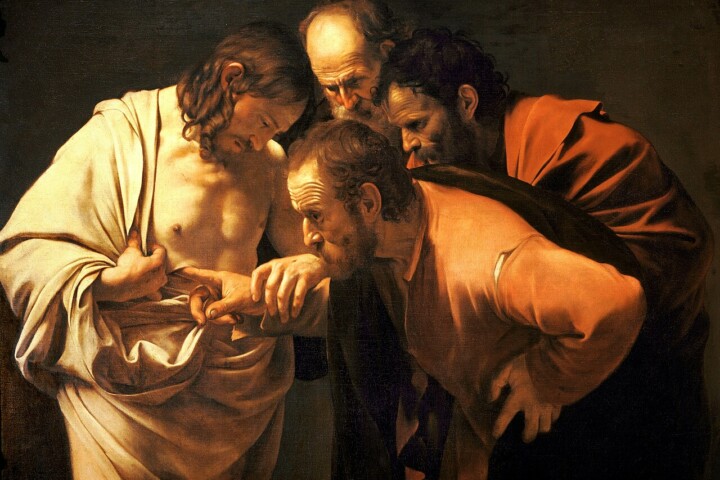
Reach out your hand and put it in my side. Do not doubt but believe’… ‘My Lord and my God!’ (Jn. 20:18)). Today is Divine Mercy Sunday, and as we celebrate the end of the Easter Octave, we contemplate the wounded side of our Saviour, the Church’s source of life. On Good Friday in the[…]Continue reading→

Saint Stanislaus of Szczepanów
We celebrate Saint Stanislaus today (+ April 11, 1079), in light of this Easter Octave, a bishop and martyr who accepted the episcopacy only at the direct order of Pope Alexander II. He proved a wise and courageous leader of his flock, put to death by his own king, Boleslaus, for rebuking the monarch’s ‘immoral[…]Continue reading→
First Holy Communion: Sermon from May 16, 1943
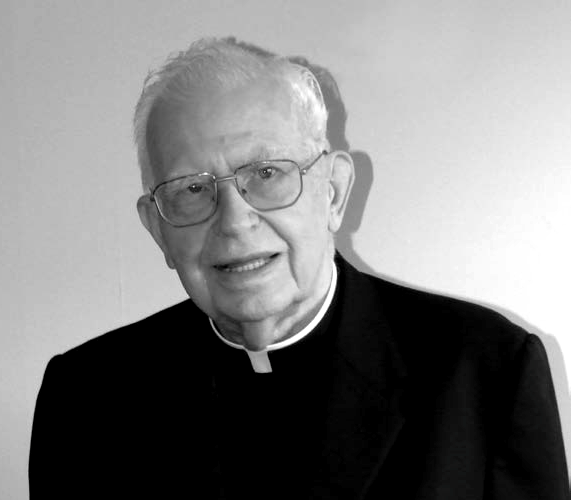
Here is a sermon from the good old days by +Rev. Msgr. Vincent Nicholas Foy (August 14, 1915 – March 13, 2017), from 1943. Readers may recall that Pope Saint Pius X, by the decree Quam Singulari in 1910, lowered the customary age of reception of Holy Communion – after the rigours of the plague[…]Continue reading→
In the Glorious Light of Easter, Alleluia!
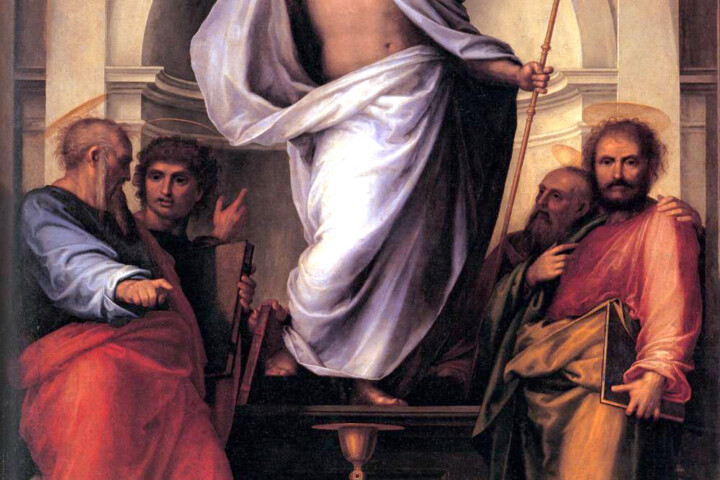
Set your minds on things that are above, not on things that are on earth, for you have died, and your life is hidden with Christ in God. When Christ who is your life is revealed, then you also will be revealed with him in glory (Col. 3:3-4). The Resurrection of Our Lord and Saviour[…]Continue reading→
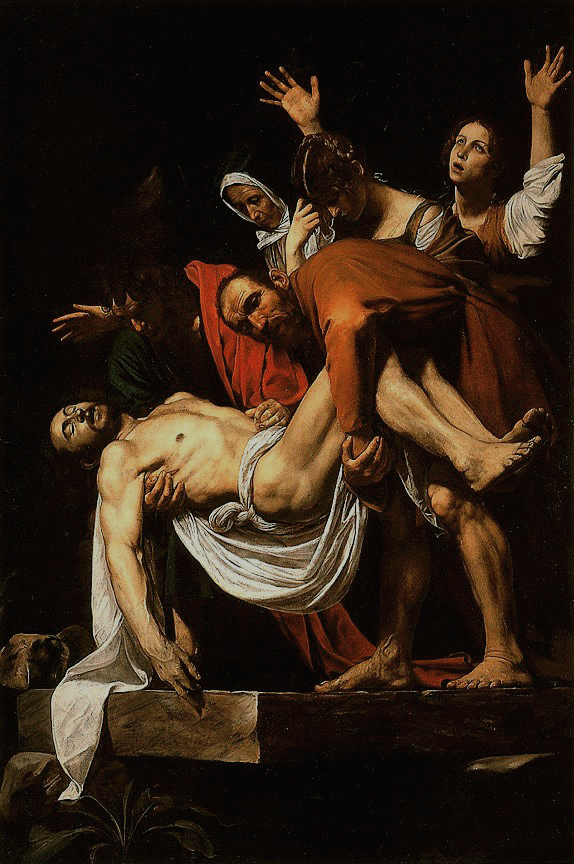
An Ancient Homily for Holy Saturday
The time between Good Friday and Easter Sunday is one of waiting, in silence, as the world wonders – anticipates – what will happen, after the death of Christ. We re-live this time each year in the anamnesis of our liturgy, and in turn look forward to the glorious re-creation of all things at the[…]Continue reading→
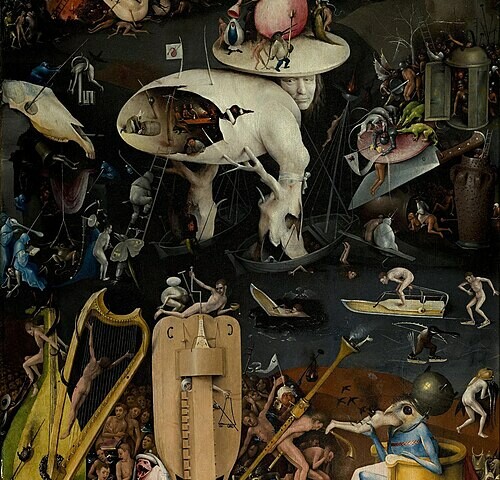
Europe’s Long Descent
(As we meditate on this day on Christ’s burial, and His descent into hell, it is fitting to ponder here with contributor Peter Marcus how the world seems to be heading there as well. The difference is that, although God cannot ‘redeem’ hell, nor those therein, He can and did redeem the world. There is[…]Continue reading→
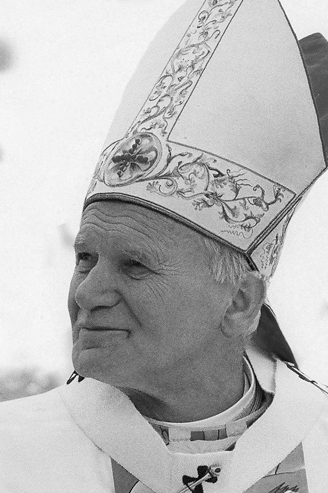
Pope Saint John Paul II’s First Good Friday Homily
ADDRESS OF HIS HOLINESS JOHN PAUL II AT THE CONCLUSION OF THE STATIONS OF THE CROSS AT THE COLOSSEUM Good Friday, 13 April 1979 When we make the Way of the Cross from one station to the next, in spirit we are always at the spot wherethis journey had its “historical” place: where it[…]Continue reading→
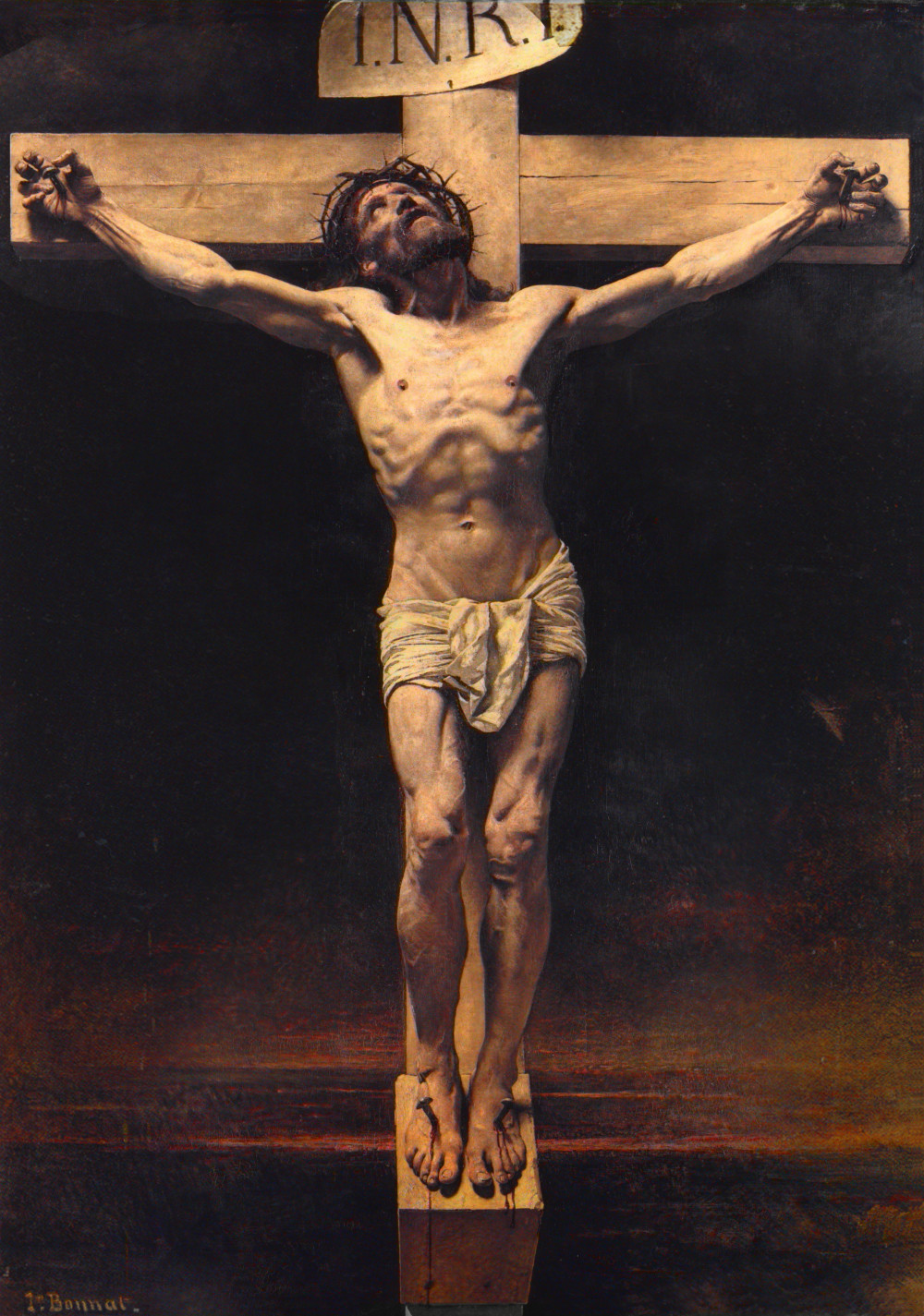
A Meditation for Good Friday: How To Undo the Effects of Sin?
Cardinal Newman, now Saint John Henry Newman, was a towering figure of nineteenth-century Catholicism who is almost universally admired. I say “almost” because not everyone likes him. I knew a priest once, Arthur Caulkins, who has become disenchanted with Newman. As an undergraduate Arthur had been enamoured of Newman, and this interest continued when he[…]Continue reading→
Pope Benedict’s Last Holy Thursday Homily
MASS OF THE LORD’S SUPPER HOMILY OF HIS HOLINESS BENEDICT XVI Basilica of St John Lateran Holy Thursday, 5 April 2012 Photo Gallery (Video) Dear Brothers and Sisters! Holy Thursday is not only the day of the institution of the Most Holy Eucharist, whose splendour bathes all else and in some ways draws it to[…]Continue reading→