
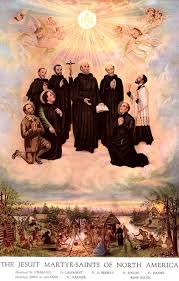
The Non-Milquetoast and Quite Holy Canadian Martyrs
In the rest of the world, the Canadian, or if you will, North American, Martyrs, six priests and two laymen put to death for the faith between 1642 and 1649 – are celebrated on October 19th, when the layman Jean de la Lalande was put to death in 1646, one day after the priest whom he was serving, Isaac Jogues, was also martyred in what is now Auriesville, New York.
Here in Canada, we celebrate all these martyrs on this day, September 26th, perhaps because it’s too cold on the 19th up here, and our bishops would rather commemorate these secondary patrons of this fair Dominion while the tapestry of fall colours are beginning. The others members of this noble band are Jean de Brebeuf, Gabriel Lalemant, Antoine Daniel, Charles Garnier, and Noel Chabanel, all put to death near Midland, Ontario, while René Goupil, a layman, was the first, also in New York, in 1642. All of them were Jesuits, back in the most zealous, unified, and intrepid early days of the Society, which did untold work holding the Church together in those fractious years, torn by war and religious division.
Each of their stories, their backgrounds, how they ended up on the missions, are all different. But there were one in their religion, their orthodoxy, their dedication to the Faith, in the rule and ideals of Saint Ignatius, as well as their desire to spread the joy and hope of that faith to their Native brethren, who, for all their noble qualities, contrary to modern myths, were by and large mired in hopelessness and often misery. One of the sad revisionisms of late is painting pre-colonial, which means pre-Christian, life in Canada as an Edenic paradise, in the rosy hues of Rousseau’s bon sauvage. As the vivid, detailed and all-too-human accounts of the Jesuit Relations make clear, life in the wilderness was anything but ideal, with brutality, sexual licence, flies, dirt, thick smoke in longhouses, bitter cold, and death by disease, infection, starvation or war perpetually lurking just around the corner. ‘Savage’ may now be an inappropriate term for the first nations, as the saying goes, but it is accurate enough to describe their eked-out existence.
The Jesuits and their fellow missionaries were sadly accompanied and followed by unscrupulous men who gave Catholicism, and European culture in general a bad name, a trend that, need we belabour the point, continues today. Yet the good more than outweighed whatever imperfection there was, something our modern, jejune virtue-signalers should learn. From Jean de Brebeuf to Justin Trudeau is not a mark of progress.
These Jesuits were men of noble ideals, for which they worked indefatigably their entire lives, in the midst of the same hardships as their beloved Natives, for whose good they were willing to suffer and die; and die they did, in the most horrific of ways. They were more than willing, desirous even, and none more than the powerful, yet gentle, giant Jean de Brébeuf, to shed their blood for Christ, and for conversion of all peoples to Him and His salvific truth. As he once confessed in writing:
in truth I vow to you, Jesus my Saviour, that as far as I have the strength I will never fail to accept the grace of martyrdom, if some day you in your infinite mercy should offer it to me, your most unworthy servant
We may not have to give up our lives, but we must do what we can to stand against the tide of the culture of death, be counted, and proclaim the truth, boldly and without compromise or complaisance. Jean de Brebeuf recalled of the Natives that if you picked up a paddle in their canoes, you had to ply it all day; also, they expected you to carry your own fair share on the portages, silently, without complaint; and all of this on a handful of cornmeal at breakfast. They would take the measure of a man by how much he could endure, and they were impressed by the steadfastness of the ‘Blackrobes’, not least de Brebeuf, whom they called ‘Echon’, a term of great respect and admiration. Instead of the milquetoast metrosexual ‘manhood’ we see all around us, yes even in the priesthood and within our homo urbanus selves, we could stand a small share in such fortitude of our spiritual ancestors, to whom this country owes so much, yet now knows so little.
On a final note, our bishops consecrated Canada to Our Lady Immaculate on this day two years ago, so let us beseech her intercession, along with these holy Jesuits, those martyred, and those who suffered much in bringing the Faith to this fair land.
Holy Canadian Martyrs, orate pro nobis!
Carney’s Amoral Majority
After five defections – euphemistically described as ‘crossing the floor’ – and three by-elections, Mark Carney and his Liberals how have their coveted majority. One wonders what bowls of pottage were offered in back-room deals. In the archaic monarchical system that is the Dominion of Canada, this majority allows the newly-minted Prime Minister to rule[…]Continue reading→

Saint Kateri , Canada’s Protectress
This was the title given to Saint Kateri Tekakwitha, by Pope Benedict XVI, when he canonized her on October 28th, 2012, along with six others, in Saint Peter’ Square (she had been beatified by Pope John Paul II back in 1980). With Saint Joseph as our protector, along with the Canadian martyrs, we seem to[…]Continue reading→
A Tale of Two Benedicts
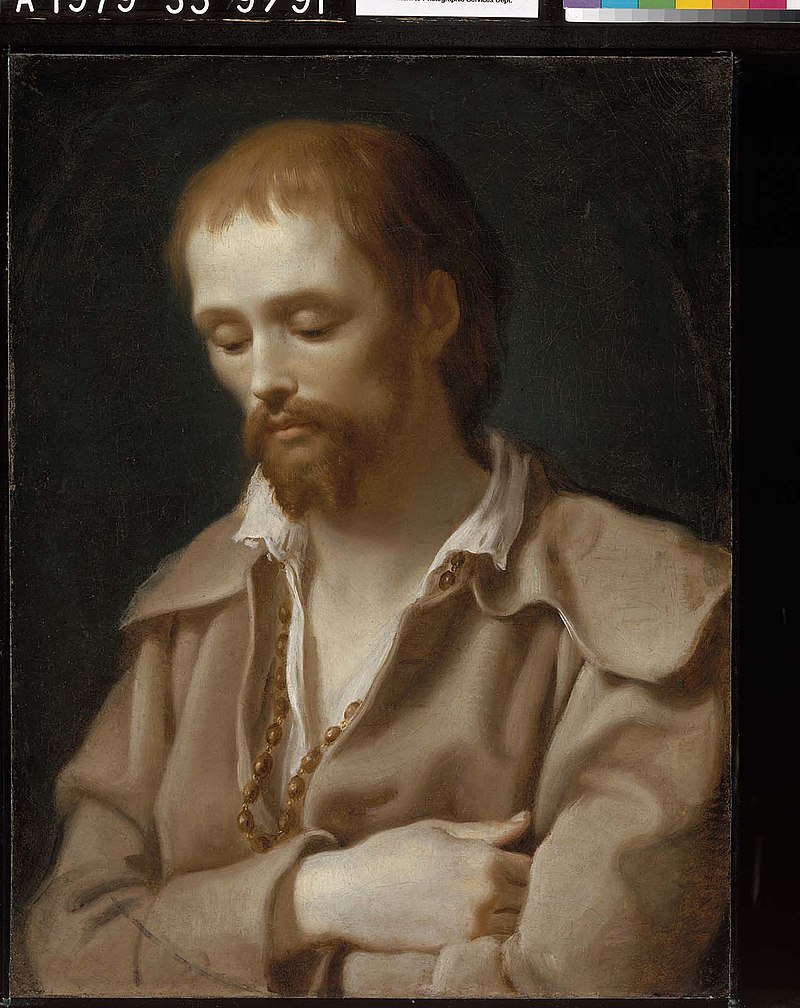
A grace-filled Holy Week to all our readers! As we await and prepare for the Resurrection about to dawn upon us, we might keep in mind two Benedicts: Pope Emeritus Benedict XVI, requiescat in pace, elected on this day in 2005; and today’s commemoration of the mystic pilgrim, Benedict Joseph Labre, who died on this[…]Continue reading→

My Name is Bernadette
April 16th is a propitious day, for besides the anniversary of Father de Valk’s death, who founded Catholic Insight in its print form decades ago, and the commemoration of the ‘two Benedicts’, mentioned in accompanying posts, today we also recall Saint Bernadette Soubirous, the young visionary to whom the Virgin Mary appeared numerous times at[…]Continue reading→
Saint Lydwina of Schiedam and Suffering Joyfully
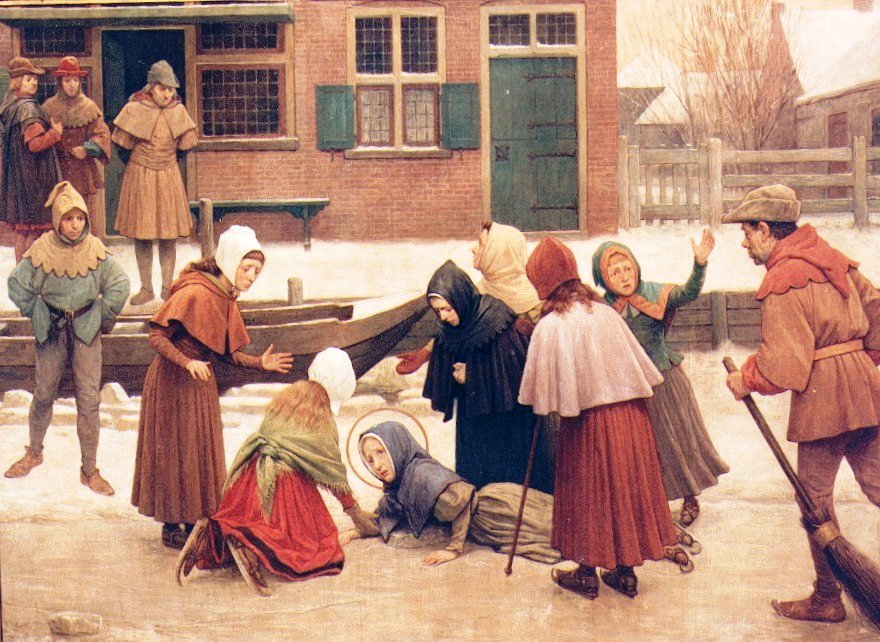
Saint Lydwina of Schiedam (1380 – 1433) was one of the countless and glorious ‘victim souls’ in the history of the Church, those whose lives are filled with suffering, often of an unimaginable intensity, but who suffer joyfully. She was a fifteen-year old Dutch girl, out skating one day, when she fell and broke one[…]Continue reading→
The Glorious Martyrdoms of Martin and Maximus
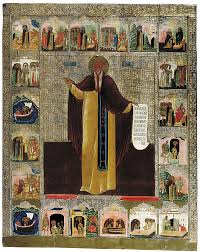
As we enter into Eastertide, we recall on this 13th of April Pope Saint Martin I (+655), one of the noblest, if most tragic, of the successors of Saint Peter. Born in Umbria, Italy, he was of noble lineage, with great intelligence combined with charity and love of the poor and the Church. While still[…]Continue reading→

Saint Stanislaus of Szczepanów
We celebrate Saint Stanislaus today (+ April 11, 1079), in light of this Easter Octave, a bishop and martyr who accepted the episcopacy only at the direct order of Pope Alexander II. He proved a wise and courageous leader of his flock, put to death by his own king, Boleslaus, for rebuking the monarch’s ‘immoral[…]Continue reading→
Saint Gemma Galgani
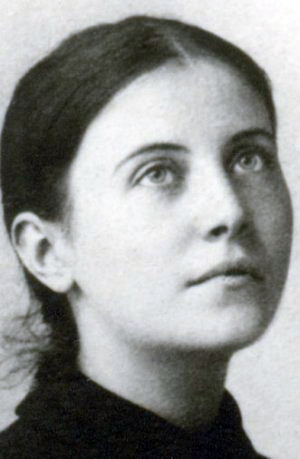
On this April 11th, in 1903 – the same year that the Italian Guiseppe Sarto was elected Pope later that summer as Pius X – a lovely, young Italian woman died, by the name of Gemma Galgani. She lived a brief life of 24 years, as did a number of other young saints, including Pier[…]Continue reading→
An Ideological and Improper Translation
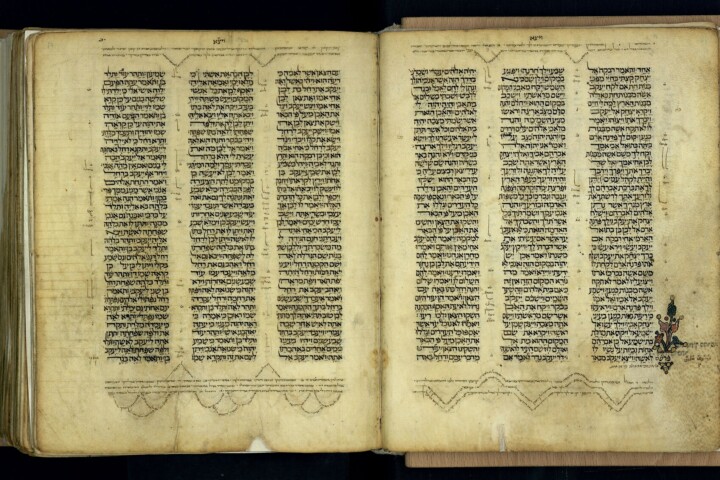
I noticed something odd with the psalm reading at Mass the other day. Our bishops’ conference here in Canada has decreed that the Mass in English – Novus Ordo – use the ‘NRSV’, the ‘New Revised Standard Version’, an ‘updated’ translation of the original RSV, first published in 1952. This ‘new translation’ has the tendency[…]Continue reading→
Saint Jean-Baptiste de la Salle: A Teacher for Teachers
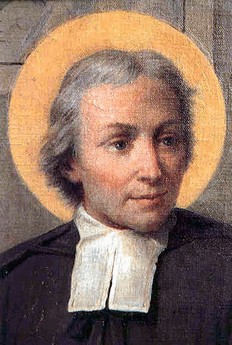
Jean-Baptiste de la Salle (1651 – 1719), a French nobleman, ordained a priest, founded the first order in the Church’s history entirely without priests, and this came about almost by accident. I say ‘almost’, for, of course, there are no accidents with God. Destined for ordination from an early age, Jean-Baptiste never looked back, even[…]Continue reading→