
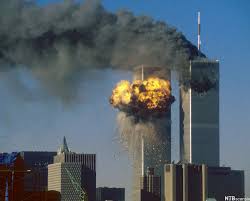
9 11 and Historical Memory
It is difficult to believe that it was a full eighteen years ago I first heard of the attack – initially reported as a bombing – on the World Trade Centre buildings, on my car radio, an old, donated Pontiac 6000, its navy-blue paint mottled and rusted, but still running fine, outside the former convent, where we just starting out on the adventure that would become Seat of Wisdom College.
We had a few American students amongst the fifteen who had signed up for that year – our program was a one-year foundation in the liberal arts – one of whose fathers worked at the Pentagon. I called the day off, as the horror and tragedy of what truly happened unfolded before our eyes.
Yet we must put all this into current and historical context: 2,977 were estimated to have died when the towers fell on that September morning. A tragedy beyond reckoning. Yet, ten million were killed in the First World War, and up to forty million in the Second. And we should keep in mind that there are approximately 125,000 abortions committed each day across the world, with about 1,748 of them daily in the United States. And those are only the ones reported to the CDC, to say nothing of all the chemical abortions done at home, or those induced by abortifacient contraceptives.
We are awash in death, a great evil, especially in the first bloom of one’s existence, but, as Pope Saint John Paul II pointed out in Evangelium Vitae, our life here is but a penultimate good, with the ‘ultimate’ good found only in heaven. Spiritual and moral evil is far greater than any physical evil, even death itself, which is why the Holy Father goes on to state that in all the crimes against life, more harm is done to the perpetrator than the victim (cf., par. 3). Those who hijacked the planes and flew them into the buildings, motivated by their distorted view of God, of all the victims are most to be pitied, since their salvation is, to all appearances, most in doubt. And eternal death, need we point out, far more evil than the dissolution of one’s flesh, by whatever means. But we pray for them, and for all.
And do not fear those who kill the body but cannot kill the soul; rather fear him who can destroy both soul and body in hell. (Mt 10:28)
And what are we to say of Islam in all of this? The perpetrators – so we shall call them, and those who stood behind them, planning all this and further mayhem – chose their day well. It was on September 11th – or 12th by some accounts – in 1683 that the vast army of the Islamic Ottoman Turks, confident in their numbers, their zeal, their cannonry, sieged the gates of Vienna, hoping to burst through its into Europe, were stopped dead in their tracks, decimated and humiliated – against all odds – by the courageous forces under the Polish general Jan Sobielski – but more on that tomorrow.
But they have waited, and continue to wait. As one aphorism from the Taliban has it, the Americans have all the watches, but we have all the time.
Historical memory is a good thing, even if it may be put to bad use. Seeing events in their context, in light of that whole eschatological view of history moving towards its final culmination in God’s good providence, allows us to take confidence that though the forces of evil may have their transitory triumphs – from their limited perspective – God in the end wins the war. And woe to those on the losing side.
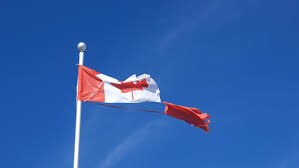
Carney’s Amoral Majority
After five defections – euphemistically described as ‘crossing the floor’ – and three by-elections, Mark Carney and his Liberals how have their coveted majority. One wonders what bowls of pottage were offered in back-room deals. In the archaic monarchical system that is the Dominion of Canada, this majority allows the newly-minted Prime Minister to rule[…]Continue reading→

Saint Kateri , Canada’s Protectress
This was the title given to Saint Kateri Tekakwitha, by Pope Benedict XVI, when he canonized her on October 28th, 2012, along with six others, in Saint Peter’ Square (she had been beatified by Pope John Paul II back in 1980). With Saint Joseph as our protector, along with the Canadian martyrs, we seem to[…]Continue reading→

A Tale of Two Benedicts
A grace-filled Holy Week to all our readers! As we await and prepare for the Resurrection about to dawn upon us, we might keep in mind two Benedicts: Pope Emeritus Benedict XVI, requiescat in pace, elected on this day in 2005; and today’s commemoration of the mystic pilgrim, Benedict Joseph Labre, who died on this[…]Continue reading→

My Name is Bernadette
April 16th is a propitious day, for besides the anniversary of Father de Valk’s death, who founded Catholic Insight in its print form decades ago, and the commemoration of the ‘two Benedicts’, mentioned in accompanying posts, today we also recall Saint Bernadette Soubirous, the young visionary to whom the Virgin Mary appeared numerous times at[…]Continue reading→

Saint Lydwina of Schiedam and Suffering Joyfully
Saint Lydwina of Schiedam (1380 – 1433) was one of the countless and glorious ‘victim souls’ in the history of the Church, those whose lives are filled with suffering, often of an unimaginable intensity, but who suffer joyfully. She was a fifteen-year old Dutch girl, out skating one day, when she fell and broke one[…]Continue reading→

The Glorious Martyrdoms of Martin and Maximus
As we enter into Eastertide, we recall on this 13th of April Pope Saint Martin I (+655), one of the noblest, if most tragic, of the successors of Saint Peter. Born in Umbria, Italy, he was of noble lineage, with great intelligence combined with charity and love of the poor and the Church. While still[…]Continue reading→

Saint Stanislaus of Szczepanów
We celebrate Saint Stanislaus today (+ April 11, 1079), in light of this Easter Octave, a bishop and martyr who accepted the episcopacy only at the direct order of Pope Alexander II. He proved a wise and courageous leader of his flock, put to death by his own king, Boleslaus, for rebuking the monarch’s ‘immoral[…]Continue reading→
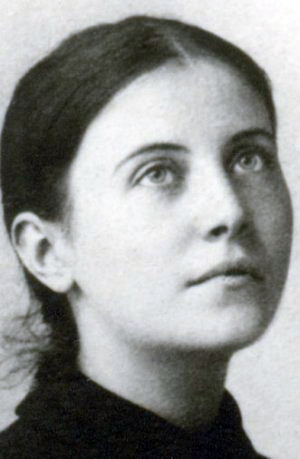
Saint Gemma Galgani
On this April 11th, in 1903 – the same year that the Italian Guiseppe Sarto was elected Pope later that summer as Pius X – a lovely, young Italian woman died, by the name of Gemma Galgani. She lived a brief life of 24 years, as did a number of other young saints, including Pier[…]Continue reading→
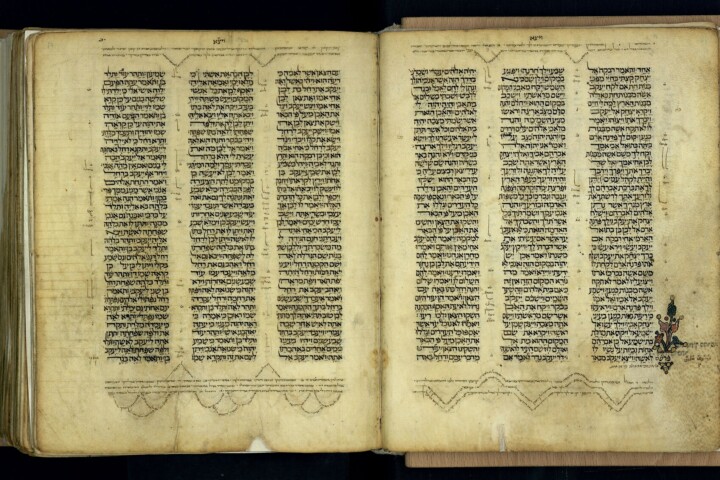
An Ideological and Improper Translation
I noticed something odd with the psalm reading at Mass the other day. Our bishops’ conference here in Canada has decreed that the Mass in English – Novus Ordo – use the ‘NRSV’, the ‘New Revised Standard Version’, an ‘updated’ translation of the original RSV, first published in 1952. This ‘new translation’ has the tendency[…]Continue reading→
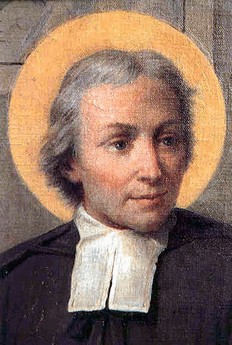
Saint Jean-Baptiste de la Salle: A Teacher for Teachers
Jean-Baptiste de la Salle (1651 – 1719), a French nobleman, ordained a priest, founded the first order in the Church’s history entirely without priests, and this came about almost by accident. I say ‘almost’, for, of course, there are no accidents with God. Destined for ordination from an early age, Jean-Baptiste never looked back, even[…]Continue reading→