
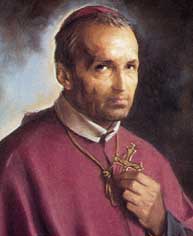
Alphonsus Ligouri, John Paul’s Institute and the Battle for Truth
Saint Alphonsus Ligouri died in 1787, two years before the unleashing of the demonic fury of the French Revolution, after a long and fruitful life as a priest, bishop, poet, musician, artist, lawyer, moral theologian, author of innumerable treatises, and, finally, one of the elite 36 Doctors of the Church. As well, he is the patron saint of moral theologians.
Born of noble lineage, he was at first destined for a military career, learning to ride and fence, but poor eyesight and asthma prompted him to switch to the more sedate career of law, degrees in which he obtained doctorates, both civil and canonical. However, at the age of 27, he admitted to a confidante, with words that bear reflection on all those pursuing a profession which all-too-often cleans out the bank accounts of those desperate in the pursuit of what should be simple and easily obtainable earthly justice:
My friend, our profession is too full of difficulties and dangers; we lead an unhappy life and run risk of dying an unhappy death.
Indeed. Thankfully for history, Alphonsus chose the priesthood, confirmed by an interior voice which said, Leave the world, and give yourself to me.
He at first joined the Oratory of Saint Philip Neri, but, at his father’s objection, began studying for the priesthood at home, and was ordained on December 21, 1726. At once, he began working with the poor and homeless youth, preaching simple and direct homilies that everyone could understand – the custom at the time was to offer God’s word in high-flowing rhetoric – and the young Father Alphonsus became immensely popular.
On November 9th, 1732, he founded the Congregation of the Most Holy Redeemer – the Redemptorists – with the object of preaching popular missions, especially to the underprivileged, fighting the heresy of Jansenism, with its strict moral code and depressing, harsh view of a punishing, vengeful God. The penitents should be treated as souls to be saved than as criminals to be punished he told his priests.
In the midst of all his responsibilities, Alphonsus, verifying that paradox that people with what seems no time make the best use of their time – he found that time to write hymns and poems for the people to the glory of God, including perhaps his most famous Tu scendi dalle stele, a very popular – and now traditional – Italian Christmas carol.
Here is Andrea Bocelli accompanying himself:
https://www.youtube.com/watch?v=ZSW4tUk5uBw
And, if you’d like a more formal version, with Luciano Pavarotti, full orchestra and children’s choir:
https://www.youtube.com/watch?v=HzU9vVK51-Y
Saint Alphonsus was on the right track, that moral truth is best presented not just with simplicity, but with beauty, for the moral life is and should be immensely attractive, which is why Pope Saint John Paul II titled his encyclical on the principles of the moral life, Veritatis Splendor, the splendour – the beauty – of truth, published in 1993 a few days after the memorial of our saint, on the feast of the Transfiguration,.
This memorial of the patron saint of moral theologians is a fitting one on which to re-visit, reflect upon, and pray for whatever is going on at John Paul II Institute in Rome. It seems the simmering war – between orthodoxy and heterodoxy, and, between the truth and the anti-truth – is now flaring out into the open, almost in apocalyptic dimensions. The Institute is a fitting arena, perhaps. For the saintly pontiff warned that the battle for good and evil, Christ and anti-Christ, for the very soul of Man, would be waged at the heart of the marriage and family, the sanctuary of human life.
Father Jose Granados, the Institute’s vice-president – fresh from witnessing the wholesale firings of colleagues with whom he has worked for years, with almost no warning, and this after apparently being promised that there would be no layoffs – has tried and continues to try to argue in good faith.
But how does one dialogue and work ‘in good faith’ with people, even those in the hierarchy, who seem no longer to believe in such a thing as ‘intrinsic evil’, the foundational truth that some actions – not just sexual sins, but lying and dishonourable conduct – are to be condemned, ‘semper et pro semper’, in John Paul II’s words, always and for always, at all times, in all circumstances, regardless of exigencies and noble intentions, with which the road to hell is rather richly paved.
Now the rumour is that they – the powers that have taken over the venerable and fruitful Institute, on which I wrote recently – after firing a plethora of fine, orthodox, intelligent professors, plan to hire Father Maurizio Chiodi, who has proclaimed publicly for all to hear that in some cases contraception and sodomy are permissible, based on the ‘reasoning’ of Amoris Laetitia‘s ambiguous Chapter 8, used for such insidious ends.
One can only wonder what Saint Alphonsus and Saint John Paul II are thinking – more to the point, what Christ, Peter and Saint Paul think – today’s parable of the good and bad fish bears much pondering. And something smells real fishy in Rome at present.
Of course, the truth will win out in the end. The Institute will lose students, wither, die, for people want the truth, that pearl of great price, and will seek it out wherever it may be found. The don’t want emotive mush, however well-packaged in esoteric and scholarly language.
There is still the John Paul II Institute in Washington, far from the current machinations at the Vatican; their tentacles may eventually reach there, perhaps; if so, to the hedges and catacombs we go, figurative or otherwise.
Stay on the side of all the saints, dear reader, all the Doctors, popes, Magisteria, all the Tradition that has gone before us, of light, truth, beauty and good. It is all there, for those eyes to see and ears to hear, and we must go, over hill and vale, thicket and narrow, winding path, where it – the whole fullness of Christ’s salvific teaching – may be found.
After all, what is life, if not an adventure?

Carney’s Amoral Majority
After five defections – euphemistically described as ‘crossing the floor’ – and three by-elections, Mark Carney and his Liberals how have their coveted majority. One wonders what bowls of pottage were offered in back-room deals. In the archaic monarchical system that is the Dominion of Canada, this majority allows the newly-minted Prime Minister to rule[…]Continue reading→

Saint Kateri , Canada’s Protectress
This was the title given to Saint Kateri Tekakwitha, by Pope Benedict XVI, when he canonized her on October 28th, 2012, along with six others, in Saint Peter’ Square (she had been beatified by Pope John Paul II back in 1980). With Saint Joseph as our protector, along with the Canadian martyrs, we seem to[…]Continue reading→

A Tale of Two Benedicts
A grace-filled Holy Week to all our readers! As we await and prepare for the Resurrection about to dawn upon us, we might keep in mind two Benedicts: Pope Emeritus Benedict XVI, requiescat in pace, elected on this day in 2005; and today’s commemoration of the mystic pilgrim, Benedict Joseph Labre, who died on this[…]Continue reading→

My Name is Bernadette
April 16th is a propitious day, for besides the anniversary of Father de Valk’s death, who founded Catholic Insight in its print form decades ago, and the commemoration of the ‘two Benedicts’, mentioned in accompanying posts, today we also recall Saint Bernadette Soubirous, the young visionary to whom the Virgin Mary appeared numerous times at[…]Continue reading→

Saint Lydwina of Schiedam and Suffering Joyfully
Saint Lydwina of Schiedam (1380 – 1433) was one of the countless and glorious ‘victim souls’ in the history of the Church, those whose lives are filled with suffering, often of an unimaginable intensity, but who suffer joyfully. She was a fifteen-year old Dutch girl, out skating one day, when she fell and broke one[…]Continue reading→

The Glorious Martyrdoms of Martin and Maximus
As we enter into Eastertide, we recall on this 13th of April Pope Saint Martin I (+655), one of the noblest, if most tragic, of the successors of Saint Peter. Born in Umbria, Italy, he was of noble lineage, with great intelligence combined with charity and love of the poor and the Church. While still[…]Continue reading→

Saint Stanislaus of Szczepanów
We celebrate Saint Stanislaus today (+ April 11, 1079), in light of this Easter Octave, a bishop and martyr who accepted the episcopacy only at the direct order of Pope Alexander II. He proved a wise and courageous leader of his flock, put to death by his own king, Boleslaus, for rebuking the monarch’s ‘immoral[…]Continue reading→
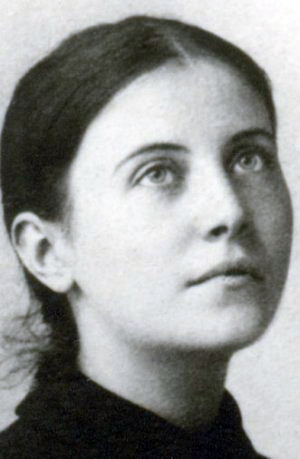
Saint Gemma Galgani
On this April 11th, in 1903 – the same year that the Italian Guiseppe Sarto was elected Pope later that summer as Pius X – a lovely, young Italian woman died, by the name of Gemma Galgani. She lived a brief life of 24 years, as did a number of other young saints, including Pier[…]Continue reading→
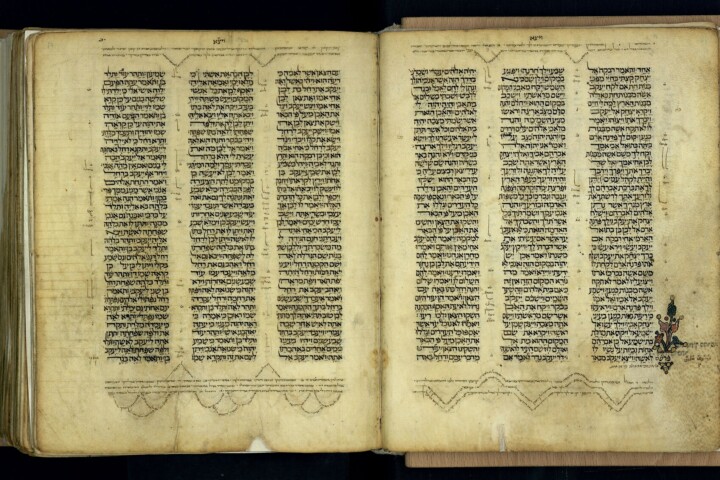
An Ideological and Improper Translation
I noticed something odd with the psalm reading at Mass the other day. Our bishops’ conference here in Canada has decreed that the Mass in English – Novus Ordo – use the ‘NRSV’, the ‘New Revised Standard Version’, an ‘updated’ translation of the original RSV, first published in 1952. This ‘new translation’ has the tendency[…]Continue reading→
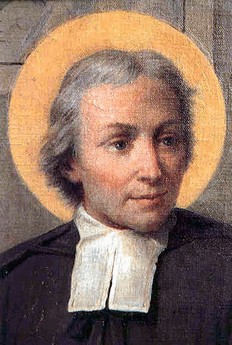
Saint Jean-Baptiste de la Salle: A Teacher for Teachers
Jean-Baptiste de la Salle (1651 – 1719), a French nobleman, ordained a priest, founded the first order in the Church’s history entirely without priests, and this came about almost by accident. I say ‘almost’, for, of course, there are no accidents with God. Destined for ordination from an early age, Jean-Baptiste never looked back, even[…]Continue reading→