
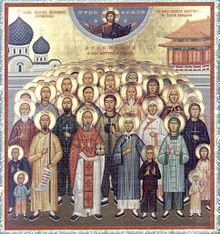
God and the Church in Godless China
Today is the feast of the Chinese martyrs, Augustine Zhao Rang and his companions, hundreds of Catholics (along with many Orthodox and Protestants) put to death for their faith, often in brutal ways, from the 17th to 20th centuries. Ironically, the first official martyrdom, of the Dominican priest Father Francisco de Capillas, was on January 15th, 1648, the same year that the Treaty (or, rather, treaties) of Westphalia were signed, which supposedly instantiated the modern era of ‘religious freedom’ under the rather limited principle of cuius regio, eius religio, that the religion of the prince was the religion of the State (with persecution of ‘heretics’, defined by the prince, still broadly allowed). The only real heretic, of course, is one who divides himself from the one, true religion, but, sadly, the pagan emperors saw Catholics as ‘heretics’ disturbing the peace and order of their own realm, and tried to stamp out the religion which they saw as a rival to their own power (see the words of John Paul II on totalitarianism, which I quoted recently on the Martyrs of Rome under Nero and the Roman emperors).
In the Jubilee year 2000On October 1st – the feast of Sainte Therese of Lisieux, who dedicated her prayers as a Carmelite to the missions in China – Pope John Paul canonized 119 martyrs by name, but there were hundreds, even thousands, of others, known to God, and such persecution continues. The days are now upon us wherein we too must stand for the truth, and suffer what martyrdom God may send.
Even though Pope Benedict XVI in 2008 declared May 24th as the world day of prayer for the Church in China, composing a special prayer through the intercession of Our Lady of Shesan, under Mary’s role as ‘Help of Christians’- any day is a good day to pray for the besieged Church, not least this day’s feast.
The Church in China is in a troubled state, especially since the long march of Communism under Chairman Mao, who, like so many other nations, established a Marxist government in China in 1949, to disastrous effect, with untold millions displaced and murdered. Soon afterwards, in 1957, Mao, as part of the Communist credo to control all aspects of the lives of its ‘citizens’, also established a government-sanctioned-and-controlled ‘Catholic’ Church (officially, the ‘Chinese Patriotic Catholic Association’), whose bishops and priests would be chosen by, report to and work for the Party. Those who remained faithful to Rome were and still are persecuted.
The history of Catholicism in China is a long and complex one, dating back to the 13th century, and the Franciscan missionaries who first evangelized the vast nation, with a rich and complex culture of its own. Highly educated Jesuits such as Matteo de Ricci brought the Faith to the highest echelons of society in the 16th century, and the Church maintained a small but tenacious hold in the vast nation, until the persecutions in the 19th century, when the various dynastic emperors, invoking obscure and vague laws against ‘superstitions’, strove to crush the Church which they thought undermined their absolute and, to their minds divine, authority, as the Communists do today.
In the past two centuries, there have been an untold numbers of martyrs, whose blood, as Tertullian wrote in the third century, is the seed of Christianity. Though small in number, the Catholics in China were exemplary in their fidelity and sacrifice, walking many miles to attend Mass, in the midst of great suffering and even the fear of death. Saint Augustine Zhao Rong was himself a Chinese soldier deputed to escort Catholics to prison, including the Monsignor Gabriel-Taurin Dufresse, who was later executed on the feast of the Triumph of the Cross, September 14, 1815. Augustine – his adopted name – himself converted to Catholicism, was ordained a priest, and followed the bishop to martyrdom, along with many others, in the same year when, back in France, Napoleon, ‘master of the world’, was to meet his Waterloo. God bides His time, but His time does arrive, as it will for China.
Would that more of us occidental, and all-too-accidental, Catholics, with our debilitating ho-hum attitude about the Holy Sacrifice, gain even a drop of that same oriental zeal. Nothing like a good persecution and a dose of suffering to discover what we really value.
After Mao’s assumption of power, the Church and Catholics faithful to Rome went underground, resulting in the two ‘Churches’ in China, each with its own bishops and priests: the above ground ‘official’ one, whose bishops are chosen by the government and illicitly ordained, with sermons carefully monitored by governmental agents; and the hidden, but true, Church, whose bishops and priests have been ordained lawfully, but usually secretly, celebrating Mass and the rest of the sacraments in homes, waysides and wherever they are able.
Pope Francis has tried to reach a rapprochement with the government, to bring the two ‘Churches’ into unity. Yet one wonders how far can he go to find a compromise, without compromising what is essential to the Faith, especially with advisers such as Bishop Marcelo Sanchez Sarondo, chancellor of the Pontifical Academy for Social Sciences, who seems to think China some Platonic ideal of social justice? One may perplex over how this jibes with Pius XI’s doctrinal conclusion that communism and socialism are ‘intrinsically evil’, and in no way compatible with Catholic – which is to say reasonable and sane – social principles. The rather aptly-named Cardinal Zen, former head of the Church in Hong Kong, going through its own travails with the Communist overlords, has not minced words, calling the agreement a ‘betrayal’, whether a witting or not. Time and events will tell, but with the continued persecution of Catholics and demolition of churches, the signs are not auspicious.
The main question for the Church swirls around the choice of bishops, and it has always been Rome’s prerogative, ever since the investiture controversy of the 12th century, that the choice of bishops must ultimately be the Holy Father’s. For he who controls the bishops, in the end controls the Church. To relinquish that right would, as Cardinal Zen never tires of pointing out, spell the demise of the Church in an Erastian morass of Communist complaisance, ignoring the decades of sacrifice of faithful Christians, who have done yeoman’s work in holding the Church together, loyal to the Vicar of Christ and, hence, to Christ Himself.
Father Raymond de Souza recently wrote that China humiliates others ‘because it can’, but I’m not so sure. There is a method to their apparent caprice; as followers of Marx, Lenin and Stalin, Xi Jinping and his Communists know that they must break the will of those under them, to make them compliant, and make them realize that resistance is futile.
But is it? From the world’s eyes, there may be failure – the destruction of lives, churches, communities – but God brings far greater good therefrom, and, whatever current compromises are written into the ‘secret’ Vatican concordat, we may yet see the Church in China rise to great glory. There are over a billion souls in China, so the future of the Church universal hinges to some large degree what happens in that vast and complex nation.
So we pray, and offer our own sacrifices for those Christians, for the Church, for the world, that good counsel may reign in Rome, that God’s holy will be done as best it can in the constraints of this life.
Our Lady of Shesan, ora pro nobis!
Our Lady, Help of Christians, ora pro nobis!
Holy Martyrs of China, orate pro nobis!
Carney’s Amoral Majority
After five defections – euphemistically described as ‘crossing the floor’ – and three by-elections, Mark Carney and his Liberals how have their coveted majority. One wonders what bowls of pottage were offered in back-room deals. In the archaic monarchical system that is the Dominion of Canada, this majority allows the newly-minted Prime Minister to rule[…]Continue reading→

Saint Kateri , Canada’s Protectress
This was the title given to Saint Kateri Tekakwitha, by Pope Benedict XVI, when he canonized her on October 28th, 2012, along with six others, in Saint Peter’ Square (she had been beatified by Pope John Paul II back in 1980). With Saint Joseph as our protector, along with the Canadian martyrs, we seem to[…]Continue reading→
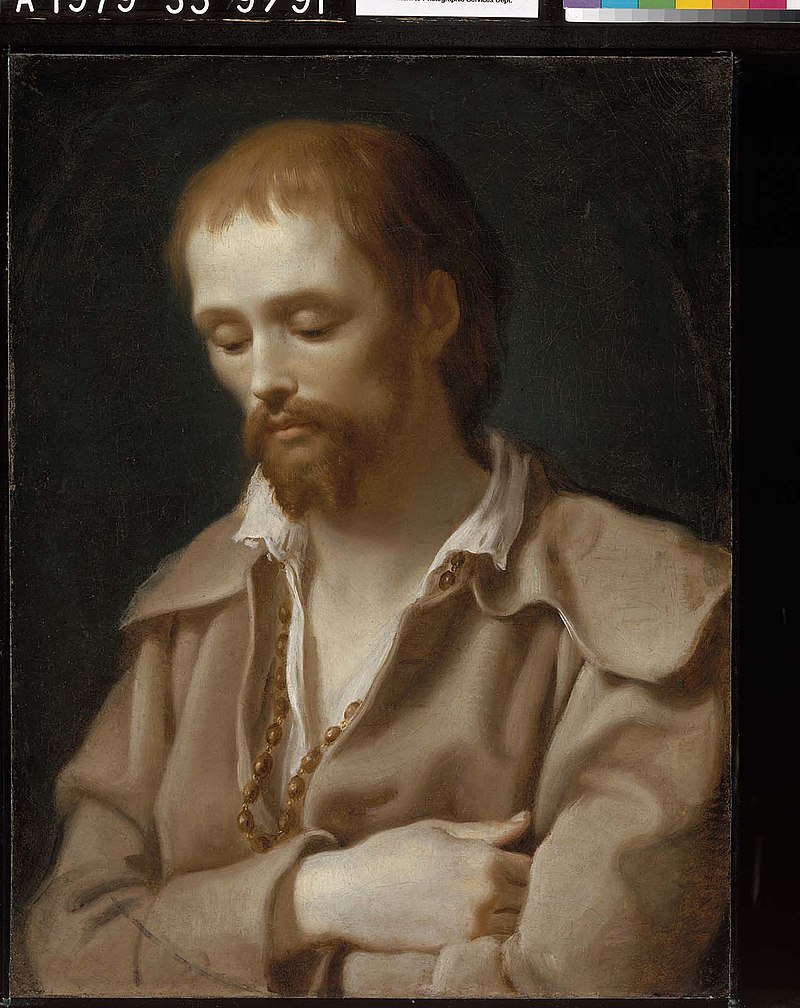
A Tale of Two Benedicts
A grace-filled Holy Week to all our readers! As we await and prepare for the Resurrection about to dawn upon us, we might keep in mind two Benedicts: Pope Emeritus Benedict XVI, requiescat in pace, elected on this day in 2005; and today’s commemoration of the mystic pilgrim, Benedict Joseph Labre, who died on this[…]Continue reading→

My Name is Bernadette
April 16th is a propitious day, for besides the anniversary of Father de Valk’s death, who founded Catholic Insight in its print form decades ago, and the commemoration of the ‘two Benedicts’, mentioned in accompanying posts, today we also recall Saint Bernadette Soubirous, the young visionary to whom the Virgin Mary appeared numerous times at[…]Continue reading→
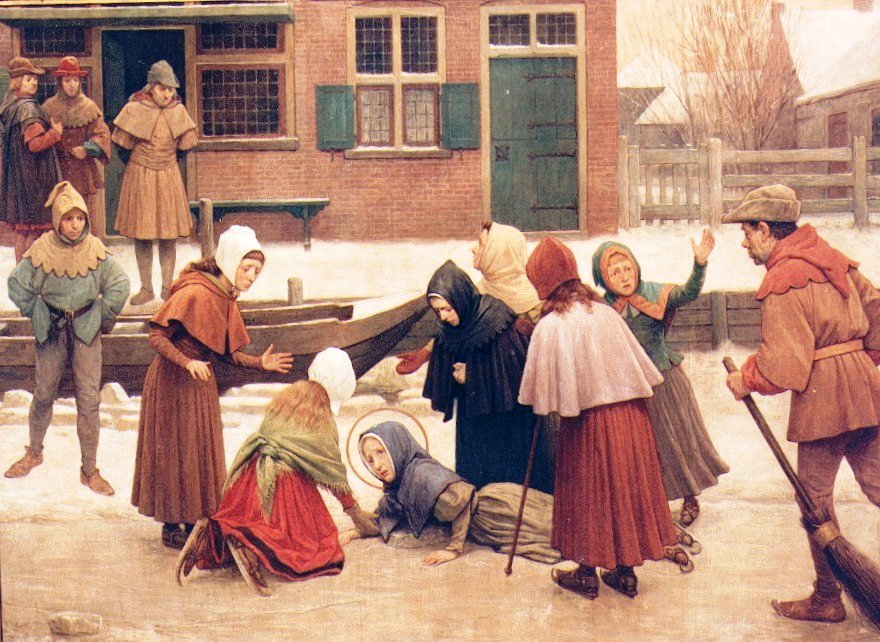
Saint Lydwina of Schiedam and Suffering Joyfully
Saint Lydwina of Schiedam (1380 – 1433) was one of the countless and glorious ‘victim souls’ in the history of the Church, those whose lives are filled with suffering, often of an unimaginable intensity, but who suffer joyfully. She was a fifteen-year old Dutch girl, out skating one day, when she fell and broke one[…]Continue reading→
The Glorious Martyrdoms of Martin and Maximus
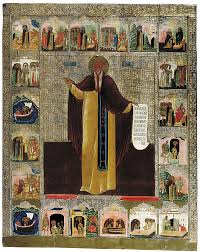
As we enter into Eastertide, we recall on this 13th of April Pope Saint Martin I (+655), one of the noblest, if most tragic, of the successors of Saint Peter. Born in Umbria, Italy, he was of noble lineage, with great intelligence combined with charity and love of the poor and the Church. While still[…]Continue reading→

Saint Stanislaus of Szczepanów
We celebrate Saint Stanislaus today (+ April 11, 1079), in light of this Easter Octave, a bishop and martyr who accepted the episcopacy only at the direct order of Pope Alexander II. He proved a wise and courageous leader of his flock, put to death by his own king, Boleslaus, for rebuking the monarch’s ‘immoral[…]Continue reading→
Saint Gemma Galgani
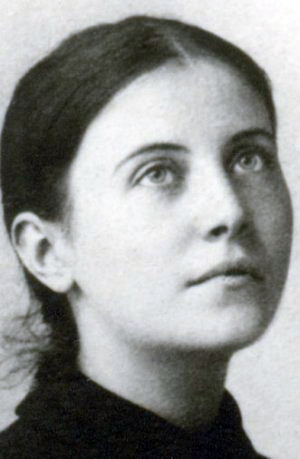
On this April 11th, in 1903 – the same year that the Italian Guiseppe Sarto was elected Pope later that summer as Pius X – a lovely, young Italian woman died, by the name of Gemma Galgani. She lived a brief life of 24 years, as did a number of other young saints, including Pier[…]Continue reading→
An Ideological and Improper Translation
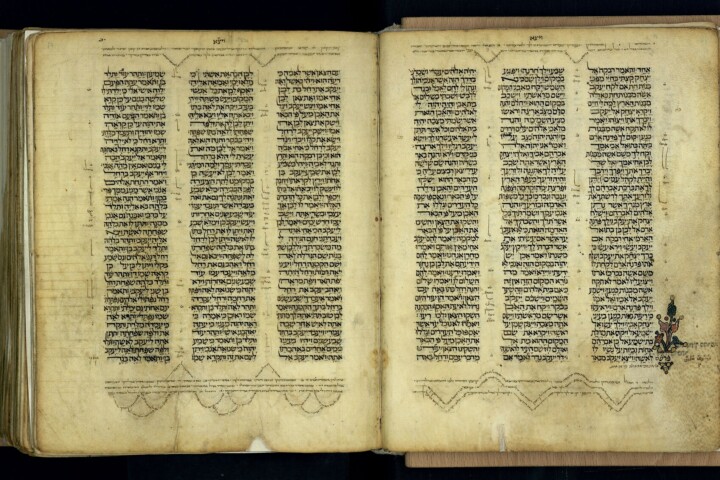
I noticed something odd with the psalm reading at Mass the other day. Our bishops’ conference here in Canada has decreed that the Mass in English – Novus Ordo – use the ‘NRSV’, the ‘New Revised Standard Version’, an ‘updated’ translation of the original RSV, first published in 1952. This ‘new translation’ has the tendency[…]Continue reading→
Saint Jean-Baptiste de la Salle: A Teacher for Teachers
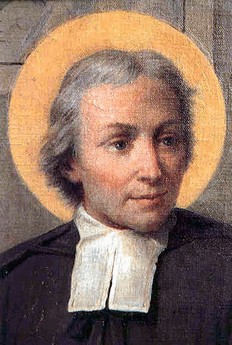
Jean-Baptiste de la Salle (1651 – 1719), a French nobleman, ordained a priest, founded the first order in the Church’s history entirely without priests, and this came about almost by accident. I say ‘almost’, for, of course, there are no accidents with God. Destined for ordination from an early age, Jean-Baptiste never looked back, even[…]Continue reading→