
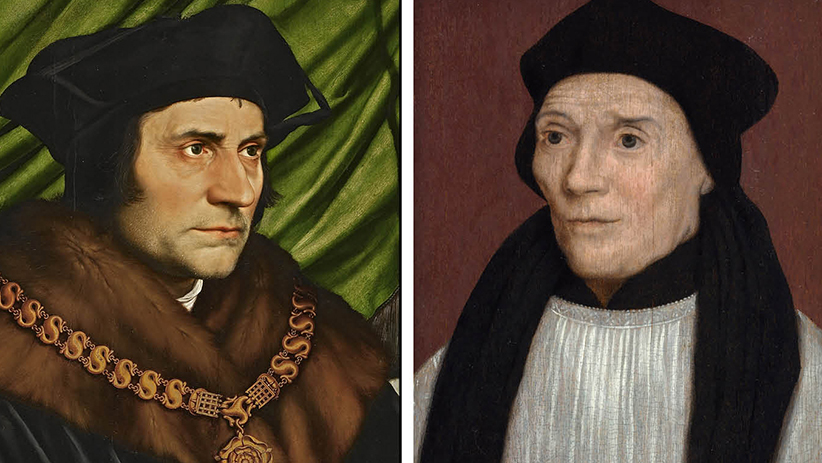
More and Fisher: Signs for our Times
Today we commemorate Saint Thomas More, husband, father, lawyer, sometime chancellor of England, martyred in 1535 along with his compatriot Saint John Fisher, Bishop of Rochester and cardinal of the Church, who is remembered today also. In fact, although More’s head went under the headsman’s axe on July 6, it was Fisher who was put to death on this day, when they are both remembered. I suppose Cardinals first, Chancellors, second.
Both saints are martyrs of conscience (as are all martyrs, really, as John Paul II made clear in Veritatis Splendor) – put to death in odium fidei, in hatred of the Faith. More’s case made famous in the 1954 play by Robert Bolt, and the 1966 film, the martyr portrayed in immemorial fashion by the great Paul Scofield.
Thomas More saw the need for law, human law, but especially the divine law of God as embodied and instantiated in the Catholic Church, upon which all human law is – or should be – based. Without law, conscience becomes something unhinged and, ultimately, destructive. His sharp mind and soul perceived, at least in inchoate fashion, the hell that would be unleashed by his King, Henry VIII, in making conscience a purely subjective matter – the will of the King is the law, in Machiavellian fashion.
Most did not see, or refused to see, the evil. Every bishop in the land acquiesced to the King, signing the sacrilegious Oath of Supremacy – that Henry was ‘head of the Church in England’ – except one: The indomitable John Fisher, whose saintly ascetical life and courageous example should be a model for our bishops through the ages. He never rested easy: A learned and prayerful man, when past the age of fifty, although fluent in Latin, he thought he should learn Greek, so as to better understand Scripture – the wave of humanistic studies was waxing strong. As the Chinese adage has it, the best time to plant a tree is twenty years ago; the second best time, is today. And what holds for trees, holds for Greek (and the violin, as I am discovering).
Fisher also saw through the King’s machinations, which Henry could not stand: While in prison, Pope Paul III made the good bishop a cardinal, to which Henry replied, and I paraphrase from memory: Let the Pope send him the red hat, for head he shall have none to wear it! And, sure enough, John Fisher was beheaded on this day in 1535, going gallantly to his God.
Soon after Henry’s schism, we would have the Peace of Augsburg (1555), which enshrined the principle of cuius regio, eius religio, more or less, the religion of the prince is the religion of the land and, by extension, the people. Which means in practice that the prince can do more or less whatever he pleases. The rest of the hoi polloi would just have to follow along, under the deformed and seared conscience of the King, led along, in Henry’s case, by his lust and ambition. Merrie England, after Henry had separated from the Church, dissolved the monasteries, murdered or dispersed the monks and hoarded their wealth, was not so merrie; in fact, it became very sad, impoverished, even ruined, island, the churches ransacked, beggary and immorality rife, with a very few, very rich ignoble men ensuring that Catholicism would never return.
We are still living through the rippling and deleterious effects of the momentous rift begun with the schism of ‘King Harry’. As the future Pope Leo XIII would put it, without the one, true religion, no society can be well governed, and the further we drift from the Church, the worse off things will be.
The whole case of Henry’s quest for an annulment seems rather quaint to us now. If he had asked for his marriage to Catherine of Aragon to be declared null and void in today’s milieu, it would likely be handed to him on a silver platter, instead of the heads of More and Fisher.
But law is law, and marriage, marriage, and the Church, the Church. They all bind us in conscience in whatever age in which we live, as More so rightly and wisely saw. As he declared to his son-in-law Roper, who wanted to mow down the law to rebel against the King and his heinous henchmen:
William Roper: So, now you give the Devil the benefit of law!
Sir Thomas More: Yes! What would you do? Cut a great road through the law to get after the Devil?
William Roper: Yes, I’d cut down every law in England to do that!
Sir Thomas More: Oh? And when the last law was down, and the Devil turned ’round on you, where would you hide, Roper, the laws all being flat? This country is planted thick with laws, from coast to coast, Man’s laws, not God’s! And if you cut them down, and you’re just the man to do it, do you really think you could stand upright in the winds that would blow then? Yes, I’d give the Devil benefit of law, for my own safety’s sake!
The ‘benefit of law’. There is more to be said on that, but, for now, let us recall the witness of these two glorious martyrs, and the countless souls who would give their blood for the one true Faith, in England, and across the world.
Saints Thomas More and John Fisher, orate pro nobis!

Carney’s Amoral Majority
After five defections – euphemistically described as ‘crossing the floor’ – and three by-elections, Mark Carney and his Liberals how have their coveted majority. One wonders what bowls of pottage were offered in back-room deals. In the archaic monarchical system that is the Dominion of Canada, this majority allows the newly-minted Prime Minister to rule[…]Continue reading→

Saint Kateri , Canada’s Protectress
This was the title given to Saint Kateri Tekakwitha, by Pope Benedict XVI, when he canonized her on October 28th, 2012, along with six others, in Saint Peter’ Square (she had been beatified by Pope John Paul II back in 1980). With Saint Joseph as our protector, along with the Canadian martyrs, we seem to[…]Continue reading→
A Tale of Two Benedicts
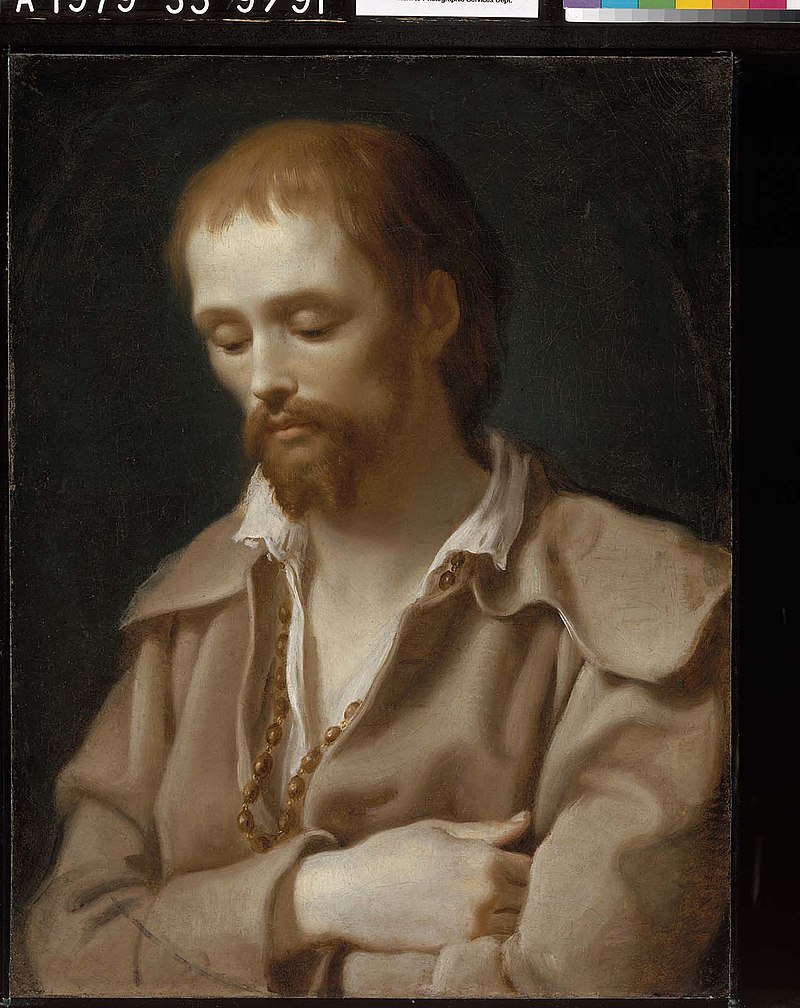
A grace-filled Holy Week to all our readers! As we await and prepare for the Resurrection about to dawn upon us, we might keep in mind two Benedicts: Pope Emeritus Benedict XVI, requiescat in pace, elected on this day in 2005; and today’s commemoration of the mystic pilgrim, Benedict Joseph Labre, who died on this[…]Continue reading→

My Name is Bernadette
April 16th is a propitious day, for besides the anniversary of Father de Valk’s death, who founded Catholic Insight in its print form decades ago, and the commemoration of the ‘two Benedicts’, mentioned in accompanying posts, today we also recall Saint Bernadette Soubirous, the young visionary to whom the Virgin Mary appeared numerous times at[…]Continue reading→
Saint Lydwina of Schiedam and Suffering Joyfully
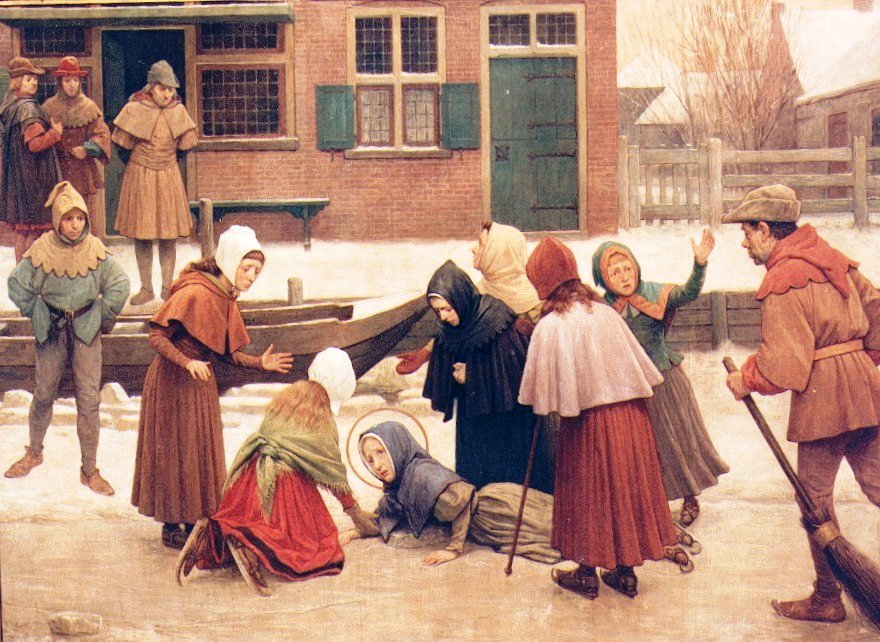
Saint Lydwina of Schiedam (1380 – 1433) was one of the countless and glorious ‘victim souls’ in the history of the Church, those whose lives are filled with suffering, often of an unimaginable intensity, but who suffer joyfully. She was a fifteen-year old Dutch girl, out skating one day, when she fell and broke one[…]Continue reading→
The Glorious Martyrdoms of Martin and Maximus
As we enter into Eastertide, we recall on this 13th of April Pope Saint Martin I (+655), one of the noblest, if most tragic, of the successors of Saint Peter. Born in Umbria, Italy, he was of noble lineage, with great intelligence combined with charity and love of the poor and the Church. While still[…]Continue reading→

Saint Stanislaus of Szczepanów
We celebrate Saint Stanislaus today (+ April 11, 1079), in light of this Easter Octave, a bishop and martyr who accepted the episcopacy only at the direct order of Pope Alexander II. He proved a wise and courageous leader of his flock, put to death by his own king, Boleslaus, for rebuking the monarch’s ‘immoral[…]Continue reading→
Saint Gemma Galgani
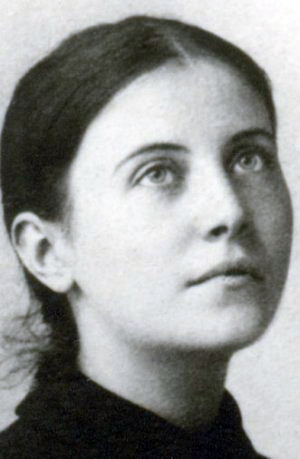
On this April 11th, in 1903 – the same year that the Italian Guiseppe Sarto was elected Pope later that summer as Pius X – a lovely, young Italian woman died, by the name of Gemma Galgani. She lived a brief life of 24 years, as did a number of other young saints, including Pier[…]Continue reading→
An Ideological and Improper Translation
I noticed something odd with the psalm reading at Mass the other day. Our bishops’ conference here in Canada has decreed that the Mass in English – Novus Ordo – use the ‘NRSV’, the ‘New Revised Standard Version’, an ‘updated’ translation of the original RSV, first published in 1952. This ‘new translation’ has the tendency[…]Continue reading→
Saint Jean-Baptiste de la Salle: A Teacher for Teachers
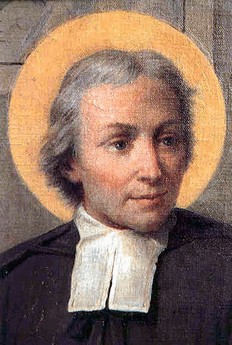
Jean-Baptiste de la Salle (1651 – 1719), a French nobleman, ordained a priest, founded the first order in the Church’s history entirely without priests, and this came about almost by accident. I say ‘almost’, for, of course, there are no accidents with God. Destined for ordination from an early age, Jean-Baptiste never looked back, even[…]Continue reading→