
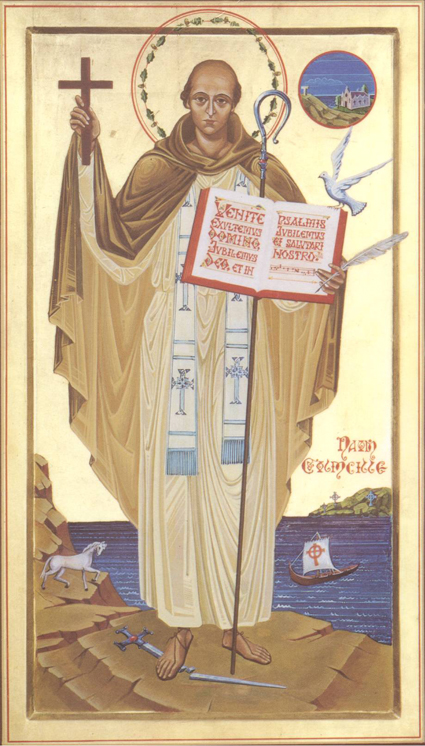
An Irish Monk in Scotland
If it ’twere not Pentecost Sunday – the second highest liturgical celebration in the Church’s calendar (see Pater Ignotus’ reflection), and a blessed one indeed to all our readers – we would ordinarily celebrate in our particular diocese today the feast of Saint Columbkille (521-597), an Irish monk from Donegal on the wild west coast of the emerald isle, whose Gaelic name means ‘dove of the Church’, a name which does not, ironically, fit either his historical appearance or demeanour. Columbkille is described as being of huge stature, with a strong, athletic build and a booming, melodious voice that could carry across hill and dale; he was also, apparently, an impetuous man of strong convictions, being involved, even helping to instigate, a minor war over the ownership of a manuscript he had copied from Saint Finnian, who wanted it back. An early case of copyright dispute (everything old is new again!), and those monks certainly treasured their writing. The details are obscure, but a number of men were killed, for which Columbkille felt deep repentance. The saint was also involved in an apparently more legitimate struggle with the local chieftain King Diarmait over the violation of sanctuary laws.
Columbkille was going to be excommunicated, a sentence which was commuted to exile, providentially so, for he sailed across the Irish Sea in a leather boat with twelve companions, and landed on Iona, a beautiful, small grassy island on the west of Scotland, just across from the much-larger Isle of Mull, where he set up the famous monastery, whose ruins still stand, after its destruction under the plundering iconoclasm of Henry VIII, now rebuilt, with perhaps somewhat lesser glory.
So it was an Irishman who brought the Catholic faith to Scotland, a fitting saint for this writer, born in Scotland, but of Irish lineage. I went on a personal pilgrimage to Iona years ago, standing on the very beach where Columbkille may have landed; looking down, I noticed all the stones were of a curious green tinge, and had this thought – Irish as I am – that they turned that colour when the Irish monk set his sandalled foot upon the shore. Columbkille was a missionary, a diplomat, a poet and, all in all, a saint, his early Gaelic temper apparently tempered, so that his reputation for holiness went far and wide. He rarely left Scotland, only twice, and was buried in the abbey on that green jewel of Iona where he had spent most of his life.
Both Scotland and Ireland need a good dose of re-evangelization, but the seeds of the faith, even in the very bones and relics of all those priests, monks, nuns and laity who carried the Faith for all those centuries until the rupture and upheaval of the ‘Reformation’. But there is hope that what once was can be again, even if only in a small, hidden way. That is how the Faith began, and that may be likely how it will be in the end.
Saint Columbkille, and all Irish and Scottish saints of yore, orate pro nobis!
Carney’s Amoral Majority
After five defections – euphemistically described as ‘crossing the floor’ – and three by-elections, Mark Carney and his Liberals how have their coveted majority. One wonders what bowls of pottage were offered in back-room deals. In the archaic monarchical system that is the Dominion of Canada, this majority allows the newly-minted Prime Minister to rule[…]Continue reading→

Saint Kateri , Canada’s Protectress
This was the title given to Saint Kateri Tekakwitha, by Pope Benedict XVI, when he canonized her on October 28th, 2012, along with six others, in Saint Peter’ Square (she had been beatified by Pope John Paul II back in 1980). With Saint Joseph as our protector, along with the Canadian martyrs, we seem to[…]Continue reading→
A Tale of Two Benedicts
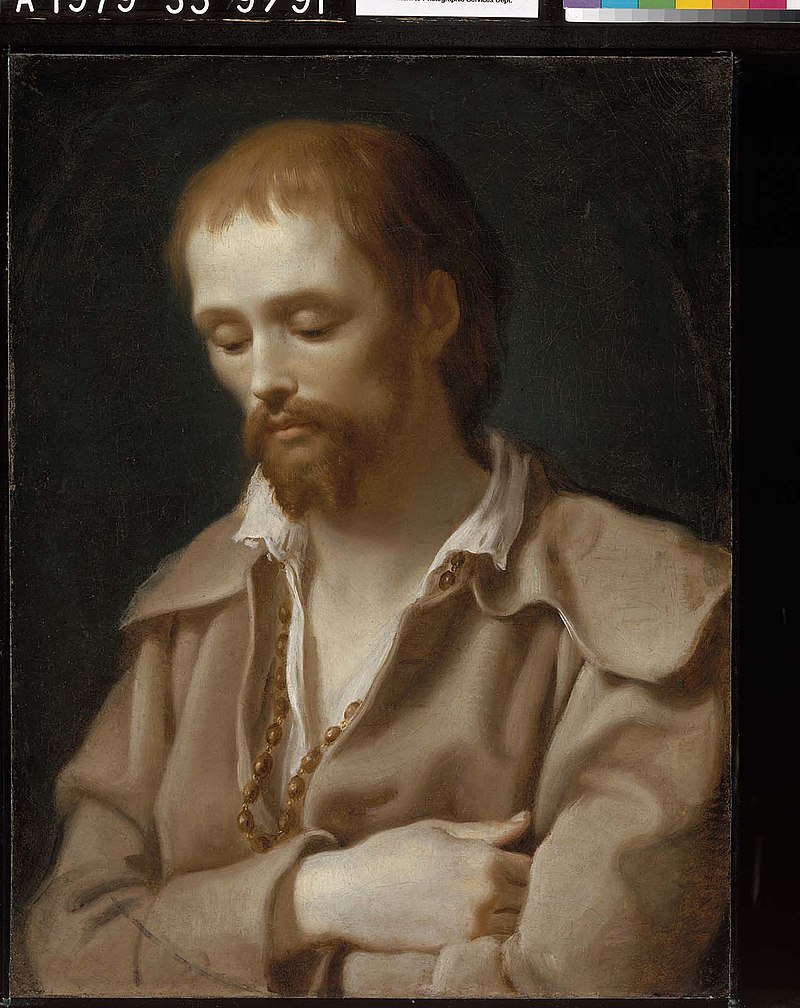
A grace-filled Holy Week to all our readers! As we await and prepare for the Resurrection about to dawn upon us, we might keep in mind two Benedicts: Pope Emeritus Benedict XVI, requiescat in pace, elected on this day in 2005; and today’s commemoration of the mystic pilgrim, Benedict Joseph Labre, who died on this[…]Continue reading→

My Name is Bernadette
April 16th is a propitious day, for besides the anniversary of Father de Valk’s death, who founded Catholic Insight in its print form decades ago, and the commemoration of the ‘two Benedicts’, mentioned in accompanying posts, today we also recall Saint Bernadette Soubirous, the young visionary to whom the Virgin Mary appeared numerous times at[…]Continue reading→
Saint Lydwina of Schiedam and Suffering Joyfully
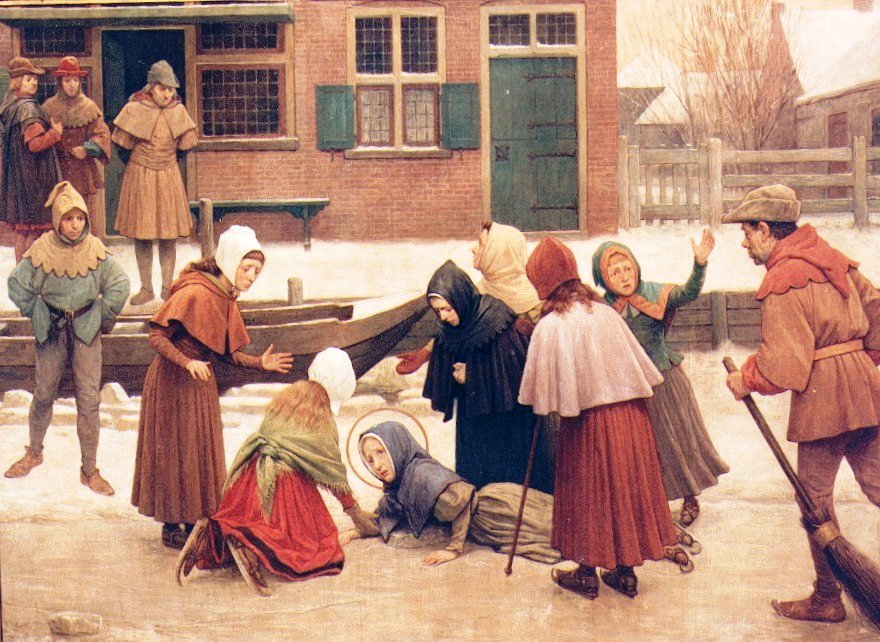
Saint Lydwina of Schiedam (1380 – 1433) was one of the countless and glorious ‘victim souls’ in the history of the Church, those whose lives are filled with suffering, often of an unimaginable intensity, but who suffer joyfully. She was a fifteen-year old Dutch girl, out skating one day, when she fell and broke one[…]Continue reading→
The Glorious Martyrdoms of Martin and Maximus
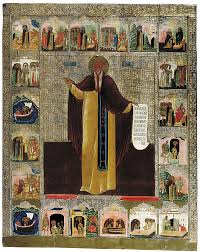
As we enter into Eastertide, we recall on this 13th of April Pope Saint Martin I (+655), one of the noblest, if most tragic, of the successors of Saint Peter. Born in Umbria, Italy, he was of noble lineage, with great intelligence combined with charity and love of the poor and the Church. While still[…]Continue reading→

Saint Stanislaus of Szczepanów
We celebrate Saint Stanislaus today (+ April 11, 1079), in light of this Easter Octave, a bishop and martyr who accepted the episcopacy only at the direct order of Pope Alexander II. He proved a wise and courageous leader of his flock, put to death by his own king, Boleslaus, for rebuking the monarch’s ‘immoral[…]Continue reading→
Saint Gemma Galgani
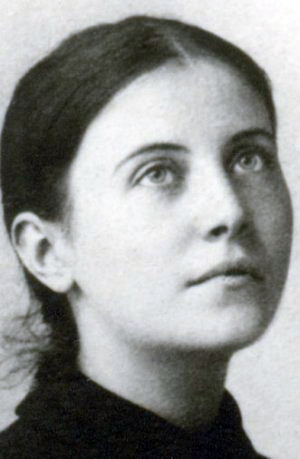
On this April 11th, in 1903 – the same year that the Italian Guiseppe Sarto was elected Pope later that summer as Pius X – a lovely, young Italian woman died, by the name of Gemma Galgani. She lived a brief life of 24 years, as did a number of other young saints, including Pier[…]Continue reading→
An Ideological and Improper Translation
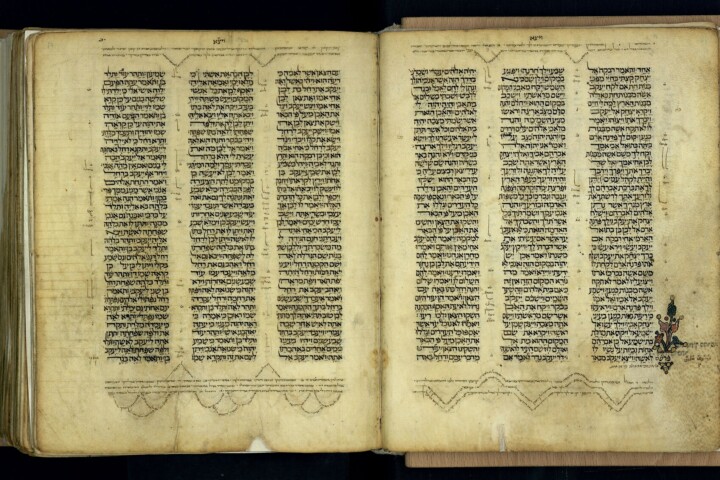
I noticed something odd with the psalm reading at Mass the other day. Our bishops’ conference here in Canada has decreed that the Mass in English – Novus Ordo – use the ‘NRSV’, the ‘New Revised Standard Version’, an ‘updated’ translation of the original RSV, first published in 1952. This ‘new translation’ has the tendency[…]Continue reading→
Saint Jean-Baptiste de la Salle: A Teacher for Teachers
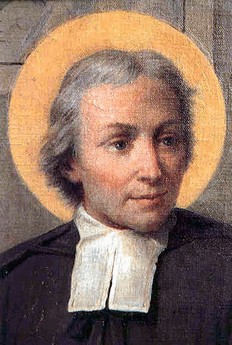
Jean-Baptiste de la Salle (1651 – 1719), a French nobleman, ordained a priest, founded the first order in the Church’s history entirely without priests, and this came about almost by accident. I say ‘almost’, for, of course, there are no accidents with God. Destined for ordination from an early age, Jean-Baptiste never looked back, even[…]Continue reading→