
Western Schism, Redivivus?
There is no easy solution to the present crisis in the Catholic Church, which is a crisis of faith, of doctrine, of morals and metaphysics, of soteriology and eschatology, all of which transcend Pope Francis, along with his cardinals, confidants and counsellors. One need only look at the near-total rejection of Humanae Vitae and other core moral principles, at least in practise, as well as the scale of sacerdotal scandals in the Western hemisphere – to take but two tragic cases amongst many – to see that the morass in which we find ourselves has deep roots, whose bitter fruit is now being borne.
One might argue – and many do – that Pope Francis, whatever his ultimate ‘agenda’, is making a bad situation worse. But what is to be done? Pace the thought experiments of Saint Robert Bellarmine and others about ‘heretical Popes’, who have thus far never appeared, those pondering a quasi-Magisterial mutiny – even for the best of intentions, to ‘save’ the Church – should ponder historical precedent, and should reflect well before taking a step of no return.
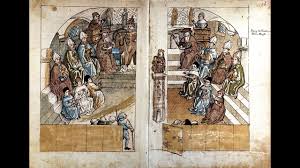
On June 5th, 1305, the cardinals elected a Frenchman, the Archbishop of Rouen– Rome at this point in history was a fetid swamp – the Pope moved from Rome to the papal fief of Avignon in southern France, an exile which last for nearly a biblical 70 years, until 1376. The Popes during that time were all Frenchmen, compliantly under the thumb of the French King, Philip le Bel – with they and their courtiers wallowing in the delights of the French court. When Pope Gregory XI eventually returned to Rome, at the urging of Saint Catherine of Siena, the cardinals, upon his death, were determined elect a Roman, or at least an Italian.
The conclave of the fateful year 1378 was therefore held under some duress, with the populace of Rome demanding one of their own, and literally pounding on the doors. Unable to find a viable candidate from the Eternal City, the cardinals in April of 1378 elected the Neapolitan Archbishop of Bari, Bartolomeo Prignani, who took the name Urban VI. As a cardinal, Prignani had been a competent and well-like administrator, but the power of the papacy seems to have turned his head, and, as Pope, he manifested as a reformist, suspicious, domineering and prone to violent outbursts of temper, in a word, unbearable. A number of cardinals regretted their choice, thought they could declare his election null and void, and elect another Pope.
So, with Urban still reigning, a majority of them decamped to Anagni, about 40 miles from Rome, and, in September 20th of the same year, elected the more compliant and agreeable (to them) – and, of course, French – Robert of Geneva, who took the name Clement VII, and promptly moved his ‘papal’ court to Avignon.
As might have been expected, Urban refused to consider himself deposed, and Clement considered himself legitimately elected, and so began the scandal of the Great Western Schism, which came near to destroying the Church (impossible, of course) as well as European civilization (eminently possible).
A quasi-Council in Pisa in 1409 attempted to resolve the issue by deposing both Popes (by this time, Benedict XIII and Gregory XII, as both the Roman and the Anagnian lines had continued to elect successors), claiming both ‘Popes to be ‘schismatical, heretical, perjured and scandalous’ – sounds sort of familiar – and elected yet another Pope, Peter of Candia, who took the name Alexander V.
Now there were three ‘Popes’, all claiming full and legitimate authority, and the evils of this mess rippled through Christendom, dividing Catholics far and wide, far worse than whatever evils precipitated it.
The confusion was only solved at the Council of Constance in 1415 when, as history and our Catholic faith now attest, he who turned out to be the legitimate Pope, Gregory XII, the successor of the cardinals’ original choice in Rome, the irascible Urban VI back in the summer of 1378, declared the Council itself lawful, and then resigned, the last papal resignation until Benedict XVI’s in February of 2013. The assembled cardinals then elected – legitimately, as the seat of the Pope was now vacant – Otto Colonna as Pope Martin V.
The Church eventually clarified that cardinals, bishops, even gathered in ‘Council’, are not superior to the Pope, who holds ‘supreme, full, and universal’ power (potestas): Here is the relevant passage from the Church’s own Constitution, (cf., Lumen Gentium, par. 22), worth quoting in full:
But the college or body of bishops has no authority unless it is understood together with the Roman Pontiff, the successor of Peter as its head. The pope’s power of primacy over all, both pastors and faithful, remains whole and intact. In virtue of his office, that is as Vicar of Christ and pastor of the whole Church, the Roman Pontiff has full, supreme and universal power over the Church. And he is always free to exercise this The order of bishops, which succeeds to the college of apostles and gives this apostolic body continued existence, is also the subject of supreme and full power over the universal Church, provided we understand this body together with its head the Roman Pontiff and never without this head. This power can be exercised only with the consent of the Roman Pontiff. For our Lord placed Simon alone as the rock and the bearer of the keys of the Church, and made him shepherd of the whole flock.
Whether any given Pope exercises this power or authority well or badly is between him and Christ, who will deal with His vicars in His own divine and infallible way.
What we – even a ‘majority of bishops’ – cannot do is resurrect the heretical, evil ghost of conciliarism, that cardinals and bishops may judge a given Pope ‘unworthy’, even ‘heretical’, and depose him. That we must all resist, for the evils of that rather ambiguous principle would be worse than whatever suffering we now face – some of it well deserved, in accord with God’s permissive and punitive will. If schism is to be inflicted upon the Church, so be it, but let us not be the instigators thereof.
The time to decide whether a given man is a good fit as the successor of Saint Peter – who, a self-confessed homo peccator, considered himself most unworthy – is before he is elected, not afterward. For, once chosen, alea iacta est, the die is cast, the Rubicon crossed, and we must face the consequences, until the Pope’s death or his own free resignation.
That all said, we should do what we can to clarify ambiguities and errors, even resist, if need be, misuses of this papal prerogative. The Pope is not above the Word of God – that is, Scripture and Tradition – but its most humble servant. He must be reminded of that at times, and the truth defended with all the might and means at our lawful disposal.
Besides that, fret not, and have faith. Ponder the reply of our Lord Himself, fast asleep in the midst of the storm-tossed sea, when His apostles awoke him in their deadly fear. The barque of Peter will survive this crisis, as she has survived many others before. God has protected His Church from formal heresy thus far, and, we may believe, will do so unto the end. In some way beyond our human and worldly perspective, Christ knows what He is about, and His truth will win out in the end.

Carney’s Amoral Majority
After five defections – euphemistically described as ‘crossing the floor’ – and three by-elections, Mark Carney and his Liberals how have their coveted majority. One wonders what bowls of pottage were offered in back-room deals. In the archaic monarchical system that is the Dominion of Canada, this majority allows the newly-minted Prime Minister to rule[…]Continue reading→

Saint Kateri , Canada’s Protectress
This was the title given to Saint Kateri Tekakwitha, by Pope Benedict XVI, when he canonized her on October 28th, 2012, along with six others, in Saint Peter’ Square (she had been beatified by Pope John Paul II back in 1980). With Saint Joseph as our protector, along with the Canadian martyrs, we seem to[…]Continue reading→

A Tale of Two Benedicts
A grace-filled Holy Week to all our readers! As we await and prepare for the Resurrection about to dawn upon us, we might keep in mind two Benedicts: Pope Emeritus Benedict XVI, requiescat in pace, elected on this day in 2005; and today’s commemoration of the mystic pilgrim, Benedict Joseph Labre, who died on this[…]Continue reading→

My Name is Bernadette
April 16th is a propitious day, for besides the anniversary of Father de Valk’s death, who founded Catholic Insight in its print form decades ago, and the commemoration of the ‘two Benedicts’, mentioned in accompanying posts, today we also recall Saint Bernadette Soubirous, the young visionary to whom the Virgin Mary appeared numerous times at[…]Continue reading→

Saint Lydwina of Schiedam and Suffering Joyfully
Saint Lydwina of Schiedam (1380 – 1433) was one of the countless and glorious ‘victim souls’ in the history of the Church, those whose lives are filled with suffering, often of an unimaginable intensity, but who suffer joyfully. She was a fifteen-year old Dutch girl, out skating one day, when she fell and broke one[…]Continue reading→

The Glorious Martyrdoms of Martin and Maximus
As we enter into Eastertide, we recall on this 13th of April Pope Saint Martin I (+655), one of the noblest, if most tragic, of the successors of Saint Peter. Born in Umbria, Italy, he was of noble lineage, with great intelligence combined with charity and love of the poor and the Church. While still[…]Continue reading→

Saint Stanislaus of Szczepanów
We celebrate Saint Stanislaus today (+ April 11, 1079), in light of this Easter Octave, a bishop and martyr who accepted the episcopacy only at the direct order of Pope Alexander II. He proved a wise and courageous leader of his flock, put to death by his own king, Boleslaus, for rebuking the monarch’s ‘immoral[…]Continue reading→
Saint Gemma Galgani
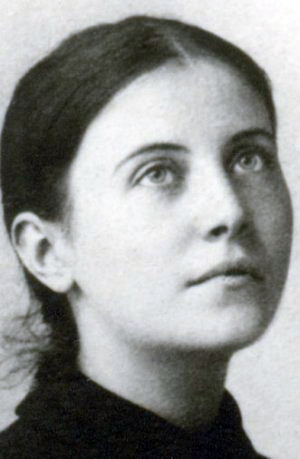
On this April 11th, in 1903 – the same year that the Italian Guiseppe Sarto was elected Pope later that summer as Pius X – a lovely, young Italian woman died, by the name of Gemma Galgani. She lived a brief life of 24 years, as did a number of other young saints, including Pier[…]Continue reading→
An Ideological and Improper Translation
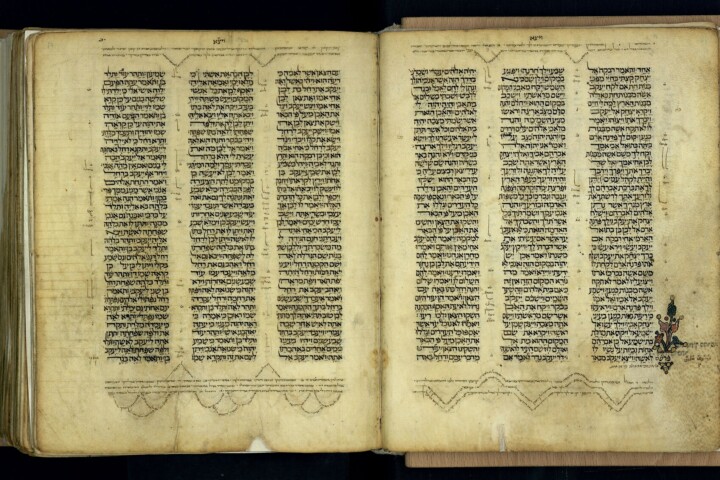
I noticed something odd with the psalm reading at Mass the other day. Our bishops’ conference here in Canada has decreed that the Mass in English – Novus Ordo – use the ‘NRSV’, the ‘New Revised Standard Version’, an ‘updated’ translation of the original RSV, first published in 1952. This ‘new translation’ has the tendency[…]Continue reading→
Saint Jean-Baptiste de la Salle: A Teacher for Teachers
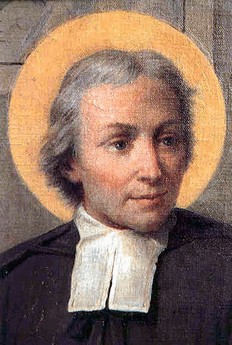
Jean-Baptiste de la Salle (1651 – 1719), a French nobleman, ordained a priest, founded the first order in the Church’s history entirely without priests, and this came about almost by accident. I say ‘almost’, for, of course, there are no accidents with God. Destined for ordination from an early age, Jean-Baptiste never looked back, even[…]Continue reading→