
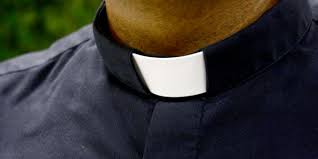
Father Jonathan Morris’ Circuitous Road
I must confess that I had never heard of Father Jonathan Morris – perhaps for the simple reason that I don’t watch television – until the story of his request to be laicized made its way through the news.
In general, we should leave a person’s vocational discernment private, but, then, so should the person vocationally discerning, especially when such a discernment involves a ‘media’ priest, the reverberations of whose decisions will affect many.
Whether this be a temptation – for there are few things the Devil wants to destroy more than a priestly vocation – or a true call from God, we must leave to the conscience of Father Morris, his spiritual director and that same God. There is nothing essentially and intrinsically wrong with a priest choosing to ‘leave’ the priesthood – which is why the Church has a process for doing so – even if, technically speaking, he still remains a priest forever. What Father Morris is requesting is simply a release from the duties and obligations, rights and promises, of the priesthood so that, as he says in his public letter, he may seek a wife and family.
That said, there are a number of things that are accidentally or circumstantially problematical in this case. Although I’m a great advocate of getting the truth ‘out there’ – hence, these pages and this magazine – there is some implicit spiritual hazard in the notion itself of the ‘popular, media priest’, whose words, amplified by modern media, carry more weight than his hierarchical position, and often his formation and disposition, should sometimes permit. I’m not saying that a given priest cannot work through all of this, should the task be laid upon him and not sought, but it does make the practice of humility, necessary to any spiritual growth, that much more difficult.
As Saint Philip Neri advised his own priests, amare nesciri, ‘love to be unknown’. And it is difficult to imagine Saint Jean Vianney’s – patron saint of all priests, parochial and otherwise – ascetical visage covered in anti-glare make-up, bobbing and answering often inane and obvious questions on a Fox news screen. In fact, the Cure D’Ars, who lived until the dawn of early cameras, would never allow his picture to be taken, thinking there was something vaguely wrong about the whole notion of one’s image being ‘captured’, and any notoriety was abhorrent to him, even if ‘fame’ was thrust upon him by the holiness of his life. We may smile at his scruple, which we might tend to class with his fiery denunciation of dancing, but in this age of ‘twerking’, along with ubiquitous images of dubious propriety, and now the possibility of all-too-real deep fakes, one wonders whether the holy saint wasn’t onto something.
One also wonders at what sort of lifestyle this fame fosters, the fawning and feting, the over-valuation of one’s own fallible, oracular opinions. To take one example, Father Morris does not quite accurately represent the moral distinction between formal and material cooperation in issuing ‘same-sex’ marriage licences.
I read also, albeit from a secondary source, that he once congratulated someone on his ‘courageous choice’ to attend a same-sex wedding, which seems to obfuscate the fact that in attending a wedding, one is also witnessing to the veracity and validity of said wedding, and how does one witness to something that is in no way a marriage?
In announcing his decision to part ways with his active priesthood, Father Morris wanted to let his followers know of his choice, so that the consequences – showing up ‘in the pews’ with a wife – did not come as a shock to those who know him.
But, the thing is, like an annulment (albeit, a distinct process), the decision is not just his to make, which is why priests must petition the Holy Father to be laicized. By making his a priori discernment public, has he not pre-empted the decision of the Holy See? What if Pope Francis replies in the negative? Will Father Morris still go ahead on the path to ‘wife and family’, which would put him outside the Church?
Then, there is the scandal – we may presume unintended on Father Morris’ part – that he broke this news just as preparations are underway for the upcoming Amazonian synod in the fall, part of the agenda of which is celibacy and the priesthood. The timing is just, well, bad, the impression being given – to priests and potential priests – that being celibate and unmarried is a lonely, bereft existence, and that priests, like the Pirates of Penzance, are pining away for blissful domesticity.
When students sometimes tell me they feel ‘called to marriage’, I retort, ‘well, who doesn’t?’. Marriage is the natural state of Man, and giving up that good is difficult, which is why we need supernatural grace and the charism – that is, the gift – of celibacy to live it out well. But there are many greater graces that flow from such a sacrifice, a topic on which I mused recently, and which the lives of innumerable saints evince. Spiritual fatherhood or motherhood is an objectively higher calling.
Father Morris seems to have discerned that he was not given that gift. Perhaps he was strong-armed into his vocation by the early dysfunction and disorder of the Legionaries. So be it. Since he made his news public, however, allow me to posit that it would be have been best for him and for all to have discerned this quietly, to petition quietly, and to have left quietly, famous media priest, or not.
As more than one commentator has put it – likely, the married ones – I’m not sure Father will find the grass any greener on the other side of the vocational aisle, or more properly, nave. In what may be an apocryphal story, but which still sort of works, Saint Catherine of Siena, when discerning her vocation, was shown in a vision a wall of crosses, the largest in the middle. She said to Christ, ‘I’ll take that one!’, when our Lord responded, and I quote from vague memory ‘No, those are reserved for married people’.
As a 46-year old man, formed his entire adult life in the seminary and priesthood, Father Morris is unlikely to find adapting to marriage an easy proposition – pardon the nubile pun. As one priest mentioned at a vocational dinner a while back, raising babies and children is, in the usual course of things, – again, there are exceptions – a young man’s game (and a young woman’s, more by biological necessity). He may also regret what he has left behind. The usual advice in vocational discernment, whether married, consecrated or sacerdotal, is that once one’s choice is made, the hand laid to the plow, alea iacta est, the die has been cast, and best just to get on with it to eternity.
So let us leave this for now, and keep Father Morris – as we do all priests – in our prayers, remembering him before God, Our Lady and all the saints, that he find his way to heaven by paths circuitous, but narrow, by the grace and in the holy and perfect will of that same God.
Carney’s Amoral Majority
After five defections – euphemistically described as ‘crossing the floor’ – and three by-elections, Mark Carney and his Liberals how have their coveted majority. One wonders what bowls of pottage were offered in back-room deals. In the archaic monarchical system that is the Dominion of Canada, this majority allows the newly-minted Prime Minister to rule[…]Continue reading→

Saint Kateri , Canada’s Protectress
This was the title given to Saint Kateri Tekakwitha, by Pope Benedict XVI, when he canonized her on October 28th, 2012, along with six others, in Saint Peter’ Square (she had been beatified by Pope John Paul II back in 1980). With Saint Joseph as our protector, along with the Canadian martyrs, we seem to[…]Continue reading→
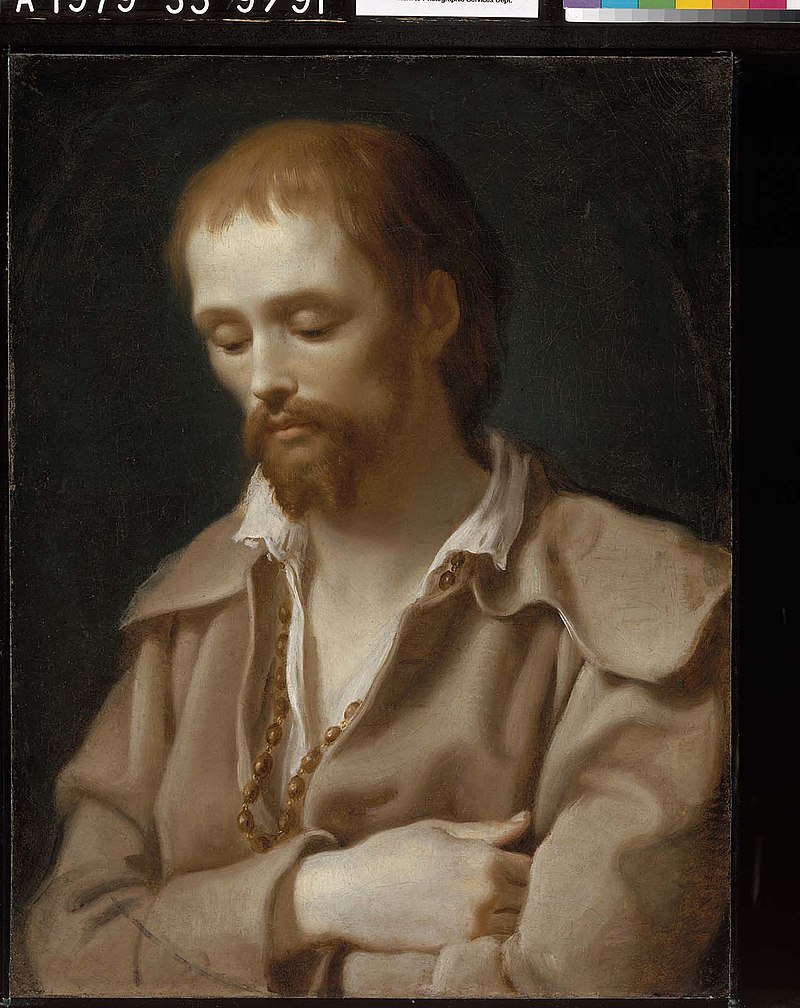
A Tale of Two Benedicts
A grace-filled Holy Week to all our readers! As we await and prepare for the Resurrection about to dawn upon us, we might keep in mind two Benedicts: Pope Emeritus Benedict XVI, requiescat in pace, elected on this day in 2005; and today’s commemoration of the mystic pilgrim, Benedict Joseph Labre, who died on this[…]Continue reading→

My Name is Bernadette
April 16th is a propitious day, for besides the anniversary of Father de Valk’s death, who founded Catholic Insight in its print form decades ago, and the commemoration of the ‘two Benedicts’, mentioned in accompanying posts, today we also recall Saint Bernadette Soubirous, the young visionary to whom the Virgin Mary appeared numerous times at[…]Continue reading→
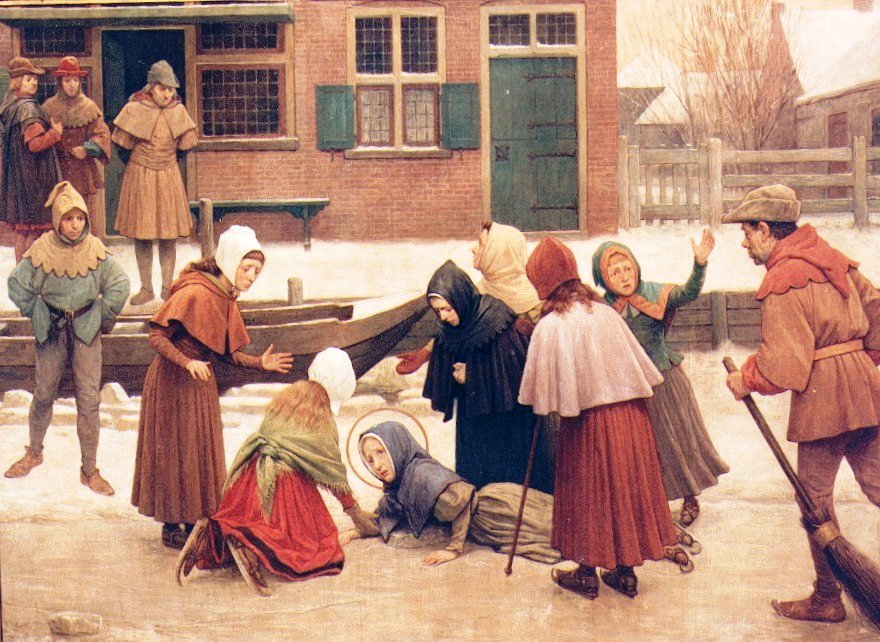
Saint Lydwina of Schiedam and Suffering Joyfully
Saint Lydwina of Schiedam (1380 – 1433) was one of the countless and glorious ‘victim souls’ in the history of the Church, those whose lives are filled with suffering, often of an unimaginable intensity, but who suffer joyfully. She was a fifteen-year old Dutch girl, out skating one day, when she fell and broke one[…]Continue reading→
The Glorious Martyrdoms of Martin and Maximus
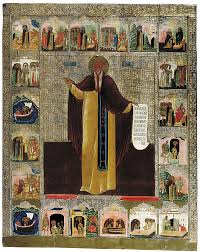
As we enter into Eastertide, we recall on this 13th of April Pope Saint Martin I (+655), one of the noblest, if most tragic, of the successors of Saint Peter. Born in Umbria, Italy, he was of noble lineage, with great intelligence combined with charity and love of the poor and the Church. While still[…]Continue reading→

Saint Stanislaus of Szczepanów
We celebrate Saint Stanislaus today (+ April 11, 1079), in light of this Easter Octave, a bishop and martyr who accepted the episcopacy only at the direct order of Pope Alexander II. He proved a wise and courageous leader of his flock, put to death by his own king, Boleslaus, for rebuking the monarch’s ‘immoral[…]Continue reading→
Saint Gemma Galgani
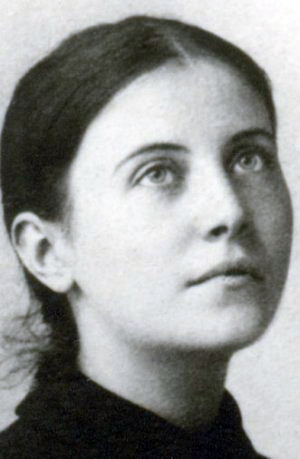
On this April 11th, in 1903 – the same year that the Italian Guiseppe Sarto was elected Pope later that summer as Pius X – a lovely, young Italian woman died, by the name of Gemma Galgani. She lived a brief life of 24 years, as did a number of other young saints, including Pier[…]Continue reading→
An Ideological and Improper Translation
I noticed something odd with the psalm reading at Mass the other day. Our bishops’ conference here in Canada has decreed that the Mass in English – Novus Ordo – use the ‘NRSV’, the ‘New Revised Standard Version’, an ‘updated’ translation of the original RSV, first published in 1952. This ‘new translation’ has the tendency[…]Continue reading→
Saint Jean-Baptiste de la Salle: A Teacher for Teachers
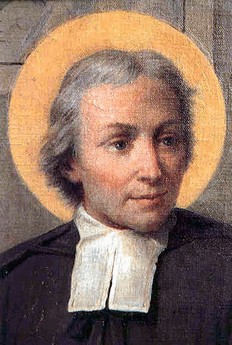
Jean-Baptiste de la Salle (1651 – 1719), a French nobleman, ordained a priest, founded the first order in the Church’s history entirely without priests, and this came about almost by accident. I say ‘almost’, for, of course, there are no accidents with God. Destined for ordination from an early age, Jean-Baptiste never looked back, even[…]Continue reading→