
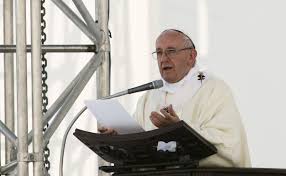
Overplaying the Heretical Hand
Is Pope Francis a heretic? So claims the recent letter, signed by various theological luminaries of various stripes, including, to my surprise, the Dominican priest, Father Aidan Nichols, whose sharp mind, I would have thought, might have seen through the limitations of this radical claim.
The thing about heresy, as a canonical crime, is that the false principle must be public, manifest, clear and held with some degree of determination. Here is the definition from the current Code of Canon Law (#751):
Heresy is the obstinate denial or obstinate doubt after the reception of baptism of some truth which is to be believed by divine and Catholic faith.
The Holy Father’s internal forum – that is, his conscience – is between him and God, intermediated by his confessor and spiritual director. What we have a duty to assess are his public pronouncements, especially his authoritative ones, and whether any of these constitute such an ‘obstinate denial’ of a divinely revealed truth. Nowhere, as far as this writer has read, has Pope Francis done this, even if some of what he has said and written – or at least, promulgated under his authority and name – is dangerously ambiguous, and perhaps even propaedeutic to some of the heretical claims made. As examples, that man cannot live, or live well, without conjugal relations; that certain commandments are impossible to keep under certain conditions; that a marriage may be nullified in the internal forum; that Communion may be received even while committing what constitutes ‘grave sin’; and so on.
But nowhere has the Holy Father explicitly and obstinately made these claims. In fact – although I have deep reservations about certain statements he has made, and this is not meant as a pro-Francis apologia – most of his writing and pronouncements are in the opposite direction, even in Chapter 8 of Amoris, reaffirming the traditional teaching of the Church, even if in more muted, ambiguous and even confusing terms than is befitting.
One might think, even argue, that all the pious and orthodox statements a ‘foil’ to deflect from his ‘true’ intentions. Only God knows that for certain, and the nineteen signers of the letter (update: the number has now been signed by 12 others, bringing the number to 31) seem to have overplayed their hand, which may play into the very hands of those may indeed have nefarious intentions. For what will now happen if actual heresy is explicitly promulgated, which would hardly need twenty pages of ‘proof’? Would not one line of indisputable text suffice? Will this be a case of crying wolf? I for one fear they have played their hand too early and too precipitously.
Regardless, we as Catholics follow primarily not the Pope, but the Christ and His Church. Whatever a given Pontiff teaches writes or opines – to say nothing of various cardinals (German or otherwise), bishops, synods – should always, always be interpreted with the traditional teaching of the Church, with all the two millennia of Magisteria that came before him, with the clear, definitive and authoritative ‘deposit of Faith’ that constitutes what we must believe and live out to gain heaven, which those with eyes to see and ears to hear and a mind to think will always be able to find.
As I have written before, this seems the reason God gave us the vast corpus of theological precision in the teachings of Popes John Paul and Benedict, and we may add Piuses IX – XII, and on back in time, prior to the reign of Francis; it’s all there, and quite easy to find, and not all that difficult to read.
Popes come and go, back to the dust whence they came, but Christ and His Truth stand forever, for those who ask and seek.
Carney’s Amoral Majority
After five defections – euphemistically described as ‘crossing the floor’ – and three by-elections, Mark Carney and his Liberals how have their coveted majority. One wonders what bowls of pottage were offered in back-room deals. In the archaic monarchical system that is the Dominion of Canada, this majority allows the newly-minted Prime Minister to rule[…]Continue reading→

Saint Kateri , Canada’s Protectress
This was the title given to Saint Kateri Tekakwitha, by Pope Benedict XVI, when he canonized her on October 28th, 2012, along with six others, in Saint Peter’ Square (she had been beatified by Pope John Paul II back in 1980). With Saint Joseph as our protector, along with the Canadian martyrs, we seem to[…]Continue reading→
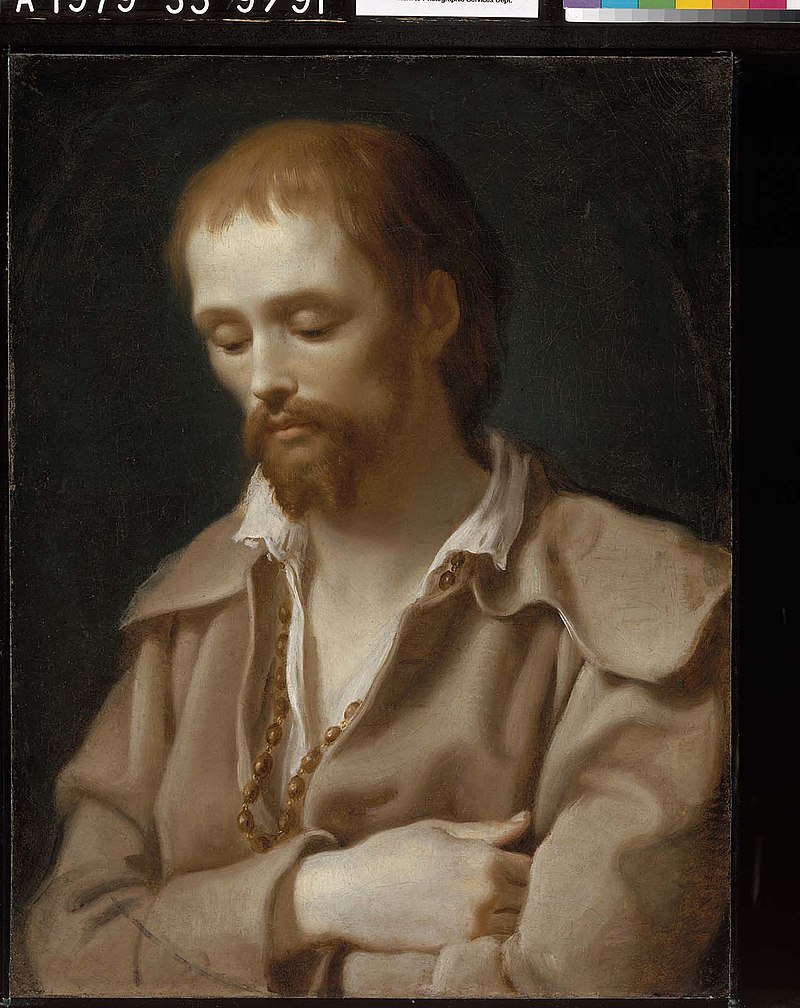
A Tale of Two Benedicts
A grace-filled Holy Week to all our readers! As we await and prepare for the Resurrection about to dawn upon us, we might keep in mind two Benedicts: Pope Emeritus Benedict XVI, requiescat in pace, elected on this day in 2005; and today’s commemoration of the mystic pilgrim, Benedict Joseph Labre, who died on this[…]Continue reading→

My Name is Bernadette
April 16th is a propitious day, for besides the anniversary of Father de Valk’s death, who founded Catholic Insight in its print form decades ago, and the commemoration of the ‘two Benedicts’, mentioned in accompanying posts, today we also recall Saint Bernadette Soubirous, the young visionary to whom the Virgin Mary appeared numerous times at[…]Continue reading→
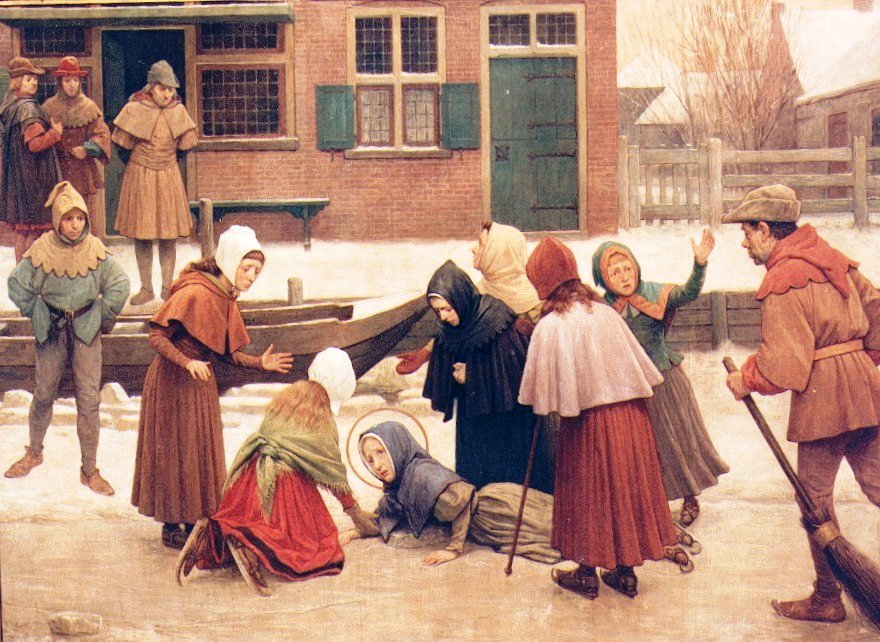
Saint Lydwina of Schiedam and Suffering Joyfully
Saint Lydwina of Schiedam (1380 – 1433) was one of the countless and glorious ‘victim souls’ in the history of the Church, those whose lives are filled with suffering, often of an unimaginable intensity, but who suffer joyfully. She was a fifteen-year old Dutch girl, out skating one day, when she fell and broke one[…]Continue reading→
The Glorious Martyrdoms of Martin and Maximus
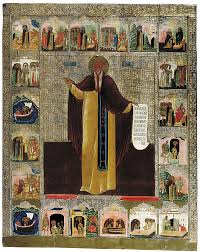
As we enter into Eastertide, we recall on this 13th of April Pope Saint Martin I (+655), one of the noblest, if most tragic, of the successors of Saint Peter. Born in Umbria, Italy, he was of noble lineage, with great intelligence combined with charity and love of the poor and the Church. While still[…]Continue reading→

Saint Stanislaus of Szczepanów
We celebrate Saint Stanislaus today (+ April 11, 1079), in light of this Easter Octave, a bishop and martyr who accepted the episcopacy only at the direct order of Pope Alexander II. He proved a wise and courageous leader of his flock, put to death by his own king, Boleslaus, for rebuking the monarch’s ‘immoral[…]Continue reading→
Saint Gemma Galgani
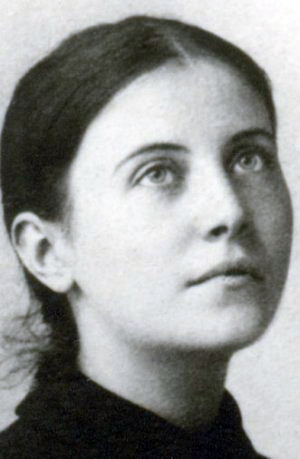
On this April 11th, in 1903 – the same year that the Italian Guiseppe Sarto was elected Pope later that summer as Pius X – a lovely, young Italian woman died, by the name of Gemma Galgani. She lived a brief life of 24 years, as did a number of other young saints, including Pier[…]Continue reading→
An Ideological and Improper Translation
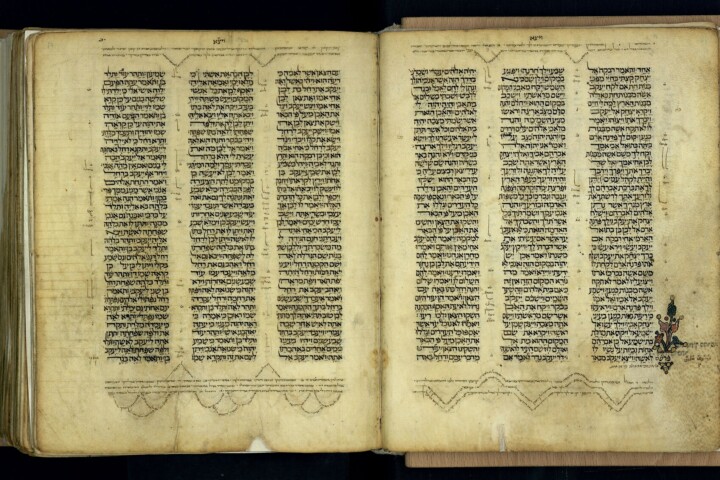
I noticed something odd with the psalm reading at Mass the other day. Our bishops’ conference here in Canada has decreed that the Mass in English – Novus Ordo – use the ‘NRSV’, the ‘New Revised Standard Version’, an ‘updated’ translation of the original RSV, first published in 1952. This ‘new translation’ has the tendency[…]Continue reading→
Saint Jean-Baptiste de la Salle: A Teacher for Teachers
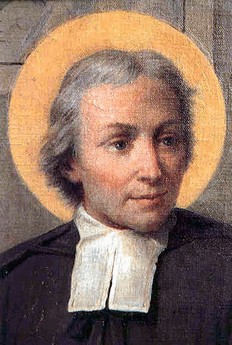
Jean-Baptiste de la Salle (1651 – 1719), a French nobleman, ordained a priest, founded the first order in the Church’s history entirely without priests, and this came about almost by accident. I say ‘almost’, for, of course, there are no accidents with God. Destined for ordination from an early age, Jean-Baptiste never looked back, even[…]Continue reading→