
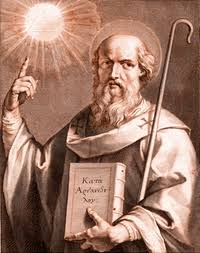
Athanasius and the Iota Against the World
Today is the memorial of one of the most heroic bishops in the history of the Church, the great Saint Athanasius (+373), mighty foe of Arianism, and the hero of Bd. John Henry Cardinal Newman, whose essays on the fourth-century bishop still make for delightful and edifying reading.
It was by studying the early Church that Newman realized that there was no ‘Anglican’ via media between what he saw as the ‘excesses’ of Rome and the poverty of stripped-down Protestantism. No, from the very beginning, Newman discovered, there was only Catholicism, with all that entails, and as he famously concluded ’to delve into history is to cease do be a Protestant’. Quite so.
Athanasius was consecrated bishop of the great see of Alexandria in 328, while still very young (some even dispute whether he was of the then-canonical age of 30). As the current bishop, Alexander, lay dying, the people acclaimed ‘Athanasius for bishop!’, as they would do in the African city of Hippo for Augustine at the end of the century.
Athanasius thought of fleeing, realizing the difficulties the task would bring, but accepted God’s will. Even before his episcopacy, as Bishop Alexander’s theological peritus, young Athanasius was one of the main influences at the Council of Nicaea in 325, convoked by the Emperor Constantine primarily to determine the foundational question of ‘who was Christ?’ (as well as fixing a universal date for Easter), which would be the defining question of his episcopacy.
For there soon arose the mysterious figure of Arius, a deacon, also from Alexandria, had come to the conclusion with his logic-chopping mind that Christ was, and could not be, God, not in the sense that the Father was God. For was not God but one, and undivided? How could He give His nature to another? Christ therefore must have been created at some point (‘there was a time when he was not’, was an Arian catchphrase). Christ was the greatest of God the Father’s creations, perhaps, but a creature nonetheless. Such was Arianism, a theory that grew wildly popular, spread by hymns and jingles, and was conducive to the Emperor’s frame of mind. After all, if Christ be not God, then he, Caesar, would again be all-supreme, and Christ, the creature, could bend to his will.
Of course, the consistent orthodox belief of the Church is that Christ truly is God. As the creed from Nicaea (and the later council of Constantinople) has it, Christ is ‘God from God, Light from Light, true God from true God, consubstantial with the Father’.
It is for championing that term ‘con-substantial’, in the original Greek, homo-ousios, literally, the ‘same in being’, that Athanasius is most remembered. Originating from Roman influence (even though Greek), homo-ousios declared that Christ has the same ‘being, substance, nature as the Father, that He truly was and is divine, in the same way the Father is. I and the Father are one and he who has seen me has seen the Father.
Some Arians sought a compromise: Why not all agree on homoi-ousios, that the Son is similar to the Father? But Athanasius, never one for obfuscatory ambiguity, saw that the addition of that one iota would undermine the faith of the Church. After all, are we not all ‘similar’ to God, in some way, however distant? But only Christ is the same as the Father, His very image, the ‘Son’, the Second Person of the Blessed Trinity, sent into the world, Who assumed a human nature, while retaining His divine nature, and remaining a divine Person, who lived, suffered and died for our sins, so opening the gates of heaven to all men, now and until the end of time.
But the world would not have it. From the Emperor, to the bishops, to priests and potentates, almost all infected with the Arian virus, and it was Athanasius contra mundum, the stout-hearted, implacable bishop against nearly the entire Roman world. He suffered five exiles under various descendants and successors of Constantine, who all preferred the more rational, and politically expedient, Arianism, with Christ as a teacher, pedagogue, rabbi, angel, spirit, anything but God Himself, to Whom even empires and emperors must submit. All for the sake of one iota, and that homoousios…
Athanasius saw with the clarity of mind, the fruit of a sanctified and disciplined life, that orthopraxy, literally, ‘right practice’ (or living) requires orthodoxy, and that heresy (or heterodoxy) will always, always eventually lead to heteropraxy, living in a way contrary to the faith, right reason, and the will of God.
In other words, behind a heretic, there is often a moral problem.
The Incarnation is the central and pivotal event in human history, and to remind us of this, we are supposed to ‘bow profoundly’ at the mention of the Incarnation in the Creed at Mass, et homo factus est. I have rarely seen anyone actually do this, and would recommend going back to full-scale genuflection, to avoid the awkwardness of the bow, and so that we are all on the same liturgical page.
On that liturgical note, I wonder how many Catholics in our vast suburban parishes know and accept the full truth of Christ’s divinity, and what this has done for them. How aware am I, who profess to be so? As Athansius put it, following the earlier Irenaeus, for the Son of God became man, so that we might become God. Just spend a few moments, if not hours, days, weeks and years, pondering that truth.
That really is the central point of our Faith, and why Saint John warns that the surest sign of the spirit of ‘Anti-Christ’ is a denial of the Incarnation, that God took flesh and a true human nature; for the Devil well knows that it is this truth which stands as the basis for the inviolable dignity of each human person, made in imago Dei, sharing a nature that now shares in the very nature of God Himself.
For it is only be demoting Christ that the Antichrist can promote himself. And that spirit of Antichrist will not rest until the very end, and as the Gospel prophesies:
Indeed the hour is coming when whoever kills you will think he is offering service to God. And they will do this because they have not known the Father, nor me…
it is no accident that a certain desert religion, demanding worldwide ‘submission’, now waxing strong, has as one of its central theses the denial the Incarnation, indeed the denial of any direct involvement of God-with-man. But then so do the ‘religions’ of atheism, secularism, hedonism, humanism. It matters not the means; all the Devil wants is for us to renounce Christ, then we would be firmly in his grip. For he who is not with me, is against me; whoever does not gather with me scatters….
We should pray each day that we might stand firm with Athanasius against anything that violates the full truth of Christ, and, hence, the truth of Man. As Pope Saint John Paul loved to quote “Only in the mystery of Christ does the mystery of man make sense’.
Our annual graduation ceremonies were just held here on Saturday at Our Lady Seat of Wisdom College, and each year the sight of our fresh-faced graduands, soon-to-be alumni, completing their course of studies, I become more convinced of the need for a solid Athanasius-esque intellectual formation, both in reason and in faith, especially for the youth. For only such a foundation can keep them going in what look to be ever-more confusing difficult and tumultuous years ahead. But they need not be, if we keep our eyes fixed on Christ and the truth He offers.
Yet even beyond youth, I think we need a lot more orthodoxy in our Catholic community, and by that I mean a full immersion in the truths of our religion, making them ‘our own’. This would go a long way to more vibrant and solid faith which could, and would, convert the world, as the Church is called to do. The heart, indeed everything else, follows the mind, and it is only the truth that will truly set us free.
Saint Athanasius, ora pro nobis!
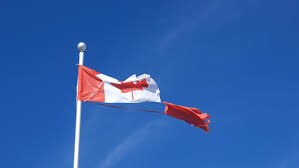
Carney’s Amoral Majority
After five defections – euphemistically described as ‘crossing the floor’ – and three by-elections, Mark Carney and his Liberals how have their coveted majority. One wonders what bowls of pottage were offered in back-room deals. In the archaic monarchical system that is the Dominion of Canada, this majority allows the newly-minted Prime Minister to rule[…]Continue reading→

Saint Kateri , Canada’s Protectress
This was the title given to Saint Kateri Tekakwitha, by Pope Benedict XVI, when he canonized her on October 28th, 2012, along with six others, in Saint Peter’ Square (she had been beatified by Pope John Paul II back in 1980). With Saint Joseph as our protector, along with the Canadian martyrs, we seem to[…]Continue reading→

A Tale of Two Benedicts
A grace-filled Holy Week to all our readers! As we await and prepare for the Resurrection about to dawn upon us, we might keep in mind two Benedicts: Pope Emeritus Benedict XVI, requiescat in pace, elected on this day in 2005; and today’s commemoration of the mystic pilgrim, Benedict Joseph Labre, who died on this[…]Continue reading→

My Name is Bernadette
April 16th is a propitious day, for besides the anniversary of Father de Valk’s death, who founded Catholic Insight in its print form decades ago, and the commemoration of the ‘two Benedicts’, mentioned in accompanying posts, today we also recall Saint Bernadette Soubirous, the young visionary to whom the Virgin Mary appeared numerous times at[…]Continue reading→

Saint Lydwina of Schiedam and Suffering Joyfully
Saint Lydwina of Schiedam (1380 – 1433) was one of the countless and glorious ‘victim souls’ in the history of the Church, those whose lives are filled with suffering, often of an unimaginable intensity, but who suffer joyfully. She was a fifteen-year old Dutch girl, out skating one day, when she fell and broke one[…]Continue reading→

The Glorious Martyrdoms of Martin and Maximus
As we enter into Eastertide, we recall on this 13th of April Pope Saint Martin I (+655), one of the noblest, if most tragic, of the successors of Saint Peter. Born in Umbria, Italy, he was of noble lineage, with great intelligence combined with charity and love of the poor and the Church. While still[…]Continue reading→

Saint Stanislaus of Szczepanów
We celebrate Saint Stanislaus today (+ April 11, 1079), in light of this Easter Octave, a bishop and martyr who accepted the episcopacy only at the direct order of Pope Alexander II. He proved a wise and courageous leader of his flock, put to death by his own king, Boleslaus, for rebuking the monarch’s ‘immoral[…]Continue reading→
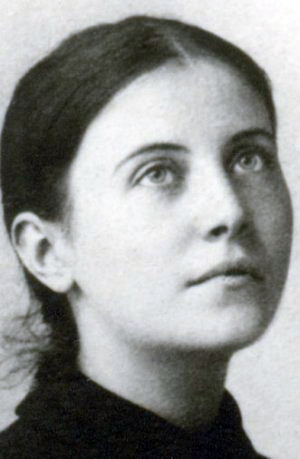
Saint Gemma Galgani
On this April 11th, in 1903 – the same year that the Italian Guiseppe Sarto was elected Pope later that summer as Pius X – a lovely, young Italian woman died, by the name of Gemma Galgani. She lived a brief life of 24 years, as did a number of other young saints, including Pier[…]Continue reading→
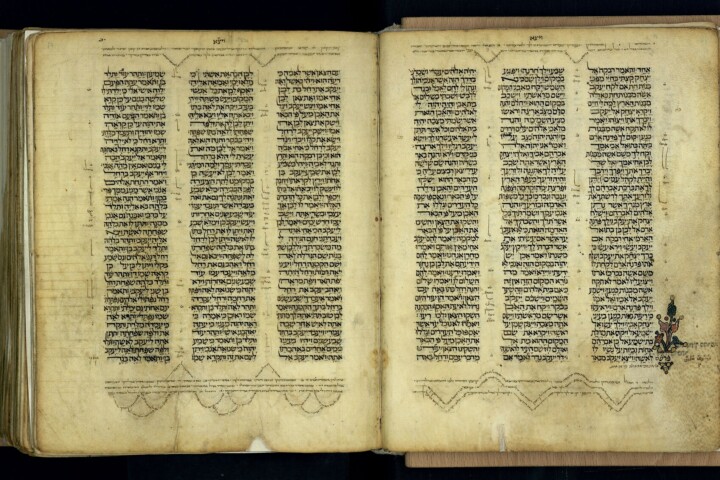
An Ideological and Improper Translation
I noticed something odd with the psalm reading at Mass the other day. Our bishops’ conference here in Canada has decreed that the Mass in English – Novus Ordo – use the ‘NRSV’, the ‘New Revised Standard Version’, an ‘updated’ translation of the original RSV, first published in 1952. This ‘new translation’ has the tendency[…]Continue reading→
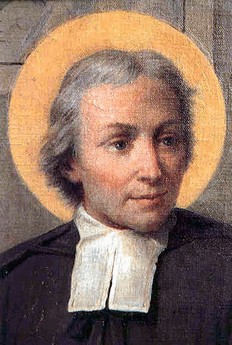
Saint Jean-Baptiste de la Salle: A Teacher for Teachers
Jean-Baptiste de la Salle (1651 – 1719), a French nobleman, ordained a priest, founded the first order in the Church’s history entirely without priests, and this came about almost by accident. I say ‘almost’, for, of course, there are no accidents with God. Destined for ordination from an early age, Jean-Baptiste never looked back, even[…]Continue reading→